1. TEXTSPLIT

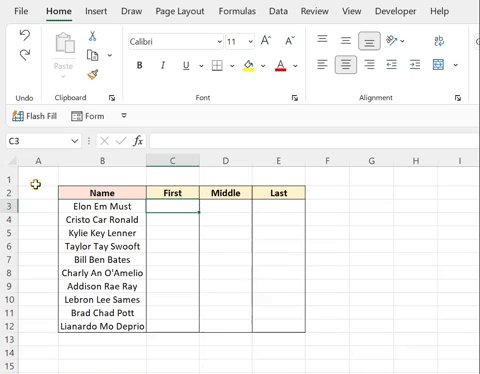
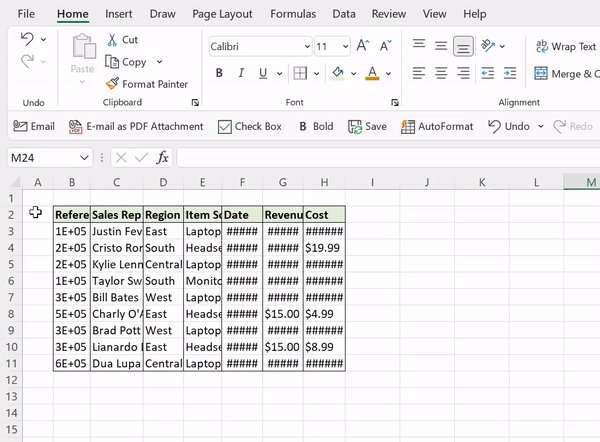
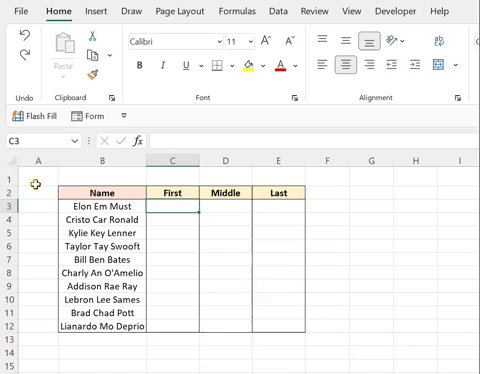
Need to break up data in a text string into multiple rows or columns? Use the TEXTSPLIT function to split up text at a specified delimiter. For example, this function can split full names into first, middle, and last name columns by defining the col_delimiter.
2. TEXTJOIN

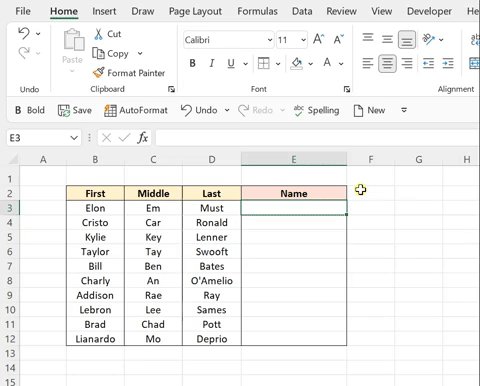
Now that we’ve learned how to split text, let’s learn how to combine it. The TEXTJOIN function combines values into one with a delimiter in between each value. For example, we can combine first, middle, and last name back together with a space in between each name.
3. TEXTBEFORE

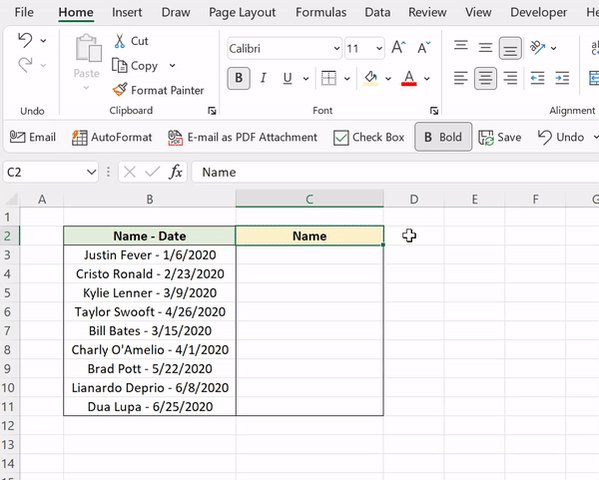
Now let’s say we need to extract text from the beginning of a text string. The TEXTBEFORE function extracts text before a specified delimiter. For example, if we just want the names from this list. We can extract the names by defining the dash as the delimiter.
4. TEXTAFTER

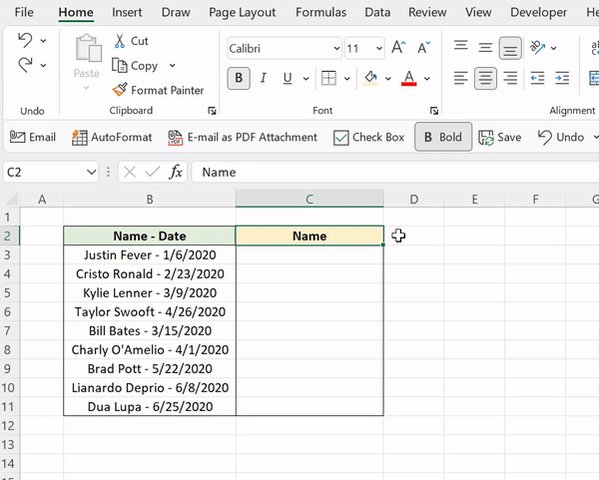
Similarly, we can extract text from the end of a text string using the TEXTAFTER function. TEXTAFTER extracts text after a specified delimiter. If we want to extract the date and omit the names, we can define the dash as the delimiter using the TEXTAFTER function.
Break up (or get back together) with these text functions. Who knew all four? #excel

Follow me @exceldictionary for even more Excel tips and tricks.

And if you never want to forget my excel tips at your desk, check out my shortcut merch and ebooks. https://t.co/riWzaCFeeo

More from Excel Dictionary ☕️

More from All

https://t.co/6cRR2B3jBE
Viruses and other pathogens are often studied as stand-alone entities, despite that, in nature, they mostly live in multispecies associations called biofilms—both externally and within the host.

https://t.co/FBfXhUrH5d


Microorganisms in biofilms are enclosed by an extracellular matrix that confers protection and improves survival. Previous studies have shown that viruses can secondarily colonize preexisting biofilms, and viral biofilms have also been described.


...we raise the perspective that CoVs can persistently infect bats due to their association with biofilm structures. This phenomenon potentially provides an optimal environment for nonpathogenic & well-adapted viruses to interact with the host, as well as for viral recombination.


Biofilms can also enhance virion viability in extracellular environments, such as on fomites and in aquatic sediments, allowing viral persistence and dissemination.

You May Also Like

MDZS is laden with buddhist references. As a South Asian person, and history buff, it is so interesting to see how Buddhism, which originated from India, migrated, flourished & changed in the context of China. Here's some research (🙏🏼 @starkjeon for CN insight + citations)

1. LWJ’s sword Bichen ‘is likely an abbreviation for the term 躲避红尘 (duǒ bì hóng chén), which can be translated as such: 躲避: shunning or hiding away from 红尘 (worldly affairs; which is a buddhist teaching.) (
https://t.co/zF65W3roJe) (abbrev. TWX)

2. Sandu (三 毒), Jiang Cheng’s sword, refers to the three poisons (triviṣa) in Buddhism; desire (kāma-taṇhā), delusion (bhava-taṇhā) and hatred (vibhava-taṇhā).

These 3 poisons represent the roots of craving (tanha) and are the cause of Dukkha (suffering, pain) and thus result in rebirth.

Interesting that MXTX used this name for one of the characters who suffers, arguably, the worst of these three emotions.

3. The Qian kun purse “乾坤袋 (qián kūn dài) – can be called “Heaven and Earth” Pouch. In Buddhism, Maitreya (मैत्रेय) owns this to store items. It was believed that there was a mythical space inside the bag that could absorb the world.” (TWX)