Understanding NeRF or Neural Radiance Fields 🧐

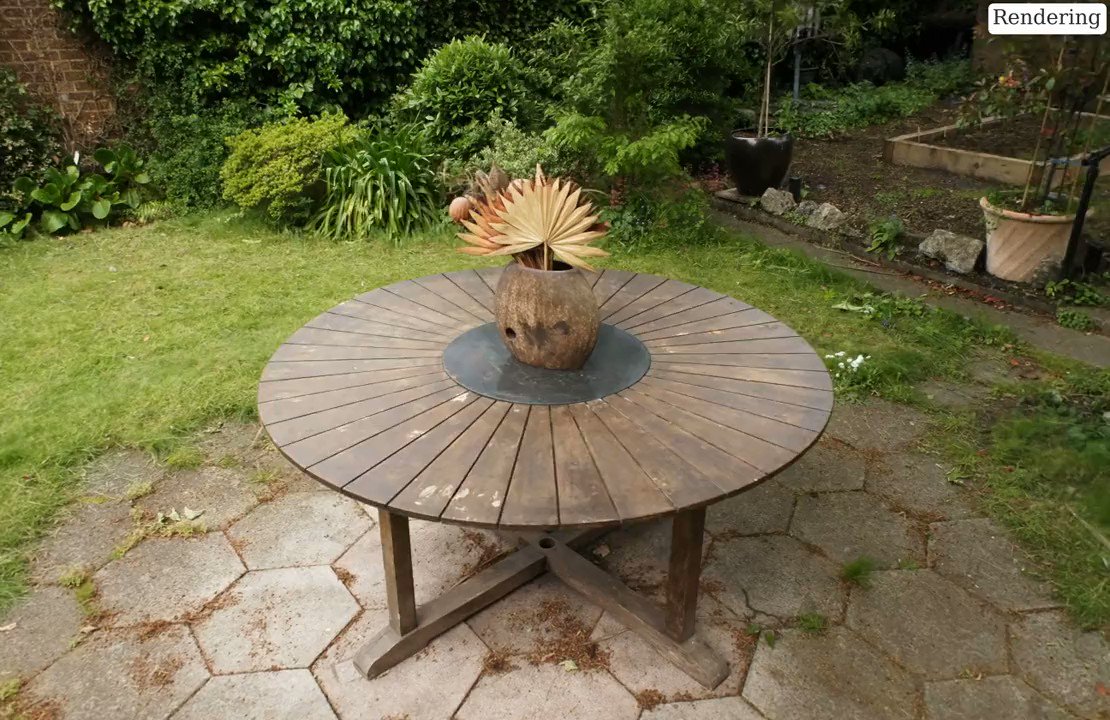
It is a method that can synthesize new views of 3D scenes using a small number of input views.

As part of the @weights_biases blogathon (https://t.co/tRddw6jXeA), here are some articles to understand them
1/

Want to dive head first into some code? đŸ€ż
Here is an implementation of NeRF using JAX & Flax https://t.co/pKO5NDSDqv.

The Report used W&B to track the experiments, compare results, ensure reproducibility, and track utilization of the TPU during the experiment.
2/
Mip-NeRF 360 is a follow-up work that looks at whether it's possible to effectively represent an unbounded scene, where the camera may point in any direction and content may exist at any distance.

https://t.co/QNY6VuN8zd
3/
Training a single NeRF does not scale when trying to represent scenes as large as cities.

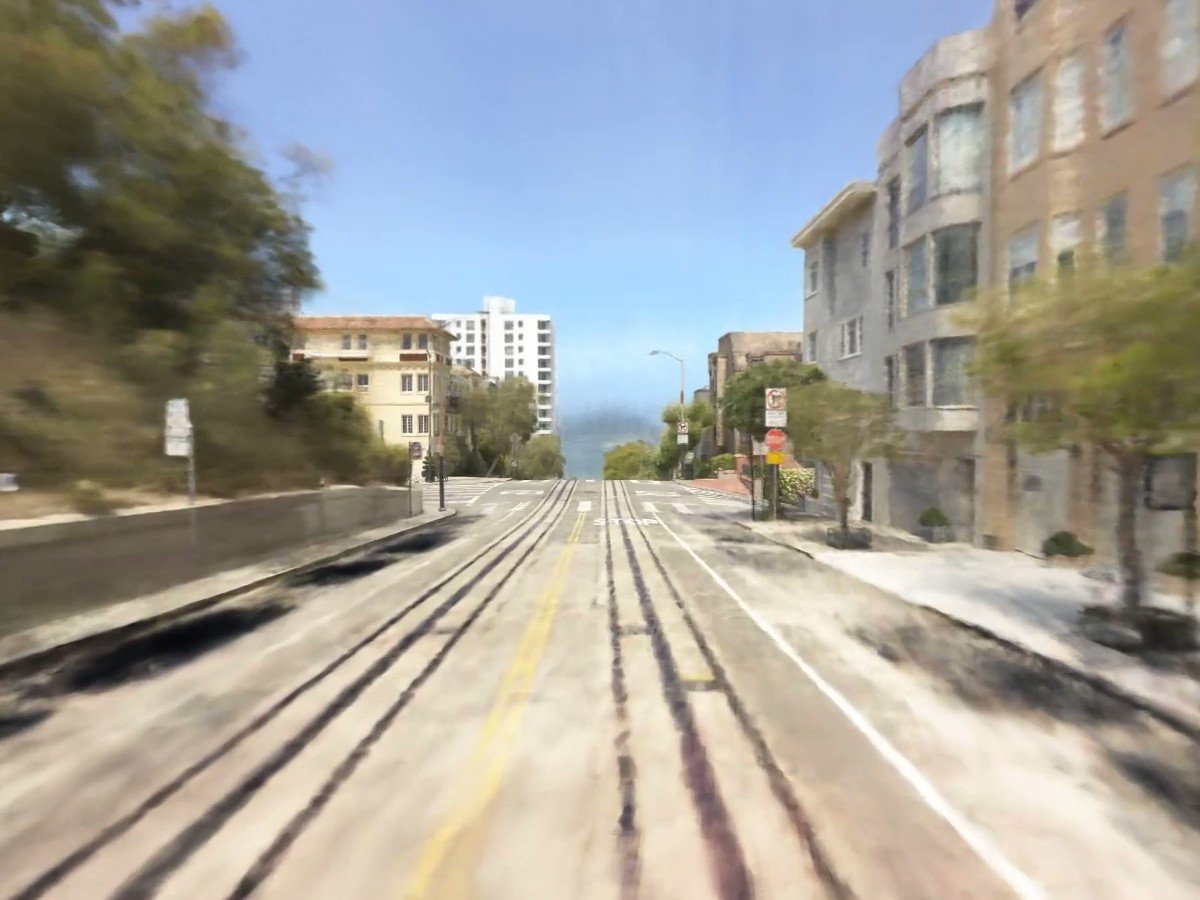
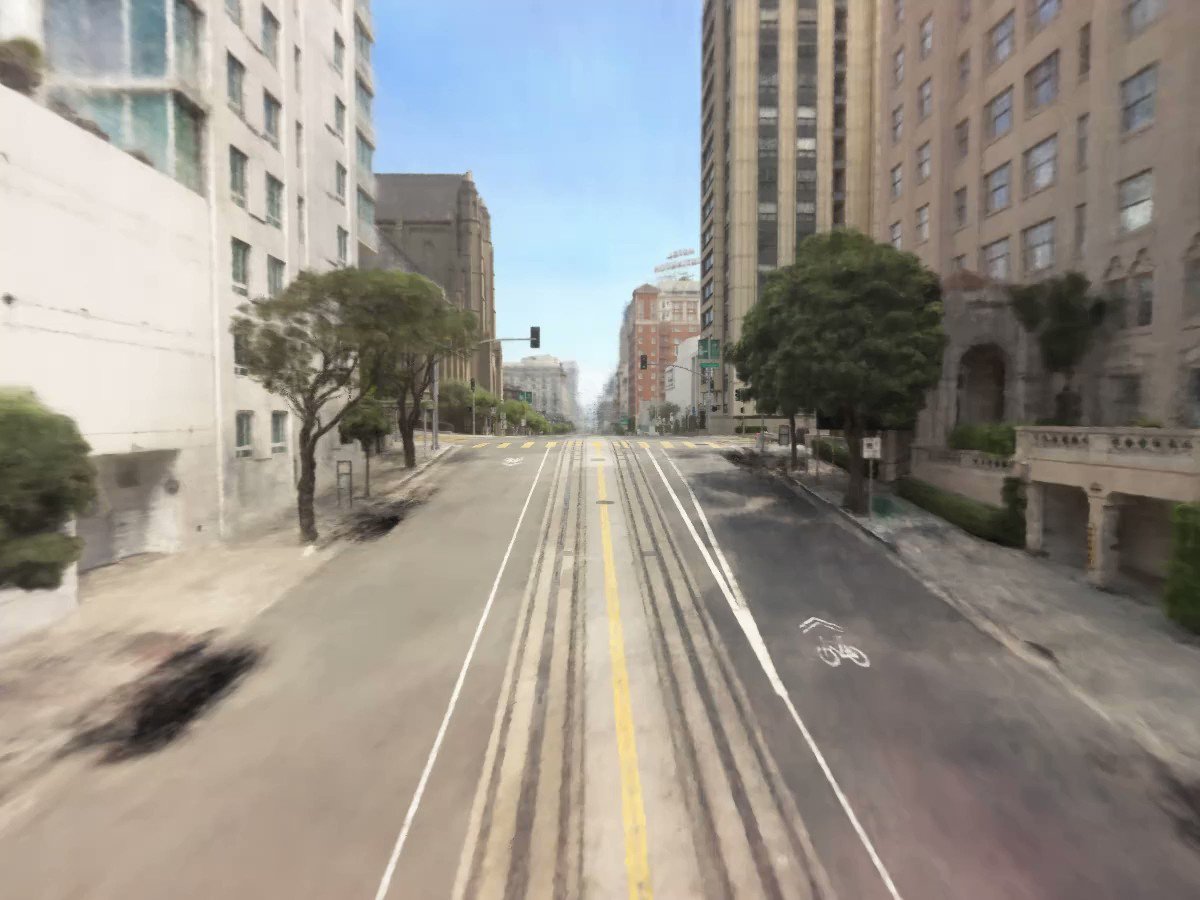
To overcome this challenge, Block-NeRF was introduced which yields some amazing reconstructions of San Francisco. Here's one of Lombard Street.
4/
They built their implementation on top of Mip-NeRF, and also combine many NeRFs to reconstruct a coherent large environment from millions of images.

🐝Read more here:
https://t.co/C34gdGlx6f
5/
These articles have been written using @weights_biases Reports, a collaboration tool for ML projects.

Here's a thread I wrote about why I love W&B reports
https://t.co/EiCtCfyZcb
6/
Thanks for reading! đŸȘ„

The W&B blogathon is ending in a few days on June 14, if you'd like to take part and write some nice articles as I've included here, we'd love your participation.
https://t.co/tRddw6jXeA
7/
Follow @soumikRakshit96 for more of these articles. He's an amazing engineer and is great at explaining extremely complex topics!

More from All

How can we use language supervision to learn better visual representations for robotics?

Introducing Voltron: Language-Driven Representation Learning for Robotics!

Paper: https://t.co/gIsRPtSjKz
Models: https://t.co/NOB3cpATYG
Evaluation: https://t.co/aOzQu95J8z

đŸ§”đŸ‘‡(1 / 12)


Videos of humans performing everyday tasks (Something-Something-v2, Ego4D) offer a rich and diverse resource for learning representations for robotic manipulation.

Yet, an underused part of these datasets are the rich, natural language annotations accompanying each video. (2/12)

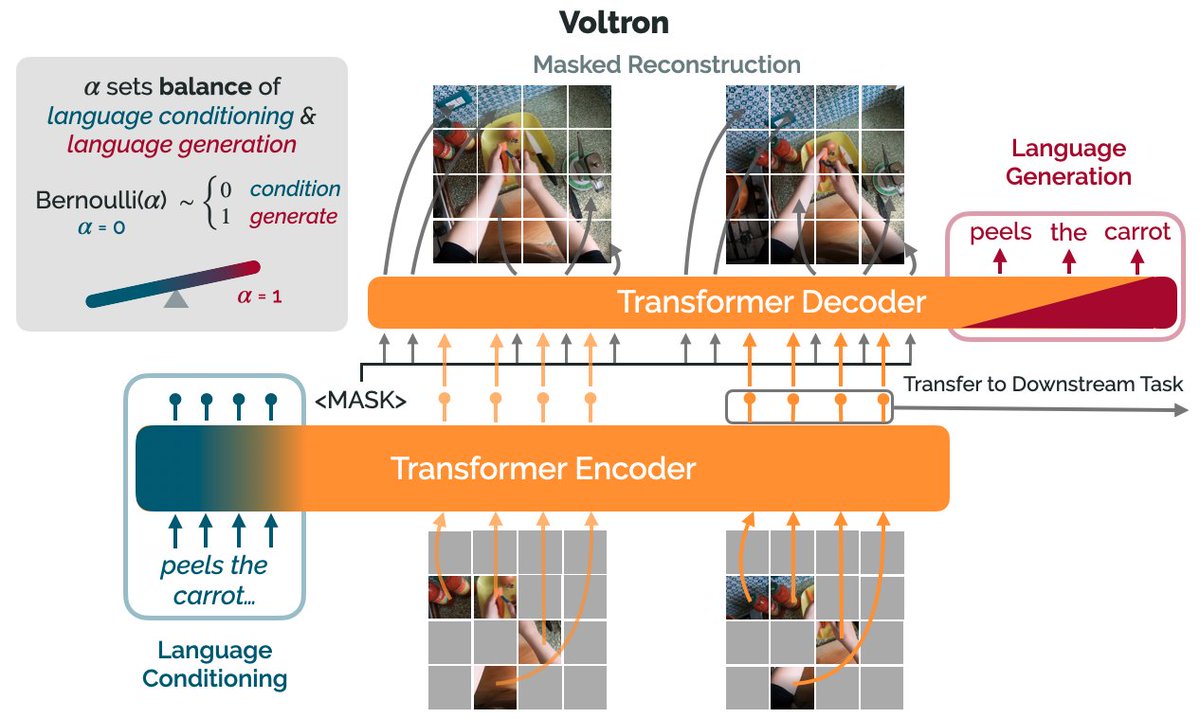
The Voltron framework offers a simple way to use language supervision to shape representation learning, building off of prior work in representations for robotics like MVP (
https://t.co/Pb0mk9hb4i) and R3M (https://t.co/o2Fkc3fP0e).

The secret is *balance* (3/12)

Starting with a masked autoencoder over frames from these video clips, make a choice:

1) Condition on language and improve our ability to reconstruct the scene.

2) Generate language given the visual representation and improve our ability to describe what's happening. (4/12)

By trading off *conditioning* and *generation* we show that we can learn 1) better representations than prior methods, and 2) explicitly shape the balance of low and high-level features captured.

Why is the ability to shape this balance important? (5/12)

You May Also Like

1/ Here’s a list of conversational frameworks I’ve picked up that have been helpful.

Please add your own.

2/ The Magic Question: "What would need to be true for you


3/ On evaluating where someone’s head is at regarding a topic they are being wishy-washy about or delaying.

“Gun to the head—what would you decide now?”

“Fast forward 6 months after your sabbatical--how would you decide: what criteria is most important to you?”

4/ Other Q’s re: decisions:

“Putting aside a list of pros/cons, what’s the *one* reason you’re doing this?” “Why is that the most important reason?”

“What’s end-game here?”

“What does success look like in a world where you pick that path?”

5/ When listening, after empathizing, and wanting to help them make their own decisions without imposing your world view:

“What would the best version of yourself do”?