
MTAR Technologies is a leader in the precision engineering industry. They serve clients in the Defence, Space, Nuclear and Clean Energy industries. The company is engaged in the manufacture of
#MTAR Technologies - Leader in Niche Precision Engineering 🛩️🛩️
Like & Retweet For Max Reach !
CMP - ₹ 1803

MTAR Technologies is a leader in the precision engineering industry. They serve clients in the Defence, Space, Nuclear and Clean Energy industries. The company is engaged in the manufacture of
2. Business Segments
The company operates in 4 segments: Nuclear, Defence, Space and Clean Energy.
Nuclear: In the Nuclear Segment, the company is partnered with Nuclear

Defence: In this segment, the company has undertaken complex assemblies for the DRDO, such as the base shroud assembly for Agni missiles and the assembly of Secondary Injection Thrust Vector Control (SITVC)
Clean Energy: This is their biggest segment and most of their revenues in this segment comes from Bloom Energy.
About 50% of their revenues come from the Clean energy segment where Bloom energy is their main customer. 26% of their revenues come from the Nuclear segment and 22% comes from Space and Defence.


They company is launching new products and new capabilities which can provide significant growth in the future. They are developing roller screws which are very complex to manufacture and are used in space and defence applications.
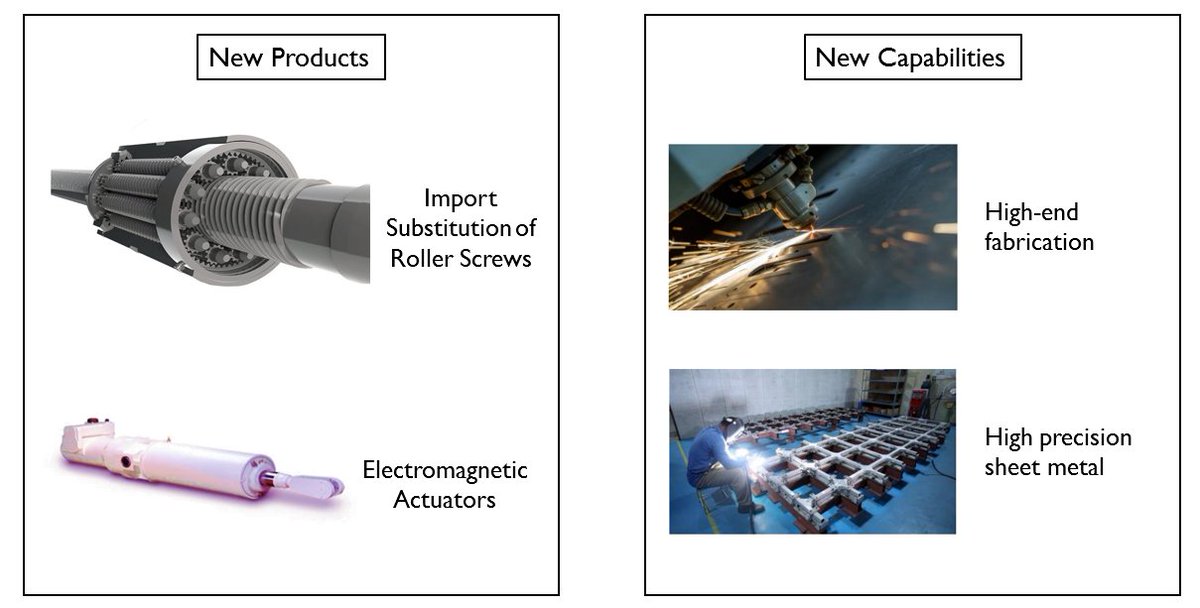
This is a very high entry barrier business because the products are extremely complex to manufacture and there is no room for error. Any kind of fault in the product is completely unacceptable when you are dealing with rocket engines and aircraft parts.


More from Value Educator

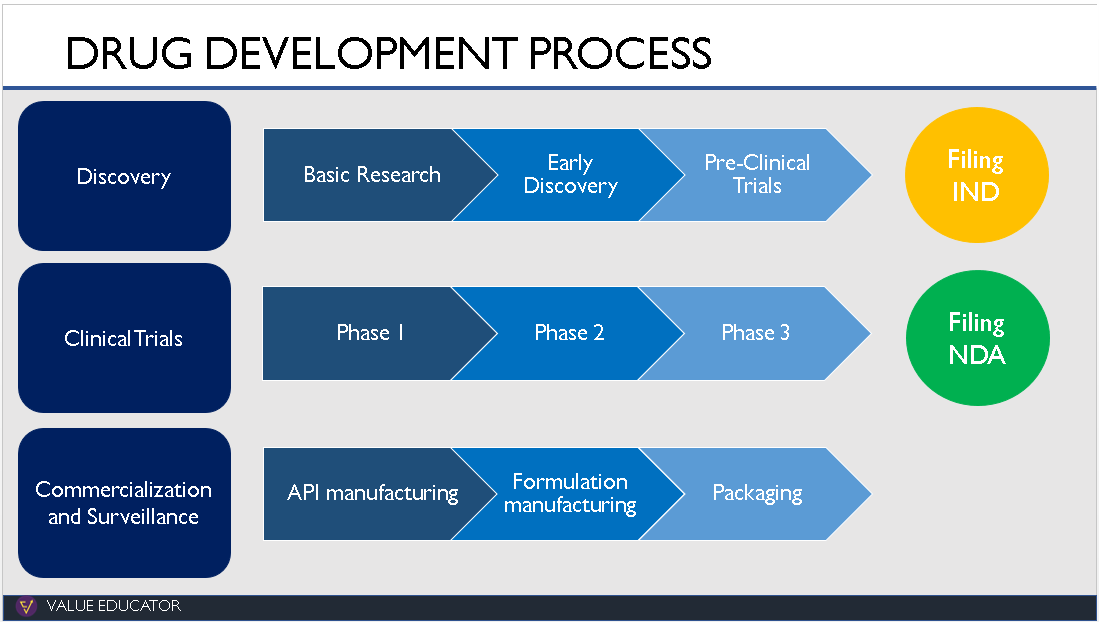
Initially we had planned 3 part series on Pharma Sector but now we are adding one more part and making it 4 part series.
Part 1 : Introduction to pharma industry
Link : https://t.co/XZvGKjxo0C
Part 2: Drug discovery process with CRAMS, CDMO, CMO, CSM
Link : https://t.co/MPQm0OXUbL
Part 3 : Generic Drugs (ANDA)
Coming this Saturday at 11 AM
Part 4: Bio-similars
Like & Retweet to support us in the journey to educate investors !!


More from All







You May Also Like

Ivor Cummins has been wrong (or lying) almost entirely throughout this pandemic and got paid handsomly for it.
He has been wrong (or lying) so often that it will be nearly impossible for me to track every grift, lie, deceit, manipulation he has pulled. I will use...

... other sources who have been trying to shine on light on this grifter (as I have tried to do, time and again:
Example #1: "Still not seeing Sweden signal versus Denmark really"... There it was (Images attached).
19 to 80 is an over 300% difference.
Tweet: https://t.co/36FnYnsRT9

Example #2 - "Yes, I'm comparing the Noridcs / No, you cannot compare the Nordics."
I wonder why...
Tweets: https://t.co/XLfoX4rpck / https://t.co/vjE1ctLU5x

Example #3 - "I'm only looking at what makes the data fit in my favour" a.k.a moving the goalposts.
Tweets: https://t.co/vcDpTu3qyj / https://t.co/CA3N6hC2Lq

He has been wrong (or lying) so often that it will be nearly impossible for me to track every grift, lie, deceit, manipulation he has pulled. I will use...
... other sources who have been trying to shine on light on this grifter (as I have tried to do, time and again:
Ivor Cummins BE (Chem) is a former R&D Manager at HP (sourcre: https://t.co/Wbf5scf7gn), turned Content Creator/Podcast Host/YouTube personality. (Call it what you will.)
— Steve (@braidedmanga) November 17, 2020
Example #1: "Still not seeing Sweden signal versus Denmark really"... There it was (Images attached).
19 to 80 is an over 300% difference.
Tweet: https://t.co/36FnYnsRT9
Example #2 - "Yes, I'm comparing the Noridcs / No, you cannot compare the Nordics."
I wonder why...
Tweets: https://t.co/XLfoX4rpck / https://t.co/vjE1ctLU5x
Example #3 - "I'm only looking at what makes the data fit in my favour" a.k.a moving the goalposts.
Tweets: https://t.co/vcDpTu3qyj / https://t.co/CA3N6hC2Lq





1/ Some initial thoughts on personal moats:
Like company moats, your personal moat should be a competitive advantage that is not only durable—it should also compound over time.
Characteristics of a personal moat below:
2/ Like a company moat, you want to build career capital while you sleep.
As Andrew Chen noted:
3/ You don’t want to build a competitive advantage that is fleeting or that will get commoditized
Things that might get commoditized over time (some longer than
4/ Before the arrival of recorded music, what used to be scarce was the actual music itself — required an in-person artist.
After recorded music, the music itself became abundant and what became scarce was curation, distribution, and self space.
5/ Similarly, in careers, what used to be (more) scarce were things like ideas, money, and exclusive relationships.
In the internet economy, what has become scarce are things like specific knowledge, rare & valuable skills, and great reputations.
Like company moats, your personal moat should be a competitive advantage that is not only durable—it should also compound over time.
Characteristics of a personal moat below:
I'm increasingly interested in the idea of "personal moats" in the context of careers.
— Erik Torenberg (@eriktorenberg) November 22, 2018
Moats should be:
- Hard to learn and hard to do (but perhaps easier for you)
- Skills that are rare and valuable
- Legible
- Compounding over time
- Unique to your own talents & interests https://t.co/bB3k1YcH5b
2/ Like a company moat, you want to build career capital while you sleep.
As Andrew Chen noted:
People talk about \u201cpassive income\u201d a lot but not about \u201cpassive social capital\u201d or \u201cpassive networking\u201d or \u201cpassive knowledge gaining\u201d but that\u2019s what you can architect if you have a thing and it grows over time without intensive constant effort to sustain it
— Andrew Chen (@andrewchen) November 22, 2018
3/ You don’t want to build a competitive advantage that is fleeting or that will get commoditized
Things that might get commoditized over time (some longer than
Things that look like moats but likely aren\u2019t or may fade:
— Erik Torenberg (@eriktorenberg) November 22, 2018
- Proprietary networks
- Being something other than one of the best at any tournament style-game
- Many "awards"
- Twitter followers or general reach without "respect"
- Anything that depends on information asymmetry https://t.co/abjxesVIh9
4/ Before the arrival of recorded music, what used to be scarce was the actual music itself — required an in-person artist.
After recorded music, the music itself became abundant and what became scarce was curation, distribution, and self space.
5/ Similarly, in careers, what used to be (more) scarce were things like ideas, money, and exclusive relationships.
In the internet economy, what has become scarce are things like specific knowledge, rare & valuable skills, and great reputations.

