How my day "used to" be as a trader when I "used to" have NO TRADE PLAN!

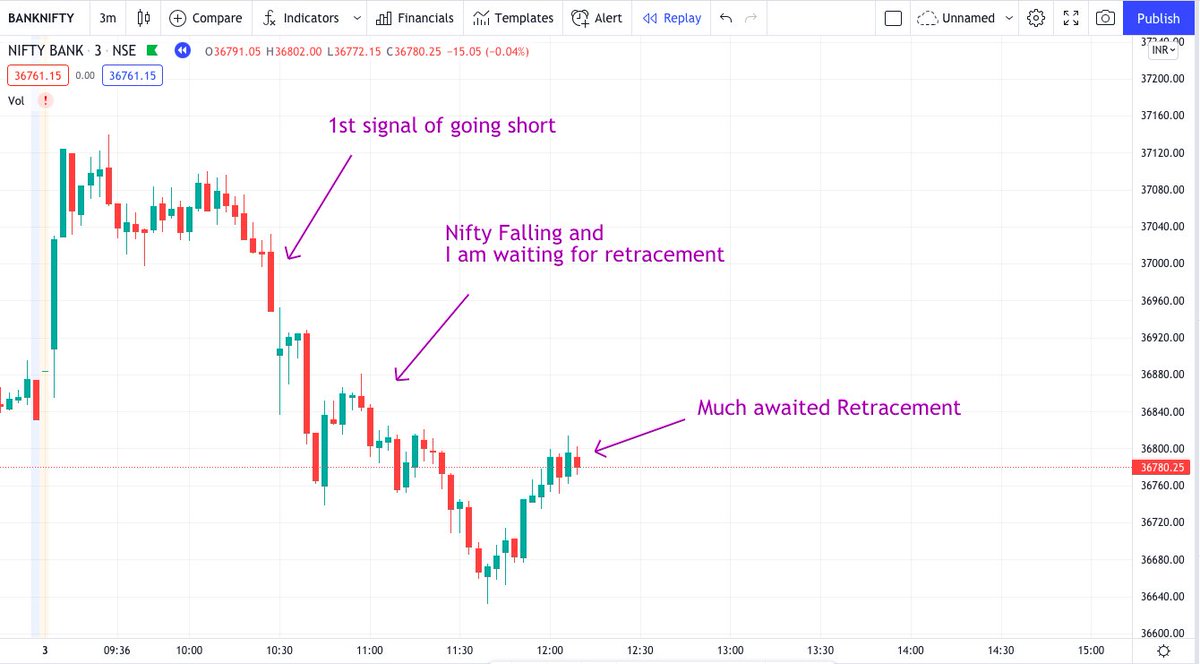
I have taken an example of Friday BNF.

I had committed these mistakes but repaired them immediately!

What lesson I learnt is depicted in last tweet of this thread.

Let me know if you can relate it!

At start of day I saw 2 big Green Candles & made view as Bullish

But, avoids taking trade as I just read that only amateurs trades in first few mins

Now BNF starts turning, I get 1st sign to Short

But didn't enter as my view was bullish & hence waiting for more confirmation
After that I see BNF keeps on falling. Now I realised, I should have shorted at first sign only and starts regretting.

Now, I am having a fear to enter now and hence avoids entering.

Convinced myself that I will short whenever I see a retracement and continues to watch.
Time is already 11.30, People on twitter already started posting SS

Now much awaited retracement comes Up

Now I start doubting if I should enter as I can see Nifty has already fallen a lot, ppl have already booked their profits & posting SS

Again Not Entered & still waiting 😐
Now I see Nifty again started falling.
I again started regretting "Why I did not enter on retracement"

And Finally with all the Regret, Frustration, FOMO entered Short on Break down of day Low.

Already exhausted with all those feeling & now just hoping it will keep going down
You know what happens next
BNF moves UP right after I entered

Now I am in more Regret, more Frustration and starts taking random and REVENGE Trades

The day where I could have gained good profits, I ended up myself in Frustration, Regret.

Just because I did not have any Plan!
That's why you should have trading Plan and Rules with which you make a system!

Making plan is important but sticking to it is more important.

That's why its been said

"Markets are Hardest way of making Easiest Money"

Hence,

"Plan the Trade & Trade the Plan"

More from All

You May Also Like

1/ Here’s a list of conversational frameworks I’ve picked up that have been helpful.

Please add your own.

2/ The Magic Question: "What would need to be true for you


3/ On evaluating where someone’s head is at regarding a topic they are being wishy-washy about or delaying.

“Gun to the head—what would you decide now?”

“Fast forward 6 months after your sabbatical--how would you decide: what criteria is most important to you?”

4/ Other Q’s re: decisions:

“Putting aside a list of pros/cons, what’s the *one* reason you’re doing this?” “Why is that the most important reason?”

“What’s end-game here?”

“What does success look like in a world where you pick that path?”

5/ When listening, after empathizing, and wanting to help them make their own decisions without imposing your world view:

“What would the best version of yourself do”?
1/“What would need to be true for you to….X”

Why is this the most powerful question you can ask when attempting to reach an agreement with another human being or organization?

A thread, co-written by @deanmbrody:


2/ First, “X” could be lots of things. Examples: What would need to be true for you to

- “Feel it's in our best interest for me to be CMO"
- “Feel that we’re in a good place as a company”
- “Feel that we’re on the same page”
- “Feel that we both got what we wanted from this deal

3/ Normally, we aren’t that direct. Example from startup/VC land:

Founders leave VC meetings thinking that every VC will invest, but they rarely do.

Worse over, the founders don’t know what they need to do in order to be fundable.

4/ So why should you ask the magic Q?

To get clarity.

You want to know where you stand, and what it takes to get what you want in a way that also gets them what they want.

It also holds them (mentally) accountable once the thing they need becomes true.

5/ Staying in the context of soliciting investors, the question is “what would need to be true for you to want to invest (or partner with us on this journey, etc)?”

Multiple responses to this question are likely to deliver a positive result.