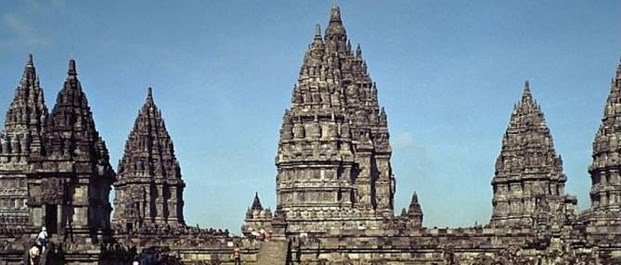
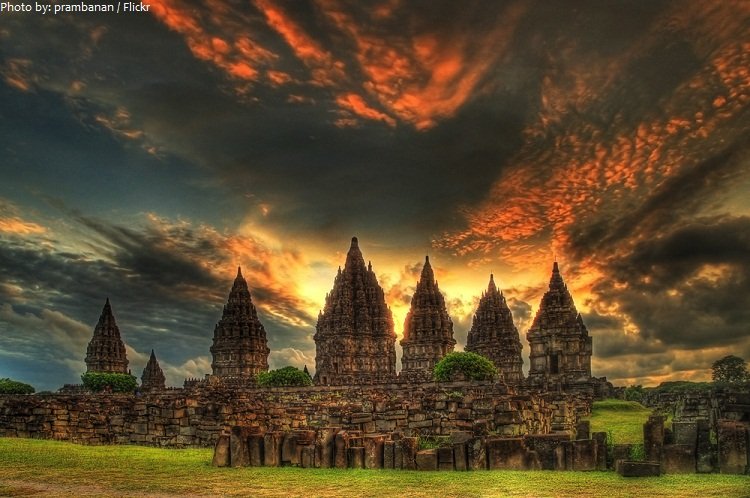
Dedicated to Brahma, Vishnu and Shiva, this temple is believed to have been built in the 9th century.
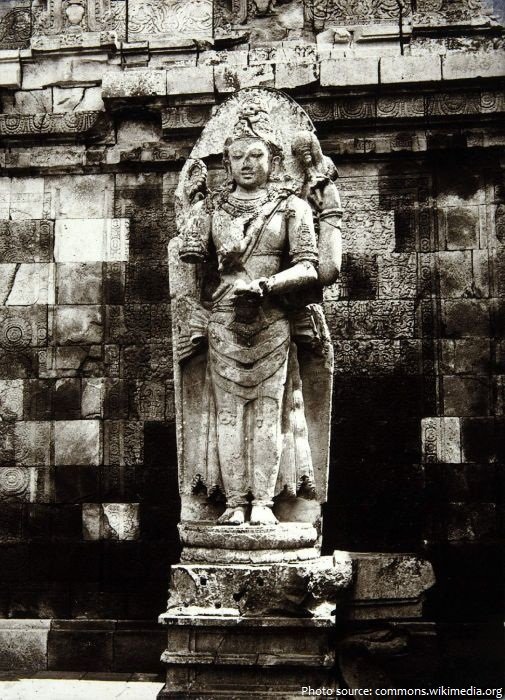
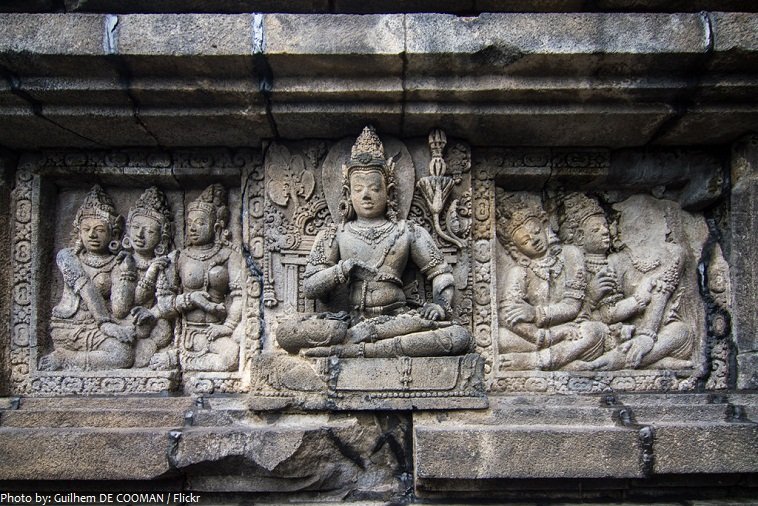
Religious stories and magnificent carvings are carved on the walls of the temple.
Prambanan is the largest and most beautiful Hindu temple complex in Indonesia.
It is the masterpiece of Hindu culture of the ninth century.
Prambanan is a collection of massive Hindu temples (candi) built by the Mataram Kingdom, rulers of central Java and defeaters of the Sailendra Dynasty.
A temple was first built at the site around 850 CE by Rakai Pikatan and expanded extensively by King Lokapala and Balitung Maha Sambu the Sanjaya king of the Mataram Kingdom.
It is dedicated to the Trimurti (Trinity of the formless supreme God), the expression of God as the Creator (Brahma), the Preserver (Vishnu) and the Destroyer (Shiva).
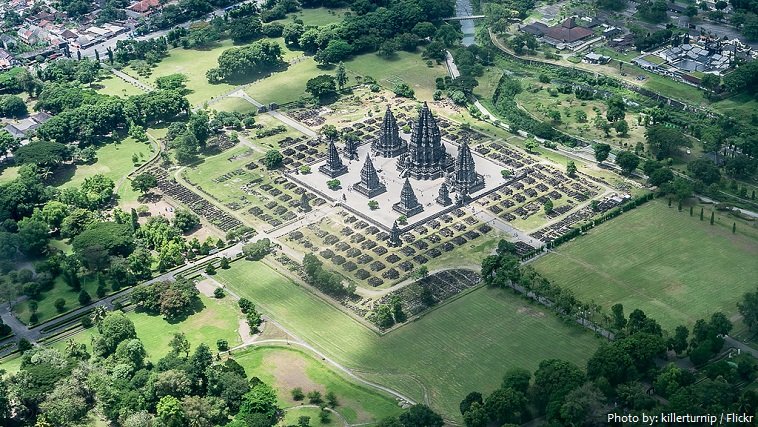
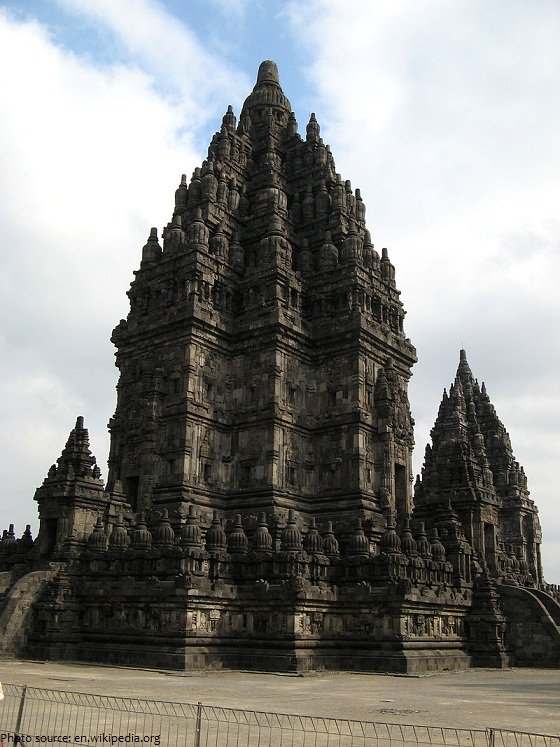
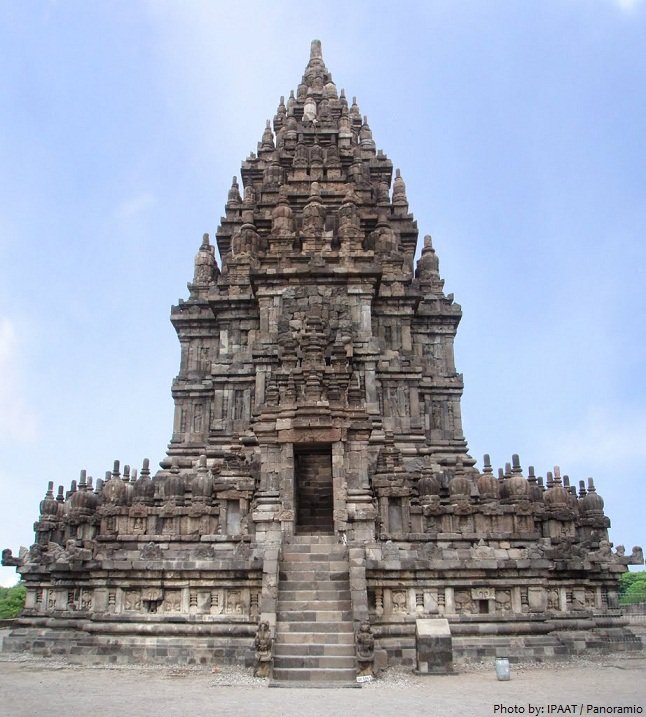
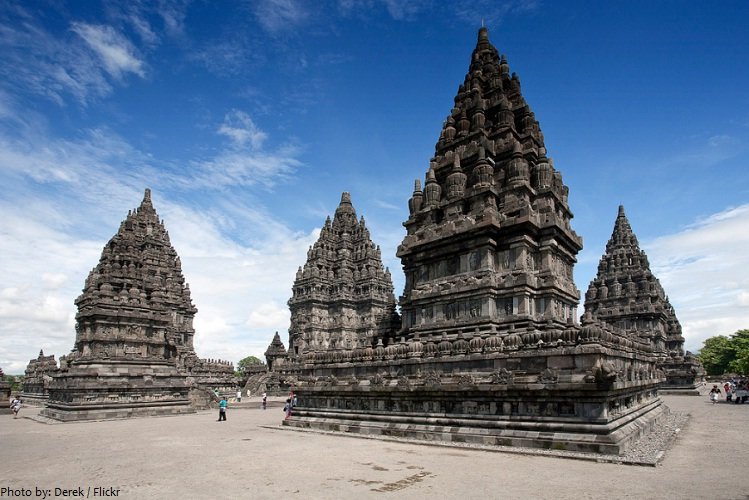
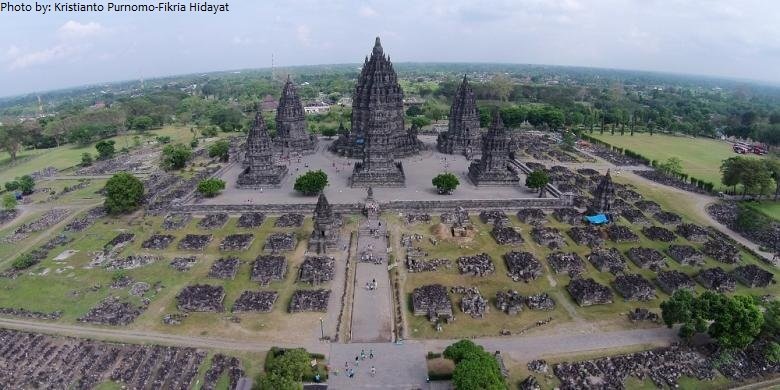
The complex is laid out in the form of a mandala, and features the towering, broad spires that are typical of Hindu temple architecture, and represent Meru, the holy mountain where the gods live.
Originally there were 240 temples in the complex but many of them have deteriorated or been looted leaving just scattered stones.
The Prambanan temple complex consists of three zones; first the outer zone, second the middle zone that contains hundreds of small temples, and third the holiest inner zone that contains eight main temples and likewise, eight small shrines.
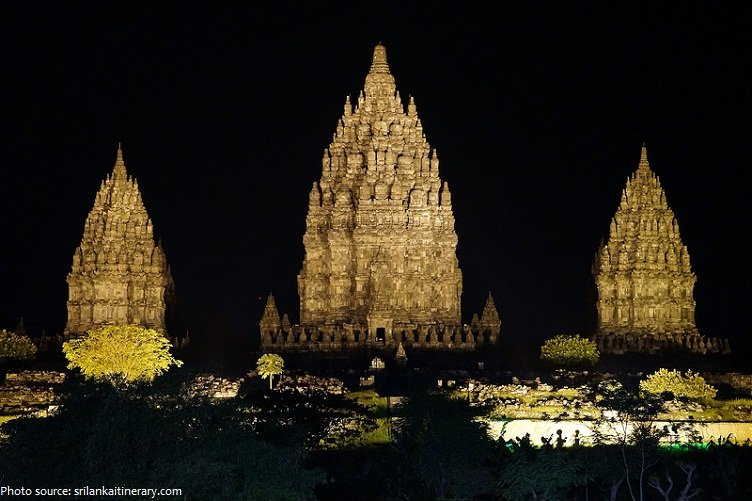
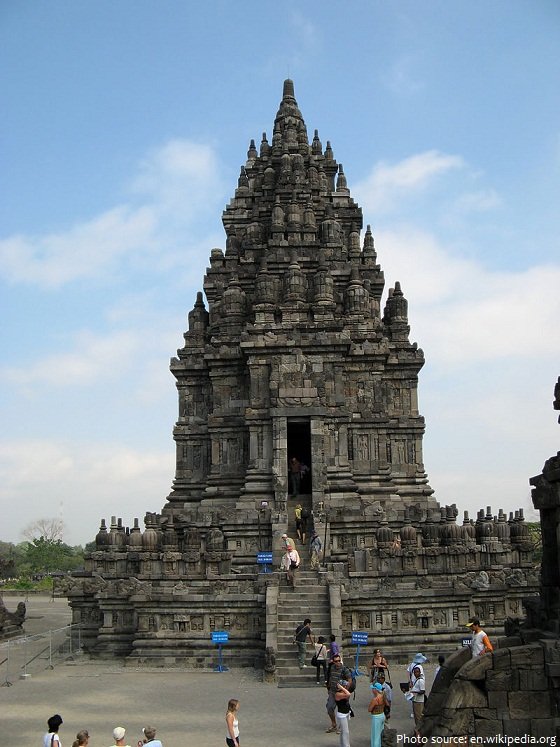
The three main inner shrines are dedicated to Brahma the Creator, Vishnu the Keeper and Shiva the Destroyer.
The three towers cut a striking figure in any conditions, but are perhaps most breathtaking when lit up at night.
The Shiva temple dedicated to Shiva the Destroyer is the tallest and largest structure in Prambanan complex, it measures 47 meters (154 feet) tall and 34 meters (111 feet) wide. Relief sculptures around the perimeter tell the story of the Ramayana.
The Shiva temple contains five chambers, four small chambers in every cardinal direction and one bigger main chamber in central part of the temple. The largest chamber contains a three meter (10 feet) high statue of Shiva Mahadeva.
North of Shiva Temple is Vishnu Temple, dedicated to Vishnu the Preserver. It measures 20 meters (65 feet) wide and 33 meters (108 feet) tall. Relief sculptures around its perimeter tell the story of Lord Krishna, an avatar of Vishnu.
South of Shiva Temple is Brahma Temple, dedicated to Brahma the Creator. It also measures 20 meters (65 feet) wide and 33 meters (108 feet) tall. Relief sculptures around the perimeter tell the story of the Ramayana.
The narrative bas-relief panels was carved along the inner balustrades wall on the gallery around the three main temples.
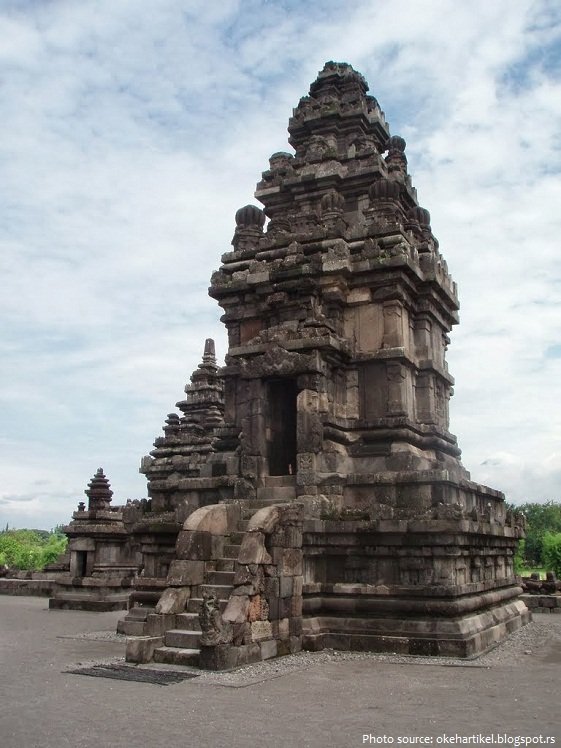
The other three shrine in front of three main temples is dedicated to vehicle (vahana) of the respective gods – the bull Nandi for Shiva, the sacred swan Hamsa for Brahma, and Vishnu’s Kite Garuda.
Between these row of main temple, on north and south side stands two Candi Apit temples. Apit in Javanese means “flank”, it refer to the two temples position that flanked the inner courtyard in north and south sides.
The middle zone consists of four rows of 224 identical, concentrically arranged shrines. Most of these are in ruins but a few have been fully restored. These shrines are called Candi Perwara (guardian temples).
The outer zone is a large open space that was once bounded by a large wall (long gone). The function of this space is disputed but was probably either a park/relaxation garden or the site of an ashram for temple priests brahmins.
The other name of this temple is the Lorojonggrang temple.
A major earthquake in the 16th century caused serious damage to the already crumbling and largely forgotten temples.
The British rediscovered Prambanan, along with Borobudur, in the early 19th century.
Half-hearted excavations by archaeologists in the 1880s facilitated looting. In 1918, the Dutch began
reconstruction of the compound and proper restoration only in 1930. Efforts at restoration continue to this day.
The reconstruction of the main Shiva temple was completed around 1953 and inaugurated by Sukarno (the first President of Indonesia).
Prambanan was selected as a UNESCO World Heritage Site in 1991.
Prambanan attracts many visitors from around the world.