How Loom grew from 0-500K users, and beyond:

[Part 1 of 2]

First, some context:

- Loom was founded in 2015 by @yoyo_thomas, @vhmth, and myself

- Fascinated by video in the workplace and wanted to build use cases against it.

- We built a user testing marketplace (failed) → pivoted to SaaS (failed) → Loom ($325M valuation 5/'20)
Launch (0-3K users)

- Launched on @ProductHunt, social media, etc

- Launch week growth was a result of us being the #1 product of the day on PH

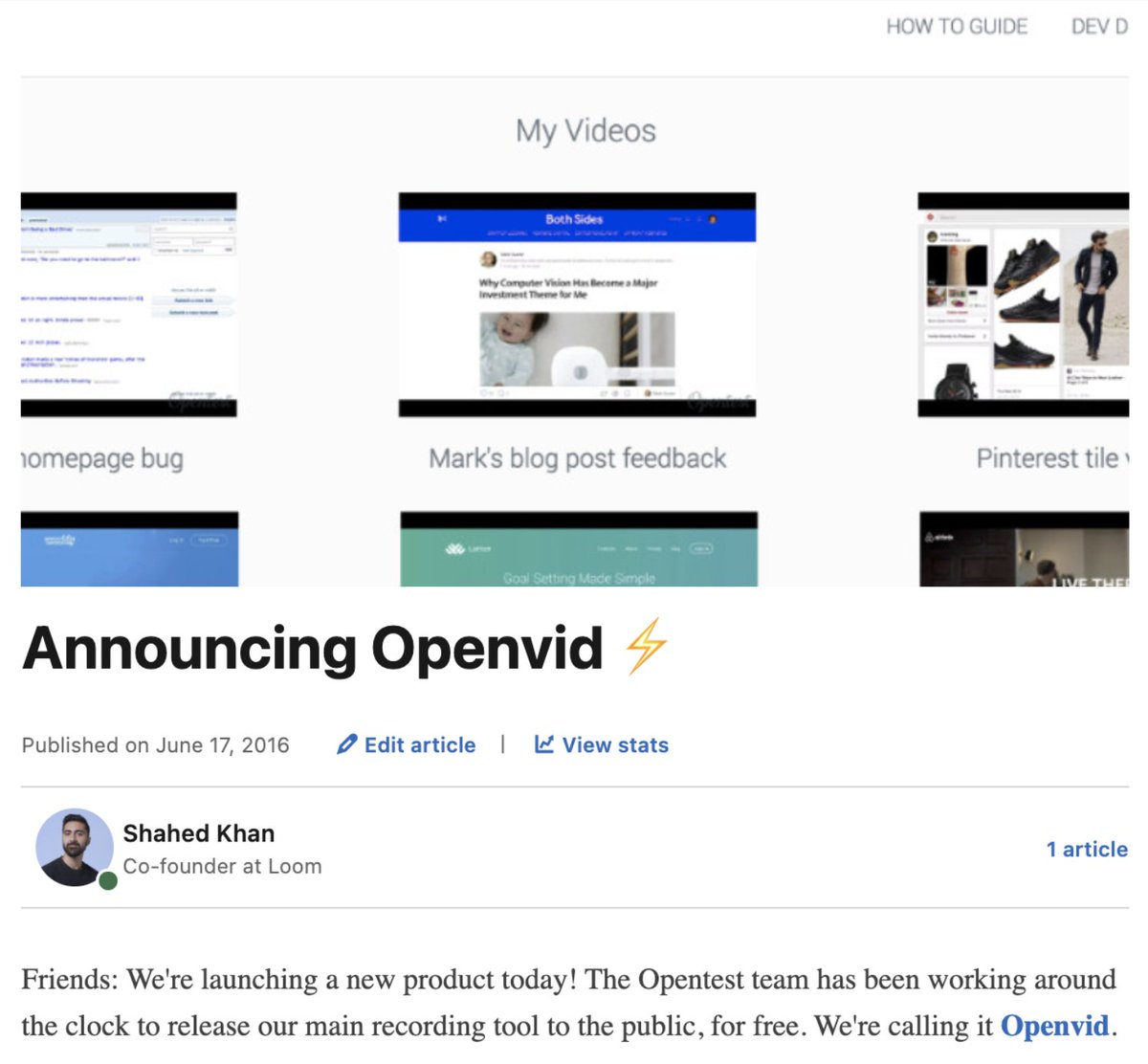
- If you want to learn how we converted our launch traffic into real users, @vhmth wrote an excellent piece:

https://t.co/VDxG5lDa5U
Understanding early growth (3-10K users)

- Given the product was entirely horizontal, we needed to understand our key personas.

- We emailed *all* users a short survey and asked respondents for a 10 min call to talk through their use cases.

Personas we identified:
Building & testing early experiments (10-25K users)

- In parallel, we started to introduce early growth levers to drive more users to the product.

- 1st experiment: Video player watermark (for embeds, downloads, etc)

- 2nd experiment: End of Video CTA (still live today)
Onboarding checklist (25-100K users)

Understood our leading indicator & turned it into a "Get Started" checklist that encouraged new users to:

- Verify their email
- Record their first Loom
- Customize the Loom
- Share their Loom with a colleague
- Enable browser notifications
Onboarding checklist [cont.]

What did we learn? People love completing checklists.

We experimented *a lot* with this checklist:

- Order we displayed our checklist items
- Added a "% complete" in the navigation
- Collapsable widget on your video page with remaining items
- etc
Next week, I'll talk about how Loom grew from 100k-500K users.

I'll dive into how we began to scale, our referral program, use cases, and how we built 1:1 relationships with our early champions.

Be sure to follow me to not miss out on the next tweet 🙂

More from All

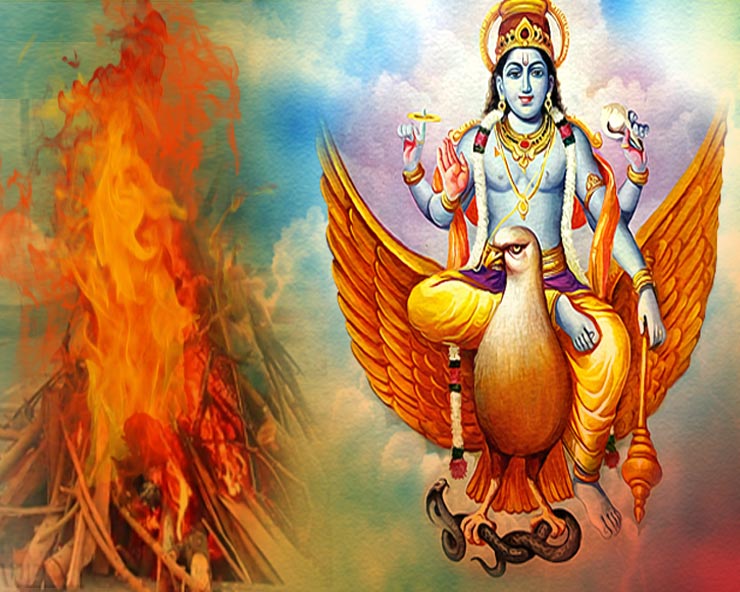
🌺श्री गरुड़ पुराण - संक्षिप्त वर्णन🌺

हिन्दु धर्म के 18 पुराणों में से एक गरुड़ पुराण का हिन्दु धर्म में बड़ा महत्व है। गरुड़ पुराण में मृत्यु के बाद सद्गती की व्याख्या मिलती है। इस पुराण के अधिष्ठातृ देव भगवान विष्णु हैं, इसलिए ये वैष्णव पुराण है।


गरुड़ पुराण के अनुसार हमारे कर्मों का फल हमें हमारे जीवन-काल में तो मिलता ही है परंतु मृत्यु के बाद भी अच्छे बुरे कार्यों का उनके अनुसार फल मिलता है। इस कारण इस पुराण में निहित ज्ञान को प्राप्त करने के लिए घर के किसी सदस्य की मृत्यु के बाद का समय निर्धारित किया गया है...

..ताकि उस समय हम जीवन-मरण से जुड़े सभी सत्य जान सकें और मृत्यु के कारण बिछडने वाले सदस्य का दुख कम हो सके।
गरुड़ पुराण में विष्णु की भक्ति व अवतारों का विस्तार से उसी प्रकार वर्णन मिलता है जिस प्रकार भगवत पुराण में।आरम्भ में मनु से सृष्टि की उत्पत्ति,ध्रुव चरित्र की कथा मिलती है।


तदुपरांत सुर्य व चंद्र ग्रहों के मंत्र, शिव-पार्वती मंत्र,इन्द्र सम्बंधित मंत्र,सरस्वती मंत्र और नौ शक्तियों के बारे में विस्तार से बताया गया है।
इस पुराण में उन्नीस हज़ार श्लोक बताए जाते हैं और इसे दो भागों में कहा जाता है।
प्रथम भाग में विष्णुभक्ति और पूजा विधियों का उल्लेख है।

मृत्यु के उपरांत गरुड़ पुराण के श्रवण का प्रावधान है ।
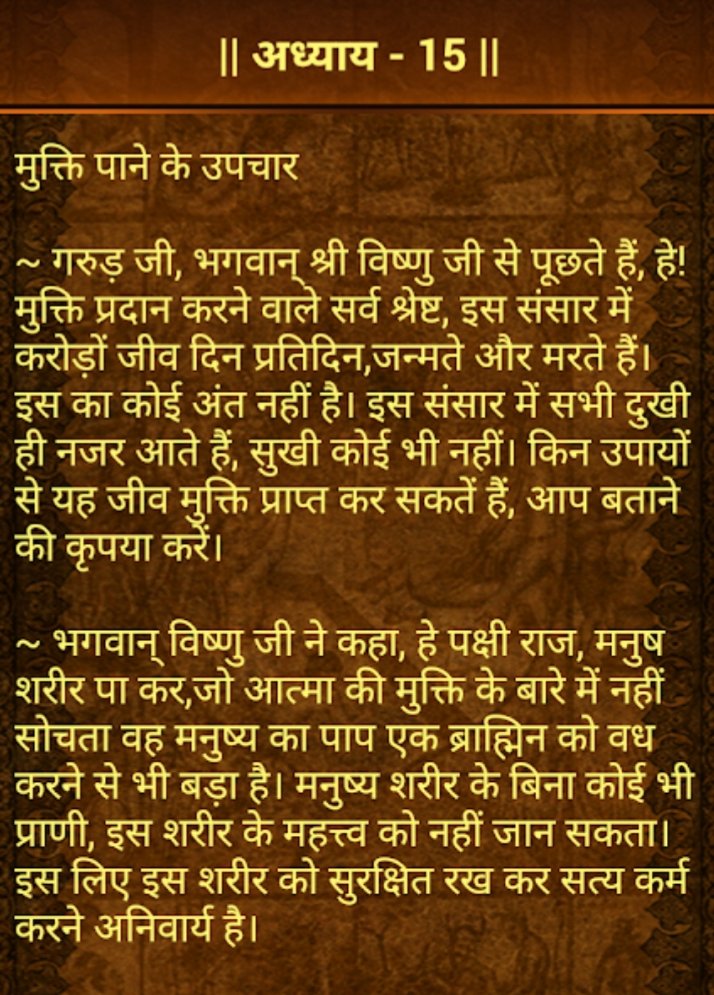
पुराण के द्वितीय भाग में 'प्रेतकल्प' का विस्तार से वर्णन और नरकों में जीव के पड़ने का वृत्तांत मिलता है। मरने के बाद मनुष्य की क्या गति होती है, उसका किस प्रकार की योनियों में जन्म होता है, प्रेत योनि से मुक्ति के उपाय...

You May Also Like