ThomassRichards Categories Society



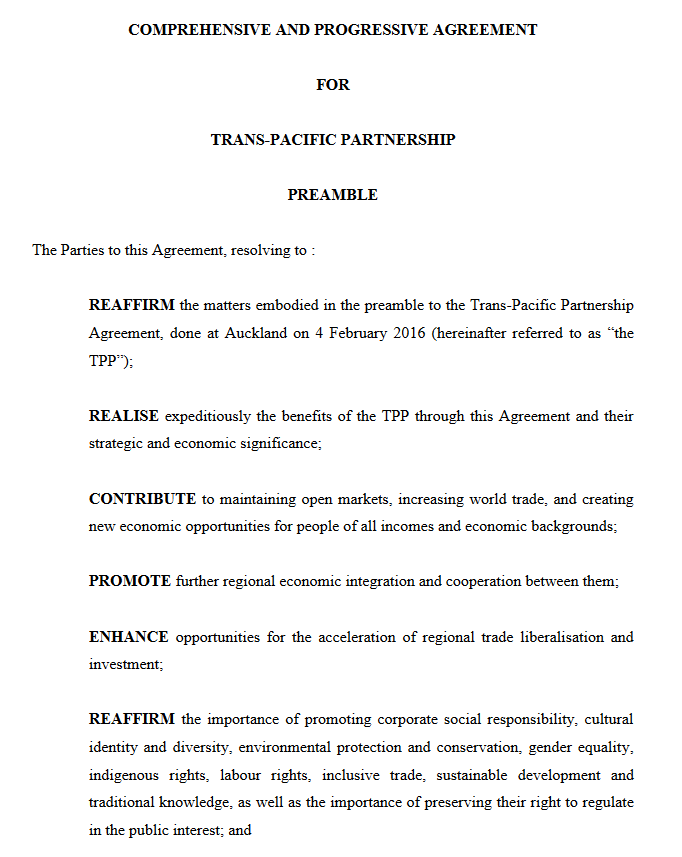
One way of finding out what it is: look at the text.
Here goes.
It doesn’t have a Secretariat so the text is published by each govt. Google “CPTPP text”
1/13
New Zealand is a good place to start. It has the text by chapter, 30 of them: https://t.co/UvtW9wgRky
(Canada has summaries by chapter: https://t.co/PswL4vt3WD)
#CPTPP
2/13
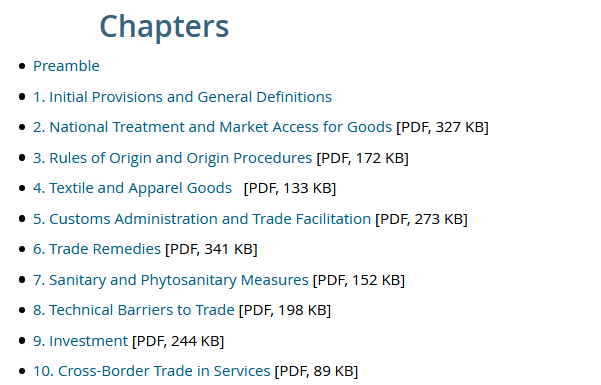
“Wow! 30 chapters. Better start reading”
“Hang on. There’s more.”
https://t.co/UvtW9wgRky
#CPTPP
3/13
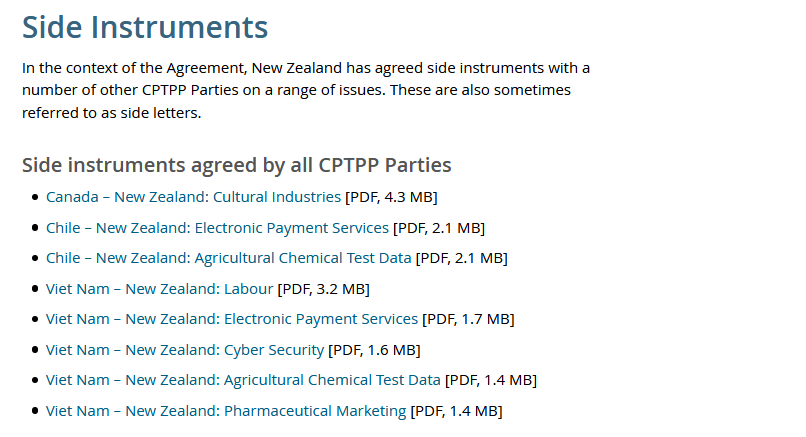
“Right. Is that it?”
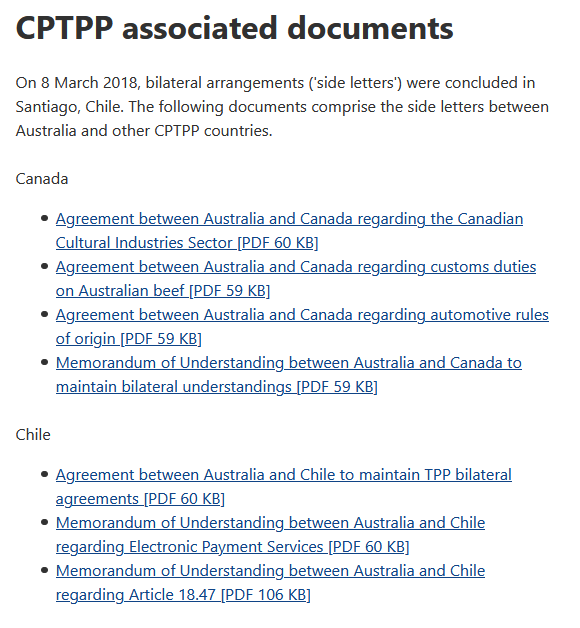
“Those are only the side agreements involving New Zealand. Here are Australia’s”
https://t.co/1Rav6hI3zZ
#CPTPP
4/13
“Er, how many members does #CPTPP have?”
"Eleven.
“Don’t worry. We’re not going through all the side agreements.
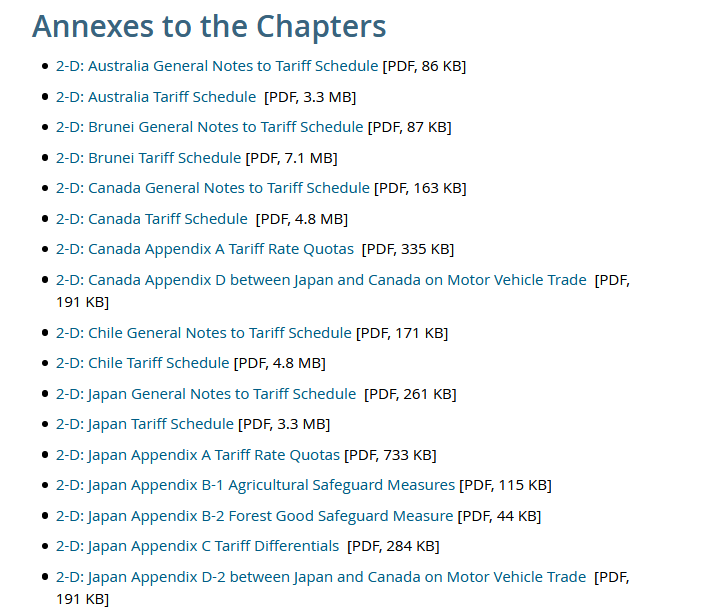
“But these next bits are important. The Annexes. Annex 2-D contains the tariff commitments of each country.”
https://t.co/UvtW9wgRky
#CPTPP
5/13




The Equality & Diversity Monitoring form in your job application asks for the 'gender' of the applicant with options:
Male
Female.
However...
https://t.co/Did1oeP6tH
1/9

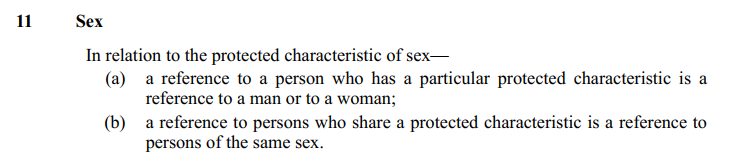
'Gender' is not a protected characteristic under the Equality Act 2010 and is not defined in the Act.
https://t.co/qisFhCiV1u
2/9
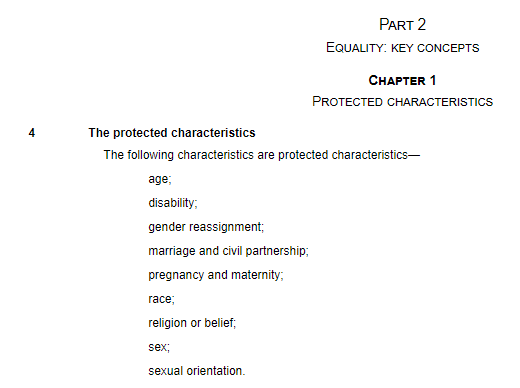
Sex is the protected characteristic and the only two possible options for sex are 'Female' and 'Male' as defined in the Act and consistent with biology, but you don't ask for that.
https://t.co/CEJ0gkr6nF
'Gender' is not a synonym for sex.
3/9
'Gender' relies on demeaning, regressive stereotypical notions of societal roles for the two sexes, concepts that I'm sure you would not wish to be associated with.
4/9
Asking about a personal characteristic such as 'gender' that is not a protected characteristic under the Act, may be in breach of the GDPR by processing personal - and potentially Special Category - data without a lawful basis.
5/9


So has Leeze convinced the SNP that the abuse is from a fake account? “Nowt to do with me, Guv?” Leeze’s account name used to be @Miss_Leeze, it's now @Ms_Leeze, apparently it's an attempt to deny association with the vile bile, archived below: 2/19
The trans activist Leeze Lawrence posted racist tweets then deleted them then claimed they were fake. Unfortunately for Leeze she has a lot more racist tweets as yet undeleted but this time they're archived. It's shocking stuff. Here's a thread with links to archive and originals pic.twitter.com/n2lWxkVISR
— The *Real* History Woman (@historywoman) June 23, 2019



A lot to unpack...but we’re in the middle of a pancetta so I’m gonna leave most of it in the bag 🧵
https://t.co/XrV77u6rUp

I almost quit after the section on “Racial Categorizations in the United States” b/c it oversimplifies & inaccurately recounts the history of census racial designations.
(No “Black” or “Native” in the 8/2/1790 census, btw. Indigenous ppl were first counted in the 1860 census)
The 1790 census grouped people as free white men, free white women, other free persons and slaves without a specific race question. Then 100 years, the crazy had reached a peak with White, Black and three gradations of white/black admixture in between.
— Lachelle Dawn (@Lachelle_Dawn) June 3, 2020
Many weren’t “white” until coming to the US & many immigrated to access “whiteness”
The US census can’t be used to demonstrate the merits of race as a proxy for biology or ancestry - white is a group for the non-Black/non-othered & includes Northern European & North African folx
The authors then refer to ethnicity as a way to capture “common values, cultural norms”
The oversimplification is offensive. Hispanic/Latino is not a monolithic grouping of people. The authors even show in (figure 1) how different ancestry can be *within* this ethnic group.
That difference in ancestry translates to VERY different cultures in terms of food, customs, & even language. Sociopolitical relations also translate to different ways that people are treated based on the precise origins of their Hispanic identity.

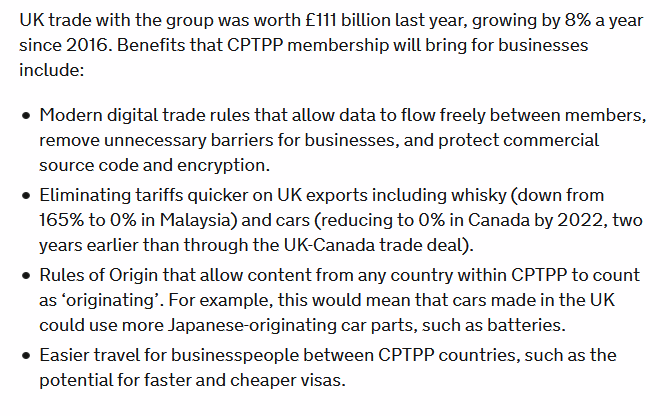
Tomorrow we will formally apply to join #CPTPP \U0001f1ec\U0001f1e7
— Liz Truss (@trussliz) January 31, 2021
Membership will help drive an export- led, jobs-led recovery across \U0001f1ec\U0001f1e7 bringing more opportunities to trade with fast growing Pacific nations. \U0001f30e
Read more here\U0001f447https://t.co/5sQhgW4vCM
Here's my more realistic take on CPTPP. Economic gains limited, but politically in terms of trade this makes some sort of sense, these are likely allies. DIT doesn't say this, presumably the idea of Australia or Canada as our equal upsets them.
Gather UK application to join CPTPP is finally about to be announced, not that it was exactly a secret. Economic value limited given distance and existing UK deals, not a particularly strong or modern agreement in areas of UK strength like services, but...
— David Henig (@DavidHenigUK) January 30, 2021
As previously noted agriculture interests in Australia and New Zealand expect us to reach generous agreements in WTO talks and bilaterals before acceding to CPTPP. So this isn't a definite. Oh and Australia wants to know if we'll allow hormone treated beef
Ultimately trade deals are political, and the UK really wants CPTPP as part of the pivot to indo-pacific, and some adherents also hope it forces us to change food laws without having to do it in a US deal (isn't certain if this is the case or not).
If we can accede to CPTPP without having to make changes to domestic laws it is fine. Just shouldn't be our priority, as it does little for services, is geographically remote, and hardly cutting edge on issues like climate change or animal welfare.

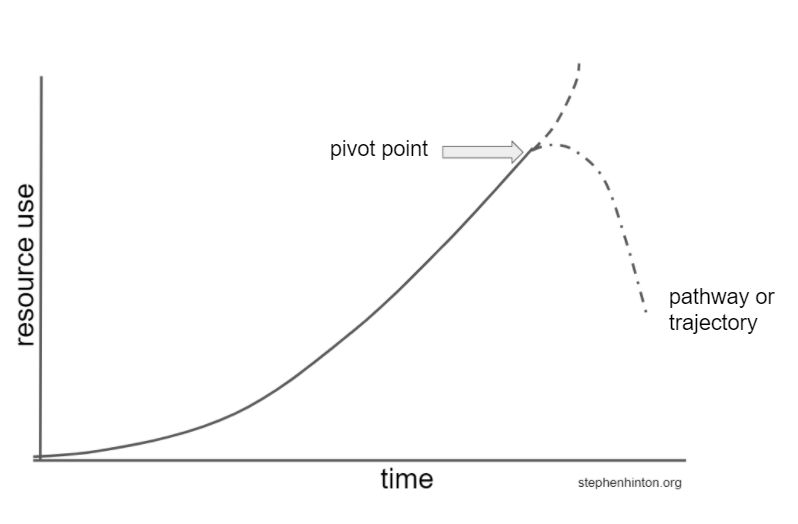
We all did this as kids: Walk up a see-saw, you keep going fine until you cross the fulcrum then WHAM! It flips.This is what happens in nature when resources are used up faster than they are replenished. All goes fine until nearly half are used up. All who study biology know..2/
This flip is a population crash. It is natural. Important to know: the crash comes after the point where more resources are being used up than are being replenished. There is a period of overshoot. The crash comes some time after overshoot. Can that happen to humans? 3/
According to Joseph Tainter (1988) there have been three:
Ancient Rome
Mayan Civilisation
Ancestral Puebloans
Modern society is exhibiting all the signs (Club of Rome 1972) 4/
https://t.co/ND85PXV9MB
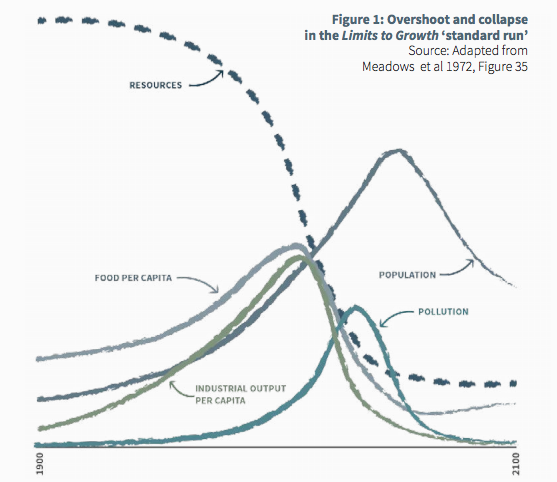
All of this is well-known by scholars. But somehow it does not seem to have sunk in with citizens in general. The urgency. So let me say it again in a retweet-worthy way 5/