Revelations of Former FO Spokesperson Tasnim Aslam regarding the role of INGOs endorse James Peck's claims about convergence of US Foreign Policy & Human Rights.

[1]
How INGOs suspiciously operate in Pakistan | A discussion with ex-civil ... https://t.co/zxQWuCEZVy via @YouTube

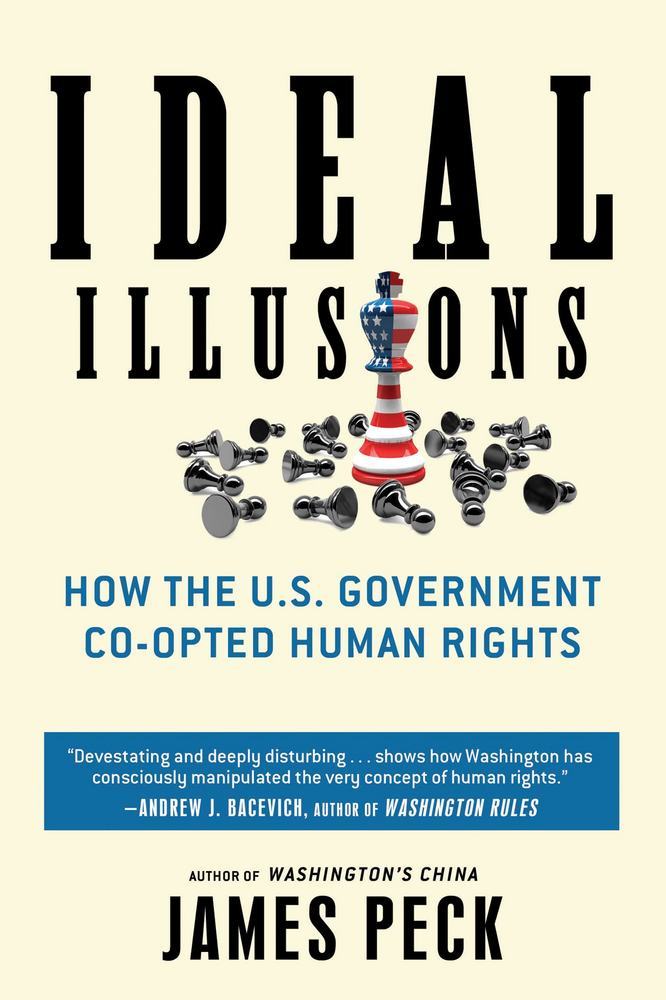
James Peck in his book, “Ideal Illusions: How the U.S. Government Co-opted Human Rights” argues that US Foreign Policy and human rights industry is interconnected and is being used as an ideological weapon.

[2]
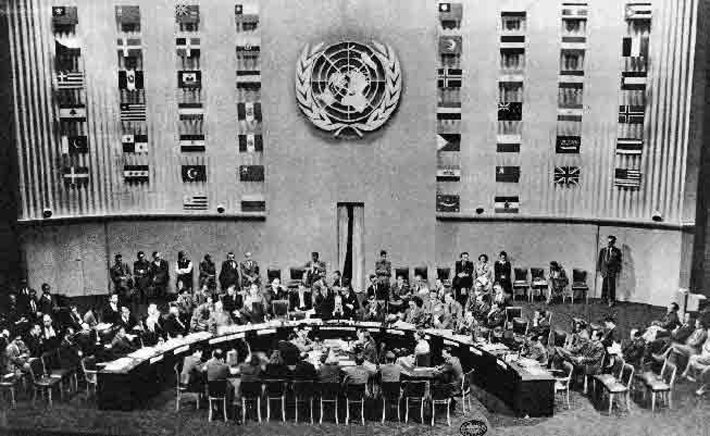
From the moment when Universal Declaration of Human Rights has been signed in 1948 in response to Nazi atrocities, human rights are being used to extend American global reach.

By condemning Amnesty International, Human Rights Watch and other human rights groups

[3]
with legal outfits for downplaying economic and social discriminations, Peck reveals that humanitarian interventions in US military adventures in Vietnam, Iraq and other places serve as pretexts for invasions to ‘legalize’ US prerogative of intervention while ignoring

[4]
the illegitimacy of intervention and the violence it causes.

In words of Peck, “The widely heralded rise of human rights is not free of such complications. For the history of human rights in the United States—as a movement, as an impassioned language of good intentions,

[5]
and as an invocation of American idealism—owes far more to the inner ideological needs of Washington’s national security establishment than to any deepening of conscience effected by the human rights movement.

[6]
Thousands of national security documents (from the CIA, the National Security Council, the Pentagon, think tanks, and U.S. government development agencies) reveal how Washington set out after the Vietnam War to craft human rights into a new language of power designed to

[7]
promote American foreign policy. They shed light on the way Washington has shaped this soaring idealism into a potent ideological weapon for ends having little to do with human rights—and everything to do with extending America’s global reach.”

[8]
While addressing ‘Terrorism and the Pathology of American Power’ in ‘Changing the Islamic World’, Peck highlights how, “The George W. Bush administration fused the aims of democratization, human rights, and regime change with a “War on Terror” to create the most formidable

[9]
fighting faith since anticommunism.” Since, “What Washington and human rights groups saw as a commitment to “universal values” Muslims saw as a war against their faith.” Therefore, “Washington’s task was to fashion the “war of ideas” so as to sustain policies

[10]
that it had little intention of changing—a conundrum that inevitably led to contradictory tactical maneuvering and the usual charges of “misperception”.

Peck is of the view that, “Washington was also far more blunt about what it means to handle the “processes of change.”

[11]
“Imagine a large map of the world,” said the chairman of the National Intelligence Council. “Let’s say we stick a pin in every country that had a low per capita income. And another for a high rate of infant mortality. Another for a sizable ‘youth bulge’…

[12]
And another pin to mark an absence of political freedoms and participatory government.” What have you got at the end of this exercise? “A large number of vulnerable states—many in the Muslim world.”

[13]
Peck here includes a comment by a task force, “the United States is not seeking to contain a threatening state/empire, but rather to convert a broad movement within Islamic civilization to accept the value structure of Western modernity—

[14]
an agenda hidden within the official rubric of a ‘War on Terrorism’. Democratization, in short, was a code word for support of “secular moderates linked to us—an admittedly scarce breed in the Arab world.”

[15]
For this purpose, in words of Peck, “Secular business people and middle-class professionals are the “strongholds of opposition to extremism … the first building blocks … that could be the basis of a democratic cadre and an indigenous force for nonviolent change.”

[16]
Policies thus should focus on reaching, sustaining, and building local Muslim “networks” (the precursor to “civil society”), and promoting local NGOs in order to “extend our reach into the core of the societies and help us to find allies who share our passion for wider

[17]
participation in society and the economy with special concern for the inclusion of youth and women.
Hence, “Washington, in short, sought “the development of a new class that could change the political and social balance in these countries” by fashioning an individualist

[18]
ethos into a culturally seductive package. The focus was not on the nation or the civilization or the faith but, rather, on “personal control, choice, and change, personal mobility, meritocracy, individual rights (and particular women’s rights).”
To know more about how foreign development aid is exploited by INGOs for policy interventions in Pakistan's education sector, see this👇
https://t.co/Y70nefGyRb
Has foreign development aid been weaponized?

Are policy interventions due to foreign development aid for education a matter of great concern?

Are INGO's working to achieve strategic objectives?

See this 👇
https://t.co/Zg3X0yXyMf

More from World

I'll bite, Mr. Gray. We can even play by your rather finicky rules.

Let's begin with some of the things you have said about Xinjiang, notably absent from your more recent media appearances, but still present in your blog about your 2014 biking trip.


The following is taken from an ongoing list I keep of people who have been to Xinjiang and written/spoken about their experiences. It is separate from the testimony of detainees and their relatives I also keep. Jerry is on this

Jerry, your article for CGTN, as well as your various Medium pieces, belabor themselves to emphasize the smoothness of your time in Xinjiang. Why did you leave out so many details from your log of your 2014 trip? They seem relevant.

For example, would CGTN not let you speak about Shanshan, the town that evidently disturbed you so much?


Why, pray tell, after noting how kind and hospitable Xinjiang police were to you in 2019 for CGTN—and how you were never told where you could or could not go—would you omit these details?
"MLs" do support the proletariat of Xinjiang & have the whole time. People like @Tursunali_7 & @GulnarNorthwest (and many others) who show the world the real Xinjiang via their everyday videos.

Shopkeepers like in this video below say

"Pompeo, we Xinjiang people hate you."


Or everyday working people like Zaynura Namatqari, who speak out against vicious & disgusting US lies and accusations about


.@qiaocollective have a brilliant thread of everyday proletarian Uyghurs speaking out against the harassment they face from the US and their paid


'Uyghur proletariat' looks like this:


Not like this: (photo from a pro Islamist separatist protest in Turkey in 2017)

You May Also Like

MASTER THREAD on Short Strangles.

Curated the best tweets from the best traders who are exceptional at managing strangles.

• Positional Strangles
• Intraday Strangles
• Position Sizing
• How to do Adjustments
• Plenty of Examples
• When to avoid
• Exit Criteria

How to sell Strangles in weekly expiry as explained by boss himself. @Mitesh_Engr

• When to sell
• How to do Adjustments
• Exit


Beautiful explanation on positional option selling by @Mitesh_Engr
Sir on how to sell low premium strangles yourself without paying anyone. This is a free mini course in


1st Live example of managing a strangle by Mitesh Sir. @Mitesh_Engr

• Sold Strangles 20% cap used
• Added 20% cap more when in profit
• Booked profitable leg and rolled up
• Kept rolling up profitable leg
• Booked loss in calls
• Sold only


2nd example by @Mitesh_Engr Sir on converting a directional trade into strangles. Option Sellers can use this for consistent profit.

• Identified a reversal and sold puts

• Puts decayed a lot

• When achieved 2% profit through puts then sold
Following @BAUDEGS I have experienced hateful and propagandist tweets time after time. I have been shocked that an academic community would be so reckless with their publications. So I did some research.
The question is:
Is this an official account for Bahcesehir Uni (Bau)?


Bahcesehir Uni, BAU has an official website
https://t.co/ztzX6uj34V which links to their social media, leading to their Twitter account @Bahcesehir

BAU’s official Twitter account


BAU has many departments, which all have separate accounts. Nowhere among them did I find @BAUDEGS
@BAUOrganization @ApplyBAU @adayBAU @BAUAlumniCenter @bahcesehirfbe @baufens @CyprusBau @bauiisbf @bauglobal @bahcesehirebe @BAUintBatumi @BAUiletisim @BAUSaglik @bauebf @TIPBAU

Nowhere among them was @BAUDEGS to find