1. Listen to various competitors
2. Put your neck on the line (invest your hard earned capital - experience comes by paying tuition fee)
3. Read non-investing books as well (Psychology, history, biographies or whatever non-fiction you like)
4. Read this :
https://t.co/6z3HvtKakL
How to augment your Sector knowledge? Follow these 5 points \U0001f447
— Conviction | Patience (@unseenvalue) May 18, 2019
1. The Five Rules For Successful Stock Investing by Pat Dorsey
2. Con Calls - as many as you can in that sector
3. Annual Reports - as many as you can in that sector
4. Interact with trade/channel partners
5. AGMs pic.twitter.com/2ZOx3nkC4i
More from Conviction | Patience
The Almanack of Naval Ravikant
The Psychology of Money
The Wealth of common sense
Masterclass with super investors
100 Baggers
Which are the books in your re-read list?
— Investment Books (@InvestmentBook1) October 8, 2021
Mine as Follows \U0001f447
The Psychology of Money
The Wealth of common sense
100 Baggers
Once upon a wall street
Masterclass with super investors
Atomic Habits
Richer, Wiser, Happier
More from Uvlearnings

https://t.co/hItmOud8Pm
#Hikal has stepped up R&D in recent years. Next few years (capex & launches) should yield superior earnings. Wish them all the luck \U0001f44d
— Sajal Kapoor (@unseenvalue) September 26, 2020
D: invested and biased view for sure, but it was below 1x price to sales vs 12x price to sales for many chemicals and generic players. No reco!! pic.twitter.com/aqPUKbziHK
3rd time for me personally
Every sector (Manufacturing, Textiles, Foods, Consumer Products, Materials & Renewable Chemicals, Life Sciences and so on will be impacted by Bioeconomy. Must study ... !)
— Conviction | Patience (@unseenvalue) July 28, 2021
Industry 5.0 Vision 2 \U0001f9ec @soicfinance
[Explained from timestamp 2:41:38 onwards]https://t.co/qgXiH9PdBH
You May Also Like







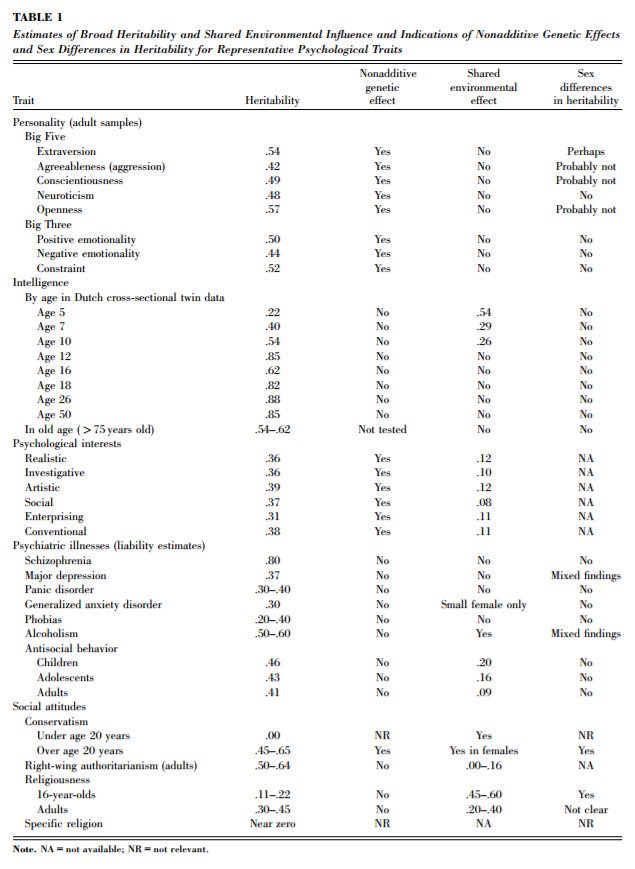
1. IQ is one of the most heritable psychological traits – that is, individual differences in IQ are strongly associated with individual differences in genes (at least in fairly typical modern environments). https://t.co/3XxzW9bxLE
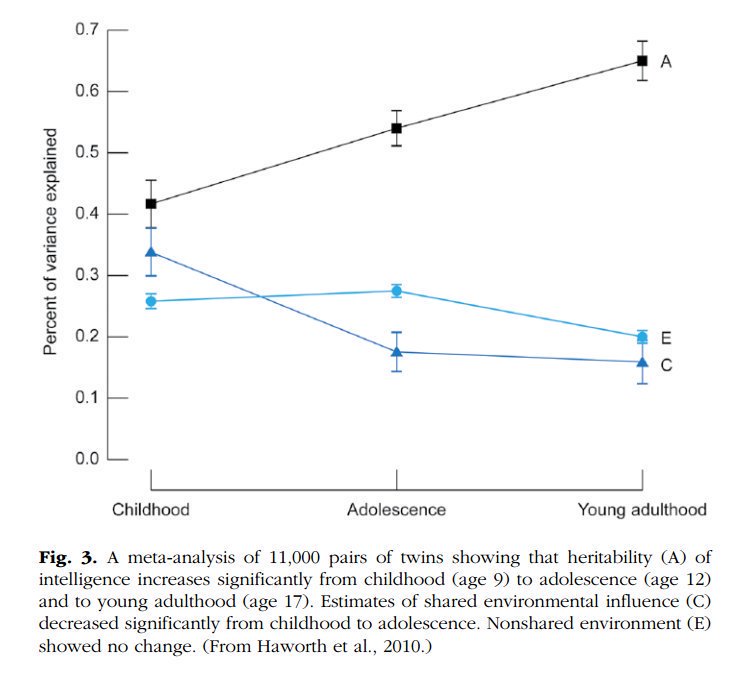
2. The heritability of IQ *increases* from childhood to adulthood. Meanwhile, the effect of the shared environment largely fades away. In other words, when it comes to IQ, nature becomes more important as we get older, nurture less. https://t.co/UqtS1lpw3n
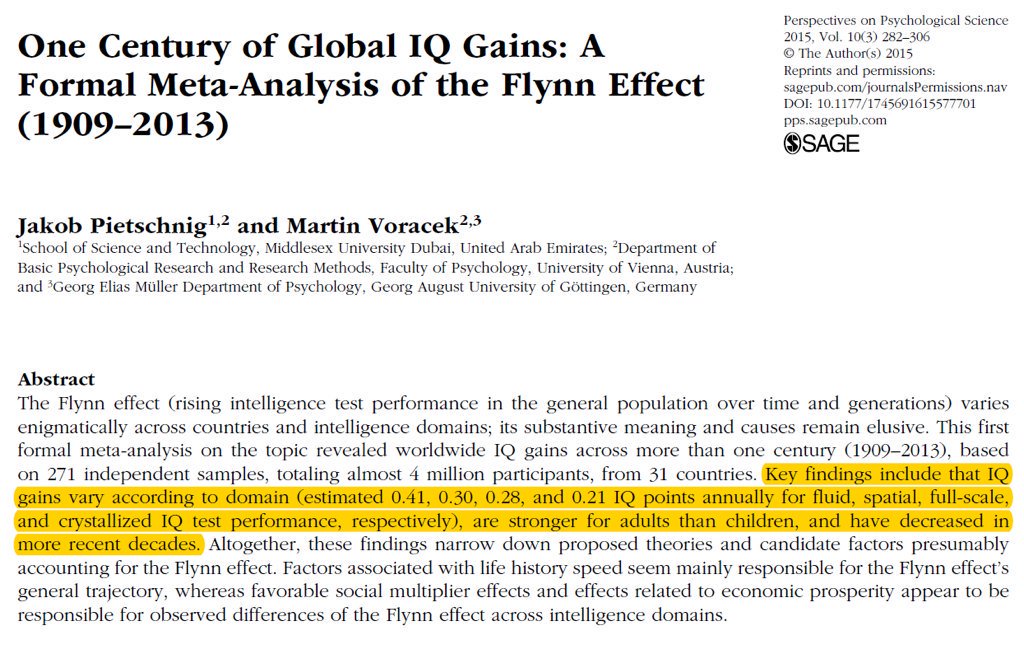
3. IQ scores have been increasing for the last century or so, a phenomenon known as the Flynn effect. https://t.co/sCZvCst3hw (N ≈ 4 million)
(Note that the Flynn effect shows that IQ isn't 100% genetic; it doesn't show that it's 100% environmental.)
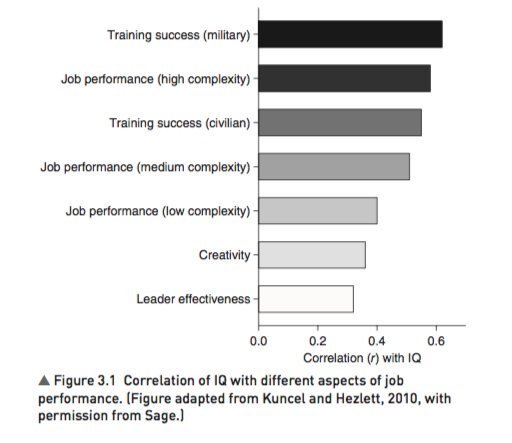
4. IQ predicts many important real world outcomes.
For example, though far from perfect, IQ is the single-best predictor of job performance we have – much better than Emotional Intelligence, the Big Five, Grit, etc. https://t.co/rKUgKDAAVx https://t.co/DWbVI8QSU3
5. Higher IQ is associated with a lower risk of death from most causes, including cardiovascular disease, respiratory disease, most forms of cancer, homicide, suicide, and accident. https://t.co/PJjGNyeQRA (N = 728,160)