
There's growing willingness to acknowledge the ways in which Trump's work of building and clinging to power resemble Hitler's. Good.
But this week the history that keeps flashing in my mind isn't Nazi Germany, it's pre-WWII Japan's May 15 Incident.
A thread. 1/
https://t.co/figNeR7vgi
https://t.co/gW9ofYg8Ur
https://t.co/IGa5mdB3qw
Historian of coups and right-wing authoritarians here. If there are not severe consequences for every lawmaker & Trump govt official who backed this, every member of the Capitol Police who collaborated with them, this "strategy of disruption" will escalate in 2021
— Ruth Ben-Ghiat (@ruthbenghiat) January 7, 2021
More from Trump

It’s not clear how Dr. Sean Conley has determined Trump will no longer need to isolate only 10 days after symptom onset.
Looks like the CDC Guidelines say Trump should be in the category that needs to isolate for 20 days after symptom onset.👇
Plus ...
2. Fauci on Thursday used a (test-based) approach, in which case, per Fauci:
Trump needs to isolate for 10 days after symptoms RESOLVE (not symptoms onset) and then two negative tests.
Note: based on his coughing on Hannity last night, Trump’s symptoms haven’t resolved yet.
3. Here’s a longer quote from Fauci (via @MarionRenault):
https://t.co/oRdrtxQe80

4. Also noteworthy: on Hannity last night, Trump wouldn’t say he’s tested negative.👇
Thus failing one of the conditions required by Fauci for Trump to be considered no longer contagious.
5/5. This resource on coronavirus (UpToDate) has been specially made available to the public. It describes the test-based and non-test-based approaches.
Looks like the CDC Guidelines say Trump should be in the category that needs to isolate for 20 days after symptom onset.👇
Plus ...
Severe COVID Pneumonia defined as low oxygen sats <94 % as confirmed by the President\u2019s chief of staff, in addition to other clinically consistent information: shortness of breath to name one.
— Vin Gupta \u201c\U0001f637!\u201d MD (@VinGuptaMD) October 9, 2020
That buys 20 days of isolation. At 74 with co-morbidities, \u2066@CDCgov\u2069 is right pic.twitter.com/fR3jc9jYQI
2. Fauci on Thursday used a (test-based) approach, in which case, per Fauci:
Trump needs to isolate for 10 days after symptoms RESOLVE (not symptoms onset) and then two negative tests.
Note: based on his coughing on Hannity last night, Trump’s symptoms haven’t resolved yet.
Dr. Fauci: "If the President goes 10 days w/o symptoms & they do the tests-then you could make the assumption, based on good science, that he is not infected. But you have to make sure you go through those particular benchmarks delineated in the CDC guidelines." #AMRstaff
— Andrea Mitchell (@mitchellreports) October 8, 2020
3. Here’s a longer quote from Fauci (via @MarionRenault):
https://t.co/oRdrtxQe80
4. Also noteworthy: on Hannity last night, Trump wouldn’t say he’s tested negative.👇
Thus failing one of the conditions required by Fauci for Trump to be considered no longer contagious.
Mark the date, we have reached the point where even Sean Hannity is asking Trump simple questions that the president can\u2019t or won\u2019t answer https://t.co/HgMpIsOCJn
— Mehdi Hasan (@mehdirhasan) October 9, 2020
5/5. This resource on coronavirus (UpToDate) has been specially made available to the public. It describes the test-based and non-test-based approaches.




You May Also Like


BREAKING: @CommonsCMS @DamianCollins just released previously sealed #Six4Three @Facebook documents:
Some random interesting tidbits:
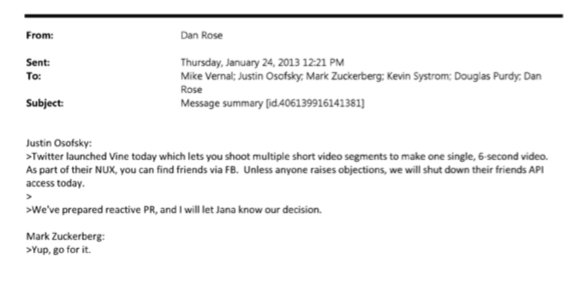
1) Zuck approves shutting down platform API access for Twitter's when Vine is released #competition
2) Facebook engineered ways to access user's call history w/o alerting users:
Team considered access to call history considered 'high PR risk' but 'growth team will charge ahead'. @Facebook created upgrade path to access data w/o subjecting users to Android permissions dialogue.
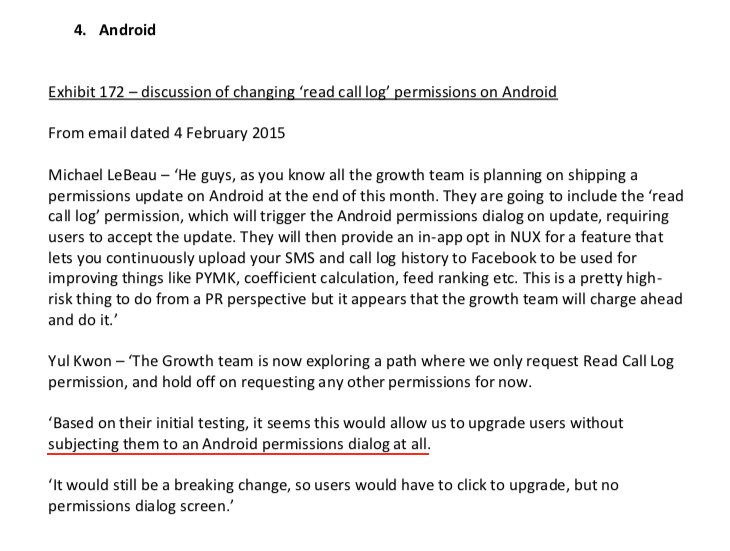
3) The above also confirms @kashhill and other's suspicion that call history was used to improve PYMK (People You May Know) suggestions and newsfeed rankings.
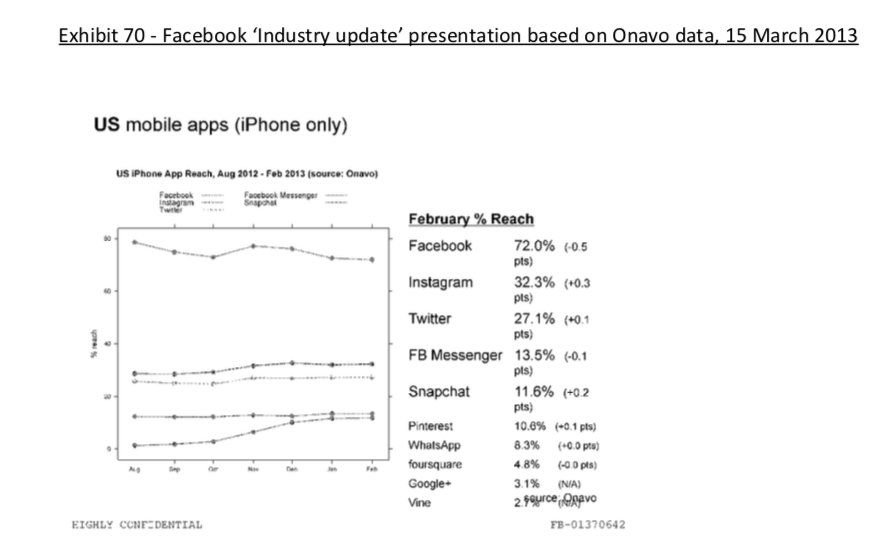
4) Docs also shed more light into @dseetharaman's story on @Facebook monitoring users' @Onavo VPN activity to determine what competitors to mimic or acquire in 2013.
https://t.co/PwiRIL3v9x
Some random interesting tidbits:
1) Zuck approves shutting down platform API access for Twitter's when Vine is released #competition
2) Facebook engineered ways to access user's call history w/o alerting users:
Team considered access to call history considered 'high PR risk' but 'growth team will charge ahead'. @Facebook created upgrade path to access data w/o subjecting users to Android permissions dialogue.
3) The above also confirms @kashhill and other's suspicion that call history was used to improve PYMK (People You May Know) suggestions and newsfeed rankings.
4) Docs also shed more light into @dseetharaman's story on @Facebook monitoring users' @Onavo VPN activity to determine what competitors to mimic or acquire in 2013.
https://t.co/PwiRIL3v9x