More from TradingView India 🇮🇳
More from Tataelxsi
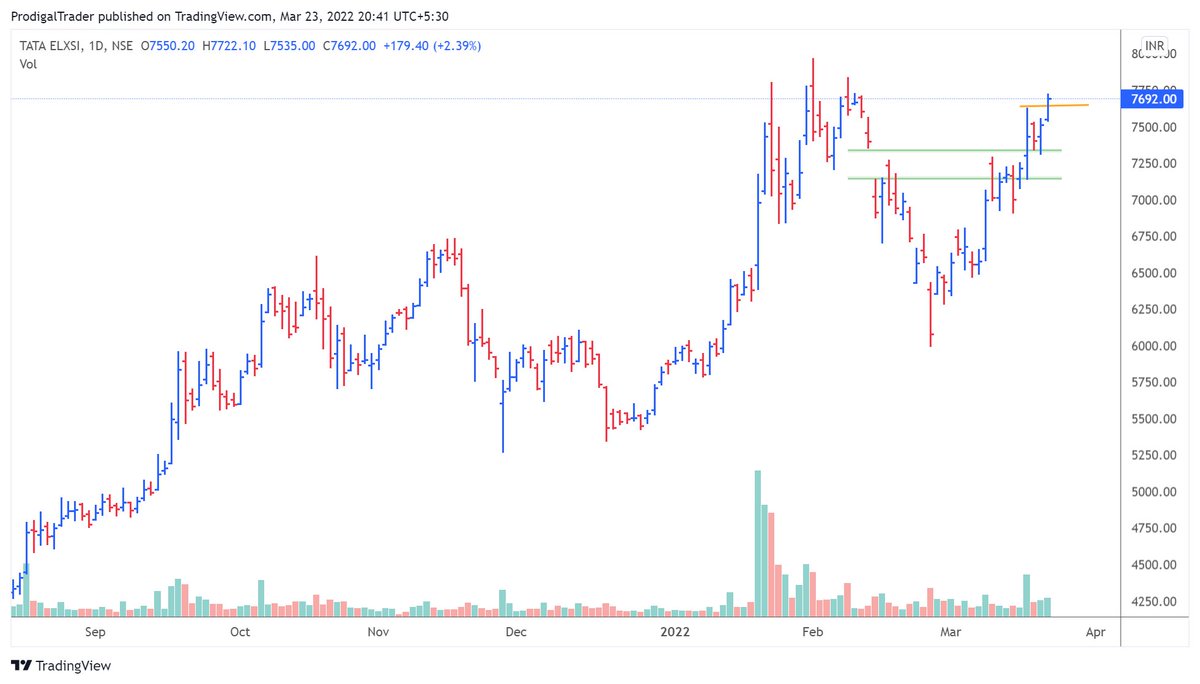
these low-volume pullbacks after the breakout are a common occurrence. However, what is more, important is the stock's reaction after a pullback. It must bounce back within a few sessions strongly to scale up the size.
Tata Elxsi https://t.co/HGCzOz1ALI
Correction \U0001f447
— The_Chartist \U0001f4c8 (@charts_zone) March 20, 2022
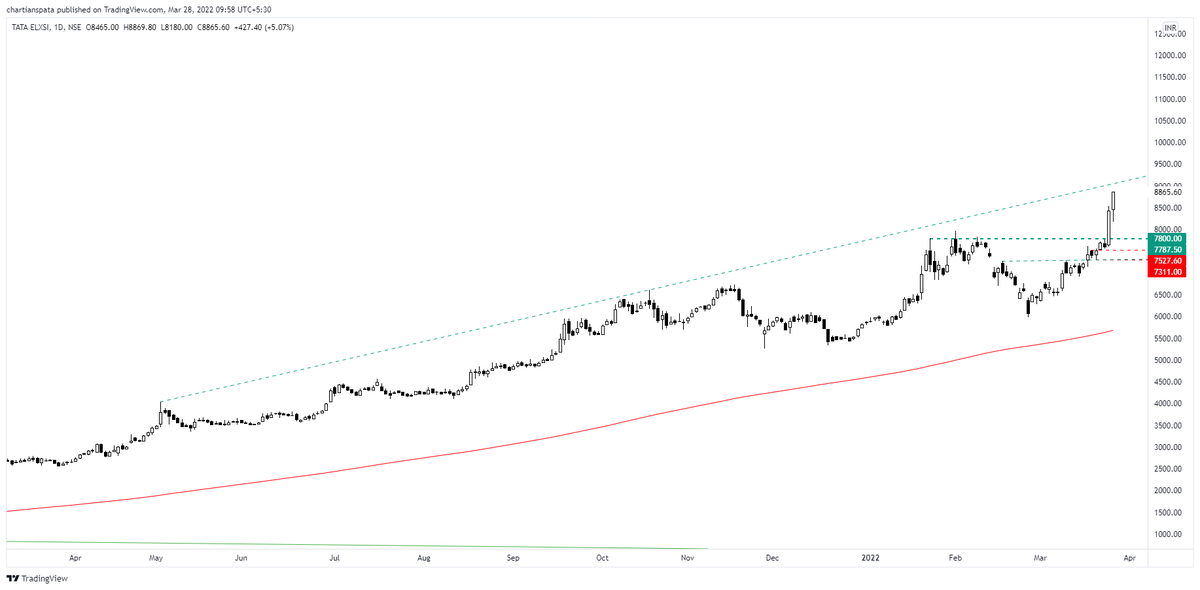
During upward breakouts, I have to consider price targets and not %age targets. Therefore the target comes out to be 8540 and not 8900 as mentioned before.
The chart stands updated.
Tata Elxsi https://t.co/sdP9X1s9qs pic.twitter.com/Gmhn3OYiNA
Alert in Tata Elxsi - with stock forming H&S at top. I would exit with the break of the neckline. It needs to cross the dashed line for H&S failure. My SL at 4030. https://t.co/rO4f8hkPFF
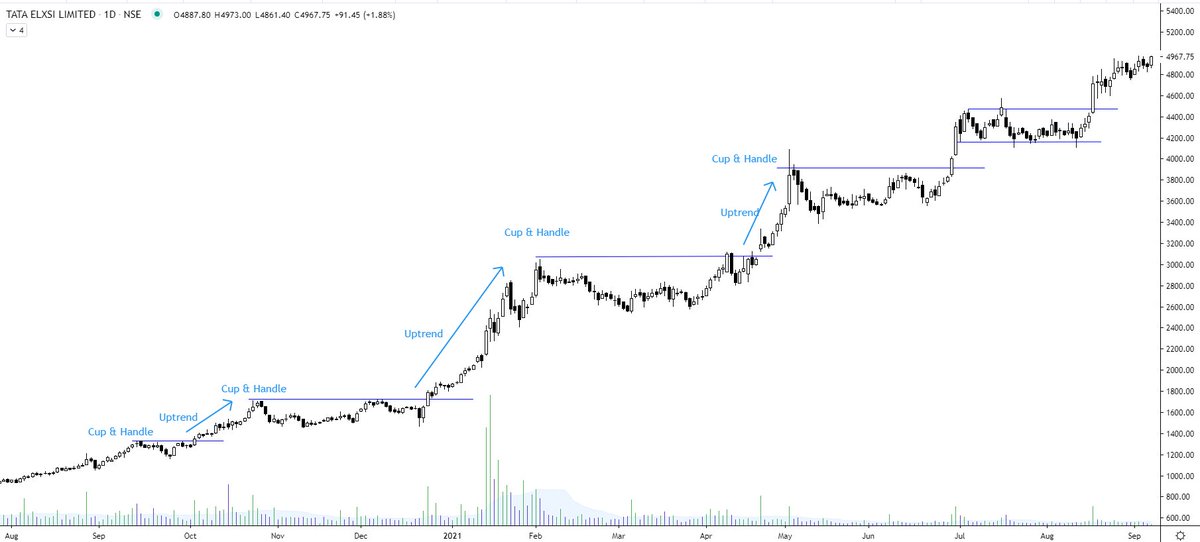
Tata Elxsi - Daily I track this chart and waiting for a big kill in this. You have to act like a cheetah sometimes waiting for the weakest hit.
— Steve Nison (@nison_steve) August 10, 2021
There are times when you must sit patiently to catch your prey. pic.twitter.com/CRoBHIetHE
You May Also Like
A brief analysis and comparison of the CSS for Twitter's PWA vs Twitter's legacy desktop website. The difference is dramatic and I'll touch on some reasons why.
Legacy site *downloads* ~630 KB CSS per theme and writing direction.
6,769 rules
9,252 selectors
16.7k declarations
3,370 unique declarations
44 media queries
36 unique colors
50 unique background colors
46 unique font sizes
39 unique z-indices
https://t.co/qyl4Bt1i5x
PWA *incrementally generates* ~30 KB CSS that handles all themes and writing directions.
735 rules
740 selectors
757 declarations
730 unique declarations
0 media queries
11 unique colors
32 unique background colors
15 unique font sizes
7 unique z-indices
https://t.co/w7oNG5KUkJ
The legacy site's CSS is what happens when hundreds of people directly write CSS over many years. Specificity wars, redundancy, a house of cards that can't be fixed. The result is extremely inefficient and error-prone styling that punishes users and developers.
The PWA's CSS is generated on-demand by a JS framework that manages styles and outputs "atomic CSS". The framework can enforce strict constraints and perform optimisations, which is why the CSS is so much smaller and safer. Style conflicts and unbounded CSS growth are avoided.
Legacy site *downloads* ~630 KB CSS per theme and writing direction.
6,769 rules
9,252 selectors
16.7k declarations
3,370 unique declarations
44 media queries
36 unique colors
50 unique background colors
46 unique font sizes
39 unique z-indices
https://t.co/qyl4Bt1i5x
PWA *incrementally generates* ~30 KB CSS that handles all themes and writing directions.
735 rules
740 selectors
757 declarations
730 unique declarations
0 media queries
11 unique colors
32 unique background colors
15 unique font sizes
7 unique z-indices
https://t.co/w7oNG5KUkJ
The legacy site's CSS is what happens when hundreds of people directly write CSS over many years. Specificity wars, redundancy, a house of cards that can't be fixed. The result is extremely inefficient and error-prone styling that punishes users and developers.
The PWA's CSS is generated on-demand by a JS framework that manages styles and outputs "atomic CSS". The framework can enforce strict constraints and perform optimisations, which is why the CSS is so much smaller and safer. Style conflicts and unbounded CSS growth are avoided.