Market 💹
The market you chose is the most important facet of your Indiehacker journey. It doesn't have to be the best market, it just has to be right for the thing you want to build.
Pick a market that is growing, has needs that are paid for, and has demand for your product.
Product 👚
Start with your MVP and iterate slowly and intentionally. Introduce features at a good clip, but don't sacrifice quality.
Do your testing. Ship excellence. Write your documentation. Design with the user in mind.
Your customers will trust you.
Ideas 💡
It's true, ideas are worth nothing. Execution is all that matters.
However, your product idea(s) should solve problems.
It should make your customers more money, save them time, or both.
Make things that give them more of what they care about.
Patience 🧘♂️
It has taken me 3 years to learn the skills I needed to make this product (business). And another 1.5 years to get the product to the revenue it's at now.
This is a long-term game. Build valuable skills. Put your head down and execute.
Marketing ✍
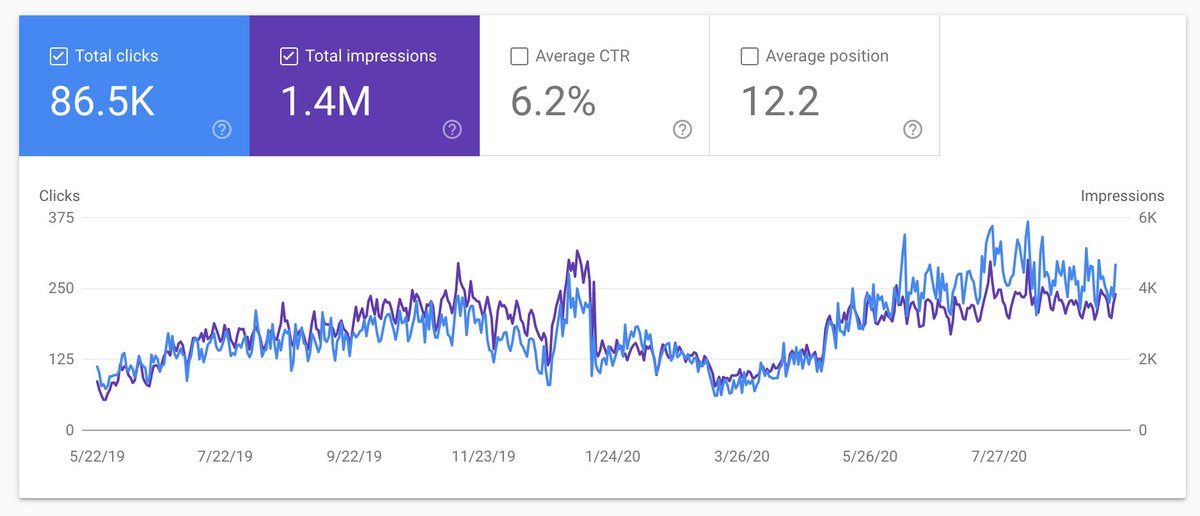
SEO is the best way for an Indiehacker to scale their time. Once SEO drives traffic, you can focus on product iteration, customer service, and other things that don't scale. SEO scales. Paid ads also scale.
Everything you can do to scale beyond yourself is a win.
Customers 👩👩👦👦
Not everyone is your customer. Be specific about your messaging. Attract the people you want.
Great customer service is hard to execute but pays dividends in the end.
Find out where they hang out (online) and meet them there.
Pricing 💳
Price high enough so that people who are cheap complain, and low enough so people who understand it's value think it's a steal.
This filters out bad customers.
Price high enough so you don't need 1 million customers to survive. You want more like 1000.
Journey 🗺
No two Indiehackers will have the same story.
You need to make the product that you were built to make.
You need to do it in the way that sits right with you.
You call the shots. Make something you're proud of. Do your best work.
Conviction 💖
It's good to have a chip on your shoulder.
Why are you doing this? What is driving you? What makes you get out of bed every morning to work on this?
Figure it out. Nail it. Remind yourself daily.
I had $200k in debt. I'm destroying it. Changing my family tree.
Productivity 👷♀️
Productivity is about eliminating distractions (people, places, things) that keep you from doing the work you need to do.
Turn everything off. Get into a flow state. Work your face off for a few hours every day.
Consistent work will product great wealth.
Health 🥗
If you're not healthy, you can't work. If you can't work, you won't be able to achieve your goals and dreams.
Get 8 hours of sleep.
Don't over-consume food.
Get up and walk every few hours.
Simple healthy actions will take you far in life.
Growth 📈
Consistent action over the long-term is what drives growth.
It's not a single feature. It's not a marketing plan. It's not a growth hack.
It's the actions you do everyday that determines whether or not the thing you're building grows.
Document 📃
Write down your journey. Talk about the things that happen to you. Leave a trace.
This will help you reflect and move forward successfully.
It's not about the fame. It's not about growing an audience.
If no one writes down your story, who will?
Communication 📣
Communicate to your family and friends clear expectations around the thing you are doing.
Say no to things that don't line up with your vision.
Talk to your customers, often. Listen to what they really need, not just what they say.
Generosity 🎁
Your product should help people. Your marketing should help people. Your feedback should help people. Your comments should help people.
Make your life about helping people, and you'll get your reward. Be patient and think about others first.
Value 💲
The person who provides the most value and obtains the most responsibility gets paid the most.
Everything is a value exchange.
The more value you provide, the more you can extract. Give a lot, ask a little. They'll keep coming back for more
Economics 💱
Every single day trillions of dollars are transacted in the world.
Luckily, you don't need trillions of dollars to live.
There's more than enough money out there. Build something valuable and people will pay you for it.
There's no upper limit.
Niches ✨
Find a group of people who resonate with a common want or need. Solve their problem successfully, and you have yourself some customers.
People in communities talk. WOM is powerful. Provide the best experience, and serve your niche. People will love you and pay you.