
1) Kids, even very young kids, are incredibly perceptive, intelligent, curious, and sensitive.
White dude wrote a thread about how he 'taught' his hungry 9 year old to use a can opener; 'figure it out' The child was in tears unable to figure out how to get the opener to align with and bite the increasingly damaged can for 6+ hours, during which time she didn't eat anything
1) Kids, even very young kids, are incredibly perceptive, intelligent, curious, and sensitive.
ALL my kids knew what a character arc was, but would not have been able to give you the words 'character arc' in a million years.
Same for plot structure, grammar, punctuation, etc. They all knew what these things were, but not necessarily how to apply them.
You don't tell them 'find all the apples in this picture' and then surprise 'there's two in the shopping bag!'
If it's a shared experience, with you going 'COME ON JUST ONE MORE PIECE AND YOU'VE GOT IT'
If they can sense you are withholding information because you want to see them fail or want to be smug about it, that also becomes a lesson they never forget
Crying in hunger and frustration when your dad is RIGHT FUCKING THERE
6) Not every moment needs to be a teachable moment. Sometimes they're just tired and worn out and it's time for a fun YouTube video or a short film. They will remember that you were compassionate to them and repay you
7) As a teacher your job is not to impart your lesson plan, it is to help them grow as human beings. I care less if they left my class with better spelling than if they left more compassionate about their fellow human beings and more
https://t.co/nYQUUTHJC8
I was a teacher for a number of years, as well as a nanny. This is a phenomenal thread of what that's like.
— Monique Gamefreakgeekgirl (@Gamefreakgeek) January 3, 2021
Children are not incomplete humans or unfinished adults. They are kids.
This is important. https://t.co/0w0mezHSez
More from Society

The UN just voted to condemn Israel 9 times, and the rest of the world 0.
View the resolutions and voting results here:
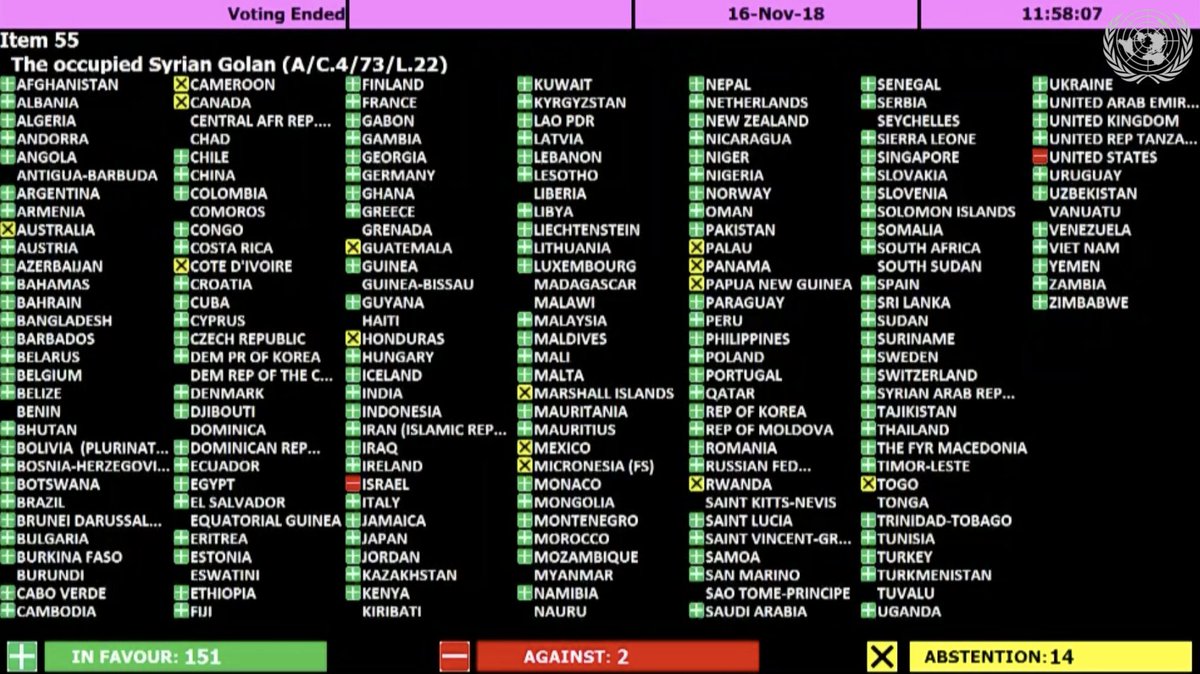
The resolution titled "The occupied Syrian Golan," which condemns Israel for "repressive measures" against Syrian citizens in the Golan Heights, was adopted by a vote of 151 - 2 - 14.
Israel and the U.S. voted 'No' https://t.co/HoO7oz0dwr
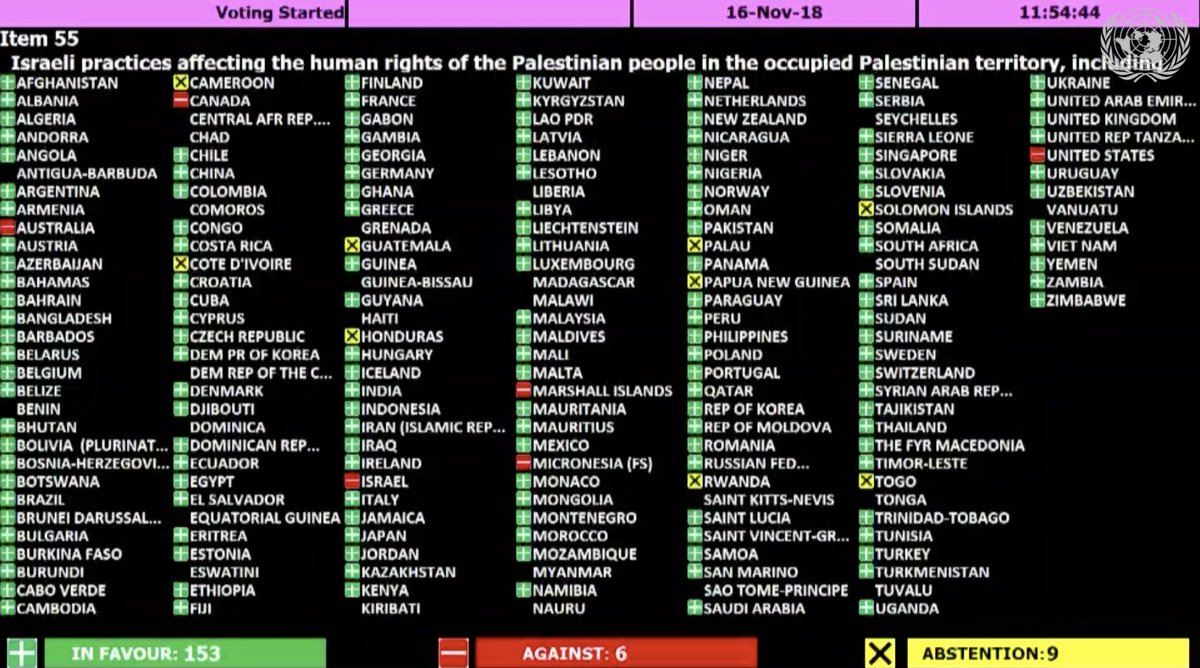
The resolution titled "Israeli practices affecting the human rights of the Palestinian people..." was adopted by a vote of 153 - 6 - 9.
Australia, Canada, Israel, Marshall Islands, Micronesia, and the U.S. voted 'No' https://t.co/1Ntpi7Vqab
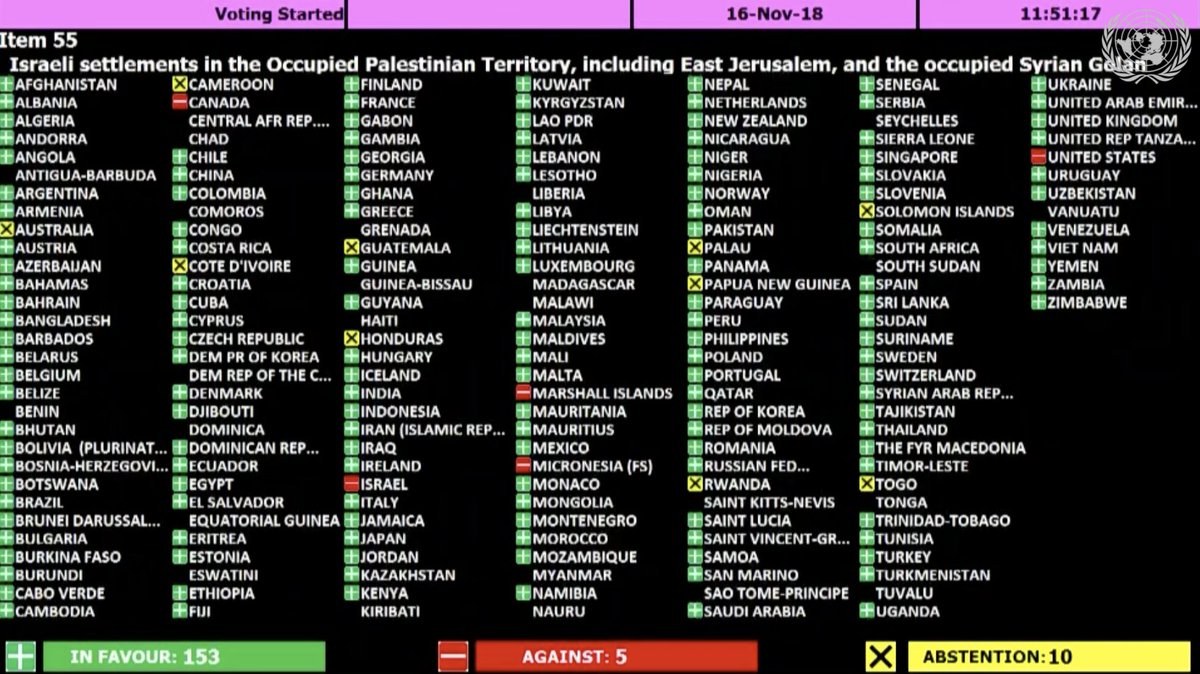
The resolution titled "Israeli settlements in the Occupied Palestinian Territory, including East Jerusalem, and the occupied Syrian Golan" was adopted by a vote of 153 – 5 – 10.
Canada, Israel, Marshall Islands, Micronesia, and the U.S. voted 'No'
https://t.co/REumYgyRuF
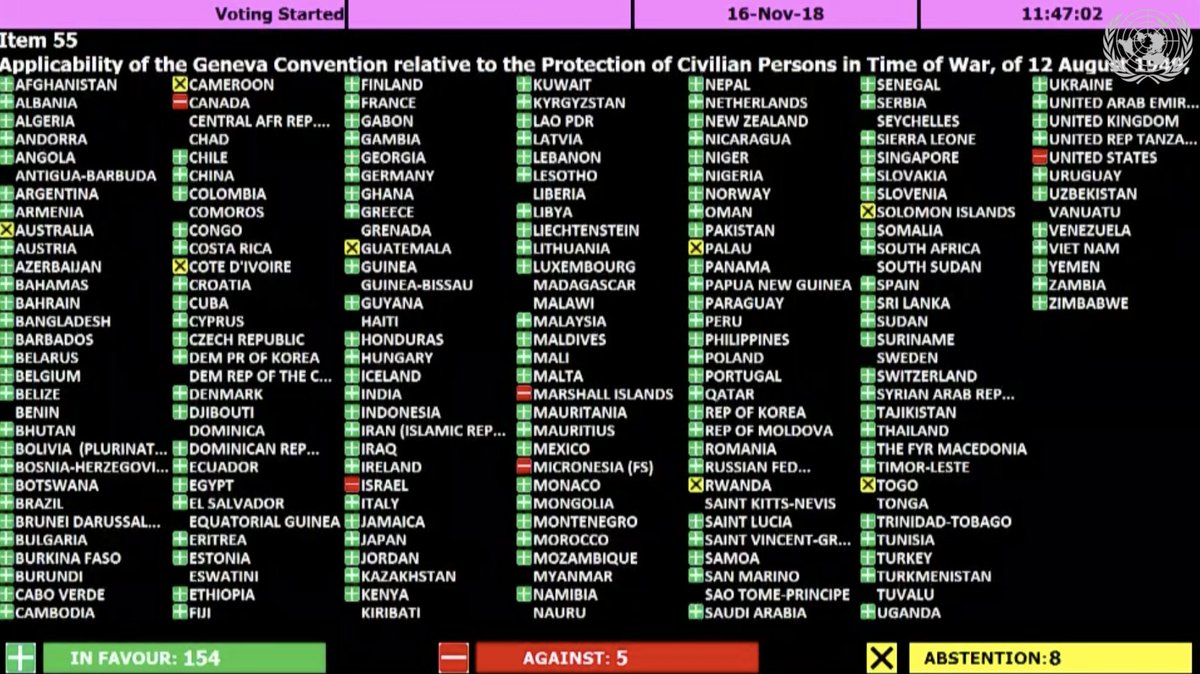
The resolution titled "Applicability of the Geneva Convention... to the
Occupied Palestinian Territory..." was adopted by a vote of 154 - 5 - 8.
Canada, Israel, Marshall Islands, Micronesia, and the U.S. voted 'No'
https://t.co/xDAeS9K1kW
View the resolutions and voting results here:
The resolution titled "The occupied Syrian Golan," which condemns Israel for "repressive measures" against Syrian citizens in the Golan Heights, was adopted by a vote of 151 - 2 - 14.
Israel and the U.S. voted 'No' https://t.co/HoO7oz0dwr
The resolution titled "Israeli practices affecting the human rights of the Palestinian people..." was adopted by a vote of 153 - 6 - 9.
Australia, Canada, Israel, Marshall Islands, Micronesia, and the U.S. voted 'No' https://t.co/1Ntpi7Vqab
The resolution titled "Israeli settlements in the Occupied Palestinian Territory, including East Jerusalem, and the occupied Syrian Golan" was adopted by a vote of 153 – 5 – 10.
Canada, Israel, Marshall Islands, Micronesia, and the U.S. voted 'No'
https://t.co/REumYgyRuF
The resolution titled "Applicability of the Geneva Convention... to the
Occupied Palestinian Territory..." was adopted by a vote of 154 - 5 - 8.
Canada, Israel, Marshall Islands, Micronesia, and the U.S. voted 'No'
https://t.co/xDAeS9K1kW

The Nashville Operation - A Battle in the War
A thread exploring the Nashville bombing in the context of the 2020 Digital War (via SolarWinds) against the United States perpetrated by our enemies, likely China, Iran and/or Russia.

SolarWinds Hack
A digital "Pearl Harbor" moment for the United States, whoever was responsible had access to the keys to the kingdom for months during 2020, including sensitive military infrastructure. This is war!
SunGard + SolarWinds
SolarWinds software company is owned by same company that owns SunGard, which essentially provides data center services. A secure place to host internet servers with redundant power and "big pipe" data connections.
https://t.co/U3P3SrrkM1

SunGard Data Center
In Nashville, around the corner from their "big pipe" connection, AT&T. Like any data center, highly secure. Only authorized personnel can enter, and even fewer can access the actual server rooms. Backup generators are available in case of power failure.

If the SunGard hardware was being used to "host" critical command and control software related to SolarWinds, the US powers would be very interested in gaining special access keys that are stored on the hard-drives of specific servers.

A thread exploring the Nashville bombing in the context of the 2020 Digital War (via SolarWinds) against the United States perpetrated by our enemies, likely China, Iran and/or Russia.
SolarWinds Hack
A digital "Pearl Harbor" moment for the United States, whoever was responsible had access to the keys to the kingdom for months during 2020, including sensitive military infrastructure. This is war!
SunGard + SolarWinds
SolarWinds software company is owned by same company that owns SunGard, which essentially provides data center services. A secure place to host internet servers with redundant power and "big pipe" data connections.
https://t.co/U3P3SrrkM1
SunGard Data Center
In Nashville, around the corner from their "big pipe" connection, AT&T. Like any data center, highly secure. Only authorized personnel can enter, and even fewer can access the actual server rooms. Backup generators are available in case of power failure.
If the SunGard hardware was being used to "host" critical command and control software related to SolarWinds, the US powers would be very interested in gaining special access keys that are stored on the hard-drives of specific servers.

A long thread on how an obsessive & violent antisemite & Holocaust denier has been embraced by the international “community of the good.”
Sarah Wilkinson has a history of Holocaust denial & anti-Jewish hatred dating back (in documented examples) to around 2015.
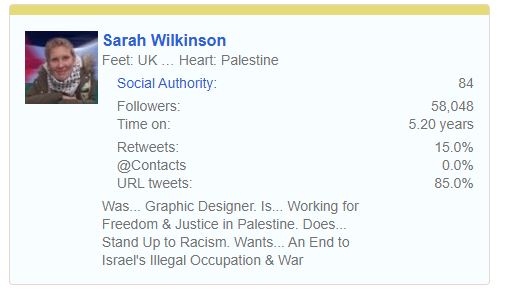
She is a self-proclaimed British activist for “Palestinian rights” but is more accurately a far Left neo-Nazi. Her son shares the same characteristics of violence, racism & Holocaust denial.
I first documented Sarah Wilkinson’s Holocaust denial back in July 2016. I believe I was the 1st person to do so.
Since then she has produced a long trail of written hate and abuse. See here for a good summary.
Wilkinson has recently been publicly celebrated by @XRebellionUK over her latest violent action against a Jewish owned business. Despite many people calling XR’s attention to her history, XR have chosen to remain in alliance with this neo-Nazi.
Former Labour Shadow Chancellor John McDonnell MP is among those who also chose to stand with Wilkinson via a tweet.
But McDonnell is not alone.
Neo-Nazi Sarah Wilkinson is supported and encouraged by thousands of those on the Left who consider themselves “anti-racists”.
Sarah Wilkinson has a history of Holocaust denial & anti-Jewish hatred dating back (in documented examples) to around 2015.
She is a self-proclaimed British activist for “Palestinian rights” but is more accurately a far Left neo-Nazi. Her son shares the same characteristics of violence, racism & Holocaust denial.
I first documented Sarah Wilkinson’s Holocaust denial back in July 2016. I believe I was the 1st person to do so.
Since then she has produced a long trail of written hate and abuse. See here for a good summary.
The internet is forever. https://t.co/zxBV7rjskB
— Heidi Bachram (@HeidiBachram) February 2, 2021
Wilkinson has recently been publicly celebrated by @XRebellionUK over her latest violent action against a Jewish owned business. Despite many people calling XR’s attention to her history, XR have chosen to remain in alliance with this neo-Nazi.
Former Labour Shadow Chancellor John McDonnell MP is among those who also chose to stand with Wilkinson via a tweet.
But McDonnell is not alone.
Neo-Nazi Sarah Wilkinson is supported and encouraged by thousands of those on the Left who consider themselves “anti-racists”.


You May Also Like

🌿𝑻𝒉𝒆 𝒔𝒕𝒐𝒓𝒚 𝒐𝒇 𝒂 𝑺𝒕𝒂𝒓 : 𝑫𝒉𝒓𝒖𝒗𝒂 & 𝑽𝒊𝒔𝒉𝒏𝒖
Once upon a time there was a Raja named Uttānapāda born of Svayambhuva Manu,1st man on earth.He had 2 beautiful wives - Suniti & Suruchi & two sons were born of them Dhruva & Uttama respectively.
#talesofkrishna https://t.co/E85MTPkF9W
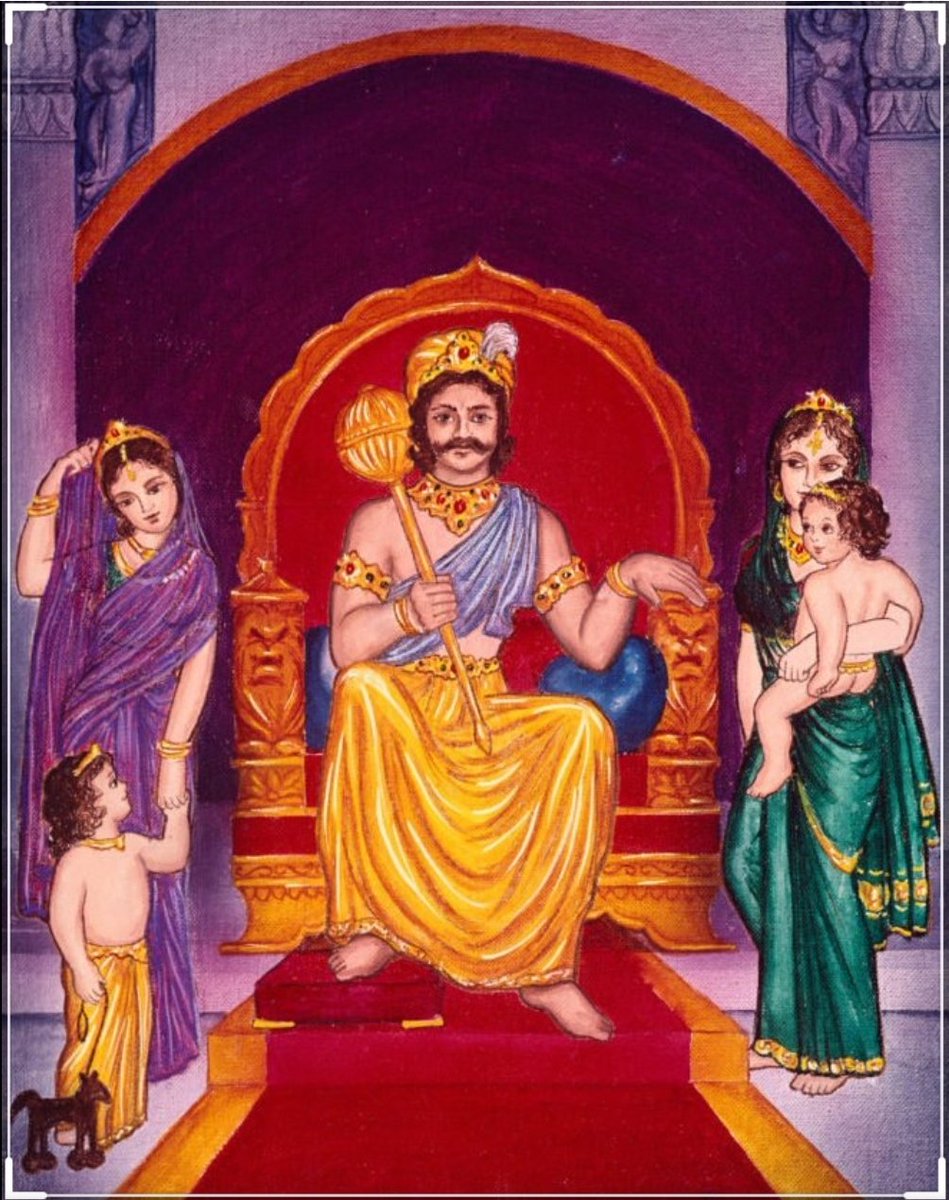
Now Suniti was the daughter of a tribal chief while Suruchi was the daughter of a rich king. Hence Suruchi was always favored the most by Raja while Suniti was ignored. But while Suniti was gentle & kind hearted by nature Suruchi was venomous inside.
#KrishnaLeela
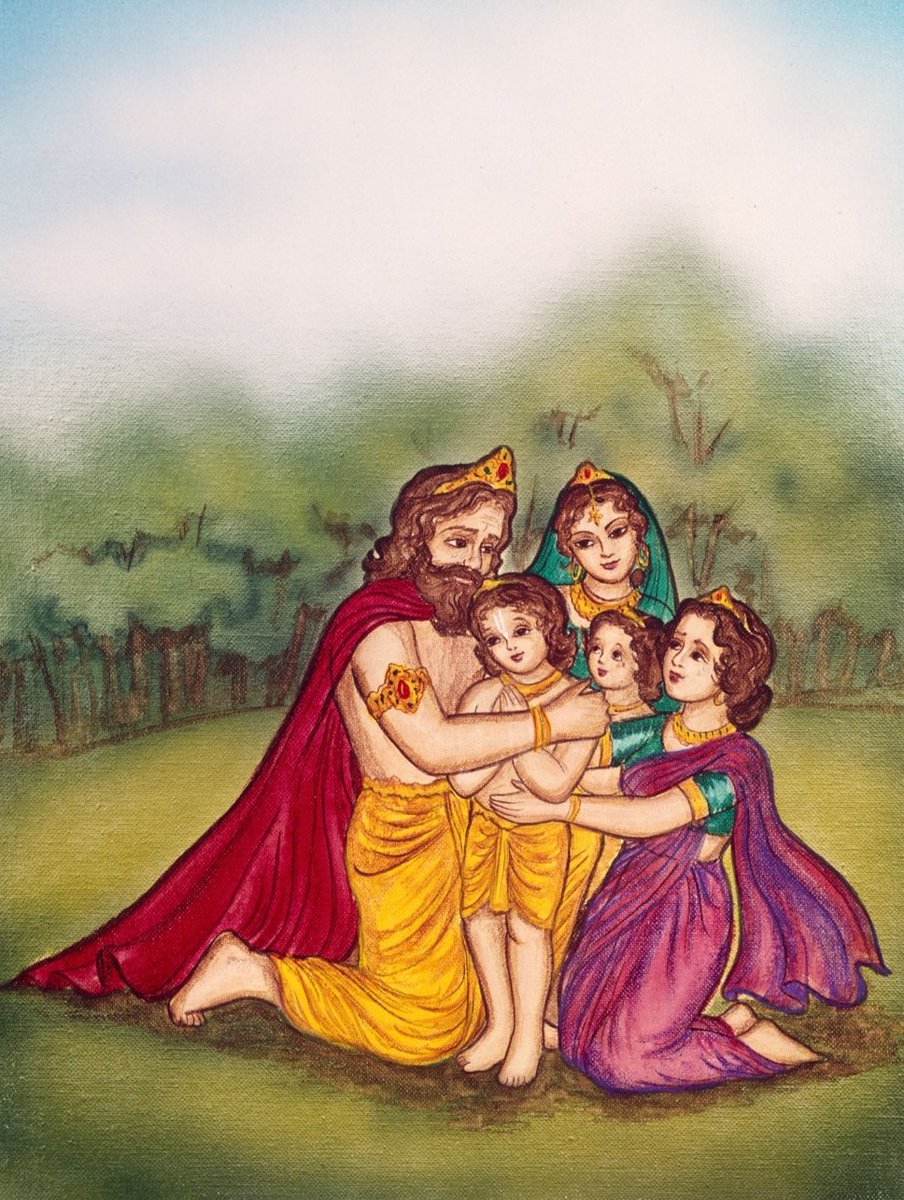
The story is of a time when ideally the eldest son of the king becomes the heir to the throne. Hence the sinhasan of the Raja belonged to Dhruva.This is why Suruchi who was the 2nd wife nourished poison in her heart for Dhruva as she knew her son will never get the throne.
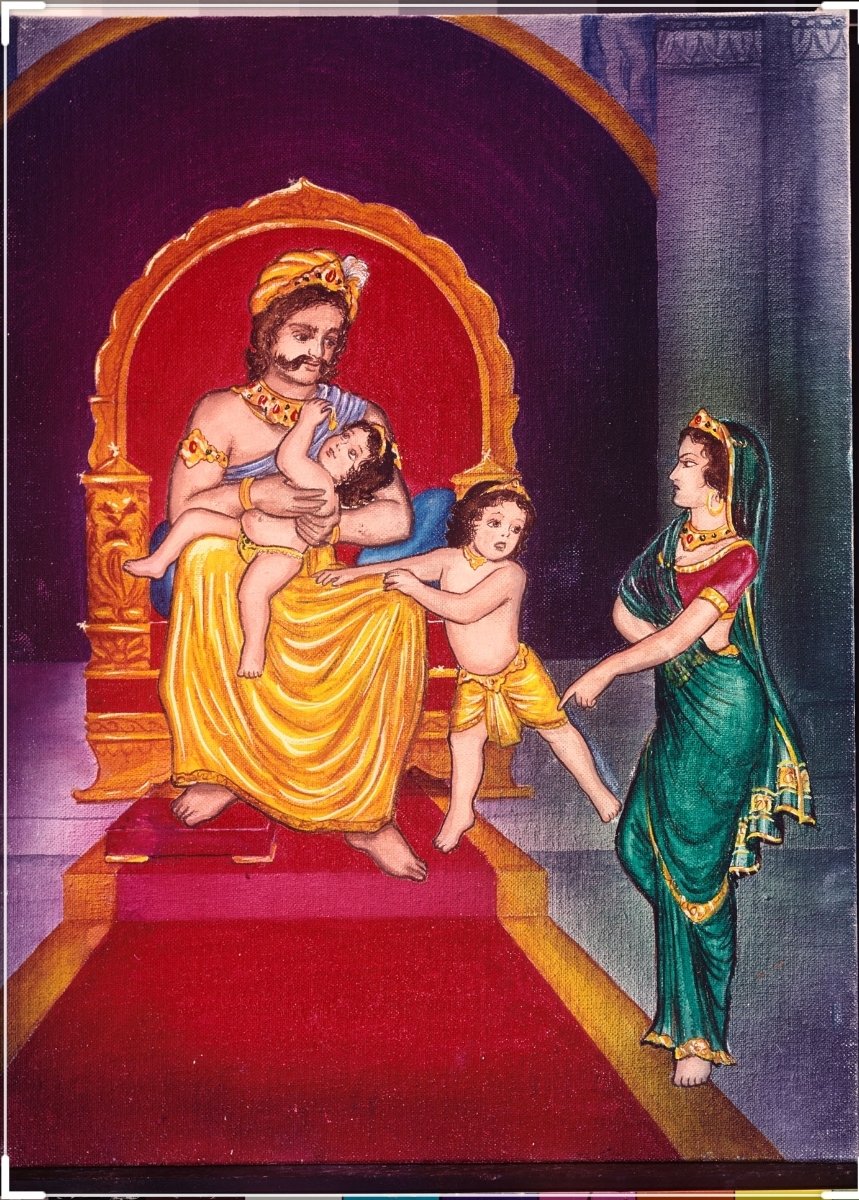
One day when Dhruva was just 5 years old he went on to sit on his father's lap. Suruchi, the jealous queen, got enraged and shoved him away from Raja as she never wanted Raja to shower Dhruva with his fatherly affection.
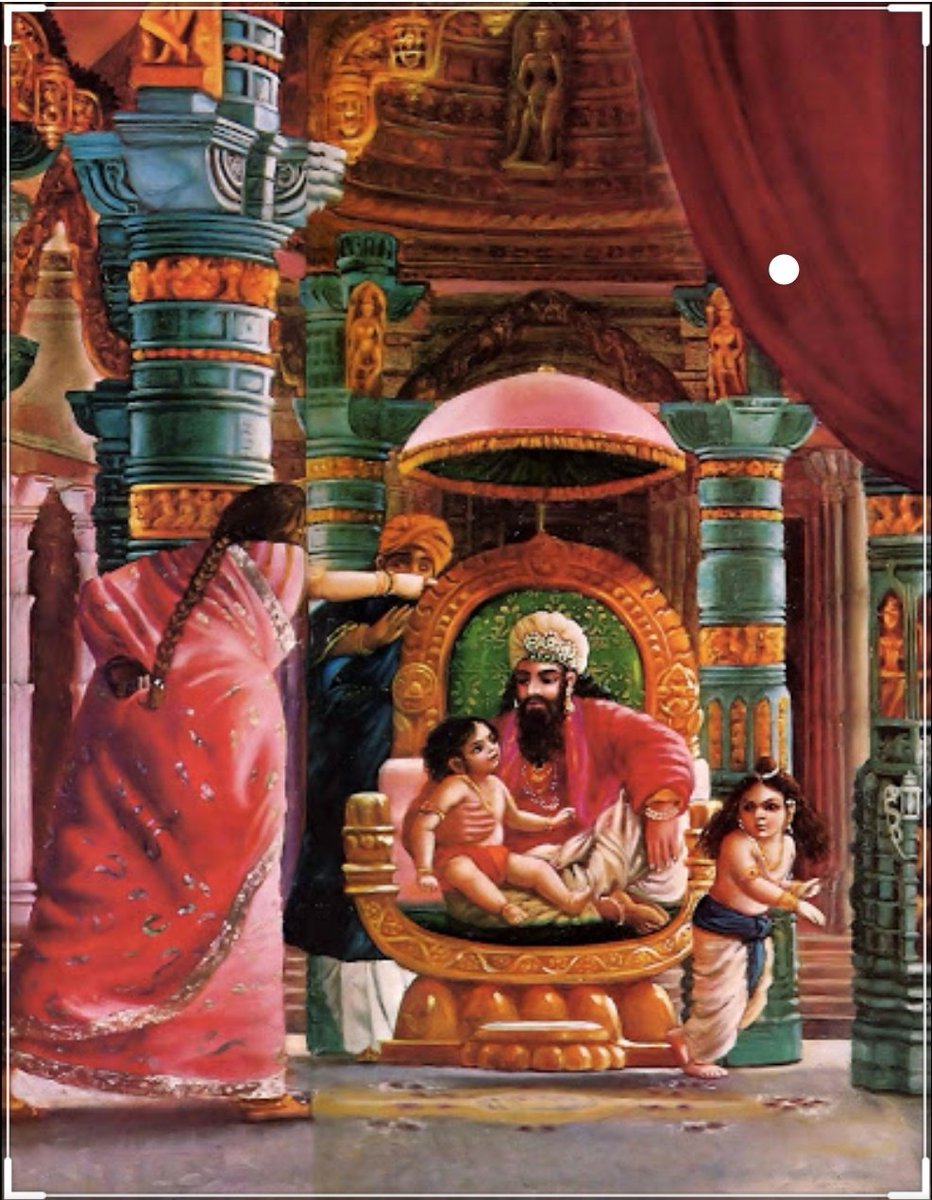
Dhruva protested questioning his step mother "why can't i sit on my own father's lap?" A furious Suruchi berated him saying "only God can allow him that privilege. Go ask him"
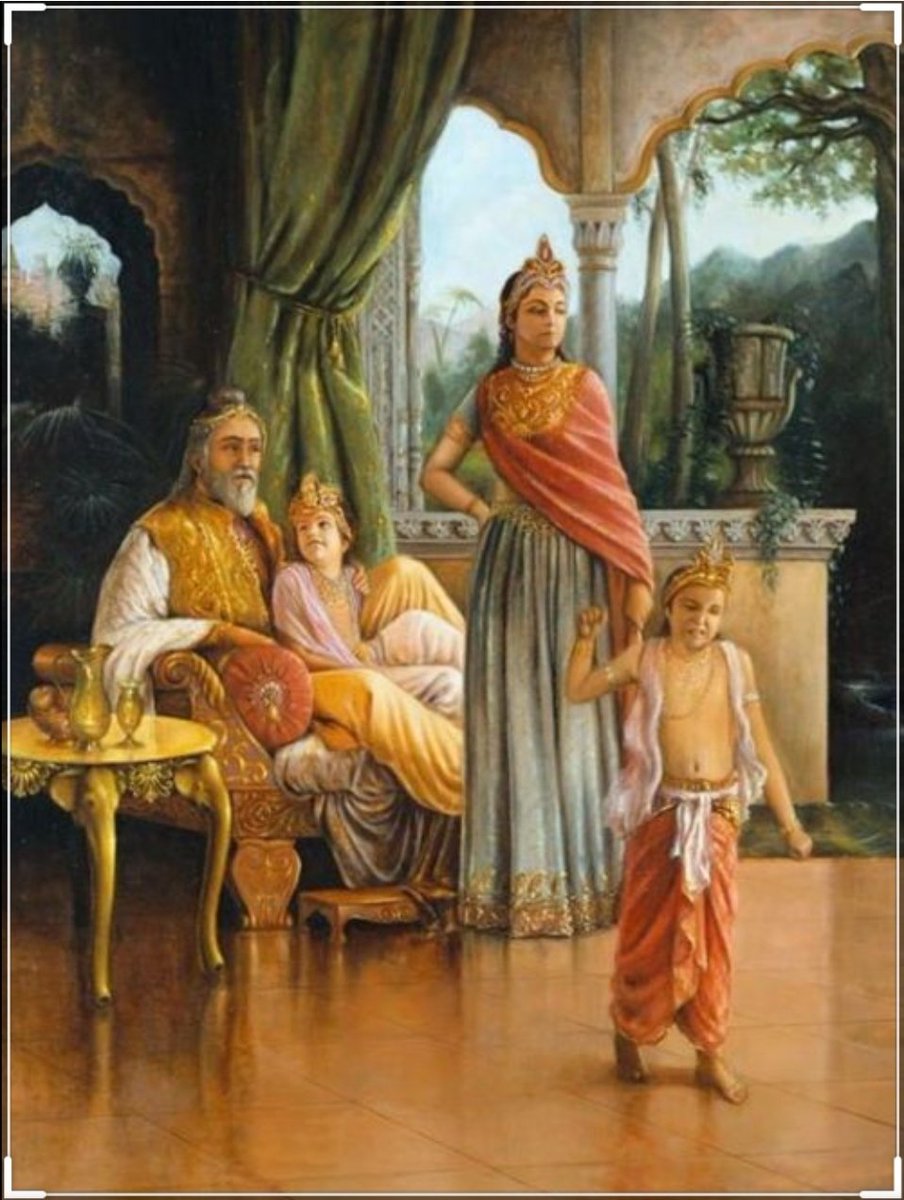
Once upon a time there was a Raja named Uttānapāda born of Svayambhuva Manu,1st man on earth.He had 2 beautiful wives - Suniti & Suruchi & two sons were born of them Dhruva & Uttama respectively.
#talesofkrishna https://t.co/E85MTPkF9W
Prabhu says i reside in the heart of my bhakt.
— Right Singh (@rightwingchora) December 21, 2020
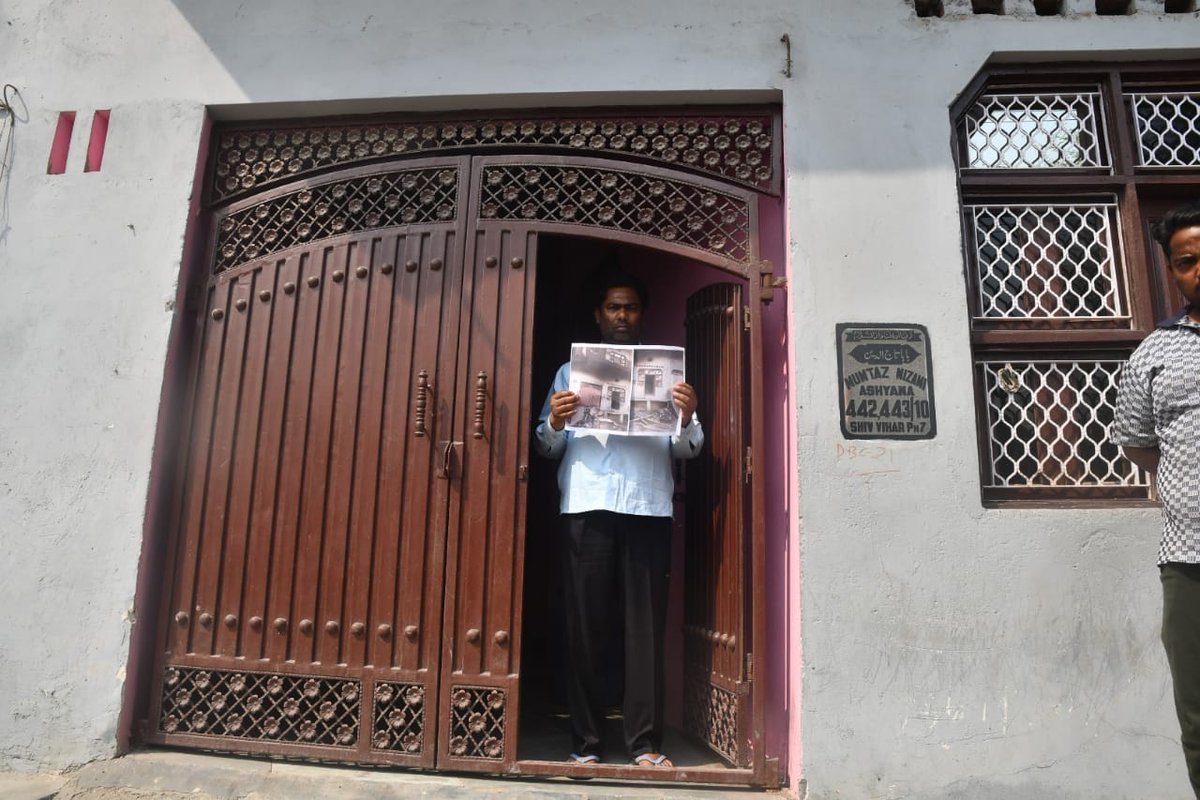
Guess the event. pic.twitter.com/yFUmbfe5KL
Now Suniti was the daughter of a tribal chief while Suruchi was the daughter of a rich king. Hence Suruchi was always favored the most by Raja while Suniti was ignored. But while Suniti was gentle & kind hearted by nature Suruchi was venomous inside.
#KrishnaLeela
The story is of a time when ideally the eldest son of the king becomes the heir to the throne. Hence the sinhasan of the Raja belonged to Dhruva.This is why Suruchi who was the 2nd wife nourished poison in her heart for Dhruva as she knew her son will never get the throne.
One day when Dhruva was just 5 years old he went on to sit on his father's lap. Suruchi, the jealous queen, got enraged and shoved him away from Raja as she never wanted Raja to shower Dhruva with his fatherly affection.
Dhruva protested questioning his step mother "why can't i sit on my own father's lap?" A furious Suruchi berated him saying "only God can allow him that privilege. Go ask him"

And here they are...
THE WINNERS OF THE 24 HOUR STARTUP CHALLENGE
Remember, this money is just fun. If you launched a product (or even attempted a launch) - you did something worth MUCH more than $1,000.
#24hrstartup
The winners 👇
#10
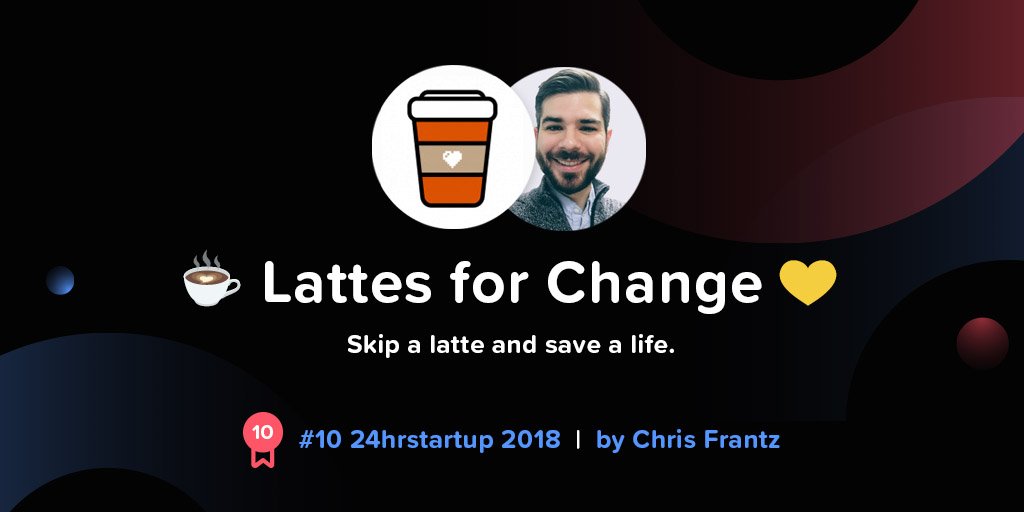
Lattes For Change - Skip a latte and save a life.
https://t.co/M75RAirZzs
@frantzfries built a platform where you can see how skipping your morning latte could do for the world.
A great product for a great cause.
Congrats Chris on winning $250!
#9
Instaland - Create amazing landing pages for your followers.
https://t.co/5KkveJTAsy
A team project! @bpmct and @BaileyPumfleet built a tool for social media influencers to create simple "swipe up" landing pages for followers.
Really impressive for 24 hours. Congrats!
#8
SayHenlo - Chat without distractions
https://t.co/og0B7gmkW6
Built by @DaltonEdwards, it's a platform for combatting conversation overload. This product was also coded exclusively from an iPad 😲
Dalton is a beast. I'm so excited he placed in the top 10.
#7
CoderStory - Learn to code from developers across the globe!
https://t.co/86Ay6nF4AY
Built by @jesswallaceuk, the project is focused on highlighting the experience of developers and people learning to code.
I wish this existed when I learned to code! Congrats on $250!!
THE WINNERS OF THE 24 HOUR STARTUP CHALLENGE
Remember, this money is just fun. If you launched a product (or even attempted a launch) - you did something worth MUCH more than $1,000.
#24hrstartup
The winners 👇
#10
Lattes For Change - Skip a latte and save a life.
https://t.co/M75RAirZzs
@frantzfries built a platform where you can see how skipping your morning latte could do for the world.
A great product for a great cause.
Congrats Chris on winning $250!
#9
Instaland - Create amazing landing pages for your followers.
https://t.co/5KkveJTAsy
A team project! @bpmct and @BaileyPumfleet built a tool for social media influencers to create simple "swipe up" landing pages for followers.
Really impressive for 24 hours. Congrats!
#8
SayHenlo - Chat without distractions
https://t.co/og0B7gmkW6
Built by @DaltonEdwards, it's a platform for combatting conversation overload. This product was also coded exclusively from an iPad 😲
Dalton is a beast. I'm so excited he placed in the top 10.
#7
CoderStory - Learn to code from developers across the globe!
https://t.co/86Ay6nF4AY
Built by @jesswallaceuk, the project is focused on highlighting the experience of developers and people learning to code.
I wish this existed when I learned to code! Congrats on $250!!


