Honoured to have been given OBE for services to higher education. I want to use this opportunity to draw further attention to suppression of critical thought about gender identity ideology and trans activism in UK Universities - so here’s a thread. 1/
More from Society

So, as the #MegaMillions jackpot reaches a record $1.6B and #Powerball reaches $620M, here's my advice about how to spend the money in a way that will truly set you, your children and their kids up for life.
Ready?
Create a private foundation and give it all away. 1/
Let's stipulate first that lottery winners often have a hard time. Being publicly identified makes you a target for "friends" and "family" who want your money, as well as for non-family grifters and con men. 2/
The stress can be damaging, even deadly, and Uncle Sam takes his huge cut. Plus, having a big pool of disposable income can be irresistible to people not accustomed to managing wealth. https://t.co/fiHsuJyZwz 3/
Meanwhile, the private foundation is as close as we come to Downton Abbey and the landed aristocracy in this country. It's a largely untaxed pot of money that grows significantly over time, and those who control them tend to entrench their own privileges and those of their kin. 4
Here's how it works for a big lotto winner:
1. Win the prize.
2. Announce that you are donating it to the YOUR NAME HERE Family Foundation.
3. Receive massive plaudits in the press. You will be a folk hero for this decision.
4. Appoint only trusted friends/family to board. 5/
Ready?
Create a private foundation and give it all away. 1/
Let's stipulate first that lottery winners often have a hard time. Being publicly identified makes you a target for "friends" and "family" who want your money, as well as for non-family grifters and con men. 2/
The stress can be damaging, even deadly, and Uncle Sam takes his huge cut. Plus, having a big pool of disposable income can be irresistible to people not accustomed to managing wealth. https://t.co/fiHsuJyZwz 3/
Meanwhile, the private foundation is as close as we come to Downton Abbey and the landed aristocracy in this country. It's a largely untaxed pot of money that grows significantly over time, and those who control them tend to entrench their own privileges and those of their kin. 4
Here's how it works for a big lotto winner:
1. Win the prize.
2. Announce that you are donating it to the YOUR NAME HERE Family Foundation.
3. Receive massive plaudits in the press. You will be a folk hero for this decision.
4. Appoint only trusted friends/family to board. 5/

A long thread on how an obsessive & violent antisemite & Holocaust denier has been embraced by the international “community of the good.”
Sarah Wilkinson has a history of Holocaust denial & anti-Jewish hatred dating back (in documented examples) to around 2015.
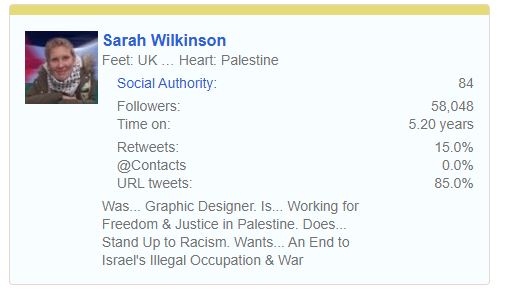
She is a self-proclaimed British activist for “Palestinian rights” but is more accurately a far Left neo-Nazi. Her son shares the same characteristics of violence, racism & Holocaust denial.
I first documented Sarah Wilkinson’s Holocaust denial back in July 2016. I believe I was the 1st person to do so.
Since then she has produced a long trail of written hate and abuse. See here for a good summary.
Wilkinson has recently been publicly celebrated by @XRebellionUK over her latest violent action against a Jewish owned business. Despite many people calling XR’s attention to her history, XR have chosen to remain in alliance with this neo-Nazi.
Former Labour Shadow Chancellor John McDonnell MP is among those who also chose to stand with Wilkinson via a tweet.
But McDonnell is not alone.
Neo-Nazi Sarah Wilkinson is supported and encouraged by thousands of those on the Left who consider themselves “anti-racists”.
Sarah Wilkinson has a history of Holocaust denial & anti-Jewish hatred dating back (in documented examples) to around 2015.
She is a self-proclaimed British activist for “Palestinian rights” but is more accurately a far Left neo-Nazi. Her son shares the same characteristics of violence, racism & Holocaust denial.
I first documented Sarah Wilkinson’s Holocaust denial back in July 2016. I believe I was the 1st person to do so.
Since then she has produced a long trail of written hate and abuse. See here for a good summary.
The internet is forever. https://t.co/zxBV7rjskB
— Heidi Bachram (@HeidiBachram) February 2, 2021
Wilkinson has recently been publicly celebrated by @XRebellionUK over her latest violent action against a Jewish owned business. Despite many people calling XR’s attention to her history, XR have chosen to remain in alliance with this neo-Nazi.
Former Labour Shadow Chancellor John McDonnell MP is among those who also chose to stand with Wilkinson via a tweet.
But McDonnell is not alone.
Neo-Nazi Sarah Wilkinson is supported and encouraged by thousands of those on the Left who consider themselves “anti-racists”.


Imagine if Christians actually had to live according to their Bibles.
Imagine if Christians actually sacrificed themselves for the good of those they considered their enemies, with no thought of any recompense or reward, but only to honor the essential humanity of all people.
Imagine if Christians sold all their possessions and gave it to the poor.
Imagine if they relentlessly stood up for the widow, the orphan, and the foreigner.
Imagine if they worshipped a God whose response to political power was to reject it.
Or cancelled all debt owed them?
Imagine if the primary orientation of Christians was what others needed, not what they deserved.
Imagine Christians with no interest in protecting what they had.
Imagine Christians who made room for other beliefs, and honored the truths they found there.
Imagine Christians who saved their forgiveness and mercy for others, rather than saving it for themselves.
Whose empathy went first to the abused, not the abuser.
Who didn't see tax as theft; who didn't need to control distribution of public good to the deserving.
"If they start canceling these American presidents, they're gonna come after Bible characters next. Mark my words" -- Fox News "news side" host Bill Hemmer pic.twitter.com/qTPV0NERv8
— Aaron Rupar (@atrupar) February 19, 2021
Imagine if Christians actually sacrificed themselves for the good of those they considered their enemies, with no thought of any recompense or reward, but only to honor the essential humanity of all people.
Imagine if Christians sold all their possessions and gave it to the poor.
Imagine if they relentlessly stood up for the widow, the orphan, and the foreigner.
Imagine if they worshipped a God whose response to political power was to reject it.
Or cancelled all debt owed them?
Imagine if the primary orientation of Christians was what others needed, not what they deserved.
Imagine Christians with no interest in protecting what they had.
Imagine Christians who made room for other beliefs, and honored the truths they found there.
Imagine Christians who saved their forgiveness and mercy for others, rather than saving it for themselves.
Whose empathy went first to the abused, not the abuser.
Who didn't see tax as theft; who didn't need to control distribution of public good to the deserving.