1. Wuhan Sewage Document Dump (Ignore the Smell)
58 Pages - Wuhan Wastewater and Stormwater Management Project
https://t.co/AyEx8UqqVK

2. Wuhan Wastewater and Stormwater Management Project (Financed by the Technical Assistance Special Fund)
1062 pages of shit
https://t.co/T2uX32FKox
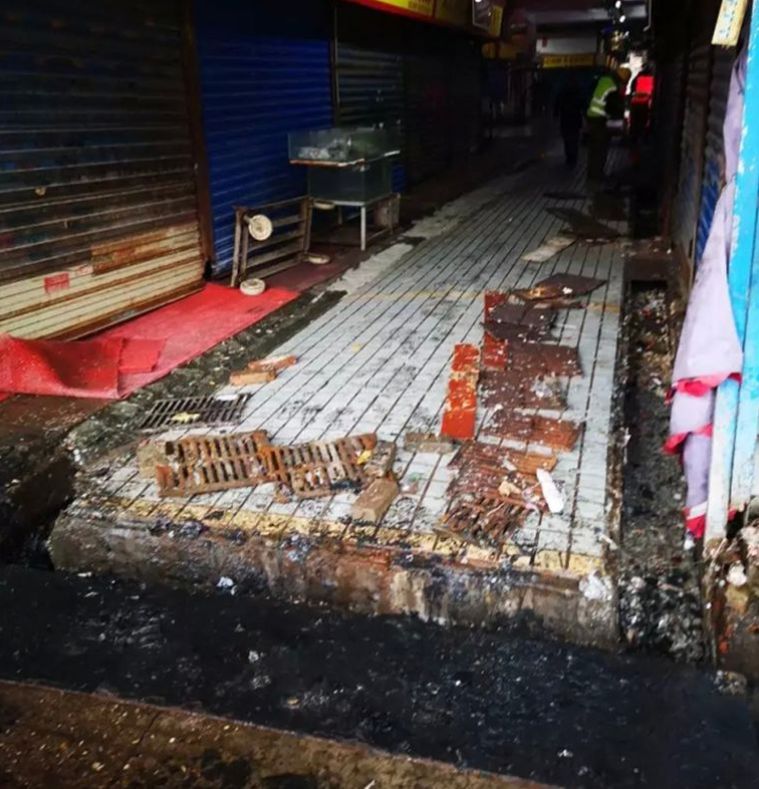
3. ADB projects:
https://t.co/mV8BznlCNz
ADB documents:
https://t.co/oMwyTeNn6f
ADB Tenders:
https://t.co/nLj7TjH3jd
4. https://t.co/RRH7xAQMQI
5. Can't download this, anyone can?
https://t.co/5m34hnHyMT
6. The sewers in our city are rotten (wuhan)
https://t.co/4P2kOShEPL
7. Wuhaners are sceptical and soaked
Looking at the sea in Wuhan, why doesn't the tens of billions drainage project work?
https://t.co/S6dws4b1Ni
8. It is a shitty job but someone has to do it
(download all the shitty documents about these ADB projects)
1. Environmental Project
https://t.co/vQdm6hKEOl
2. https://t.co/caumlj2gyv
3. Project 42011-012
https://t.co/z7sKOvJbiL
4. Project 42011-013
https://t.co/z34WQ29d9V
9. Wuhan Wastewater & Stormwater Management Project | 37597-013
https://t.co/mMOGrkbJnS
Wuhan Wastewater Management Project | 34472-013
https://t.co/Ucv0rgKnIV
Wuhan Wastewater Treatment Project | 34472-012
https://t.co/fnmSfjjhHE
10. Wuhan Urban Environmental Improvement Project
Project | 42011-013
https://t.co/caumlj2gyv
Hubei Enshi Qing River Upstream Environment Rehabilitation Project Project | 47048-002
https://t.co/MTZGhNiK7K
11. Someone needs to download all this shit & it ain't me
unroll @threadreaderapp

More from Billy Bostickson 🏴👁&👁 🆓

Emergent Bio-Kramer-BARDA-HHS-Kadlec-Fauci
U.S. Bet Big on Covid Vaccine Manufacturer Even as Problems Mounted https://t.co/o2lbFoXF5U
“Viral cross-contamination confirmed in the control cells for JANSSEN GMP Lot #8.”


an examination by The @nytimes of manufacturing practices at the Baltimore facility found serious problems, including a corporate culture that often ignored or deflected missteps and a government sponsor, BARDA, that acted more as a partner than a policeman."


https://t.co/3TszTYVhry


https://t.co/ng1oV1xrKI


https://t.co/TNQMo8LZ83
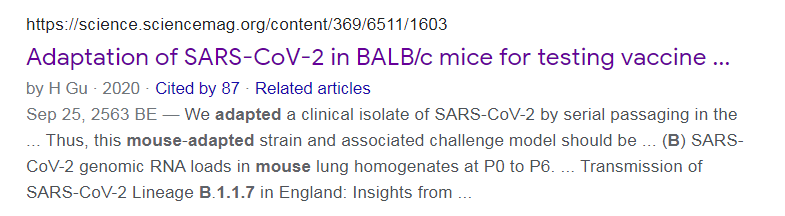
1. High Probability of serial passaging in Transgenic Mice expressing hACE2 in genesis of SARS-COV-2!
2 papers:
Human–viral molecular mimicry
https://t.co/irfH0Zgrve
Molecular Mimicry
https://t.co/yLQoUtfS6s

2. Must Read! Confirmation with supporting evidence via @flavinkins
https://t.co/NEf9HK6ReB
"ONLY place where this thing could emerge, naturally or Artificially, is by passage in HUMANIZED MICE"

3. Springer Article


4. Takeaway most significant quotes from Springer Article, burn this into your brain:
"Such a peptide commonality is unexpected and highly improbable from a mathematical point of view"


5. One image to explain it all!
November 3 - 9, 2019 -Wuhan Institute of Virology
International Training Course on Biosafety Laboratory Management and Technology
1. Daniel Feakes, head of UN Biological Weapons Convention implementation support agency
2. René Courcol, quality control system expert, France's BSL


List of Lecturers with short bios at
November 3 - 9, WIV Training Course:
https://t.co/Bsd9yO40JP
YUAN Zhiming Professor, Wuhan Institute of Virology, CAS (Deputy Director)
SONG Donglin, Professor, Wuhan Institute of Virology, CAS ( Deputy Director of Wuhan BSL-4 Laboratory.)

Dr. TONG Xiao Senior Engineer at WIV (Molecular Virology & (HIV) infection, mechanical & vaccine immunology) On-site Manager & Chief engineer for WIV BSL-4 Lab construction, maintenance & biosafety equipment R&D.

Zhengli Shi, Director of WIV Center for Emerging Infectious Diseases, now in charge of scientific activity in BSL3 & BSL4. Viral pathogen discovery through sequencing techniques, wildlife-borne viral pathogens, particularly bat-borne viruses since 2004.

DENG Fei, Principle Investigator in Research Group on Viruses Resources & Biotechnology in WIV, also Director of Microorganisms & Viruses Resource Center.
Graduate of ECUST, went to Great Lakes Forestry Center, Canada in 2001 & Wageningen University, NL to study baculovirus.
Meat is high in Glycosaminoglycans
(central to coronavirus's ability to attach to host cells)
Beef, pork poultry, seafood are rich in heparan sulfate (glycosaminoglycans), highly charged anchors for SARSCoV2
Meat surfaces critical factors for transmission
https://t.co/yP6lH22OTF

1/5 Science behind that tweet just in case anyone thinks I speak without awareness ;)
Glycosaminoglycans from fresh water fish processing discard - Isolation, structural characterization, and osteogenic activity
https://t.co/fyjac03IuV
SALMON MOUTHS

2/5 Salmon Mouths 2
Characterization of Glycosaminoglycans in Gaping and Intact Connective Tissues of Farmed Atlantic Salmon (Salmo salar) Fillets by Mass

3/5 Why does SARS-COV-2 like meat & seafood?
Glycosaminoglycan binding motif at S1/S2 proteolytic cleavage site on spike glycoprotein may facilitate novel coronavirus (SARS-CoV-2) host cell entry
https://t.co/DpHF1WmxeG
Glycosaminoglycans and

4/5 Glycosaminoglycans
Role of in Infectious Disease
(same authors as above)
https://t.co/3q5dn2Io3Q
Glycosaminoglycans in Infectious Disease
https://t.co/Dep7aJlpLP
Murine Coronavirus with an Extended Host Range Uses Heparan Sulfate as an Entry

More from Society

You May Also Like

https://t.co/6cRR2B3jBE
Viruses and other pathogens are often studied as stand-alone entities, despite that, in nature, they mostly live in multispecies associations called biofilms—both externally and within the host.

https://t.co/FBfXhUrH5d


Microorganisms in biofilms are enclosed by an extracellular matrix that confers protection and improves survival. Previous studies have shown that viruses can secondarily colonize preexisting biofilms, and viral biofilms have also been described.


...we raise the perspective that CoVs can persistently infect bats due to their association with biofilm structures. This phenomenon potentially provides an optimal environment for nonpathogenic & well-adapted viruses to interact with the host, as well as for viral recombination.


Biofilms can also enhance virion viability in extracellular environments, such as on fomites and in aquatic sediments, allowing viral persistence and dissemination.