


Enrique of Proud of Boys and Will of @UniteAmerica1st talk to a lone BLM female supporter with a \u201cTrump is the Worst President\u201d sign. pic.twitter.com/mHoq2g5HX8
— Anna Kraken (@Annakhait) December 12, 2020


#WashingtonDC
Via: Villain Report (Youtube)


Source: @MissN0b0dy1


More from Society

Krugman is, of course, right about this. BUT, note that universities can do a lot to revitalize declining and rural regions.
See this thing that @lymanstoneky wrote:
And see this thing that I wrote:
And see this book that @JamesFallows wrote:
And see this other thing that I wrote:
One thing I've been noticing about responses to today's column is that many people still don't get how strong the forces behind regional divergence are, and how hard to reverse 1/ https://t.co/Ft2aH1NcQt
— Paul Krugman (@paulkrugman) November 20, 2018
See this thing that @lymanstoneky wrote:
And see this thing that I wrote:
And see this book that @JamesFallows wrote:
And see this other thing that I wrote:


This is a piece I've been thinking about for a long time. One of the most dominant policy ideas in Washington is that policy should, always and everywhere, move parents into paid labor. But what if that's wrong?
My reporting here convinced me that there's no large effect in either direction on labor force participation from child allowances. Canada has a bigger one than either Romney or Biden are considering, and more labor force participation among women.
But what if that wasn't true?
Forcing parents into low-wage, often exploitative, jobs by threatening them and their children with poverty may be counted as a success by some policymakers, but it’s a sign of a society that doesn’t value the most essential forms of labor.
The problem is in the very language we use. If I left my job as a New York Times columnist to care for my 2-year-old son, I’d be described as leaving the labor force. But as much as I adore him, there is no doubt I’d be working harder. I wouldn't have stopped working!
I tried to render conservative objections here fairly. I appreciate that @swinshi talked with me, and I'm sorry I couldn't include everything he said. I'll say I believe I used his strongest arguments, not more speculative ones, in the piece.
I appreciate his intellectual curiosity and effort. I have quibbles. But my big disappointment is there was no mention of unintended consequences, which we discussed and which are kind of THE core conservative concern on this issue.
— \U0001d682\U0001d68c\U0001d698\U0001d69d\U0001d69d \U0001d686\U0001d692\U0001d697\U0001d69c\U0001d691\U0001d692\U0001d699 (@swinshi) February 18, 2021
You May Also Like

Krugman is, of course, right about this. BUT, note that universities can do a lot to revitalize declining and rural regions.
See this thing that @lymanstoneky wrote:
And see this thing that I wrote:
And see this book that @JamesFallows wrote:
And see this other thing that I wrote:
One thing I've been noticing about responses to today's column is that many people still don't get how strong the forces behind regional divergence are, and how hard to reverse 1/ https://t.co/Ft2aH1NcQt
— Paul Krugman (@paulkrugman) November 20, 2018
See this thing that @lymanstoneky wrote:
And see this thing that I wrote:
And see this book that @JamesFallows wrote:
And see this other thing that I wrote:

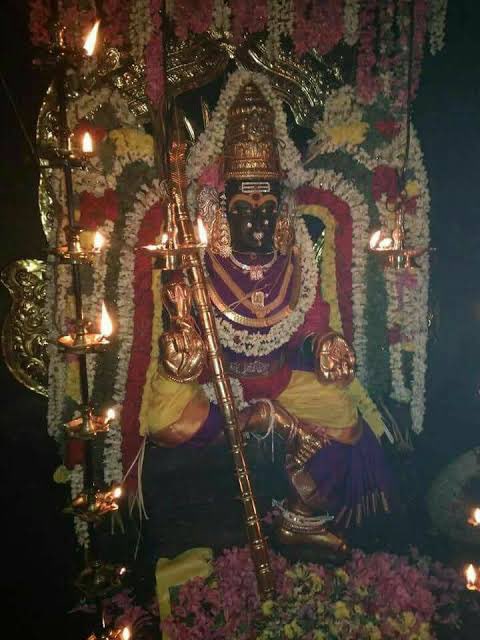
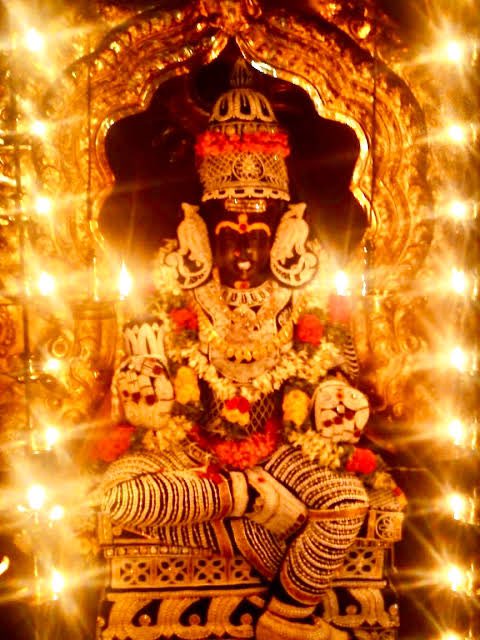
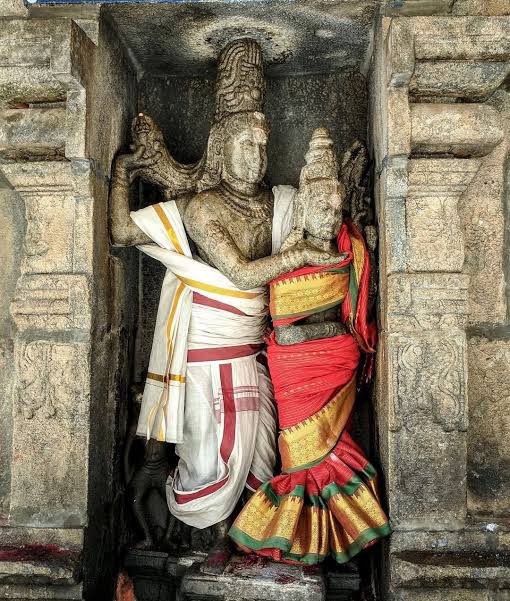


First thread of the year because I have time during MCO. As requested, a thread on the gods and spirits of Malay folk religion. Some are indigenous, some are of Indian origin, some have Islamic
Before I begin, it might be worth explaining the Malay conception of the spirit world. At its deepest level, Malay religious belief is animist. All living beings and even certain objects are said to have a soul. Natural phenomena are either controlled by or personified as spirits
Although these beings had to be respected, not all of them were powerful enough to be considered gods. Offerings would be made to the spirits that had greater influence on human life. Spells and incantations would invoke their
Two known examples of such elemental spirits that had god-like status are Raja Angin (king of the wind) and Mambang Tali Arus (spirit of river currents). There were undoubtedly many more which have been lost to time
Contact with ancient India brought the influence of Hinduism and Buddhism to SEA. What we now call Hinduism similarly developed in India out of native animism and the more formal Vedic tradition. This can be seen in the multitude of sacred animals and location-specific Hindu gods
i wonder if you can make a thread bout witchcraft in malaysia.. or list of our own local gods/deites..
— r a y a \U0001f319 (@lcvelylilith) February 20, 2020
Before I begin, it might be worth explaining the Malay conception of the spirit world. At its deepest level, Malay religious belief is animist. All living beings and even certain objects are said to have a soul. Natural phenomena are either controlled by or personified as spirits
Although these beings had to be respected, not all of them were powerful enough to be considered gods. Offerings would be made to the spirits that had greater influence on human life. Spells and incantations would invoke their
Animist ceremonies of a religious or magical nature were normally held for the purpose of divination or making a request. This would either be done at a keramat or at a shrine similar to the Thai spirit houses or Chinese roadside shrines pic.twitter.com/I1hliyi0x3
— \u2745\u1710\u170b\u1713\u170e (@uglyluhan) June 16, 2019
Two known examples of such elemental spirits that had god-like status are Raja Angin (king of the wind) and Mambang Tali Arus (spirit of river currents). There were undoubtedly many more which have been lost to time
Contact with ancient India brought the influence of Hinduism and Buddhism to SEA. What we now call Hinduism similarly developed in India out of native animism and the more formal Vedic tradition. This can be seen in the multitude of sacred animals and location-specific Hindu gods