
EXPLANATION OF THE EXISTENCE OF DARK MATTER AND DARK ENERGY !
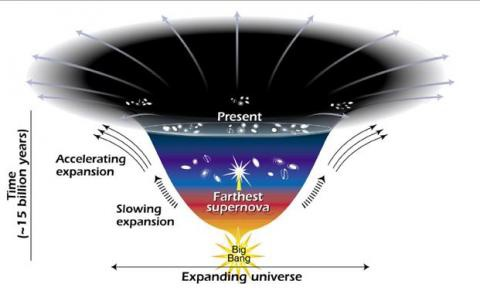
What Is Dark Energy ?
More is unknown than is known. We know how much dark energy there is because we know how it affects the universe's expansion. Other than that, it is a complete mystery.
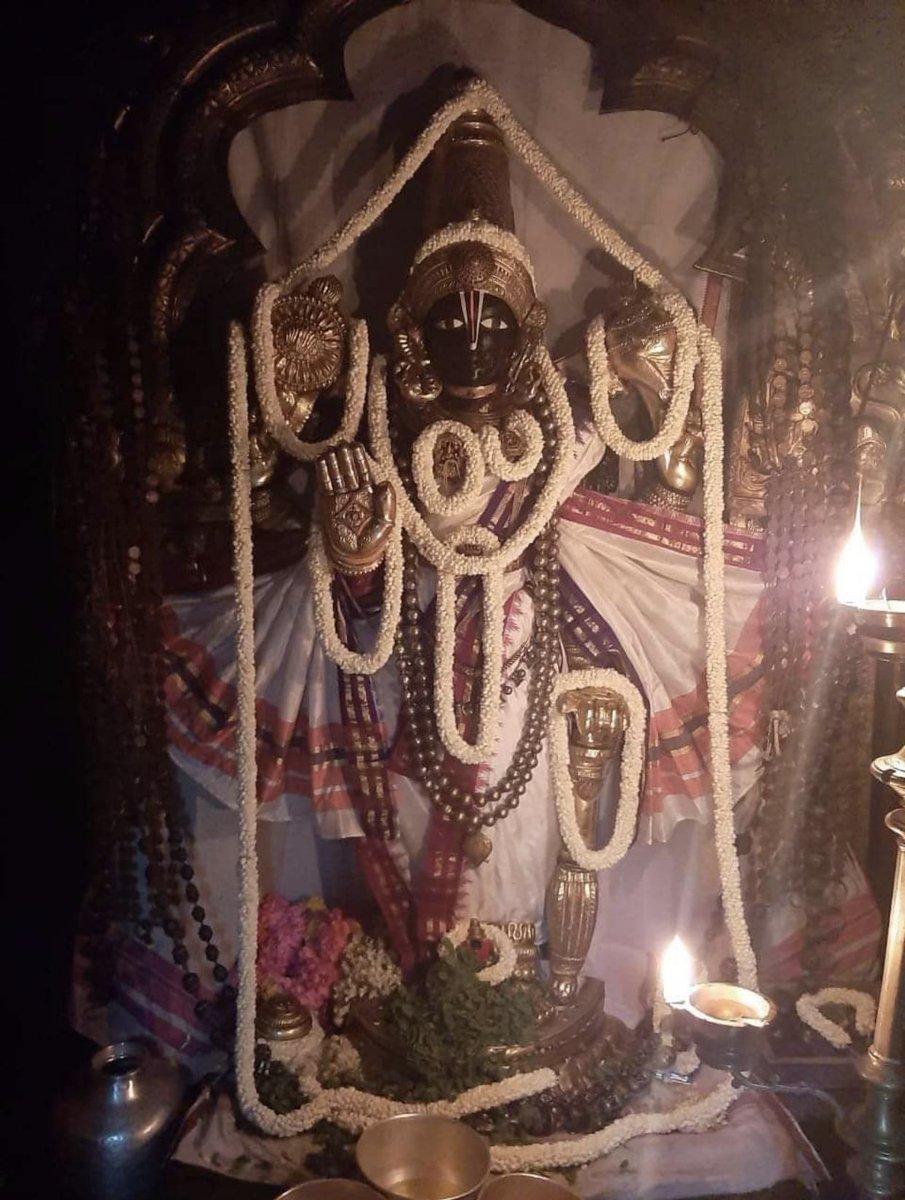
WHAT OUR SANATAN DHARMA SAYS IN THIS CONTEXT LET’S TAKE A LOOK
The verses of Taittiriya Aranyaka say that only one pada of the Lord
According to the observations and realizations of ancient seers, nearly eighty percent of this universe is yet of unknown nature which remains inactive during the process of creation (rather, evolution).
In Nasadiya sutra of Rigveda also there is a mention of this inactive matter as: ‘Nothing existed prior to creation of universe, neither shape nor size nor kind nor even the light.
‘Naavastuni vastu siddhi’
which means that only life and inert fluid (dark matter) existed before creation.
More from AKASH BHAT



More from Science



An interesting thing about carp is that they can go into anoxic hibernation and switch to an anaerobic metabolism based on converting glycogen to ethanol.
The waste ethanol is diffused out the gills
https://t.co/V3D1umHf04
Carp can switch over to an anaerobic metabolism and quietly exhale booze until the situation gets better.
They basically evolved the same metabolic pathway as yeast, independently.
In theory, if you spent a few thousand years breeding carp for it, you could use them to make booze.
They'd be enormous, almost entirely glycogen deposits with a fish added as an afterthought.
The really interesting thing about anaerobic carp, is that they can go 4-5 months without oxygen by relying on liver glycogen.
You, a human, have only about 100 grams of glycogen in your liver, about 400 more grams in your skeletal muscles. Call it 500 grams total.
In humans, glycogen is also burned for energy. This is where the marathon runner's bonk comes from: you only have about 2,000 calories worth, and running a marathon burns those 2,000 calories.
The waste ethanol is diffused out the gills
https://t.co/V3D1umHf04
Carp can switch over to an anaerobic metabolism and quietly exhale booze until the situation gets better.
They basically evolved the same metabolic pathway as yeast, independently.
In theory, if you spent a few thousand years breeding carp for it, you could use them to make booze.
They'd be enormous, almost entirely glycogen deposits with a fish added as an afterthought.
The really interesting thing about anaerobic carp, is that they can go 4-5 months without oxygen by relying on liver glycogen.
You, a human, have only about 100 grams of glycogen in your liver, about 400 more grams in your skeletal muscles. Call it 500 grams total.
In humans, glycogen is also burned for energy. This is where the marathon runner's bonk comes from: you only have about 2,000 calories worth, and running a marathon burns those 2,000 calories.




You May Also Like




"I really want to break into Product Management"
make products.
"If only someone would tell me how I can get a startup to notice me."
Make Products.
"I guess it's impossible and I'll never break into the industry."
MAKE PRODUCTS.
Courtesy of @edbrisson's wonderful thread on breaking into comics – https://t.co/TgNblNSCBj – here is why the same applies to Product Management, too.
There is no better way of learning the craft of product, or proving your potential to employers, than just doing it.
You do not need anybody's permission. We don't have diplomas, nor doctorates. We can barely agree on a single standard of what a Product Manager is supposed to do.
But – there is at least one blindingly obvious industry consensus – a Product Manager makes Products.
And they don't need to be kept at the exact right temperature, given endless resource, or carefully protected in order to do this.
They find their own way.
make products.
"If only someone would tell me how I can get a startup to notice me."
Make Products.
"I guess it's impossible and I'll never break into the industry."
MAKE PRODUCTS.
Courtesy of @edbrisson's wonderful thread on breaking into comics – https://t.co/TgNblNSCBj – here is why the same applies to Product Management, too.
"I really want to break into comics"
— Ed Brisson (@edbrisson) December 4, 2018
make comics.
"If only someone would tell me how I can get an editor to notice me."
Make Comics.
"I guess it's impossible and I'll never break into the industry."
MAKE COMICS.
There is no better way of learning the craft of product, or proving your potential to employers, than just doing it.
You do not need anybody's permission. We don't have diplomas, nor doctorates. We can barely agree on a single standard of what a Product Manager is supposed to do.
But – there is at least one blindingly obvious industry consensus – a Product Manager makes Products.
And they don't need to be kept at the exact right temperature, given endless resource, or carefully protected in order to do this.
They find their own way.