
One year on: 9 things you need to know about the 2019 General Election
In contrast, it took just 25,000 or so votes to elect an SNP MP (thankfully, both parties back proportional representation!)
For the 16 million-plus voters in these seats, it may have felt like there was barely an election happening at all
That’s a marked contrast to proportional representation, where we'd end one-party-takes-all results at last
That means millions of people were forced to try and game the system. Often, the many tactical voting sites contradicted each other
Frankly, it’s seen as not worthwhile for some parties to campaign in ultra-safe seats
The PR, the Conservatives would still have been the largest party – they got the most votes. But they would not have an undeserved majority of seats
Last December’s election saw a return to deeply disproportionate results
More from Politics

What does "patriots in control" mean?
What would that "look like" in reality?

So a massive adult film star in all his glory is included in an official FBI government filing
Hunter Biden's book is categorized as "Chinese
TIME admits to "conspiracy" to "not rig, rather
A "pillow guy" has military-grade intercepts detailing the IP addresses and device MAC IDs of EVERY incursion into every county in the
What would that "look like" in reality?
So a massive adult film star in all his glory is included in an official FBI government filing
Perhaps the explanation is that Patriots are in control.
— David Burney (@jdburney1) February 6, 2021
\U0001f923\U0001f923\U0001f923\U0001f923 https://t.co/W3S8TgeY74
Hunter Biden's book is categorized as "Chinese
Patriots in control?
— David Burney (@jdburney1) February 6, 2021
\U0001f923\U0001f923\U0001f923\U0001f923 https://t.co/p0rEyfd2DW
TIME admits to "conspiracy" to "not rig, rather
TIME admits stolen election, with spin!
— David Burney (@jdburney1) February 6, 2021
"They weren't rigging the election, they were fortifying it."
Recognize the Ministry of Truth? How many things in the last few years have been redefined to be the opposite of reality?
Google the definition of "bigot" if you doubt me. https://t.co/CNU888fxr4 pic.twitter.com/UEhRBOtUB6
A "pillow guy" has military-grade intercepts detailing the IP addresses and device MAC IDs of EVERY incursion into every county in the
God bless the pillow manufacturer.
— David Burney (@jdburney1) February 6, 2021
The last 30 minutes details where every single incursion is recorded including IP and MAC addresses. 100% proof. pic.twitter.com/P5MVb1xGNC


We’ve been getting calls and outreach from Queens residents all day about this.
The community’s response? Outrage.
Amazon is a billion-dollar company. The idea that it will receive hundreds of millions of dollars in tax breaks at a time when our subway is crumbling and our communities need MORE investment, not less, is extremely concerning to residents here.
When we talk about bringing jobs to the community, we need to dig deep:
- Has the company promised to hire in the existing community?
- What’s the quality of jobs + how many are promised? Are these jobs low-wage or high wage? Are there benefits? Can people collectively bargain?
Displacement is not community development. Investing in luxury condos is not the same thing as investing in people and families.
Shuffling working class people out of a community does not improve their quality of life.
We need to focus on good healthcare, living wages, affordable rent. Corporations that offer none of those things should be met w/ skepticism.
It’s possible to establish economic partnerships w/ real opportunities for working families, instead of a race-to-the-bottom competition.
The community’s response? Outrage.
Amazon will divide its second headquarters evenly between New York's Long Island City and Arlington County's Crystal City neighborhoods. Other cities may also receive major sites. https://t.co/c1lKmeQinX
— The Wall Street Journal (@WSJ) November 13, 2018
Amazon is a billion-dollar company. The idea that it will receive hundreds of millions of dollars in tax breaks at a time when our subway is crumbling and our communities need MORE investment, not less, is extremely concerning to residents here.
When we talk about bringing jobs to the community, we need to dig deep:
- Has the company promised to hire in the existing community?
- What’s the quality of jobs + how many are promised? Are these jobs low-wage or high wage? Are there benefits? Can people collectively bargain?
Displacement is not community development. Investing in luxury condos is not the same thing as investing in people and families.
Shuffling working class people out of a community does not improve their quality of life.
We need to focus on good healthcare, living wages, affordable rent. Corporations that offer none of those things should be met w/ skepticism.
It’s possible to establish economic partnerships w/ real opportunities for working families, instead of a race-to-the-bottom competition.



You May Also Like











#sculpture #story -
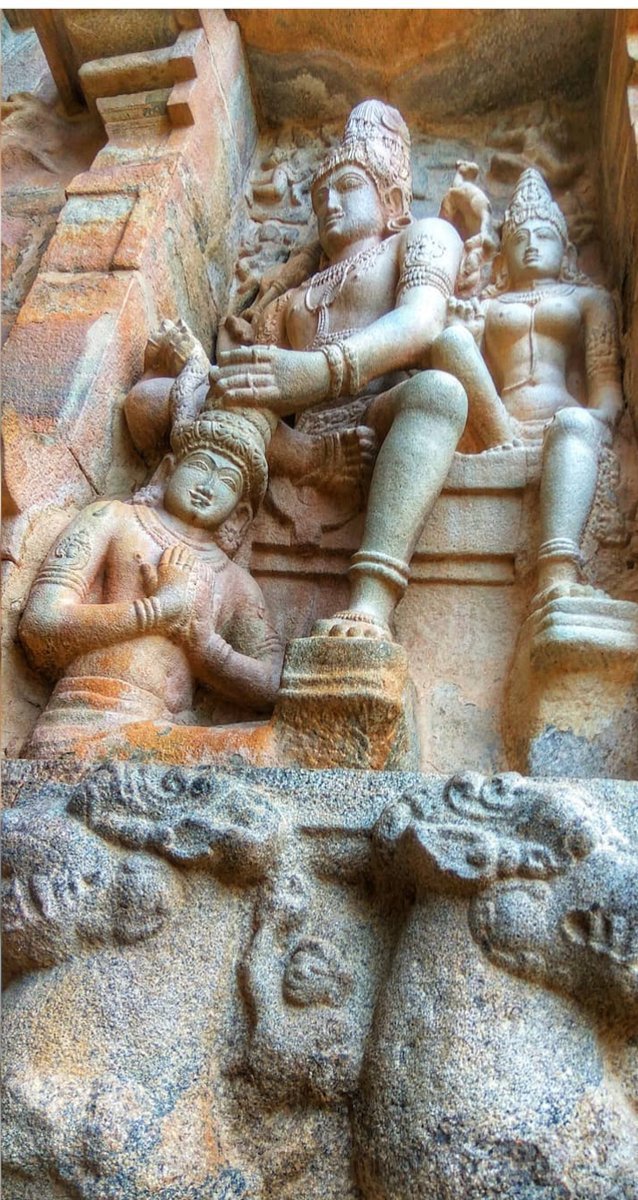
Chandesha-Anugraha Murti - One of the Sculpture in Brihadeshwara Temple at Gangaikonda Cholapuram - built by Raja Rajendra Chola I
This Sculpture depicts Bhagwan Shiva along with Devi Paravathi blessing Chandeshwara - one of the 63 Nayanmars.
#Thread
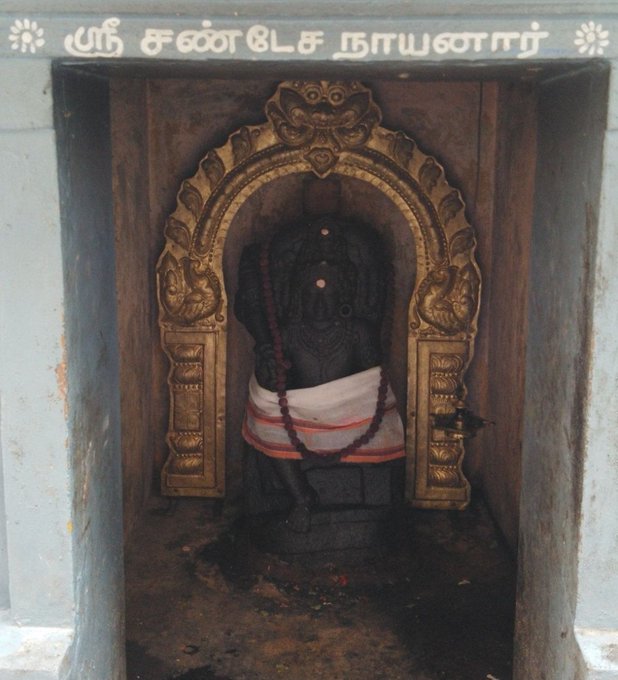
Chandeshwara/Chandikeshwara is regarded as custodian of Shiva Temple's wealth&most of Shiva temples in South India has separate sannathi for him.
His bhakti for Bhagwan Shiva elevated him as one of foremost among Nayanmars.
He gave importance to Shiva Pooja&protection of cows.
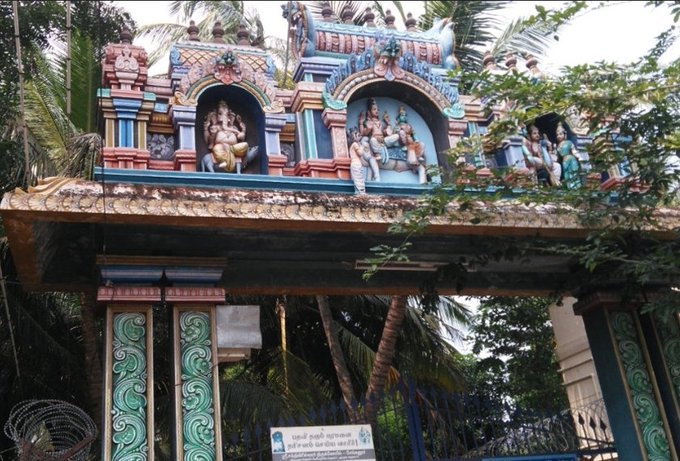
There are series of paintings, illustrating the #story of Chandikeshwar in the premises of
Sri Sathiyagireeswarar #Temple at Seinganur,near Kumbakonam,TN
Chandikeshwara's birth name
is Vichara sarman.He was born in the village of Senganur on the banks of River Manni.
His Parent names were Yajnathatan and Pavithrai.
Vichara Sarman was a gifted child and he learnt Vedas and Agamas at a very young age.
He was very devout and would always think about Bhagwan Shiva.
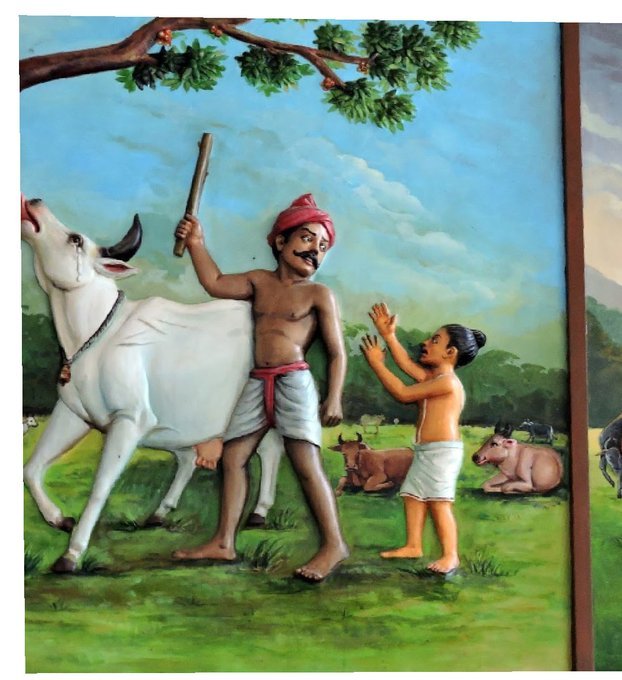
One day he saw a cowherd man brutally assaulting a cow,Vichara Sarman could not tolerate this. He spoke to cowherd: ‘Do you not know that the cow is worshipful & divine? All gods & Devas reside in https://t.co/ElLcI5ppsK it is our duty to protect cows &we should not to harm them.
Chandesha-Anugraha Murti - One of the Sculpture in Brihadeshwara Temple at Gangaikonda Cholapuram - built by Raja Rajendra Chola I
This Sculpture depicts Bhagwan Shiva along with Devi Paravathi blessing Chandeshwara - one of the 63 Nayanmars.
#Thread
Chandeshwara/Chandikeshwara is regarded as custodian of Shiva Temple's wealth&most of Shiva temples in South India has separate sannathi for him.
His bhakti for Bhagwan Shiva elevated him as one of foremost among Nayanmars.
He gave importance to Shiva Pooja&protection of cows.
There are series of paintings, illustrating the #story of Chandikeshwar in the premises of
Sri Sathiyagireeswarar #Temple at Seinganur,near Kumbakonam,TN
Chandikeshwara's birth name
is Vichara sarman.He was born in the village of Senganur on the banks of River Manni.
His Parent names were Yajnathatan and Pavithrai.
Vichara Sarman was a gifted child and he learnt Vedas and Agamas at a very young age.
He was very devout and would always think about Bhagwan Shiva.
One day he saw a cowherd man brutally assaulting a cow,Vichara Sarman could not tolerate this. He spoke to cowherd: ‘Do you not know that the cow is worshipful & divine? All gods & Devas reside in https://t.co/ElLcI5ppsK it is our duty to protect cows &we should not to harm them.