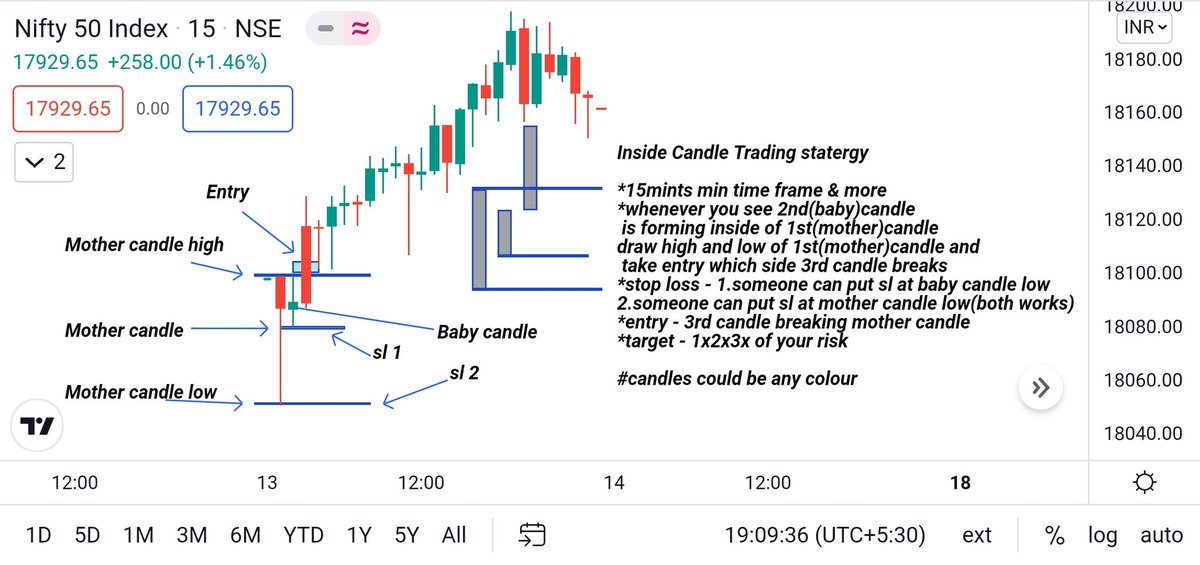
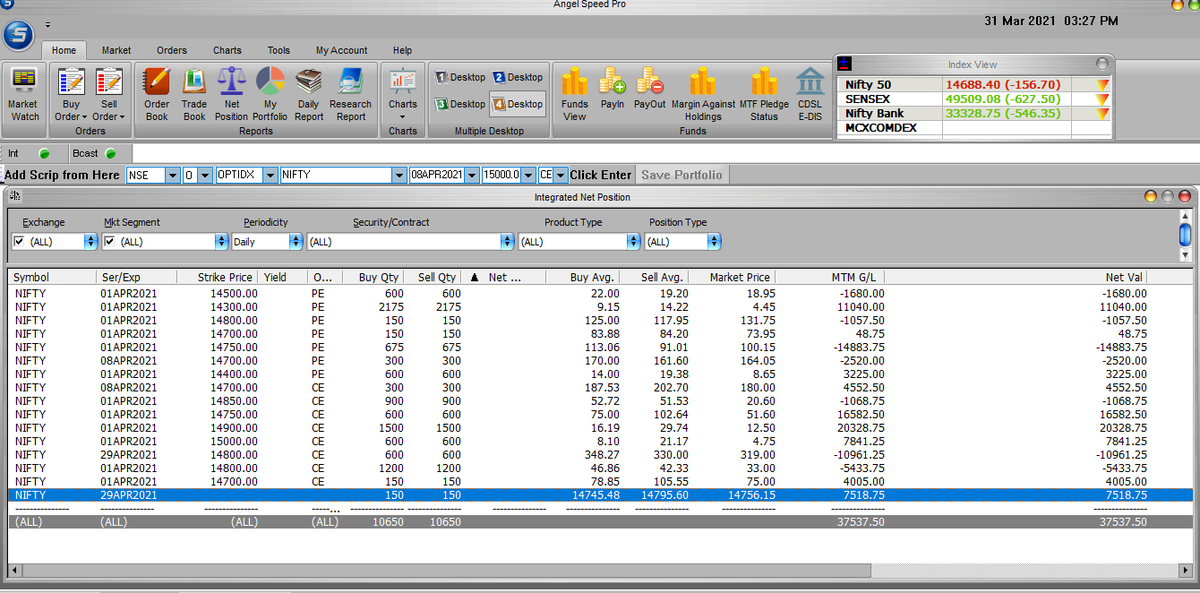
Sharing a simplest ever to trade options.

Chalk out Support & Resistance.
Play contra.
Like make bullish positions on support
Or
Bearish on resistance.
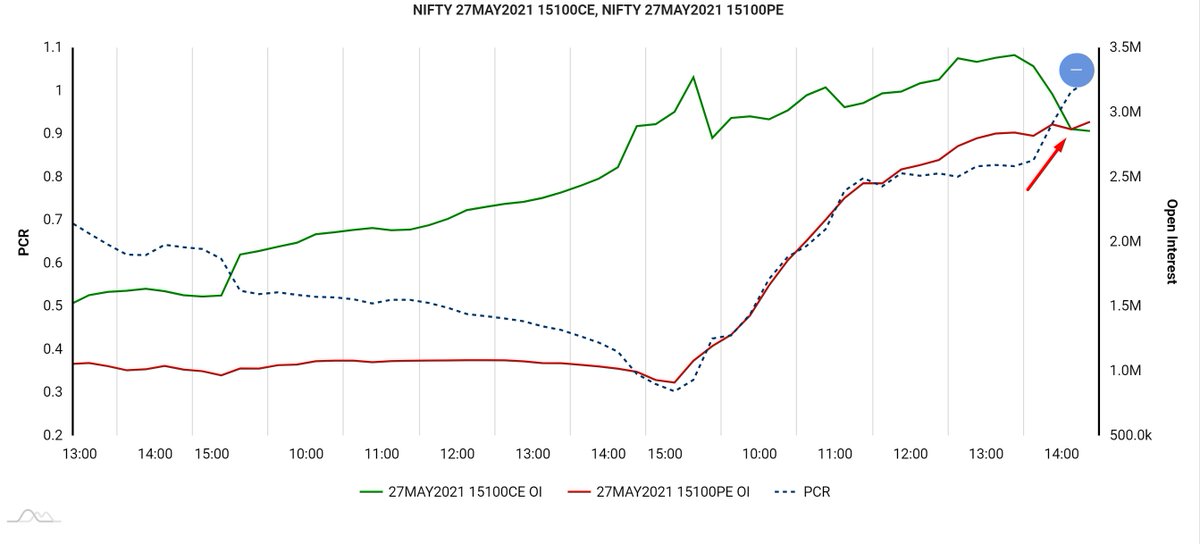
Bullish means sell ATM PE & OTM CE
or bearish means ATM CE & OTM PE
Exit if support or resistance broken.
As it gonna be a trending day.
Hold another leg to breakeven.
If moves comes into favour, one gonna make awesome.
Note:- Don’t let winners becomes looser in case strong move in favour comes.
I m sure , you won’t loose much but gain good if you win 50% times.
Moreover you gonna be right around 70% of times.
practice on regular basic to gain confidence.

More from Optionslearnings

Trading Strategies 101

14 "must-try" trading strategies you can start using today: 🧵

Collaborated with @niki_poojary

We'll break these into portions of:

1. Intraday Trading Techniques
2. Positional Trading Techniques
3. Indicator Applications

1/ 6 Intraday Strategies 🧵

How to Filter Stocks for Intraday


2/ Intraday BNF strangle based on OI data. 🧵


3/ A few setups to make intraday trading easy.

You May Also Like

Recently, the @CNIL issued a decision regarding the GDPR compliance of an unknown French adtech company named "Vectaury". It may seem like small fry, but the decision has potential wide-ranging impacts for Google, the IAB framework, and today's adtech. It's thread time! 👇

It's all in French, but if you're up for it you can read:
• Their blog post (lacks the most interesting details):
https://t.co/PHkDcOT1hy
• Their high-level legal decision: https://t.co/hwpiEvjodt
• The full notification: https://t.co/QQB7rfynha

I've read it so you needn't!

Vectaury was collecting geolocation data in order to create profiles (eg. people who often go to this or that type of shop) so as to power ad targeting. They operate through embedded SDKs and ad bidding, making them invisible to users.

The @CNIL notes that profiling based off of geolocation presents particular risks since it reveals people's movements and habits. As risky, the processing requires consent — this will be the heart of their assessment.

Interesting point: they justify the decision in part because of how many people COULD be targeted in this way (rather than how many have — though they note that too). Because it's on a phone, and many have phones, it is considered large-scale processing no matter what.