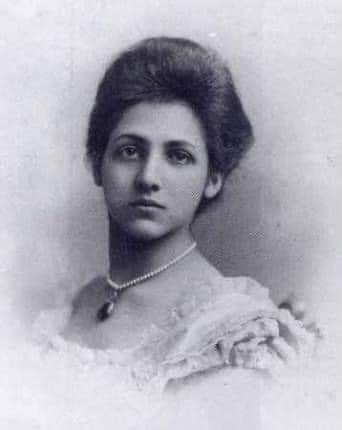
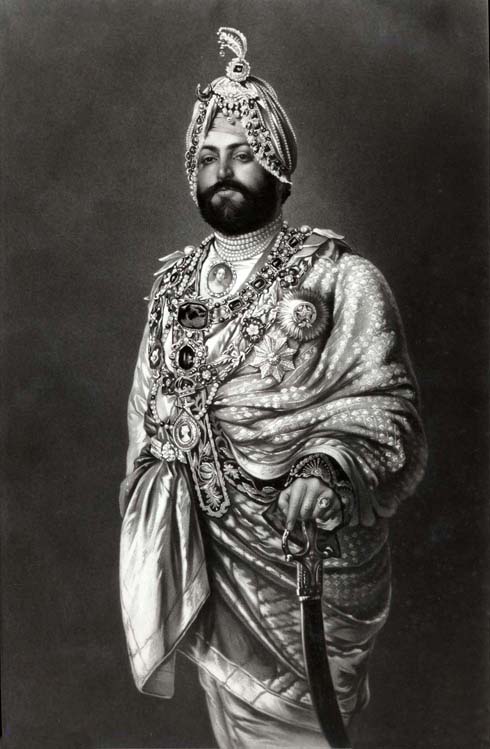
THE LAST PRINCESS OF LAHORE - BAMBA DULEEP SINGH (1869 - 1957)
Thread
Post partition, every morning a weak old woman would board the Model Town bus service headed to the city. The conductor never asked her for money or he would invite anger of the last Queen of Punjab.
1/n
Princess Bamba Sutherland, the eldest daughter of Maharaja Duleep Singh and grand-daughter of Maharaja Ranjit Singh, was born on Sep 29, 1869, in London.
Duleep Singh, the last Maharaja of Punjab was taken away to England by British after annexing Punjab.
2/n
Since he was still a child he was forcibly converted to Christianity and made to adopt British values in order to prevent him from ever thinking about regaining Punjab.
He was also kept away from his mother Maharani Jindan.
When he finally met his mother years later...
3/n
...he was told about his lost kingdom and religion after which he decided to reclaim it from British treachery.
During his struggle he married and had six children, 3 sons & 3 daughters from the 1st marriage.
Bamba was the most colorful character among 6 and was a rebel...
4/n
...like her father and daring like her Grandfather Ranjit Singh. She married Col Sutherland who later became principal of King Edward Medical College.
When she got permission to bring her grandmother Maharani Jindan's ashes to Lahore in 1924, she saw a huge crowd gathered...
5/n