
We know the risks of significant illness in this group are really, really low.
As medics, we were trained to apply "precautionary principle" and "first do no harm". It's drilled into students constantly.
It involves the recognition that every medical intervention has risks which need to be balanced with
We know the risks of significant illness in this group are really, really low.
https://t.co/FRgRhY3s73
https://t.co/paAtM3Koii
But as yet the vaccine has not even been shown to prevent infection or transmission, only reduce the severity of symtoms. Even Pfizer's CEO has stated as much.
https://t.co/j9iODDgEvP
None of the companies are claiming any reduction in the propensity to become infected, for example Pfizer's CEO is careful what he says here:https://t.co/wki00gMQoO
— Jonathan Engler (@jengleruk) December 7, 2020
OK, is this really what we want?
“In the worst-case scenario, you have people walking around feeling fine, but shedding virus everywhere,” says virologist Stephen Griffin at the University of Leeds, UK.
https://t.co/o91WCQm9E1
But one particular aspect of of this really, really disturbs me.
Really? I get asked that if ever I am given any medicine at all, whether it be drug treatment, or any vaccine.
Notably, however, subjects with a "history of severe adverse reaction associated with a vaccine" were specifically excluded.
https://t.co/Q6DNMsAdpG
https://t.co/2YHN72HebF
If so, well it's kind of understandable as the unexpected happens.
Life would be boring otherwise.
"Both NHS workers have a history of serious allergies and carry adrenaline pens around with them."
Where has "precautionary principle" gone?
I suppose I shouldn't be surprised. None of the lockdown policies pursued were ever properly analysed for collateral harms, even after the evidence became available.
I even think there's a case to be argued to allow schools to mandate vaccination as an entry requirement.
You May Also Like


First thread of the year because I have time during MCO. As requested, a thread on the gods and spirits of Malay folk religion. Some are indigenous, some are of Indian origin, some have Islamic
Before I begin, it might be worth explaining the Malay conception of the spirit world. At its deepest level, Malay religious belief is animist. All living beings and even certain objects are said to have a soul. Natural phenomena are either controlled by or personified as spirits
Although these beings had to be respected, not all of them were powerful enough to be considered gods. Offerings would be made to the spirits that had greater influence on human life. Spells and incantations would invoke their
Two known examples of such elemental spirits that had god-like status are Raja Angin (king of the wind) and Mambang Tali Arus (spirit of river currents). There were undoubtedly many more which have been lost to time
Contact with ancient India brought the influence of Hinduism and Buddhism to SEA. What we now call Hinduism similarly developed in India out of native animism and the more formal Vedic tradition. This can be seen in the multitude of sacred animals and location-specific Hindu gods
i wonder if you can make a thread bout witchcraft in malaysia.. or list of our own local gods/deites..
— r a y a \U0001f319 (@lcvelylilith) February 20, 2020
Before I begin, it might be worth explaining the Malay conception of the spirit world. At its deepest level, Malay religious belief is animist. All living beings and even certain objects are said to have a soul. Natural phenomena are either controlled by or personified as spirits
Although these beings had to be respected, not all of them were powerful enough to be considered gods. Offerings would be made to the spirits that had greater influence on human life. Spells and incantations would invoke their
Animist ceremonies of a religious or magical nature were normally held for the purpose of divination or making a request. This would either be done at a keramat or at a shrine similar to the Thai spirit houses or Chinese roadside shrines pic.twitter.com/I1hliyi0x3
— \u2745\u1710\u170b\u1713\u170e (@uglyluhan) June 16, 2019
Two known examples of such elemental spirits that had god-like status are Raja Angin (king of the wind) and Mambang Tali Arus (spirit of river currents). There were undoubtedly many more which have been lost to time
Contact with ancient India brought the influence of Hinduism and Buddhism to SEA. What we now call Hinduism similarly developed in India out of native animism and the more formal Vedic tradition. This can be seen in the multitude of sacred animals and location-specific Hindu gods

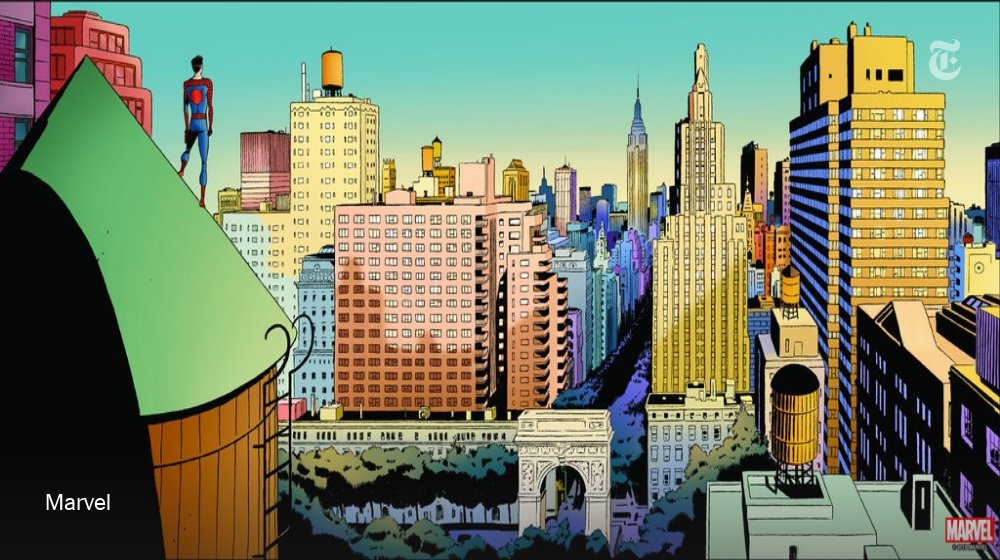
Stan Lee’s fictional superheroes lived in the real New York. Here’s where they lived, and why. https://t.co/oV1IGGN8R6

Stan Lee, who died Monday at 95, was born in Manhattan and graduated from DeWitt Clinton High School in the Bronx. His pulp-fiction heroes have come to define much of popular culture in the early 21st century.
Tying Marvel’s stable of pulp-fiction heroes to a real place — New York — served a counterbalance to the sometimes gravity-challenged action and the improbability of the stories. That was just what Stan Lee wanted. https://t.co/rDosqzpP8i

The New York universe hooked readers. And the artists drew what they were familiar with, which made the Marvel universe authentic-looking, down to the water towers atop many of the buildings. https://t.co/rDosqzpP8i
The Avengers Mansion was a Beaux-Arts palace. Fans know it as 890 Fifth Avenue. The Frick Collection, which now occupies the place, uses the address of the front door: 1 East 70th Street.
Stan Lee, who died Monday at 95, was born in Manhattan and graduated from DeWitt Clinton High School in the Bronx. His pulp-fiction heroes have come to define much of popular culture in the early 21st century.
Tying Marvel’s stable of pulp-fiction heroes to a real place — New York — served a counterbalance to the sometimes gravity-challenged action and the improbability of the stories. That was just what Stan Lee wanted. https://t.co/rDosqzpP8i
The New York universe hooked readers. And the artists drew what they were familiar with, which made the Marvel universe authentic-looking, down to the water towers atop many of the buildings. https://t.co/rDosqzpP8i
The Avengers Mansion was a Beaux-Arts palace. Fans know it as 890 Fifth Avenue. The Frick Collection, which now occupies the place, uses the address of the front door: 1 East 70th Street.
