Marie reached out to me today after 2 years, to give me the closure I never got. We talked for a while about our lost baby - lost love. There comes a time in a man's life when you have to look at yourself in the mirror & say, "I need help". I'll get help. I will be a better man.
More from Life

THREAD: 12 Things Everyone Should Know About IQ
1. IQ is one of the most heritable psychological traits – that is, individual differences in IQ are strongly associated with individual differences in genes (at least in fairly typical modern environments). https://t.co/3XxzW9bxLE
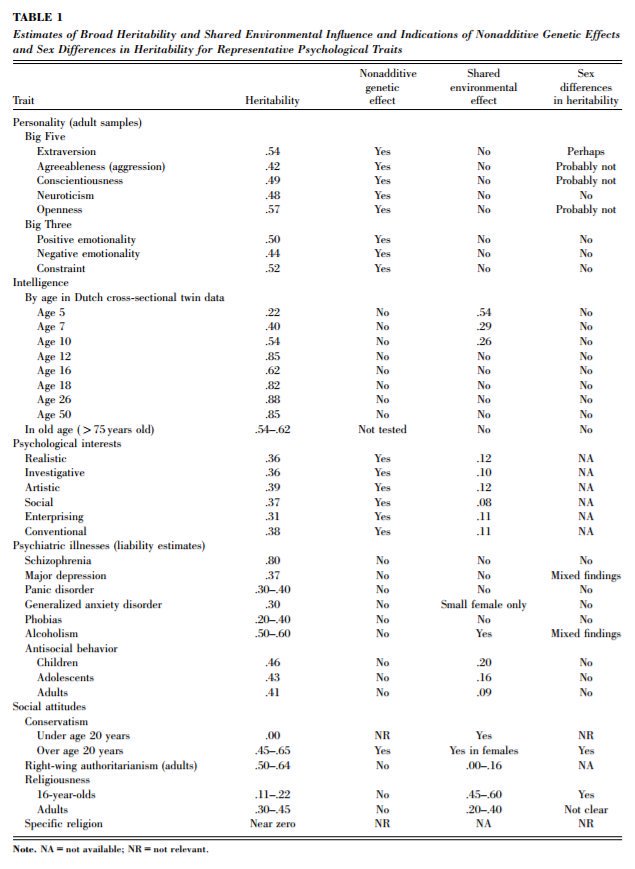
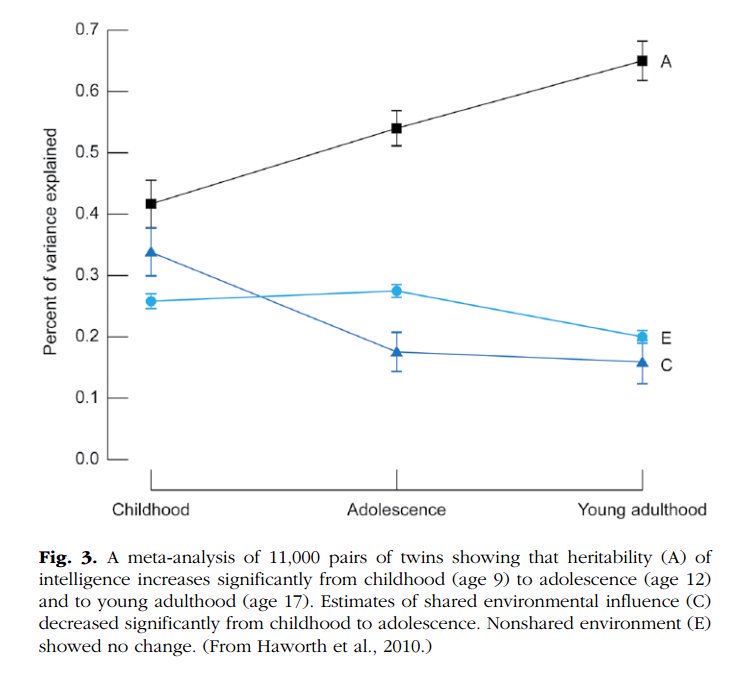
2. The heritability of IQ *increases* from childhood to adulthood. Meanwhile, the effect of the shared environment largely fades away. In other words, when it comes to IQ, nature becomes more important as we get older, nurture less. https://t.co/UqtS1lpw3n
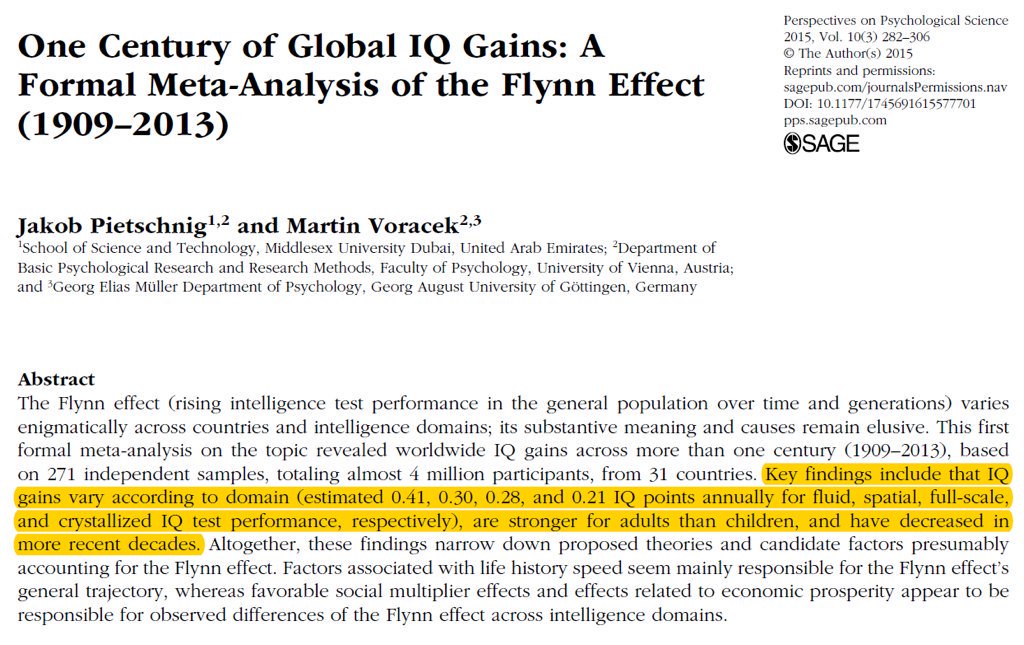
3. IQ scores have been increasing for the last century or so, a phenomenon known as the Flynn effect. https://t.co/sCZvCst3hw (N ≈ 4 million)
(Note that the Flynn effect shows that IQ isn't 100% genetic; it doesn't show that it's 100% environmental.)
4. IQ predicts many important real world outcomes.
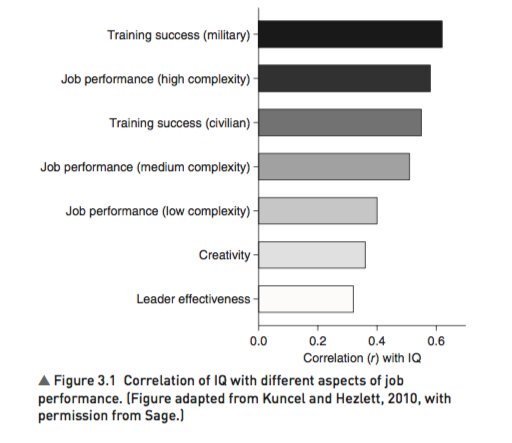
For example, though far from perfect, IQ is the single-best predictor of job performance we have – much better than Emotional Intelligence, the Big Five, Grit, etc. https://t.co/rKUgKDAAVx https://t.co/DWbVI8QSU3
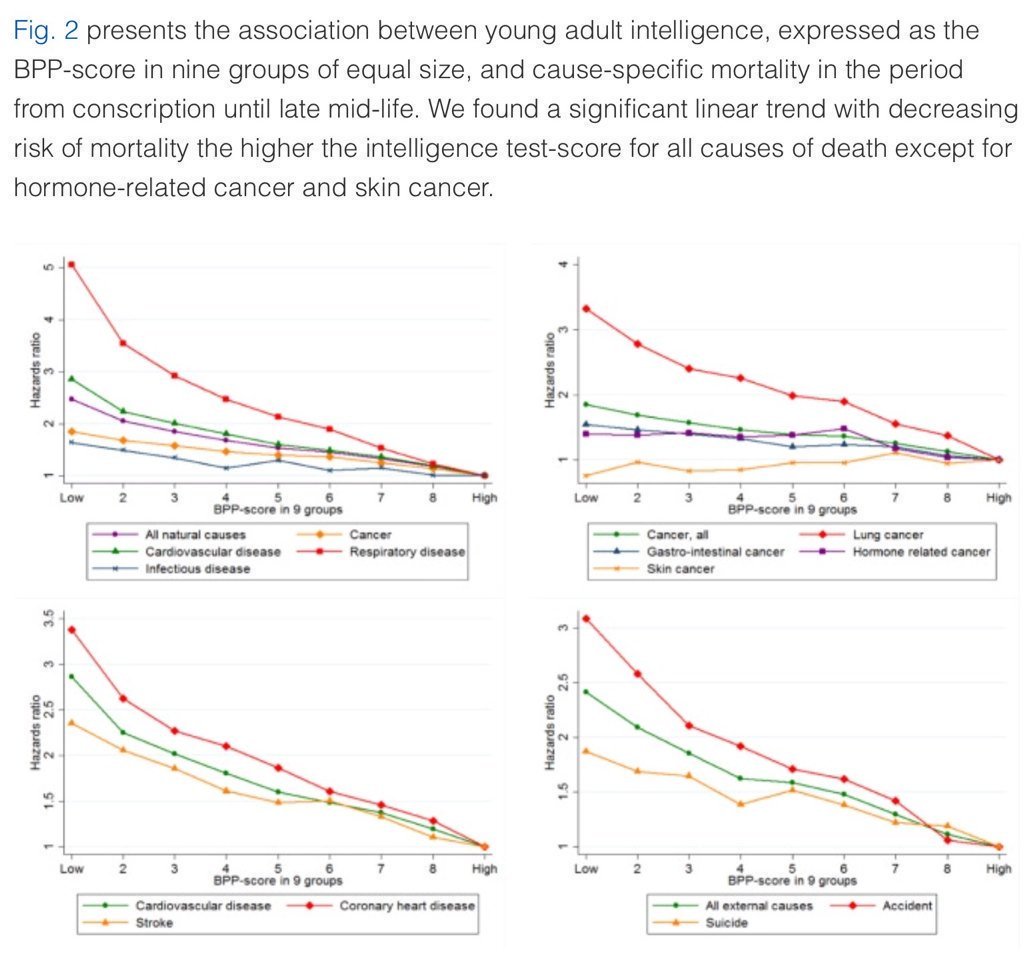
5. Higher IQ is associated with a lower risk of death from most causes, including cardiovascular disease, respiratory disease, most forms of cancer, homicide, suicide, and accident. https://t.co/PJjGNyeQRA (N = 728,160)
1. IQ is one of the most heritable psychological traits – that is, individual differences in IQ are strongly associated with individual differences in genes (at least in fairly typical modern environments). https://t.co/3XxzW9bxLE
2. The heritability of IQ *increases* from childhood to adulthood. Meanwhile, the effect of the shared environment largely fades away. In other words, when it comes to IQ, nature becomes more important as we get older, nurture less. https://t.co/UqtS1lpw3n
3. IQ scores have been increasing for the last century or so, a phenomenon known as the Flynn effect. https://t.co/sCZvCst3hw (N ≈ 4 million)
(Note that the Flynn effect shows that IQ isn't 100% genetic; it doesn't show that it's 100% environmental.)
4. IQ predicts many important real world outcomes.
For example, though far from perfect, IQ is the single-best predictor of job performance we have – much better than Emotional Intelligence, the Big Five, Grit, etc. https://t.co/rKUgKDAAVx https://t.co/DWbVI8QSU3
5. Higher IQ is associated with a lower risk of death from most causes, including cardiovascular disease, respiratory disease, most forms of cancer, homicide, suicide, and accident. https://t.co/PJjGNyeQRA (N = 728,160)


This month I’m turning 22.
To celebrate, here are the 22 best threads I’ve found on Twitter this year.
Mostly about:
•Life/purpose
•Startups
•Entrepreneurs
•Writing
•Clarity of thought
If I see more interesting threads, I will add to this list.
Enjoy!
1. @ryanstephens: Need tips on growing a newsletter, mastering Twitter, writing online?
@ryanstephens breaks down a podcast discussion between @davidperell and @nathanbarry
Here’s what you can
2. @jackbutcher: How to separate your time from your income
•Explore the market
•Build equity
•Build products and services
•Scale your reputation
•Break the matrix
A fantastic thread complete with helpful
3. @AlexAndBooks_: I love to read.
Here is a great thread on 10 fantastic books.
Includes a short summary of each.
Don’t just take it from me, this is straight from the legend: @AlexAndBooks_
4. @m_franceschetti My biggest revelation in 2020 was the importance of sleep.
Here, @m_franceschetti founder of @eightsleep gives us his eight sleep hacks to improve sleep for 2021.
Do these and your productivity will
To celebrate, here are the 22 best threads I’ve found on Twitter this year.
Mostly about:
•Life/purpose
•Startups
•Entrepreneurs
•Writing
•Clarity of thought
If I see more interesting threads, I will add to this list.
Enjoy!
1. @ryanstephens: Need tips on growing a newsletter, mastering Twitter, writing online?
@ryanstephens breaks down a podcast discussion between @davidperell and @nathanbarry
Here’s what you can
"The Writing Guy" @david_perell recently joined the re-launch of @Nathanbarry's podcast to discuss growing your newsletter, mastering Twitter, writing online and monetizing your efforts.
— Ryan Stephens \U0001f943 (@ryanstephens) December 16, 2020
Here's what you can learn from him.
THREAD
2. @jackbutcher: How to separate your time from your income
•Explore the market
•Build equity
•Build products and services
•Scale your reputation
•Break the matrix
A fantastic thread complete with helpful
Divorce your time and income: (thread)
— Jack Butcher (@jackbutcher) July 18, 2020
3. @AlexAndBooks_: I love to read.
Here is a great thread on 10 fantastic books.
Includes a short summary of each.
Don’t just take it from me, this is straight from the legend: @AlexAndBooks_
I read 55 books in 2020.
— Alex and Books \U0001f4da (@AlexAndBooks_) December 29, 2020
Here are my top 10 favorites and a short summary of each.
(thread) \U0001f9f5 pic.twitter.com/yRyOFEygQ0
4. @m_franceschetti My biggest revelation in 2020 was the importance of sleep.
Here, @m_franceschetti founder of @eightsleep gives us his eight sleep hacks to improve sleep for 2021.
Do these and your productivity will
Sleep is always my top priority, and will continue to be in 2021. It is foundational to all health.
— Matteo Franceschetti (@m_franceschetti) January 4, 2021
I\u2019ve compiled a list of my top 8 sleep hacks that I use everyday to improve my sleep. If you are trying to improve your sleep in 2021, this thread is for you. \U0001f447
You May Also Like

Krugman is, of course, right about this. BUT, note that universities can do a lot to revitalize declining and rural regions.
See this thing that @lymanstoneky wrote:
And see this thing that I wrote:
And see this book that @JamesFallows wrote:
And see this other thing that I wrote:
One thing I've been noticing about responses to today's column is that many people still don't get how strong the forces behind regional divergence are, and how hard to reverse 1/ https://t.co/Ft2aH1NcQt
— Paul Krugman (@paulkrugman) November 20, 2018
See this thing that @lymanstoneky wrote:
And see this thing that I wrote:
And see this book that @JamesFallows wrote:
And see this other thing that I wrote: