
I witnessed a really powerful moment today in court. A judge read the harrowing words of a junior doctor to a man who had been on a mass protest against lockdown.
More from Legal

LATEST:
#BLM & Movement for Black Lives are promoting a 128 page bill that brings their radical protest demands into political reality.
The bill eliminates DoD ops, stops counter-terrorism programs, offers social services to illegal immigrants, &
Due to the exorbitant length of the bill (it's 128 pages) I have to explain the specifics of the BREATEHE act in sections. This article only includes the first section of the bill, which is pages 1-10.
You can find the full bill here: https://t.co/3WgchuFqXf
In the first 10 pages, the BREATHE Act moves to:
1. Repeal federal funding for local law enforcement.
The first two pages alone "abolishes" the D.E.A. and removes local law enforcement's ability to access federal funding for bulletproof vests.
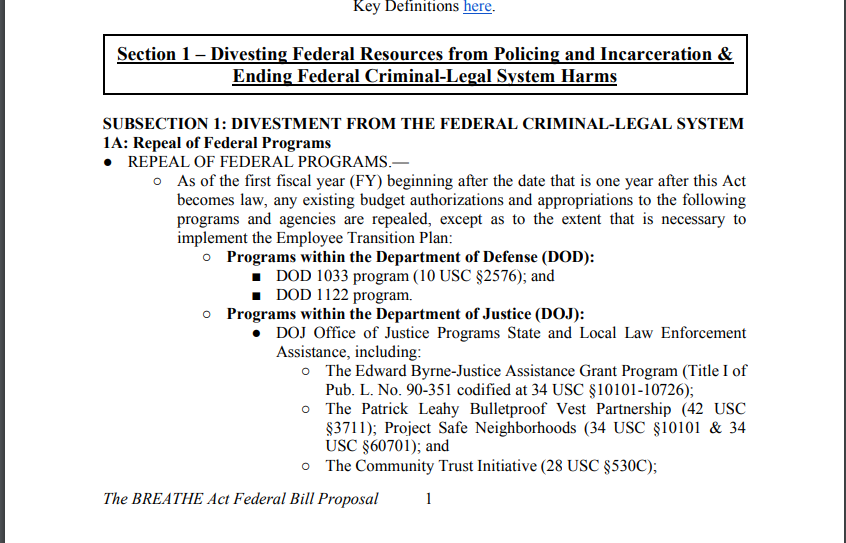
2. Eliminate Department of Homeland Security (@DHSgov) programs, including ICE and Countering Violent Extremism (CVE) programs.
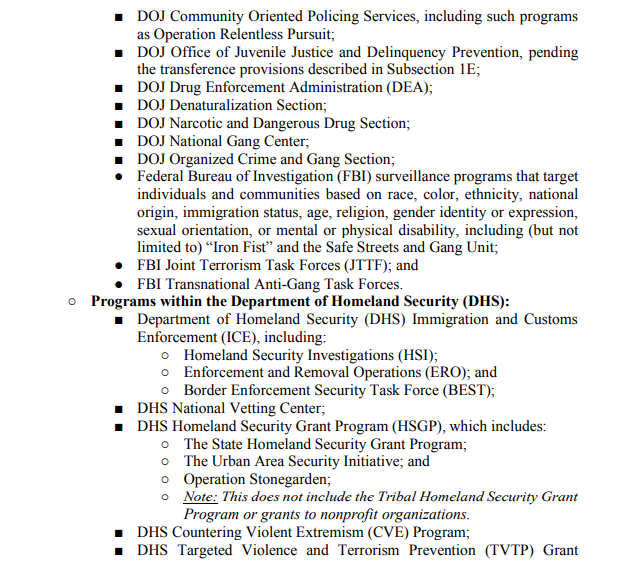
The specific programs that they move to abolish include:
ICE
Border Enforcement Security program
Countering Violent Extremism program
Targeted Violence and Terrorism Prevention Program
United States Citizenship and Immigration Services Denaturalization Program
#BLM & Movement for Black Lives are promoting a 128 page bill that brings their radical protest demands into political reality.
The bill eliminates DoD ops, stops counter-terrorism programs, offers social services to illegal immigrants, &
Due to the exorbitant length of the bill (it's 128 pages) I have to explain the specifics of the BREATEHE act in sections. This article only includes the first section of the bill, which is pages 1-10.
You can find the full bill here: https://t.co/3WgchuFqXf
In the first 10 pages, the BREATHE Act moves to:
1. Repeal federal funding for local law enforcement.
The first two pages alone "abolishes" the D.E.A. and removes local law enforcement's ability to access federal funding for bulletproof vests.
2. Eliminate Department of Homeland Security (@DHSgov) programs, including ICE and Countering Violent Extremism (CVE) programs.
The specific programs that they move to abolish include:
ICE
Border Enforcement Security program
Countering Violent Extremism program
Targeted Violence and Terrorism Prevention Program
United States Citizenship and Immigration Services Denaturalization Program


You May Also Like















1/ Some initial thoughts on personal moats:
Like company moats, your personal moat should be a competitive advantage that is not only durable—it should also compound over time.
Characteristics of a personal moat below:
2/ Like a company moat, you want to build career capital while you sleep.
As Andrew Chen noted:
3/ You don’t want to build a competitive advantage that is fleeting or that will get commoditized
Things that might get commoditized over time (some longer than
4/ Before the arrival of recorded music, what used to be scarce was the actual music itself — required an in-person artist.
After recorded music, the music itself became abundant and what became scarce was curation, distribution, and self space.
5/ Similarly, in careers, what used to be (more) scarce were things like ideas, money, and exclusive relationships.
In the internet economy, what has become scarce are things like specific knowledge, rare & valuable skills, and great reputations.
Like company moats, your personal moat should be a competitive advantage that is not only durable—it should also compound over time.
Characteristics of a personal moat below:
I'm increasingly interested in the idea of "personal moats" in the context of careers.
— Erik Torenberg (@eriktorenberg) November 22, 2018
Moats should be:
- Hard to learn and hard to do (but perhaps easier for you)
- Skills that are rare and valuable
- Legible
- Compounding over time
- Unique to your own talents & interests https://t.co/bB3k1YcH5b
2/ Like a company moat, you want to build career capital while you sleep.
As Andrew Chen noted:
People talk about \u201cpassive income\u201d a lot but not about \u201cpassive social capital\u201d or \u201cpassive networking\u201d or \u201cpassive knowledge gaining\u201d but that\u2019s what you can architect if you have a thing and it grows over time without intensive constant effort to sustain it
— Andrew Chen (@andrewchen) November 22, 2018
3/ You don’t want to build a competitive advantage that is fleeting or that will get commoditized
Things that might get commoditized over time (some longer than
Things that look like moats but likely aren\u2019t or may fade:
— Erik Torenberg (@eriktorenberg) November 22, 2018
- Proprietary networks
- Being something other than one of the best at any tournament style-game
- Many "awards"
- Twitter followers or general reach without "respect"
- Anything that depends on information asymmetry https://t.co/abjxesVIh9
4/ Before the arrival of recorded music, what used to be scarce was the actual music itself — required an in-person artist.
After recorded music, the music itself became abundant and what became scarce was curation, distribution, and self space.
5/ Similarly, in careers, what used to be (more) scarce were things like ideas, money, and exclusive relationships.
In the internet economy, what has become scarce are things like specific knowledge, rare & valuable skills, and great reputations.