• Index investing
It is a passive investment strategy that seeks to replicate the returns of an index.
By mimicking the index composition, the fund will match its performance.
Since you can't invest directly in an index, index funds are created to track their performance.
These index funds (Mutual funds and ETFs) allow investors to be exposed to a variety of securities while replicating the performance of the indices.
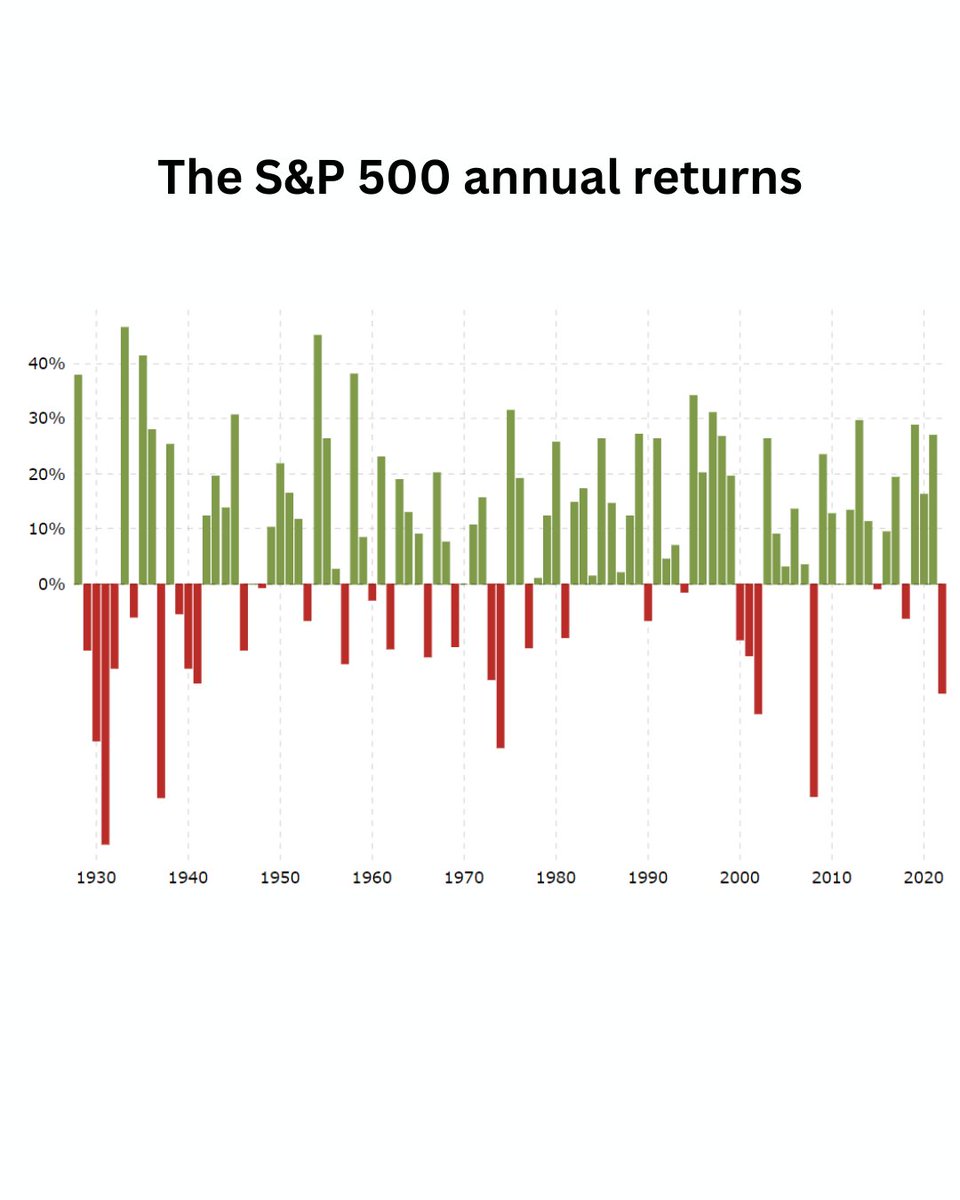
An example of a market index is the S&P 500, the Nasdaq, or the Dow Jones industrial average.
• Why buy index funds?
They are the simplest way to access the stock market.
Advantages:
• Time saver: You don't need to research individual stocks
• Low fees: Less costly than actively managed funds
• Low risk: Index funds are less risky than individual stocks
• Diversification: Index funds hold hundreds and thousands of companies
• Fewer Taxes: They are tax-efficient. They do not trade a lot, avoid generating capital gains, and lower their tax bills
• Great returns: Over 80% of active managers fail to beat index funds
What is the best way to invest in index funds?
The two most common types of index funds are ETFs and index mutual funds.
They both track the major indices.
ETFs are traded like stocks and priced during market hours.
Mutual funds are priced once a day after the market closes.
Here are a few ETFs:
• Vanguard 500 Index (VOO): Tracks the S&P 500 index and costs $4 per year for a $10,000 investment.
• Vanguard Total Stock Market (VTSAX): Tracks an index of stocks of all sizes in the United States; $4 per year in fees for a $10,000 investment.
• Vanguard Total International Stock Market (VXUS): Tracks index of global stocks, excluding the U.S.; $11/yr fee for $10K investment
• Vanguard Total Bond (VBTLX): Tracks the index of various bonds; $5/yr fee for a $10K investment.
What to look for before investing in an index fund?
1. Learn and analyze the index fund
• Location: Consider the geographic location
• Companies: Know the numbers of companies in the index
• Business: Know the industry in which the index invests
2. Fees
Index funds are cheap given that they have a passive approach.
Many of them do not charge commissions or trading fees.
Be wary of companies that offer sale loads and hidden management fees.
3. Expense ratio
It is a fee that mutual funds and exchange-traded funds (ETFs) charge investors to cover operating costs.
It is usually expressed as a percentage. They are typically expressed in percentages.
The lower the expense ratio, the better for you.
4. Long-term history
Tracking the performance of an index fund is crucial.
Although past performance doesn't guarantee future returns, knowing the history of an index can help you better decide.
Choose index funds that are low-cost and have a track record of good performance, especially well-known ones like the S&P 500.
Don't let these active managers fool you into thinking they can outperform the major indices.
If you enjoyed this thread, please like, comment, and retweet the first tweet.
I write about
• Personal Finance
• Investing
• Wealth
Follow me
@AccentInvesting for more tips.
Subscribe to receive a free guide on the top 5 ETFs to hold for life:
https://t.co/Id5i5yGsNE