
She has quite an origin story: The family ran out of wallpaper, so they papered her room with calculus notes from her father’s time at university.
Sofya Kovalevskaya was born #OTD in 1850. She was the first woman to earn a doctorate in mathematics in modern Europe, be appointed to a university chair, and join the editorial board of a scientific journal. She also won the Prix Bordin from the French Academy of Science.
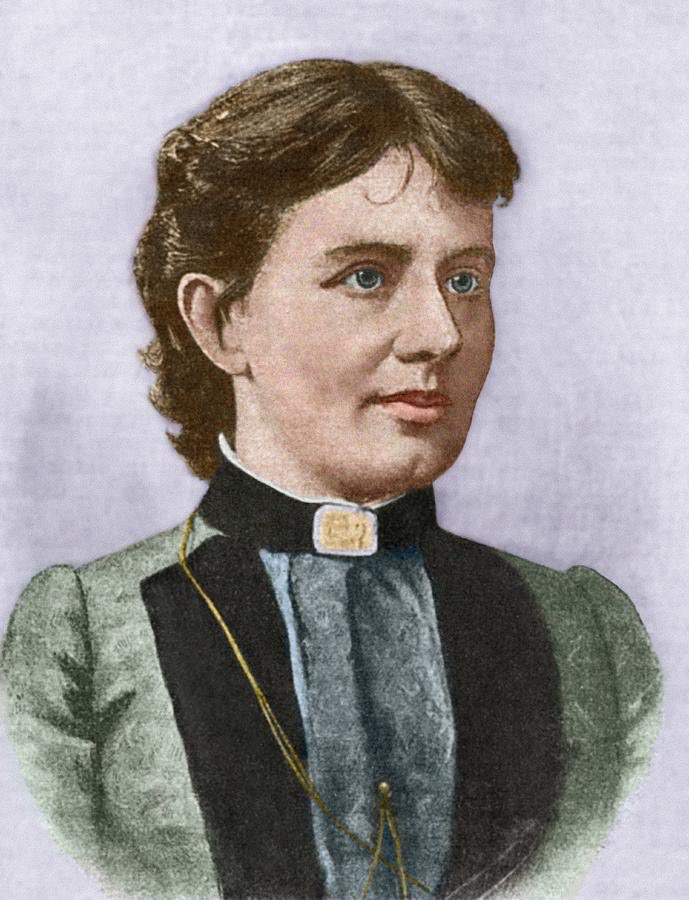
She has quite an origin story: The family ran out of wallpaper, so they papered her room with calculus notes from her father’s time at university.
https://t.co/vlAIml3P5i
The mathematician Karl Weierstrass was born #OTD, Halloween, in 1815. The fools at the academy all said he was mad, but in 1872 he announced that he had succeeded in creating a ~monster~.
— Robert McNees (@mcnees) October 31, 2020
Image: Smithsonian Institution Libraries pic.twitter.com/K1RC3MTBe2
https://t.co/IASA1PuqhL


Remember, the entries were anonymous. The judges assumed the author was a *him*.
The Imperial Academy of Sciences, the preeminent scientific organization in the country where Kovaleskaya had been refused a spot at univerisity because she was a woman, changed their rules to allow her election.
https://t.co/MqUHEwrll6

More from History








You May Also Like





The first area to focus on is diversity. This has become a dogma in the tech world, and despite the fact that tech is one of the most meritocratic industries in the world, there are constant efforts to promote diversity at the expense of fairness, merit and competency. Examples:
USC's Interactive Media & Games Division cancels all-star panel that included top-tier game developers who were invited to share their experiences with students. Why? Because there were no women on the
ElectronConf is a conf which chooses presenters based on blind auditions; the identity, gender, and race of the speaker is not known to the selection team. The results of that merit-based approach was an all-male panel. So they cancelled the conference.
Apple's head of diversity (a black woman) got in trouble for promoting a vision of diversity that is at odds with contemporary progressive dogma. (She left the company shortly after this
Also in the name of diversity, there is unabashed discrimination against men (especially white men) in tech, in both hiring policies and in other arenas. One such example is this, a developer workshop that specifically excluded men: https://t.co/N0SkH4hR35
USC's Interactive Media & Games Division cancels all-star panel that included top-tier game developers who were invited to share their experiences with students. Why? Because there were no women on the
ElectronConf is a conf which chooses presenters based on blind auditions; the identity, gender, and race of the speaker is not known to the selection team. The results of that merit-based approach was an all-male panel. So they cancelled the conference.
Apple's head of diversity (a black woman) got in trouble for promoting a vision of diversity that is at odds with contemporary progressive dogma. (She left the company shortly after this
Also in the name of diversity, there is unabashed discrimination against men (especially white men) in tech, in both hiring policies and in other arenas. One such example is this, a developer workshop that specifically excluded men: https://t.co/N0SkH4hR35