
“The history of India has for its landmarks not wars and emperors but saints and scriptures.”
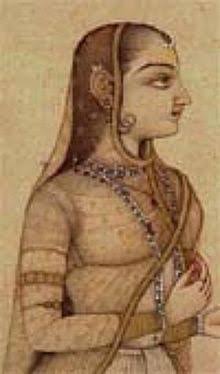
Lalleshwari (Lal Ded)
The Great Mystic Saint (1335-87)
The Valley of Kashmir, in spite of being walled by the high mountains,received waves after waves of various Asiatic cultures, which came from different directions and formed a happy amalgam in this land of beauty and plenty
“The history of India has for its landmarks not wars and emperors but saints and scriptures.”
Lalleshwari was born in pandrethan (ancient puranadhisthana) about 4.5 miles of the south east of Srinagar, in a kashmiri pandit family
Lalla’s poems are a reflection of all these influences,
In “Lal Ded - The Poet who gave a Voice to Women”. Prof. Neerja Mattoo says:
In the fourteenth century, a woman writing in any language was a rarity, but
A voice, which set off a resonance heard with clear tone till today, spoke directly to the people and what is more, was heard with all seriousness, recorded in collective memory and later, the words put down on paper.
Tradition has it that she was from a Brahmin family from a village near Srinagar.
She was married off at the age of twelve to Nika (Sona) Bhat of Drangbal near Pampore.
They may have mutton, but for Lalla the stone is the only fare
Lalla’s Lake/Pond
Saints of her stature always have legends and miracles associated with their lives.
One day, instigated by his mother, the jealous Nika broke the pitcher of water she brought home.
Unable to endure her distressful marriage any longer, she finally left her husband in her early twenties.
She sang -
Dance, Lalla, with nothing on
but air: Sing, Lalla,
wearing the sky.
Look at this glowing day! What clothes
could be so beautiful, or
more sacred? (1)
gaal gandiy-nyam bol padiy-nyam
Dapineym tiy yas yih routse,
Sahaza-kusamav puuz karineym,
Boh amalloun ta kas kyaah mvotse (2)
They may abuse me or jeer at me,
They may say what pleases them,
They may with flowers worship me.
What profits them whatever they do?
I am indifferent to praise and blame.
Mey mani waasaa khiid na heaye;
Boh youd sahaza Shankar-bakts aasaa,
Makris saasaa mal kyaah peyye (3)
If a true devotee of Siva I be,
I shall not feel distressed nor hurt.
Can a few ashes a mirror befoul?
Never differentiate between a Hindu and a Muslim.
If you are shrewd and intelligent, know THY SELF.
There lies acquaintance with god". *

“Idol is of stone temple is of stone;
Above (temple) and below (idol) are one;
Which of them wilt thou worship O foolish Pandit?
Cause thou the union of mind with Soul.”
O fool,right action does not lie
in observing fasts and ceremonial rites.
O fool, right action does not lie
in providing for bodily comfort and ease.
In contemplation of the Self alone
is right action and right counsel for you.

and meditating on the Self are too costly to buy;
He stands close by you! Do not look for Him far away.
The void was dissolved in the Void!”
* Bhakti and Worship in Scriptures in Kashmir Shaivism and Lal Ded Vakh by Prof. M.L. Koul
(1) Poetry Chaikhana
(2) https://t.co/8Qn2srf9oY
# Poet Seers
Other Web Sources
Saints and Sages of Kashmir
Image courtesy: https://t.co/J6gcWtkR8U
More from History









Rush Catalog
Emotion Detector (1985, Power Windows)
https://t.co/3U3Ol6tMHU
#RushFamily
@RushFamTourneys
What's your grade of this song?
https://t.co/3U3Ol6Lo6u
Lyrics:
When we lift the covers from our feelings
We expose our insecure spots
Trust is just as rare as devotion —
Forgive us our cynical thoughts
If we need too much attention —
Not content with being cool
We must throw ourselves wide open
And start acting like a fool
If we need too much approval
Then the cuts can seem too cruel
Right to the heart of the matter
Right to the beautiful part
Illusions are painfully shattered
Right where discovery starts
In the secret wells of emotion
Buried deep in our hearts
It’s true that love can change us
But never quite enough
Sometimes we are too tender
Sometimes we’re too tough
If we get too much attention
It gets hard to overrule
So often fragile power turns
To scorn and ridicule
Sometimes our big splashes
Are just ripples in the pool
Emotion Detector (1985, Power Windows)
https://t.co/3U3Ol6tMHU
#RushFamily
@RushFamTourneys
What's your grade of this song?
https://t.co/3U3Ol6Lo6u
Lyrics:
When we lift the covers from our feelings
We expose our insecure spots
Trust is just as rare as devotion —
Forgive us our cynical thoughts
If we need too much attention —
Not content with being cool
We must throw ourselves wide open
And start acting like a fool
If we need too much approval
Then the cuts can seem too cruel
Right to the heart of the matter
Right to the beautiful part
Illusions are painfully shattered
Right where discovery starts
In the secret wells of emotion
Buried deep in our hearts
It’s true that love can change us
But never quite enough
Sometimes we are too tender
Sometimes we’re too tough
If we get too much attention
It gets hard to overrule
So often fragile power turns
To scorn and ridicule
Sometimes our big splashes
Are just ripples in the pool
You May Also Like




First thread of the year because I have time during MCO. As requested, a thread on the gods and spirits of Malay folk religion. Some are indigenous, some are of Indian origin, some have Islamic
Before I begin, it might be worth explaining the Malay conception of the spirit world. At its deepest level, Malay religious belief is animist. All living beings and even certain objects are said to have a soul. Natural phenomena are either controlled by or personified as spirits
Although these beings had to be respected, not all of them were powerful enough to be considered gods. Offerings would be made to the spirits that had greater influence on human life. Spells and incantations would invoke their
Two known examples of such elemental spirits that had god-like status are Raja Angin (king of the wind) and Mambang Tali Arus (spirit of river currents). There were undoubtedly many more which have been lost to time
Contact with ancient India brought the influence of Hinduism and Buddhism to SEA. What we now call Hinduism similarly developed in India out of native animism and the more formal Vedic tradition. This can be seen in the multitude of sacred animals and location-specific Hindu gods
i wonder if you can make a thread bout witchcraft in malaysia.. or list of our own local gods/deites..
— r a y a \U0001f319 (@lcvelylilith) February 20, 2020
Before I begin, it might be worth explaining the Malay conception of the spirit world. At its deepest level, Malay religious belief is animist. All living beings and even certain objects are said to have a soul. Natural phenomena are either controlled by or personified as spirits
Although these beings had to be respected, not all of them were powerful enough to be considered gods. Offerings would be made to the spirits that had greater influence on human life. Spells and incantations would invoke their
Animist ceremonies of a religious or magical nature were normally held for the purpose of divination or making a request. This would either be done at a keramat or at a shrine similar to the Thai spirit houses or Chinese roadside shrines pic.twitter.com/I1hliyi0x3
— \u2745\u1710\u170b\u1713\u170e (@uglyluhan) June 16, 2019
Two known examples of such elemental spirits that had god-like status are Raja Angin (king of the wind) and Mambang Tali Arus (spirit of river currents). There were undoubtedly many more which have been lost to time
Contact with ancient India brought the influence of Hinduism and Buddhism to SEA. What we now call Hinduism similarly developed in India out of native animism and the more formal Vedic tradition. This can be seen in the multitude of sacred animals and location-specific Hindu gods