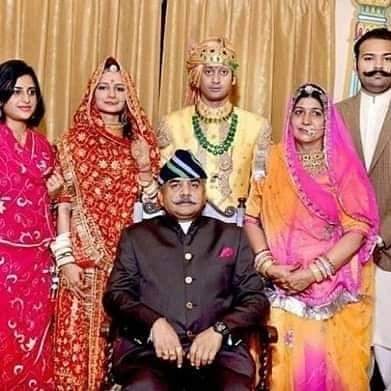
The last Hindu king of Pakistan.
The name Amarkot is known to all in our subcontinent as the birthplace of Emperor Akbar. When Humayun was fleeing from Sher Shah, Rana Prasad of Amarkot sheltered him and this is where Emperor Akbar was born.
#Thread
1/19
@talesofBharat
They have always maintained friendly relations with the rulers. The Mughal court and the Rana of Amarkot had special respect because Emperor Akbar was born in the shelter of Amarkot Raj. They did not even have to attend court regularly.
2/19
Dara Shikohar provided Rana supplies to Amarkot during his expedition to Kandahar.
But another reason why the name of this Amarkot is inextricably linked with the history of the subcontinent is the partition of the country.
Sodha is the family name of the Maharajas of..
3/19
Amarkot,They were originally known as Sodha Rajputs. Despite possessing a very small kingdom, he was far ahead in terms of wealth and honor. During the British rule, Rana Ratan Singh led the anti-British movement in Sindh. In 1753, the British occupied the state of Amarkot,
4/19
which was his and his ancestral home, and hanged Rana Ratan Singh on a high platform on the walls of Amarkot fort. It hangs in front for a few days. Even today, a folk song called "Mor tor tilaya rana" is very popular in Sindhi language.
After the capture of the fort by the
5/19