2/
The events of the week have shaken us all. Murray Bowen described 'societal regression.' Anxiety is contagious in any group and a society is one giant interconnected group, so over time, societies become more and more anxious unless the anxiety is displaced.
1/
2/
We are there.
3/
But it requires calm, aware leadership at every level.
4/
I frame it through the notion of spaces
1. The space inside me
2. The space between us
3. The space between me and God.
5/
4. The space inside them.
Systems Theory reminds us that spending time and energy on that space is not only futile, it is destructive.
6/
What is mine to carry, what is theirs, what is God's?
7/
8/
9/
10/
1. The Space inside me.
It may sound silly or weird, but maintaining connection with yourself is essential.
11/
It never does.
12/
That is a simple ex. of being connected to myself. Clarifying my posture, values, behavior BEFORE I get anxious so they can guide me WHEN I am anxious.
13.
One of the simplest, but most difficult ways to know you are anxious: you forget that God is with you. It is because anxiety has blocked your view.
14/
I, I, I.
But God invites me into response.
15/
More from Steve Cuss
More from Health

You gotta think about this one carefully!
Imagine you go to the doctor and get tested for a rare disease (only 1 in 10,000 people get it.)
The test is 99% effective in detecting both sick and healthy people.
Your test comes back positive.
Are you really sick? Explain below 👇
The most complete answer from every reply so far is from Dr. Lena. Thanks for taking the time and going through
You can get the answer using Bayes' theorem, but let's try to come up with it in a different —maybe more intuitive— way.
👇
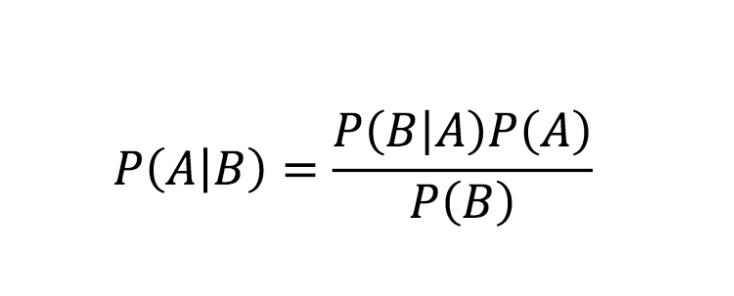
Here is what we know:
- Out of 10,000 people, 1 is sick
- Out of 100 sick people, 99 test positive
- Out of 100 healthy people, 99 test negative
Assuming 1 million people take the test (including you):
- 100 of them are sick
- 999,900 of them are healthy
👇
Let's now test both groups, starting with the 100 people sick:
▫️ 99 of them will be diagnosed (correctly) as sick (99%)
▫️ 1 of them is going to be diagnosed (incorrectly) as healthy (1%)
👇
Imagine you go to the doctor and get tested for a rare disease (only 1 in 10,000 people get it.)
The test is 99% effective in detecting both sick and healthy people.
Your test comes back positive.
Are you really sick? Explain below 👇
The most complete answer from every reply so far is from Dr. Lena. Thanks for taking the time and going through
Really doesn\u2019t fit well in a tweet. pic.twitter.com/xN0pAyniFS
— Dr. Lena Sugar \U0001f3f3\ufe0f\u200d\U0001f308\U0001f1ea\U0001f1fa\U0001f1ef\U0001f1f5 (@_jvs) February 18, 2021
You can get the answer using Bayes' theorem, but let's try to come up with it in a different —maybe more intuitive— way.
👇
Here is what we know:
- Out of 10,000 people, 1 is sick
- Out of 100 sick people, 99 test positive
- Out of 100 healthy people, 99 test negative
Assuming 1 million people take the test (including you):
- 100 of them are sick
- 999,900 of them are healthy
👇
Let's now test both groups, starting with the 100 people sick:
▫️ 99 of them will be diagnosed (correctly) as sick (99%)
▫️ 1 of them is going to be diagnosed (incorrectly) as healthy (1%)
👇


1/15
Why can cefepime cause neurological toxicity?
And why is renal failure the main risk factor for this complication?
The answer requires us to learn about cefepime's structure and why it unexpectedly binds to a certain CNS receptor.
#MedTwitter #Tweetorial
2/
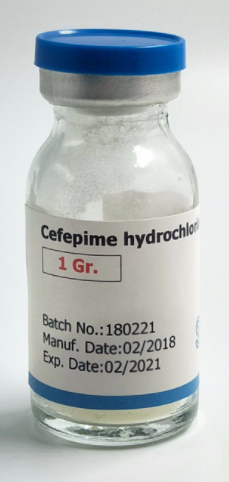
Let's establish a few facts about cefepime:
🔺4th generation cephalosporin antibiotic
🔺Excretion = exclusively in the urine (mostly as unchanged drug)
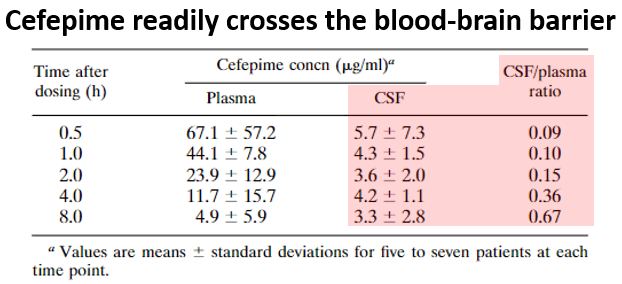
🔺Readily crosses the blood-brain barrier (so it easily accesses the brain)
https://t.co/rjYG1BfGPR
3/
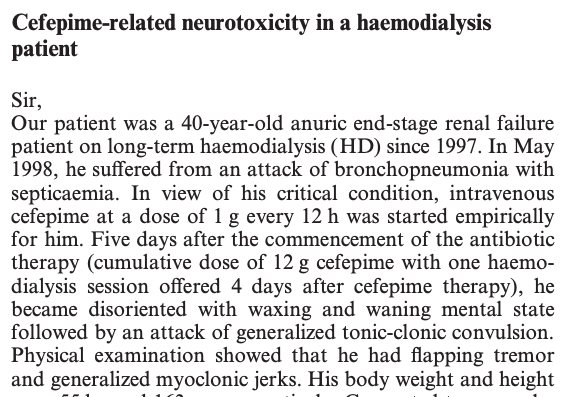
The first report of cefepime neurotoxicity was in 1999.
A patient w/ renal failure received high doses of cefepime and then developed encephalopathy, tremors, myoclonic jerks, and tonic-clonic seizures.
✅All symptoms resolved after hemodialysis.
https://t.co/u7JLVitQpp
4/
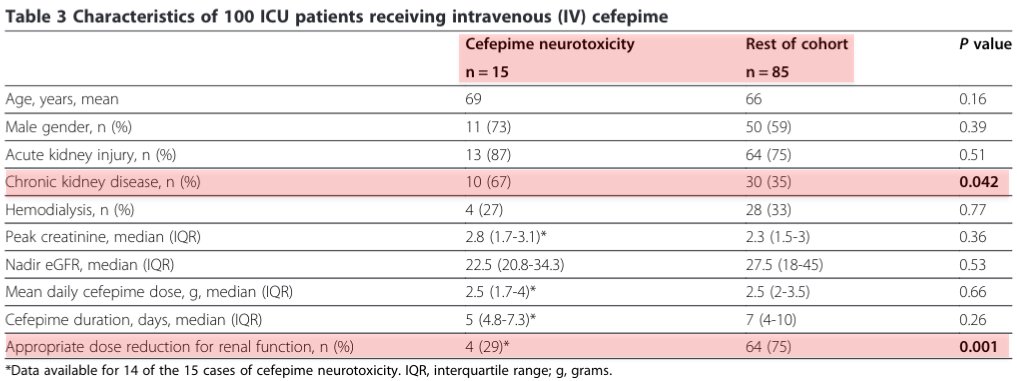
Cefepime neurotoxicity is surprisingly common, occurring in up to 15% of treated critically ill patients (w/ symptoms varying from encephalopathy to seizures).
💡The main risk factors = renal failure and lack of dose adjustment for renal function.
https://t.co/nxbnzSq8AR
5/
What about cefepime induces neurotoxicity?
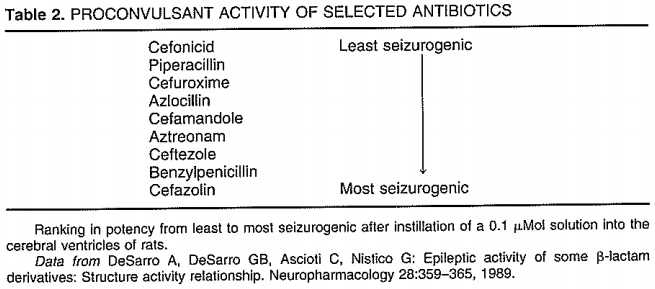
One clue is that it's not the only antibiotic that causes neurotoxicity, particularly seizures.
This actually is a class effect w/ other beta-lactam antibiotics (including penicillins and carbapenems).
https://t.co/Lf4BhON9IY
Why can cefepime cause neurological toxicity?
And why is renal failure the main risk factor for this complication?
The answer requires us to learn about cefepime's structure and why it unexpectedly binds to a certain CNS receptor.
#MedTwitter #Tweetorial
2/
Let's establish a few facts about cefepime:
🔺4th generation cephalosporin antibiotic
🔺Excretion = exclusively in the urine (mostly as unchanged drug)
🔺Readily crosses the blood-brain barrier (so it easily accesses the brain)
https://t.co/rjYG1BfGPR
3/
The first report of cefepime neurotoxicity was in 1999.
A patient w/ renal failure received high doses of cefepime and then developed encephalopathy, tremors, myoclonic jerks, and tonic-clonic seizures.
✅All symptoms resolved after hemodialysis.
https://t.co/u7JLVitQpp
4/
Cefepime neurotoxicity is surprisingly common, occurring in up to 15% of treated critically ill patients (w/ symptoms varying from encephalopathy to seizures).
💡The main risk factors = renal failure and lack of dose adjustment for renal function.
https://t.co/nxbnzSq8AR
5/
What about cefepime induces neurotoxicity?
One clue is that it's not the only antibiotic that causes neurotoxicity, particularly seizures.
This actually is a class effect w/ other beta-lactam antibiotics (including penicillins and carbapenems).
https://t.co/Lf4BhON9IY