
When we think about culpability for the events of Jan 6, who to blame, and how to move forward, there are parallels to be found in the torture era in the "war on terror." And there are so many mistakes from that era that we might usefully consider today.
https://t.co/x2GFZpSqoy
https://t.co/lowMFa5dFz
https://t.co/kTPOFdNGVy
More from For later read


The common understanding of propaganda is that it is intended to brainwash the masses. Supposedly, people get exposed to the same message repeatedly and over time come to believe in whatever nonsense authoritarians want them to believe /1
And yet authoritarians often broadcast silly, unpersuasive propaganda.
Political scientist Haifeng Huang writes that the purpose of propaganda is not to brainwash people, but to instill fear in them /2
When people are bombarded with propaganda everywhere they look, they are reminded of the strength of the regime.
The vast amount of resources authoritarians spend to display their message in every corner of the public square is a costly demonstration of their power /3
In fact, the overt silliness of authoritarian propaganda is part of the point. Propaganda is designed to be silly so that people can instantly recognize it when they see it
Propaganda is intended to instill fear in people, not brainwash them.
The message is: You might not believe in pro-regime values or attitudes. But we will make sure you are too frightened to do anything about it.
And yet authoritarians often broadcast silly, unpersuasive propaganda.
Political scientist Haifeng Huang writes that the purpose of propaganda is not to brainwash people, but to instill fear in them /2
"propaganda is often not used for indoctrination, but rather to signal the government\u2019s strength in being able to afford significant resources and impose on its citizens...not meant to 'brainwash', but rather to forewarn the society about how strong it is" https://t.co/mFAurhEHeO pic.twitter.com/WXKKJaPqWQ
— Rob Henderson (@robkhenderson) June 18, 2020
When people are bombarded with propaganda everywhere they look, they are reminded of the strength of the regime.
The vast amount of resources authoritarians spend to display their message in every corner of the public square is a costly demonstration of their power /3
In fact, the overt silliness of authoritarian propaganda is part of the point. Propaganda is designed to be silly so that people can instantly recognize it when they see it
Authoritarians do not use propaganda for brainwashing, "but to demonstrate their strength in social control...propaganda may need to be dull and unpersuasive, to make sure citizens know it is propaganda when they see it and hence get the implicit message" https://t.co/PqRpxjaIPL pic.twitter.com/1y67d2RCjB
— Rob Henderson (@robkhenderson) June 19, 2020
Propaganda is intended to instill fear in people, not brainwash them.
The message is: You might not believe in pro-regime values or attitudes. But we will make sure you are too frightened to do anything about it.

How I created content in 2020
A thread...
Back in Aug 2016, I started creating content to share my experiences as an entrepreneur.
Over 3 years I had put out 1,200+ hours of content - posting every week without
Little did I know that something I started almost 4 years back would give my life an entirely new direction.
At the end of 2019, my biggest platform was LinkedIn with ~700K followers.
In Jan 2020, I decided to build a team that would help me with the content.
I ran a month long recruitment drive to hire a team of interns.
It comprised 4 detailed rounds - starting with my loved 20 questions, then an assignment, then a WhatsApp video round and finally F2F.
Through 1,200+ applications, I finally selected 6 profiles, starting March.
I am a firm believer in @peterthiel's one task, one person philosophy
So the team was structured such that everyone was responsible for ONLY one task
1. Content ideas
2. Videography
3. Video editing
4. LinkedIn (+TikTok) distribution
5. FB+IG distribution
6. YouTube distribution
A thread...
Back in Aug 2016, I started creating content to share my experiences as an entrepreneur.
Over 3 years I had put out 1,200+ hours of content - posting every week without
August 2016.
— Ankur Warikoo (@warikoo) October 2, 2020
It has been 3 months since LinkedIn had launched its video feature.
And I had been waiting for it to be activated on my profile.
A thread...
Little did I know that something I started almost 4 years back would give my life an entirely new direction.
At the end of 2019, my biggest platform was LinkedIn with ~700K followers.
In Jan 2020, I decided to build a team that would help me with the content.
I ran a month long recruitment drive to hire a team of interns.
It comprised 4 detailed rounds - starting with my loved 20 questions, then an assignment, then a WhatsApp video round and finally F2F.
Through 1,200+ applications, I finally selected 6 profiles, starting March.
I am a firm believer in @peterthiel's one task, one person philosophy
So the team was structured such that everyone was responsible for ONLY one task
1. Content ideas
2. Videography
3. Video editing
4. LinkedIn (+TikTok) distribution
5. FB+IG distribution
6. YouTube distribution



You May Also Like


1/OK, data mystery time.
This New York Times feature shows China with a Gini Index of less than 30, which would make it more equal than Canada, France, or the Netherlands. https://t.co/g3Sv6DZTDE
That's weird. Income inequality in China is legendary.
Let's check this number.
2/The New York Times cites the World Bank's recent report, "Fair Progress? Economic Mobility across Generations Around the World".
The report is available here:
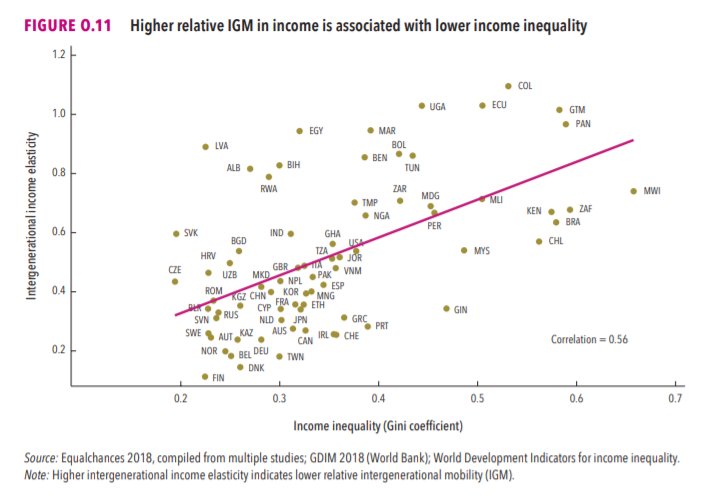
3/The World Bank report has a graph in which it appears to show the same value for China's Gini - under 0.3.
The graph cites the World Development Indicators as its source for the income inequality data.
4/The World Development Indicators are available at the World Bank's website.
Here's the Gini index: https://t.co/MvylQzpX6A
It looks as if the latest estimate for China's Gini is 42.2.
That estimate is from 2012.
5/A Gini of 42.2 would put China in the same neighborhood as the U.S., whose Gini was estimated at 41 in 2013.
I can't find the <30 number anywhere. The only other estimate in the tables for China is from 2008, when it was estimated at 42.8.
This New York Times feature shows China with a Gini Index of less than 30, which would make it more equal than Canada, France, or the Netherlands. https://t.co/g3Sv6DZTDE
That's weird. Income inequality in China is legendary.
Let's check this number.
2/The New York Times cites the World Bank's recent report, "Fair Progress? Economic Mobility across Generations Around the World".
The report is available here:
3/The World Bank report has a graph in which it appears to show the same value for China's Gini - under 0.3.
The graph cites the World Development Indicators as its source for the income inequality data.
4/The World Development Indicators are available at the World Bank's website.
Here's the Gini index: https://t.co/MvylQzpX6A
It looks as if the latest estimate for China's Gini is 42.2.
That estimate is from 2012.
5/A Gini of 42.2 would put China in the same neighborhood as the U.S., whose Gini was estimated at 41 in 2013.
I can't find the <30 number anywhere. The only other estimate in the tables for China is from 2008, when it was estimated at 42.8.