While covering a Nov. 10 protest led by @copsoutofNU, I spoke to an Evanston resident who experienced an easy relationship between EPD and Evanston residents. He put NIPAS in a different category, saying they appeared "dangerous." 🧵:
I've spotted EPD arrest vehicles present at almost every NUCNC protests, big or small.
( I work at a a local Evanston restaurant, and customers will often offer to pay for EPD officers meals when they eat at the restaurant.)
When police are recorded engaging in violence, the blame shifts elsewhere.
https://t.co/VBK5X4VbnC
Today I heard NU pres. respond to student concerns about police aggression at @copsoutofNU protests with a comment about "conflicting narratives."
— Binah Schatsky (@BinahSchatsky) November 19, 2020
As the only reporter on the scene 10/31, here's an initial fact-check of things I've heard from admin + the community. THREAD:
More from For later read




Moderna's mRNA-1273 & Pfizer's BNT162b2 consist of mRNA 3821 nucleotides long encoding *all* 1273 amino acids of the Spike including a 2 Proline-stabilized RBD. This is a plain English Description of the code:
https://t.co/w7koHyMJjL
The article mentions a “10 nucleotide linker” (GCAUAUGACU) in the poly-A tail. This is described in the patent link below (Modification of RNA, producing an increased transcript stability and translation
Here is a link to the full mRNA code if you wish to download it, blast it or make up a batch in your garage
An overview of the encoded spike
Initial mouse
https://t.co/w7koHyMJjL
The article mentions a “10 nucleotide linker” (GCAUAUGACU) in the poly-A tail. This is described in the patent link below (Modification of RNA, producing an increased transcript stability and translation
Here is a link to the full mRNA code if you wish to download it, blast it or make up a batch in your garage
The mRNA sequences used for Moderna mRNA-1273 & Pfizer BNT162b2 mRNA vaccines for COVID-19 (Direct link in Word Format). WHO International Nonproprietary Name Program # 11889 "Messenger RNA encoding the full-length SARS-CoV-2 spike glycoprotein"https://t.co/zTb7B0Apic pic.twitter.com/8tZxAZWI5S
— Roland Baker (@RolandBakerIII) December 24, 2020
An overview of the encoded spike
Moderna's mRNA-1273 & Pfizer's BNT162b2 consist of mRNA 3821 nucleotides long encoding *all* 1273 amino acids of the Spike including a 2 Proline-stabilized RBD and this includes the NTD (blue in monomer, dark gray in trimer attached to antibodies). AA 64, 66, 187, 213, 214 red. pic.twitter.com/4MX1ByAsrR
— Roland Baker (@RolandBakerIII) December 19, 2020
Initial mouse
News: NIH-Moderna investigational COVID-19 vaccine shows promise in mouse studies https://t.co/7JYuUyZT45
— NIH (@NIH) August 5, 2020

I shared this on my FB page and asked, can ya really blame him?
I was half kidding. I also assumed someone would think of what I did pretty quickly and waiting for the comment to mention what I assumed was obvious.
The timing. I was sure someone else had thought of it.
But no one did. 20+ comments in people discussed the morality or bad sense or libertarian perspectives. Someone even said I’m thinking about doing that. No one said what I thought was obvious. Have you thought of it? Is it obvious to you?
Here’s a clue...recognize it?
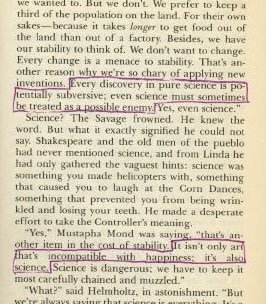
How about this?
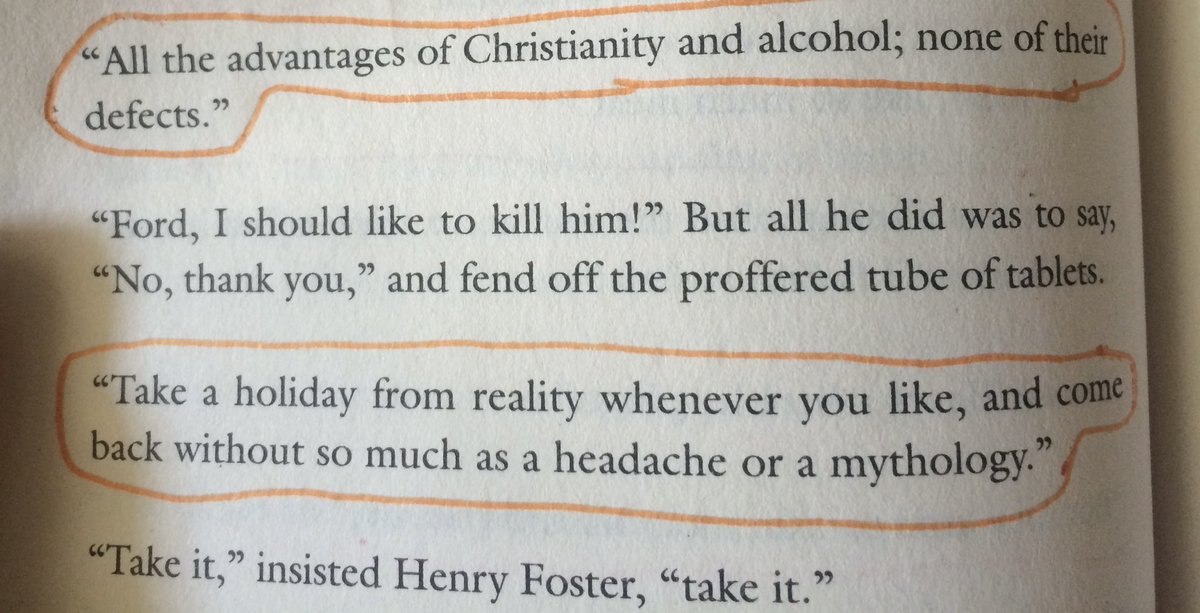
The author discusses it with Mike Wallace in 1958
I was half kidding. I also assumed someone would think of what I did pretty quickly and waiting for the comment to mention what I assumed was obvious.
The timing. I was sure someone else had thought of it.
Columbia professor: I do heroin regularly for 'work-life balance' https://t.co/6aq9cnGfPG pic.twitter.com/3OmmaHKORx
— New York Post (@nypost) February 19, 2021
But no one did. 20+ comments in people discussed the morality or bad sense or libertarian perspectives. Someone even said I’m thinking about doing that. No one said what I thought was obvious. Have you thought of it? Is it obvious to you?
Here’s a clue...recognize it?
How about this?
The author discusses it with Mike Wallace in 1958

You May Also Like



1/ Here’s a list of conversational frameworks I’ve picked up that have been helpful.
Please add your own.
2/ The Magic Question: "What would need to be true for you
3/ On evaluating where someone’s head is at regarding a topic they are being wishy-washy about or delaying.
“Gun to the head—what would you decide now?”
“Fast forward 6 months after your sabbatical--how would you decide: what criteria is most important to you?”
4/ Other Q’s re: decisions:
“Putting aside a list of pros/cons, what’s the *one* reason you’re doing this?” “Why is that the most important reason?”
“What’s end-game here?”
“What does success look like in a world where you pick that path?”
5/ When listening, after empathizing, and wanting to help them make their own decisions without imposing your world view:
“What would the best version of yourself do”?
Please add your own.
2/ The Magic Question: "What would need to be true for you
1/\u201cWhat would need to be true for you to\u2026.X\u201d
— Erik Torenberg (@eriktorenberg) December 4, 2018
Why is this the most powerful question you can ask when attempting to reach an agreement with another human being or organization?
A thread, co-written by @deanmbrody: https://t.co/Yo6jHbSit9
3/ On evaluating where someone’s head is at regarding a topic they are being wishy-washy about or delaying.
“Gun to the head—what would you decide now?”
“Fast forward 6 months after your sabbatical--how would you decide: what criteria is most important to you?”
4/ Other Q’s re: decisions:
“Putting aside a list of pros/cons, what’s the *one* reason you’re doing this?” “Why is that the most important reason?”
“What’s end-game here?”
“What does success look like in a world where you pick that path?”
5/ When listening, after empathizing, and wanting to help them make their own decisions without imposing your world view:
“What would the best version of yourself do”?

Krugman is, of course, right about this. BUT, note that universities can do a lot to revitalize declining and rural regions.
See this thing that @lymanstoneky wrote:
And see this thing that I wrote:
And see this book that @JamesFallows wrote:
And see this other thing that I wrote:
One thing I've been noticing about responses to today's column is that many people still don't get how strong the forces behind regional divergence are, and how hard to reverse 1/ https://t.co/Ft2aH1NcQt
— Paul Krugman (@paulkrugman) November 20, 2018
See this thing that @lymanstoneky wrote:
And see this thing that I wrote:
And see this book that @JamesFallows wrote:
And see this other thing that I wrote: