I’m afraid I think this definition of sovereignty (“freedom to make your own law”) is either useless or incoherent.
My latest (as ever, I don't write headlines).
— Steven Barrett (@SBarrettBar) December 10, 2020
It's important people try to explain what sovereignty is and why we are where we are. If you like elephants, read my explanation.https://t.co/mhh7Sjk6Er
More from For later read




@snip96581187 @Daoyu15 @lab_leak @walkaboutrick @ydeigin @Ayjchan @franciscodeasis @TheSeeker268 @angie_rasmussen Clearly, because as I have been saying for 8 months now, DTRA and DARPA have been using Ecohealth and UC Davis to collect novel pathogens for gain of function work back in the USA. I have documented this in many threads which I will post here just to annoy everyone.
@Daoyu15 @lab_leak @walkaboutrick @ydeigin @Ayjchan @franciscodeasis @TheSeeker268 @angie_rasmussen
@Daoyu15 @lab_leak @walkaboutrick @ydeigin @Ayjchan @franciscodeasis @TheSeeker268 @angie_rasmussen
@Daoyu15 @lab_leak @walkaboutrick @ydeigin @Ayjchan @franciscodeasis @TheSeeker268 @angie_rasmussen
@Daoyu15 @lab_leak @walkaboutrick @ydeigin @Ayjchan @franciscodeasis @TheSeeker268 @angie_rasmussen
@Daoyu15 @lab_leak @walkaboutrick @ydeigin @Ayjchan @franciscodeasis @TheSeeker268 @angie_rasmussen
28. Before moving on to DARPA, let's look at DTRA:
— Billy Bostickson \U0001f3f4\U0001f441&\U0001f441 \U0001f193 (@BillyBostickson) July 31, 2020
A must read!
It is astonishing the number of pies they had their dirty little fingers poking into:
Note John Epstein and Kevin Olival from EcoHealth Alliance are key figures in DTRA:https://t.co/O4QwVWrm7m pic.twitter.com/cnNGZ7AApj
@Daoyu15 @lab_leak @walkaboutrick @ydeigin @Ayjchan @franciscodeasis @TheSeeker268 @angie_rasmussen
24. DTRA Network for Collection of Viruses
— Billy Bostickson \U0001f3f4\U0001f441&\U0001f441 \U0001f193 (@BillyBostickson) January 9, 2021
7. DTRA - Metabiota - One Health - Ecohealth
Bat Research Networks and Viral Surveillance: Gaps and Opportunities in Western Asia pic.twitter.com/SOqSSXF3pa
@Daoyu15 @lab_leak @walkaboutrick @ydeigin @Ayjchan @franciscodeasis @TheSeeker268 @angie_rasmussen
That is the key question
— Billy Bostickson \U0001f3f4\U0001f441&\U0001f441 \U0001f193 (@BillyBostickson) January 5, 2021
1. DARPA/DTRA use NGOs like Ecohealth or Metabiota to collect new pathogens
2. They are sent to US labs (Mailman, Rocky Mountain, Atlanta CDC, UNC, USAMRIID) for GOF work by Lipkin, Nichols, Rasmussen, Baric, Dension, Munster, etchttps://t.co/wqhHK7uZO6
@Daoyu15 @lab_leak @walkaboutrick @ydeigin @Ayjchan @franciscodeasis @TheSeeker268 @angie_rasmussen
1. I wonder why Dr. Angela Rasmussen is so so upset & full of almost palpable venom about a Hypothesis and a "What if" question by @nicholsonbaker8 in the @NYMag https://t.co/a6lxtJLpKR
— Billy Bostickson \U0001f3f4\U0001f441&\U0001f441 \U0001f193 (@BillyBostickson) January 5, 2021
Did I hear someone say "DARPA"?
Did I hear someone say "DTRA"?https://t.co/i27mpxJDw2 pic.twitter.com/x4X3QPnTMS

A name has caught the radar of agencies investigating #GretaToolkit- FRIEDRICH PIETER. Delhi Police expressed shock over the appearance of Pieter's name as "Who to Follow" in g-doc as he is under cops' scanner since 2006 for his Anti-India activities. Some shocking details..
1/9
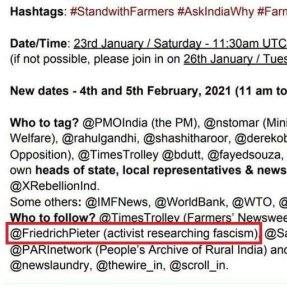
Pieter is close associate (read hired by) Bhajan Singh Bhindar, founder of OFMI (Org for Minorities of India) that considers itself an anti-Gandhi 'crusader' & is Pro-Khalistan. They also campaigned to free Bhullar (convicted Khalistani terr0r!st) & lobby against Modi in US.
2/9
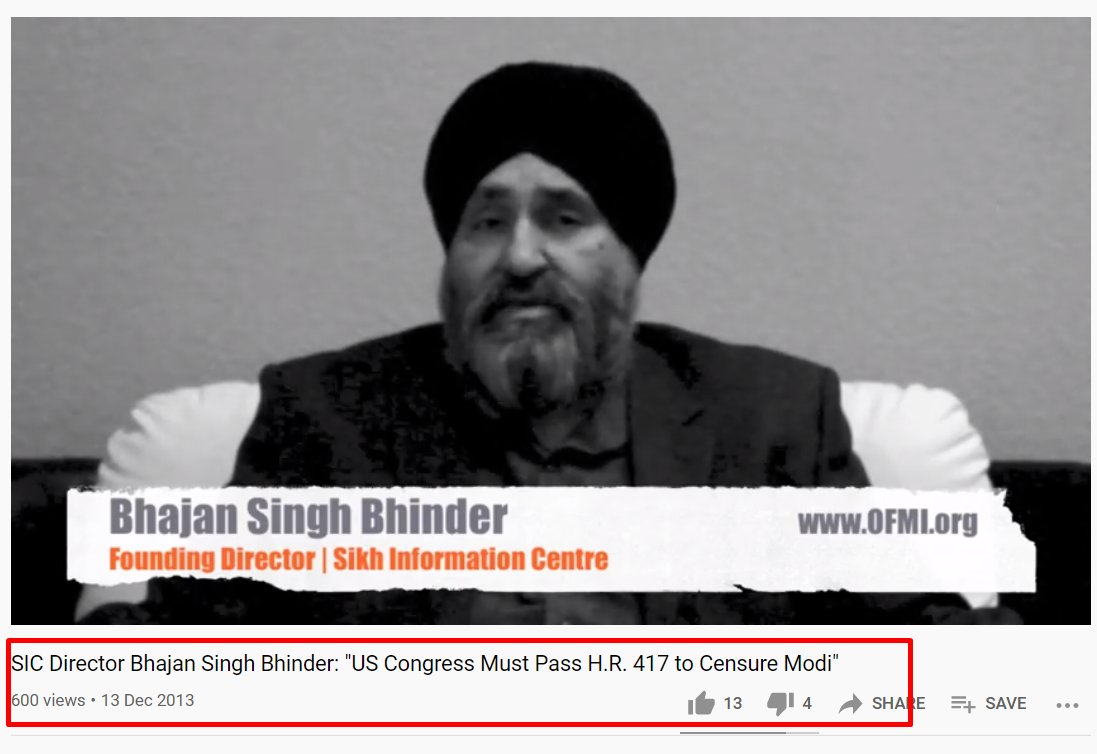
Bhinder has alleged connection with ISI & had records of owning inter-state drugs cartel & DVD piracy for terr0r funding. They also took control Fremont Gurudwara, US back in 2003 for millions of donation. Details of this 'Info-War' by @DisinfoLab
https://t.co/oIDFSoaDX2
3/9
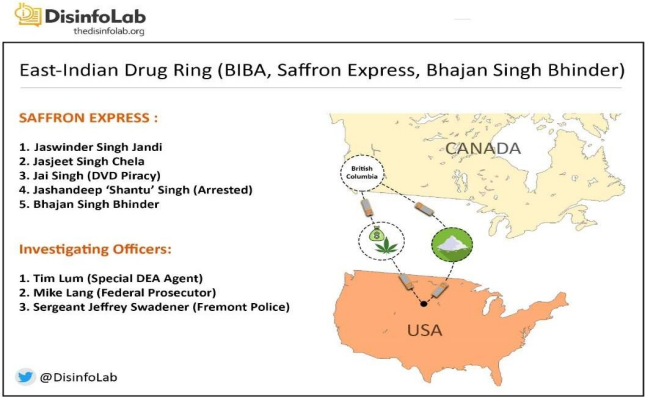
Back to Pieter. Take a glance at his work. His TL is filled with anti-BJP/RSS/Modi propaganda. From his speeches to articles, everything have few keywords in common- RSS/Fascism/gen0c!de/k!ll!ing/Kashmir/Hindutva, as if running a non-stop unrest in India is his bread & butter
4/9
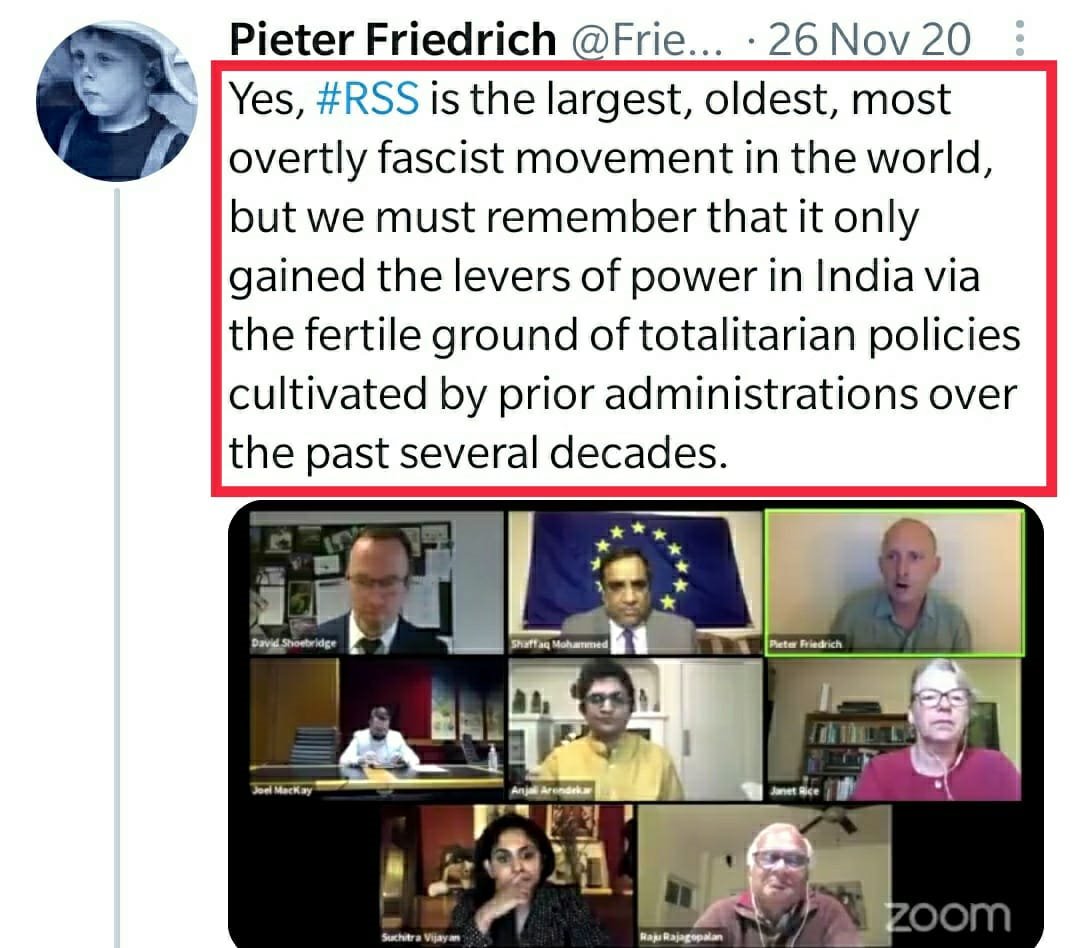
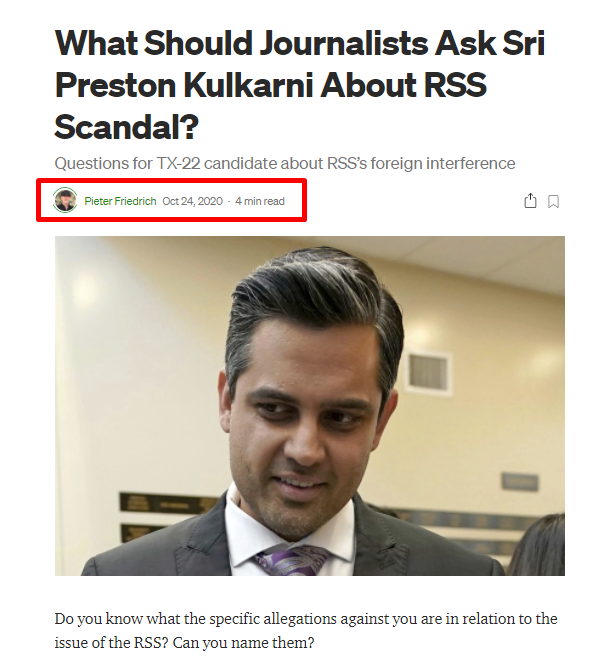
He picks every topic with an extreme narrative that potentially hurts integrity of nation, be it Kashmir,CAA,1984 & with his recent projects- Farmer protest & campaigning heavily against Sri Kulkarni. Despite all, Kulkarni appointed as Chief of Ext Affairs at Biden admin.
5/9
1/9
Pieter is close associate (read hired by) Bhajan Singh Bhindar, founder of OFMI (Org for Minorities of India) that considers itself an anti-Gandhi 'crusader' & is Pro-Khalistan. They also campaigned to free Bhullar (convicted Khalistani terr0r!st) & lobby against Modi in US.
2/9
Bhinder has alleged connection with ISI & had records of owning inter-state drugs cartel & DVD piracy for terr0r funding. They also took control Fremont Gurudwara, US back in 2003 for millions of donation. Details of this 'Info-War' by @DisinfoLab
https://t.co/oIDFSoaDX2
3/9
Back to Pieter. Take a glance at his work. His TL is filled with anti-BJP/RSS/Modi propaganda. From his speeches to articles, everything have few keywords in common- RSS/Fascism/gen0c!de/k!ll!ing/Kashmir/Hindutva, as if running a non-stop unrest in India is his bread & butter
4/9
He picks every topic with an extreme narrative that potentially hurts integrity of nation, be it Kashmir,CAA,1984 & with his recent projects- Farmer protest & campaigning heavily against Sri Kulkarni. Despite all, Kulkarni appointed as Chief of Ext Affairs at Biden admin.
5/9
You May Also Like

Recently, the @CNIL issued a decision regarding the GDPR compliance of an unknown French adtech company named "Vectaury". It may seem like small fry, but the decision has potential wide-ranging impacts for Google, the IAB framework, and today's adtech. It's thread time! 👇
It's all in French, but if you're up for it you can read:
• Their blog post (lacks the most interesting details): https://t.co/PHkDcOT1hy
• Their high-level legal decision: https://t.co/hwpiEvjodt
• The full notification: https://t.co/QQB7rfynha
I've read it so you needn't!
Vectaury was collecting geolocation data in order to create profiles (eg. people who often go to this or that type of shop) so as to power ad targeting. They operate through embedded SDKs and ad bidding, making them invisible to users.
The @CNIL notes that profiling based off of geolocation presents particular risks since it reveals people's movements and habits. As risky, the processing requires consent — this will be the heart of their assessment.
Interesting point: they justify the decision in part because of how many people COULD be targeted in this way (rather than how many have — though they note that too). Because it's on a phone, and many have phones, it is considered large-scale processing no matter what.
It's all in French, but if you're up for it you can read:
• Their blog post (lacks the most interesting details): https://t.co/PHkDcOT1hy
• Their high-level legal decision: https://t.co/hwpiEvjodt
• The full notification: https://t.co/QQB7rfynha
I've read it so you needn't!
Vectaury was collecting geolocation data in order to create profiles (eg. people who often go to this or that type of shop) so as to power ad targeting. They operate through embedded SDKs and ad bidding, making them invisible to users.
The @CNIL notes that profiling based off of geolocation presents particular risks since it reveals people's movements and habits. As risky, the processing requires consent — this will be the heart of their assessment.
Interesting point: they justify the decision in part because of how many people COULD be targeted in this way (rather than how many have — though they note that too). Because it's on a phone, and many have phones, it is considered large-scale processing no matter what.

1/OK, data mystery time.
This New York Times feature shows China with a Gini Index of less than 30, which would make it more equal than Canada, France, or the Netherlands. https://t.co/g3Sv6DZTDE
That's weird. Income inequality in China is legendary.
Let's check this number.
2/The New York Times cites the World Bank's recent report, "Fair Progress? Economic Mobility across Generations Around the World".
The report is available here:
3/The World Bank report has a graph in which it appears to show the same value for China's Gini - under 0.3.
The graph cites the World Development Indicators as its source for the income inequality data.
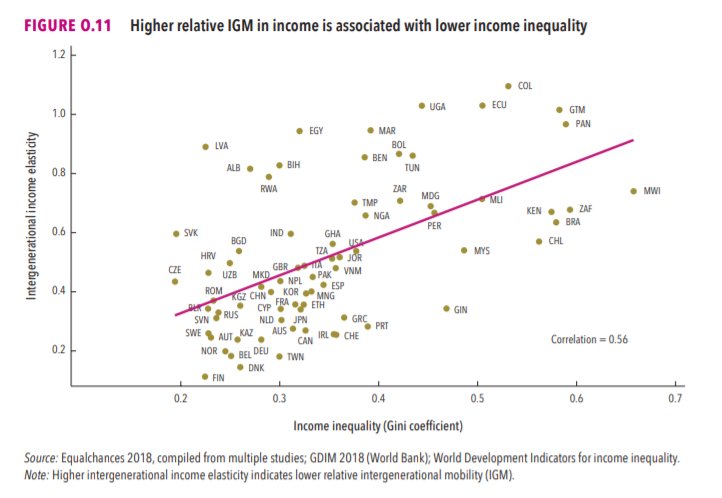
4/The World Development Indicators are available at the World Bank's website.
Here's the Gini index: https://t.co/MvylQzpX6A
It looks as if the latest estimate for China's Gini is 42.2.
That estimate is from 2012.
5/A Gini of 42.2 would put China in the same neighborhood as the U.S., whose Gini was estimated at 41 in 2013.
I can't find the <30 number anywhere. The only other estimate in the tables for China is from 2008, when it was estimated at 42.8.
This New York Times feature shows China with a Gini Index of less than 30, which would make it more equal than Canada, France, or the Netherlands. https://t.co/g3Sv6DZTDE
That's weird. Income inequality in China is legendary.
Let's check this number.
2/The New York Times cites the World Bank's recent report, "Fair Progress? Economic Mobility across Generations Around the World".
The report is available here:
3/The World Bank report has a graph in which it appears to show the same value for China's Gini - under 0.3.
The graph cites the World Development Indicators as its source for the income inequality data.
4/The World Development Indicators are available at the World Bank's website.
Here's the Gini index: https://t.co/MvylQzpX6A
It looks as if the latest estimate for China's Gini is 42.2.
That estimate is from 2012.
5/A Gini of 42.2 would put China in the same neighborhood as the U.S., whose Gini was estimated at 41 in 2013.
I can't find the <30 number anywhere. The only other estimate in the tables for China is from 2008, when it was estimated at 42.8.