
Screencaps are not from a public site, but underlying data given is real, public, and verifiable.
Originally posted Jan 5th - https://t.co/Vim3JlOtlZ
FULTON CO.
We're looking at "book votes." That is, people who are marked as having voted in the voter rolls. This is how Floyd County was detected - you had an excess of voters in the book vs. what was recorded on machines.

Screencaps are not from a public site, but underlying data given is real, public, and verifiable.
Fulton has 10K+ excess votes. This has been blamed on stale record keeping. At a precinct level, there are 14700 "excess" votes and 3900 "missing" votes.


This is a map of where the lowest vote increases relative to 2016 are. In other words, these are areas that simply didn't have much vote growth vs. 2016 (possibly didn't grow much in population).


The south cluster is 95%+ Black whereas the north cluster is 85%+ white. So, very different demographics.


We are asked to take @gasecofstate 's word that this is up-and-up with zero way of verifying it.
1) A centrally managed process of fraud (e.g., possibly as seen in the infamous suitcase video
If you find this compelling, please RT and spread far and wide.
More from Economy


1/OK, let's take a little break from Coup Twitter, and think about an economic issue:
How can we build up the wealth of the middle class?
2/The typical American has surprisingly little wealth compared to the typical resident of many other developed countries.
This is a fact that is not widely known or appreciated.
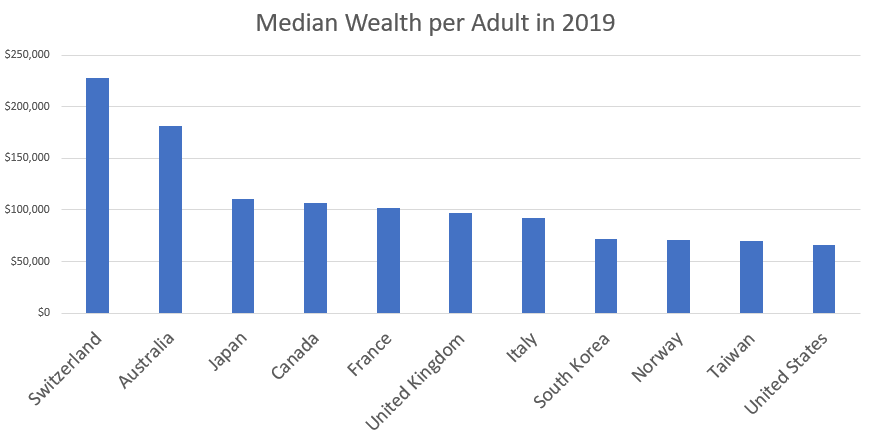
3/Now, some people argue that stuff like Social Security or social insurance programs should be included in wealth. But I chose to focus on private wealth because I think having assets you can sell whenever you want is important to
4/For many decades after World War 2, middle-class wealth in America was on a smooth upward trajectory.
Then the housing crash came, and all that changed. Suddenly the rich were still doing well but everyone else was seeing the end of their American Dream.
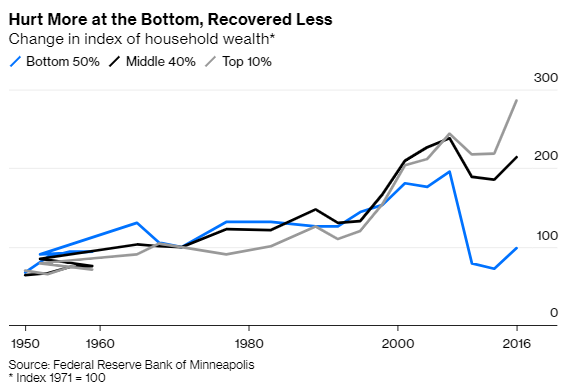
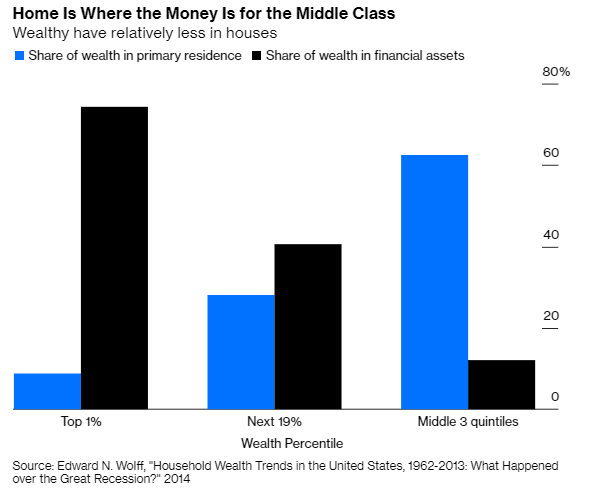
5/Why the divergence?
Because the American middle class has its wealth in houses -- specifically, in the houses they live in.
It's the rich who own stocks.
How can we build up the wealth of the middle class?
2/The typical American has surprisingly little wealth compared to the typical resident of many other developed countries.
This is a fact that is not widely known or appreciated.
3/Now, some people argue that stuff like Social Security or social insurance programs should be included in wealth. But I chose to focus on private wealth because I think having assets you can sell whenever you want is important to
Yes, these numbers don't include things like Social Security, just privately held wealth. They're not an attempt to capitalize every possible future income stream.
— Noahtogolpe \U0001f407 (@Noahpinion) January 10, 2021
4/For many decades after World War 2, middle-class wealth in America was on a smooth upward trajectory.
Then the housing crash came, and all that changed. Suddenly the rich were still doing well but everyone else was seeing the end of their American Dream.
5/Why the divergence?
Because the American middle class has its wealth in houses -- specifically, in the houses they live in.
It's the rich who own stocks.


I really think people have a very short-sighted view of the city and its key role in decades to come for the economy of 🇨🇳. Every so often, people have a handful of misconceptions about the city's future because they lack of basics in strategy 👇
https://t.co/6wuRzXGkYZ The West propaganda seems to make people think we are cracking down on 🇭🇰 people because we no longer need them and we will inevitably suppress their rights. Every now and then, I talk with people in 🇭🇰 who think the Great Firewall will extend to 🇭🇰
🇺🇸-led liberal order is very strong to come across 🇭🇰 people and make them believe what they want. Brainwashed people don't think rationally and fall for the lies and propaganda. This guy is one among so many others I met in 🇭🇰 who told me the same thing, that the city is doomed
They couldn't be more ignorant ! Unfortunately they will end up leaving the city and missing out on incredible opportunities... But they don't know that nothing will eventually change after 2047 ? 🙃Let me explain you why
I bet even after 2047 🇭🇰 will still enjoy a high degree of autonomy and freedoms that its mainland counterpart can’t enjoy : an independent legal and financial system, English as one of the official language, an access to the West internet, its traditional medias, etc.
Most Western countries are already starting to reconsider whether Hong Kong will remain a viable trading centre.
— Isaac Cheung | \U0001f1ed\U0001f1f0 | (@SoAlive0513) February 15, 2021
When the entire world stops trading with HK, how will HK be the financial center of the world?
I doubt tourism would be any better in the next few years either lol
https://t.co/6wuRzXGkYZ The West propaganda seems to make people think we are cracking down on 🇭🇰 people because we no longer need them and we will inevitably suppress their rights. Every now and then, I talk with people in 🇭🇰 who think the Great Firewall will extend to 🇭🇰
🇺🇸-led liberal order is very strong to come across 🇭🇰 people and make them believe what they want. Brainwashed people don't think rationally and fall for the lies and propaganda. This guy is one among so many others I met in 🇭🇰 who told me the same thing, that the city is doomed
They couldn't be more ignorant ! Unfortunately they will end up leaving the city and missing out on incredible opportunities... But they don't know that nothing will eventually change after 2047 ? 🙃Let me explain you why
I bet even after 2047 🇭🇰 will still enjoy a high degree of autonomy and freedoms that its mainland counterpart can’t enjoy : an independent legal and financial system, English as one of the official language, an access to the West internet, its traditional medias, etc.

You May Also Like

1/ 👋 Excited to share what we’ve been building at https://t.co/GOQJ7LjQ2t + we are going to tweetstorm our progress every week!
Week 1 highlights: getting shortlisted for YC W2019🤞, acquiring a premium domain💰, meeting Substack's @hamishmckenzie and Stripe CEO @patrickc 🤩
2/ So what is Brew?
brew / bru : / to make (beer, coffee etc.) / verb: begin to develop 🌱
A place for you to enjoy premium content while supporting your favorite creators. Sort of like a ‘Consumer-facing Patreon’ cc @jackconte
(we’re still working on the pitch)
3/ So, why be so transparent? Two words: launch strategy.
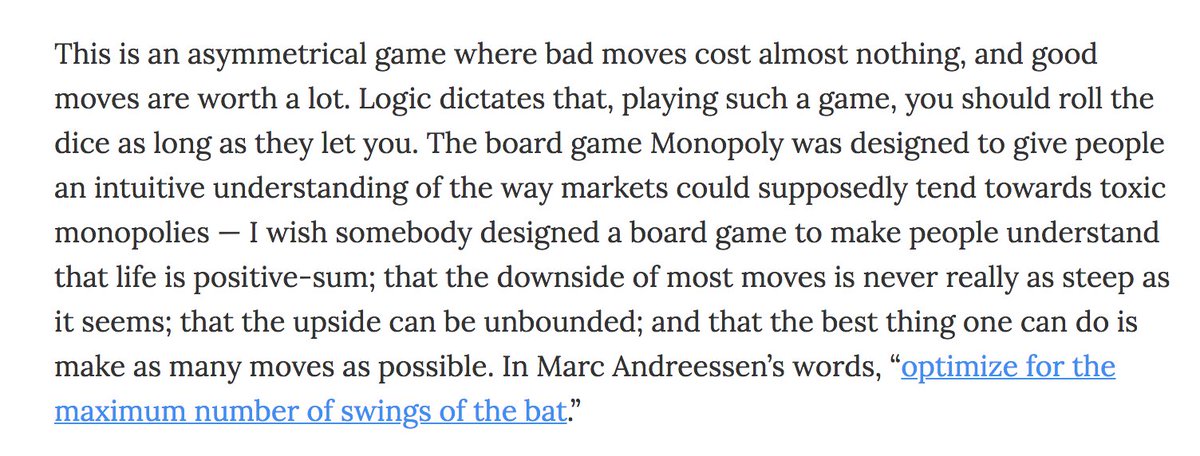
jk 😅 a) I loooove doing something consistently for a long period of time b) limited downside and infinite upside (feedback, accountability, reach).
cc @altimor, @pmarca
4/ https://t.co/GOQJ7LjQ2t domain 🍻
It started with a cold email. Guess what? He was using BuyMeACoffee on his blog, and was excited to hear about what we're building next. Within 2w, we signed the deal at @Escrowcom's SF office. You’re a pleasure to work with @MichaelCyger!
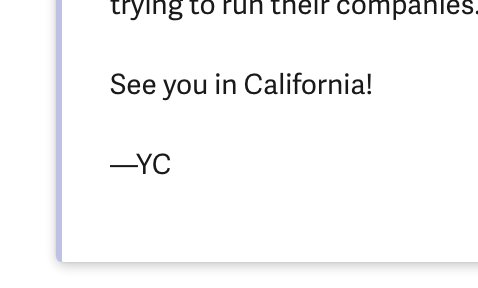
5/ @ycombinator's invite for the in-person interview arrived that evening. Quite a day!
Thanks @patio11 for the thoughtful feedback on our YC application, and @gabhubert for your directions on positioning the product — set the tone for our pitch!
Week 1 highlights: getting shortlisted for YC W2019🤞, acquiring a premium domain💰, meeting Substack's @hamishmckenzie and Stripe CEO @patrickc 🤩
2/ So what is Brew?
brew / bru : / to make (beer, coffee etc.) / verb: begin to develop 🌱
A place for you to enjoy premium content while supporting your favorite creators. Sort of like a ‘Consumer-facing Patreon’ cc @jackconte
(we’re still working on the pitch)
3/ So, why be so transparent? Two words: launch strategy.
jk 😅 a) I loooove doing something consistently for a long period of time b) limited downside and infinite upside (feedback, accountability, reach).
cc @altimor, @pmarca
4/ https://t.co/GOQJ7LjQ2t domain 🍻
It started with a cold email. Guess what? He was using BuyMeACoffee on his blog, and was excited to hear about what we're building next. Within 2w, we signed the deal at @Escrowcom's SF office. You’re a pleasure to work with @MichaelCyger!
5/ @ycombinator's invite for the in-person interview arrived that evening. Quite a day!
Thanks @patio11 for the thoughtful feedback on our YC application, and @gabhubert for your directions on positioning the product — set the tone for our pitch!


