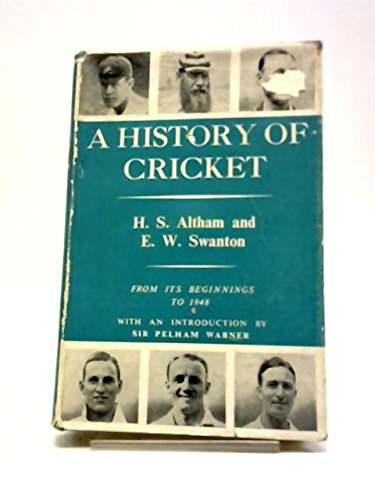
Harry Altham's 'A History of Cricket' was first published in 1926, after it was serialised in The Cricketer.
A 2nd edition came out in 1938.
This time EW swanton co-authored it with Altham.
Two more editions in 1947 and 1948.
And a final one in 1962 ( two volumes).
In 1950, Eric Parker's 672-page 'The History of cricket' was published.
Then in 1960, Roy Webber's 'Phoenix History of Cricket' was published.
And five years later, John Arlott's 'Rothman's History of Cricket'.
They had their merits but none really comprehensive.
In 1970, after seven years of producing 'The Cricket Quarterly', Rowland Bowen wrote the definitive history of the game.
It concentrated beyond the game in Britain and Bowen was not one to indulge in romantic fan fiction....
Gordon Ross' book came out in 1972 but added very little.
Trevor Bailey wrote one ( out in 1979) but, like some of his other books, was a touch drab and hardly gave any new information.
In the same year Robin Marlar's book on cricket came out too and failed to make an impression
In the 1980s, 'History of Cricket' was written by Benny Green, the musician turned Wisden man.
Wisden themselves gave their name to one written by Vic Marks.
Both came out in 1988.
And very soon there was DR Allen's book on the same subject.
All quite useful but not extraordinary
David Frith, for years, had harboured this desire to make a pictorial history of cricket.
He initially selected 50,000 images and then narrowed it down to 2000 which were used in this book.
It perhaps tells more about cricket's history than most of the regular ones.
In 1997 this book was published.
It is very detailed about how cricket developed in the 19th century and the author quite easily showed his grip on the game's history during those times.
Eric Midwinter is a social historian who knows his cricket.
It traces the game's development in the social context, right from the 18th century to the IPL days.
Probably the best book on cricket's history among the ones published so far in the 21st century.
Now,the history of cricket in the major Test playing nations.
It starts with England and though the subjects are somewhat regional, GB Buckley's and John Goulstone's books on early cricket are very well researched.
These being excellent starting points.
So is the Underdown book.
The Brookes and Birley books, written about 40 years or so ago, are accounts that should be read.
And so is Simon Wilde's recent book.
It has pleasantly surprised a lot of aficionados of cricket literature.
There are plenty others like G Derek West's accounts but now it's Australia's turn.
These are the two standard ones.
Jack Pollard wrote a lot but not all of it was good. Still, a good reference book.
The other book is thorough.
There are two Gideon Haigh books that merit inclusion.
The Summer Game is brilliant.
And so is 'Inside Story' ( co-authored with Frith).
It is a history from the Australian Board's perspective.
Exceptionally well researched.
There are a few more books on Australian's cricket's history.
Moyes' book is an usual one. Covers all details but that's just about it.
Whitington probably wrote this because he thought he must write one.
But he couldn't quite get his act together.
South Africa.
MW Luckin's early volumes cover till 1927.
Then Louis Duffus covered the next 20 years.
And Brian Bassano took it till 1960.
Standard stuff.
P.S. Luckin's books are hard to get.
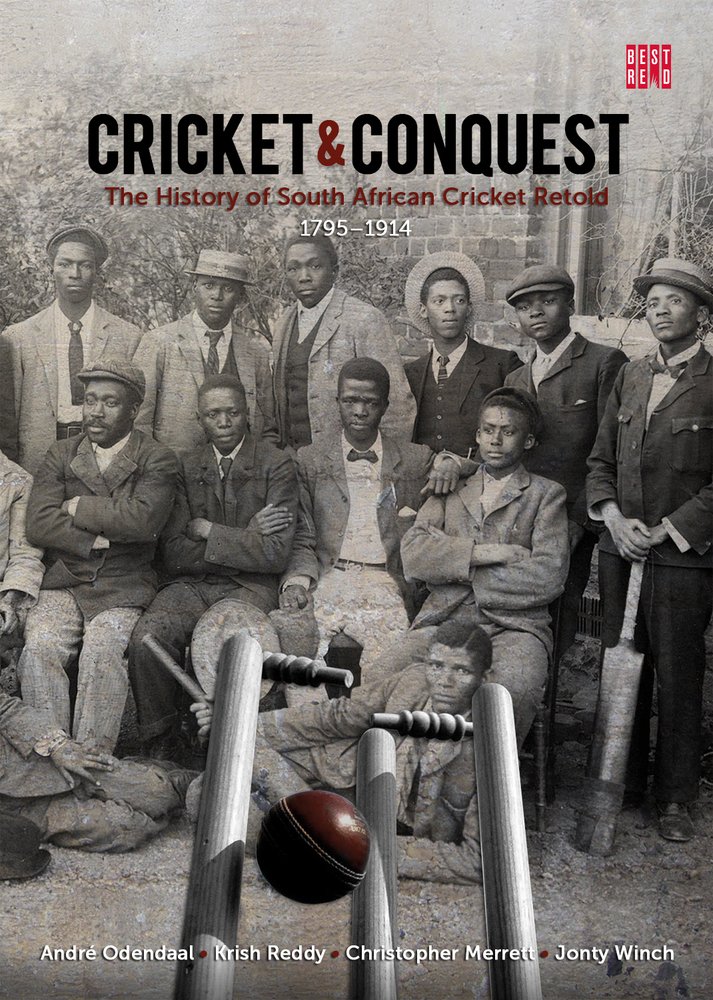
Andre Odendaal, along with a few others, wrote the modern books on SA cricket.
Fairly safe to say that they often tell a different story.
And, of course, Odendaal and the likes of Duffus were pretty different as men too.
Odendaal (once a staff of the island prison where Nelson Mandela was detained) has written a few more.
But the book that covers the first few years after readmission was written by Colin Bryden.
And recently Arunabha Sengupta wrote this detailed account.
New Zealand.
TW Reese wrote the books covering the early days.
Again, hard to find.
Greg Ryan's book tells how cricket became important in New Zealand, much before other sports like rugby.
An important work.
Then, of course, there are the books by Don Neely.
Men In White is a tome.
The Summer Game is less celebrated but a worthy offering.
There are books by the likes of Dick Brittenden which are not standard cricket history but do serve the purpose.
West Indies.
I am not considering CLR James' book for this purpose.
Anyway everyone knows about that.
The book that stands out was written by Michael Manley.
Very informative.
Hilary Beckles has written many books on WI cricket, most of them in the social context and covering the early days of their cricket.
The other book was promising but couldn't quite deliver.
Too much statistics disturbed the balance.
India.
The first name should be Mihir Bose's book. His 'Maidan View' too is very readable.
Then there are Guha's book which everyone knows.
NS Ramaswami wrote a brief history.
So did Edward Docker.
And in the 1960s, LN Mathur wrote one. Scarce.
The Framjee Patel book is, I believe, quite well known.
And so are Sujit Mukherjee's.
A very fine writer.
Richard Cashman, who for a long time taught Indian history, wrote this book when he was more a student of Indian history than cricket.
Detailed.
Pakistan.
Kim Baloch's two volumes are essential reading.
Not many knew more about Pakistan's cricket.
The other book, little-known, was published in 1981.
Edited by Omar Kureishi, it examined in depth the state of the game in Pakistan.
These three have been published recently.
Peter Obrone associated with two of them.
White on Green is my favourite.
It tells stories of some lesser known names in Pakistan's cricket.
Very informative.
SL and Zimbabwe.
'Sixty Years of Ceylon Cricket' by SP Foenandner covered the period between 1860 and 1920.
The only book that covers SL's early days in detail.
SS Perera's 'Janashakti Book of Sri Lankan cricket'(1999) too is worth a read.
And Jonty Winch's book is a must read.
There are essential reading about cricket in other countries.
Like Jake Perry's new book on Scottish cricket.
Or Jim Coldham's little booklet on German cricket.
And topics like County cricket or Shield cricket deserve their own thread.
Some day....