Obviously, like all of crypto, it is extremely risky and can go to 0. That said, given the magnitude of potential outcomes, it just doesn't have to succeed that often to make it a massively +EV bet
While my time investing in crypto and previously playing poker has gotten me used to experiencing large daily personal net worth volatility, it's never a pleasant experience
Short thread (by my standards...) with some ramblings that help me get through it 👇
Obviously, like all of crypto, it is extremely risky and can go to 0. That said, given the magnitude of potential outcomes, it just doesn't have to succeed that often to make it a massively +EV bet
Unlike early stage tech, crypto investors will have liquidity, i.e. the possibility, and thus the temptation, to sell
This is both a blessing and a curse
Crypto, as early stage tech, is much riskier than established public companies and thus even higher vol too
However, one should not let the liquidity take advantage of us
However, the fundamentals themselves rarely change that much in such short periods of time and so neither should one's investments
Occasionally they may prompt a reevaluation of the thesis, but if one is investing based on fundamentals this should imo be rare
Beware of the rationalisations for selling that spring up during downturns
If anything, it should happen more during upturns as the investment becomes more expensive and therefore riskier
For most of us working + investing in the space, our net worths are already extremely correlated to crypto prices
More from Crypto


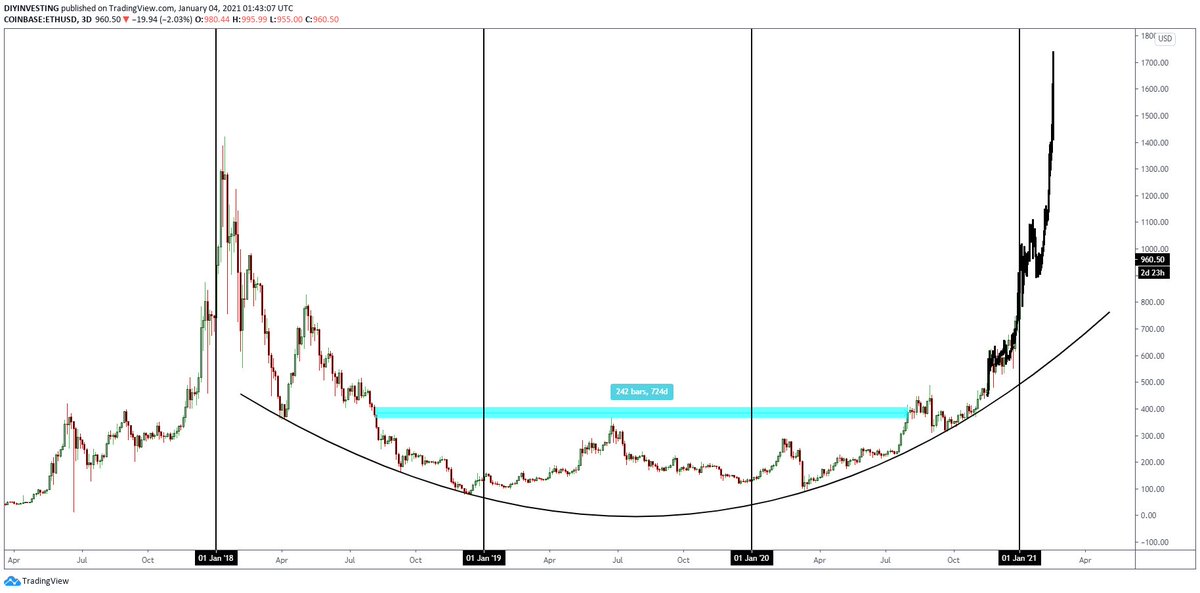
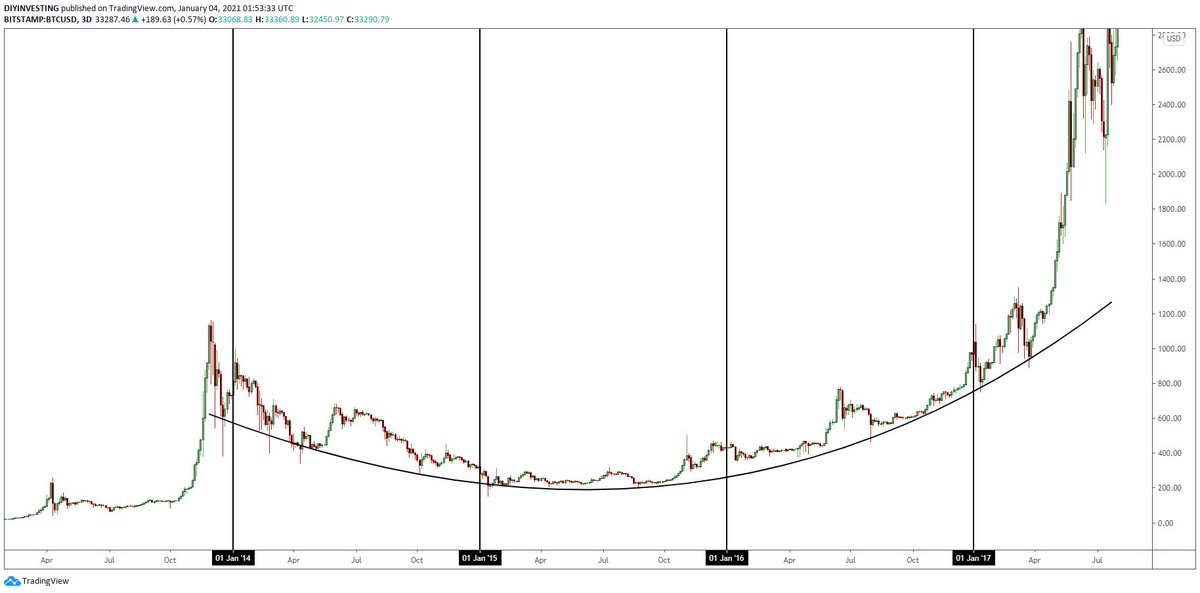
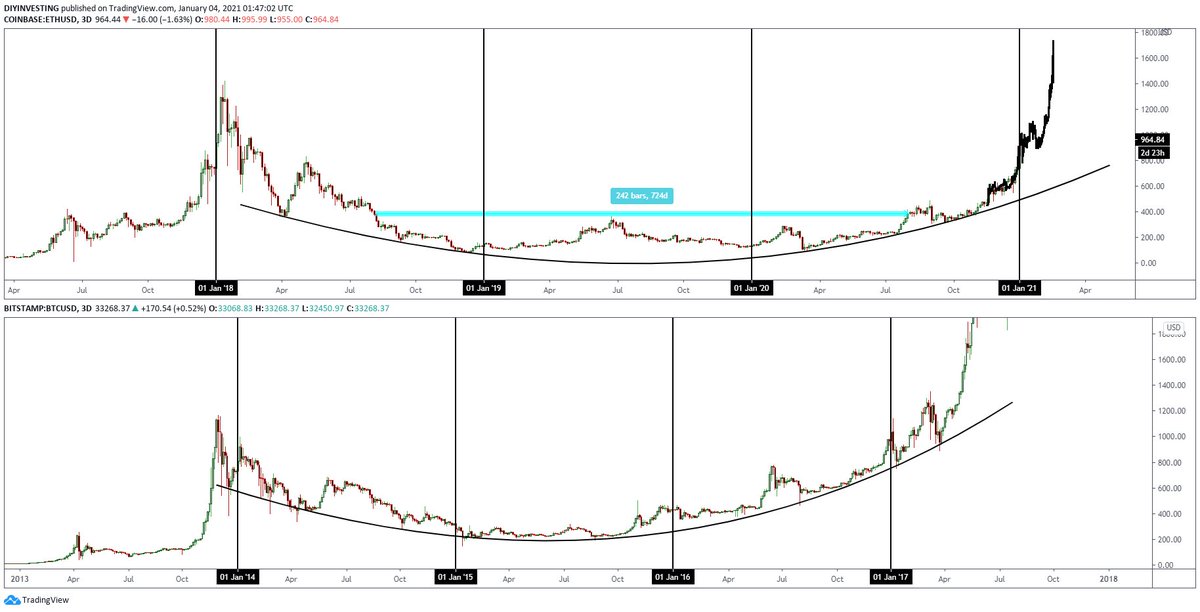


Quick Thread on #Altcoins/ #Altseason
Step 1: $BTC has a huge correction. Every range starts with either a pump (or dump) and then follows with a dump (or pump). In this case, #Bitcoin pumped and is now pulling back. This is
Step 2: $BTC ranges big once it finds a bottom. This will allow it to reaccumulate for a big summer run in 2021. This is HEALTHY IMO.

Step 3: Once $BTC finds a bottom and starts to grind up again, I expect $ALTS to do very very well in both alt/usd and alt/btc pairs. ALTSZN is almost always characterized by strong alt/btc pairs moving- I've already accumulated most and have done my final buying today and more.
$BTC.D typically has a very nice time during this time of the year. I was off on December prediction bc I thought $BTC was going to pull back by then but oh well! #Altcoins will start their pumping time VERY soon now.
More information on what #Altseason is and $ALTS market
Step 1: $BTC has a huge correction. Every range starts with either a pump (or dump) and then follows with a dump (or pump). In this case, #Bitcoin pumped and is now pulling back. This is
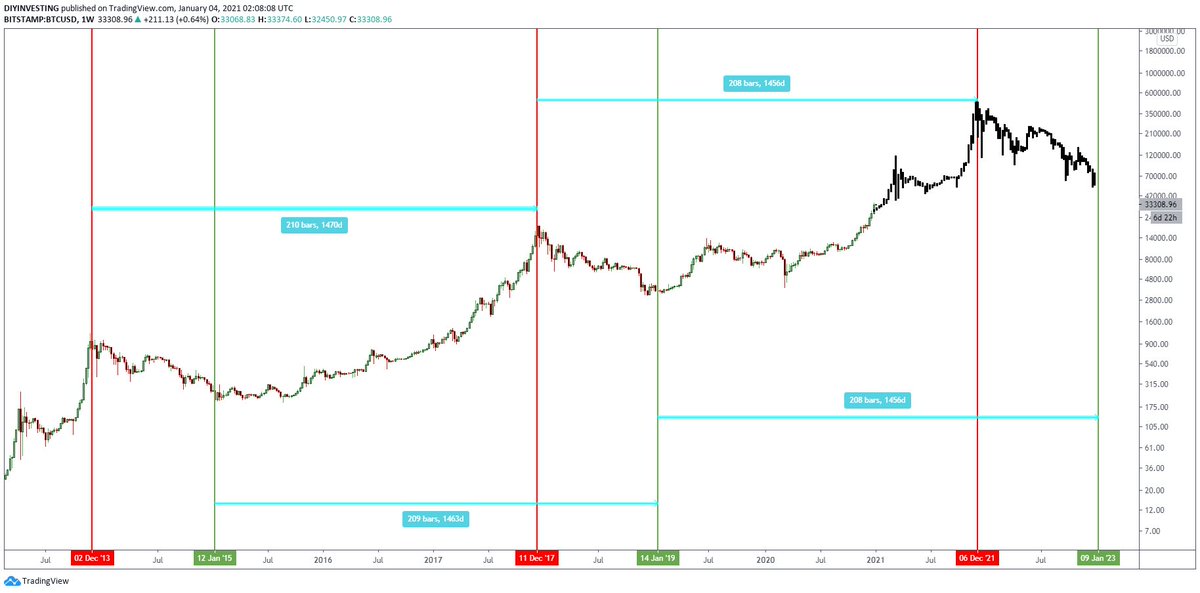
If you want #Altseason, you should want $BTC to make a decent sized pullback. Ranges start after huge moves in both directions, IMO we need to see some cooling off before the ranging starts. Plz give 26k. #Bitcoin pic.twitter.com/yLG9xSrbKz
— Altcoin Sherpa (@AltcoinSherpa) January 3, 2021
Step 2: $BTC ranges big once it finds a bottom. This will allow it to reaccumulate for a big summer run in 2021. This is HEALTHY IMO.
Step 3: Once $BTC finds a bottom and starts to grind up again, I expect $ALTS to do very very well in both alt/usd and alt/btc pairs. ALTSZN is almost always characterized by strong alt/btc pairs moving- I've already accumulated most and have done my final buying today and more.
$BTC.D typically has a very nice time during this time of the year. I was off on December prediction bc I thought $BTC was going to pull back by then but oh well! #Altcoins will start their pumping time VERY soon now.
$BTC.D: This is the chart for inverse #Bitcoin Dominance, the macro chart you need to check out for #Altcoins and when they have their runs. Still potentially more pain to go for $ALTS but I'm thinking that they will turn around strong when $BTC is done w. its run. pic.twitter.com/Q8ewTSRywp
— Altcoin Sherpa (@AltcoinSherpa) December 27, 2020
More information on what #Altseason is and $ALTS market
Big #Altcoin thread for $ALTS: Where are we at in the cycle, how long do we have, is this #ALTSEASON, what are the relationships like, all of that. $BTC #Bitcoin $ETH $LINK #Altcoins pic.twitter.com/nwVjgZu4fw
— Altcoin Sherpa (@AltcoinSherpa) November 9, 2020
You May Also Like

I’m torn on how to approach the idea of luck. I’m the first to admit that I am one of the luckiest people on the planet. To be born into a prosperous American family in 1960 with smart parents is to start life on third base. The odds against my very existence are astronomical.
I’ve always felt that the luckiest people I know had a talent for recognizing circumstances, not of their own making, that were conducive to a favorable outcome and their ability to quickly take advantage of them.
In other words, dumb luck was just that, it required no awareness on the person’s part, whereas “smart” luck involved awareness followed by action before the circumstances changed.
So, was I “lucky” to be born when I was—nothing I had any control over—and that I came of age just as huge databases and computers were advancing to the point where I could use those tools to write “What Works on Wall Street?” Absolutely.
Was I lucky to start my stock market investments near the peak of interest rates which allowed me to spend the majority of my adult life in a falling rate environment? Yup.
Ironies of Luck https://t.co/5BPWGbAxFi
— Morgan Housel (@morganhousel) March 14, 2018
"Luck is the flip side of risk. They are mirrored cousins, driven by the same thing: You are one person in a 7 billion player game, and the accidental impact of other people\u2019s actions can be more consequential than your own."
I’ve always felt that the luckiest people I know had a talent for recognizing circumstances, not of their own making, that were conducive to a favorable outcome and their ability to quickly take advantage of them.
In other words, dumb luck was just that, it required no awareness on the person’s part, whereas “smart” luck involved awareness followed by action before the circumstances changed.
So, was I “lucky” to be born when I was—nothing I had any control over—and that I came of age just as huge databases and computers were advancing to the point where I could use those tools to write “What Works on Wall Street?” Absolutely.
Was I lucky to start my stock market investments near the peak of interest rates which allowed me to spend the majority of my adult life in a falling rate environment? Yup.