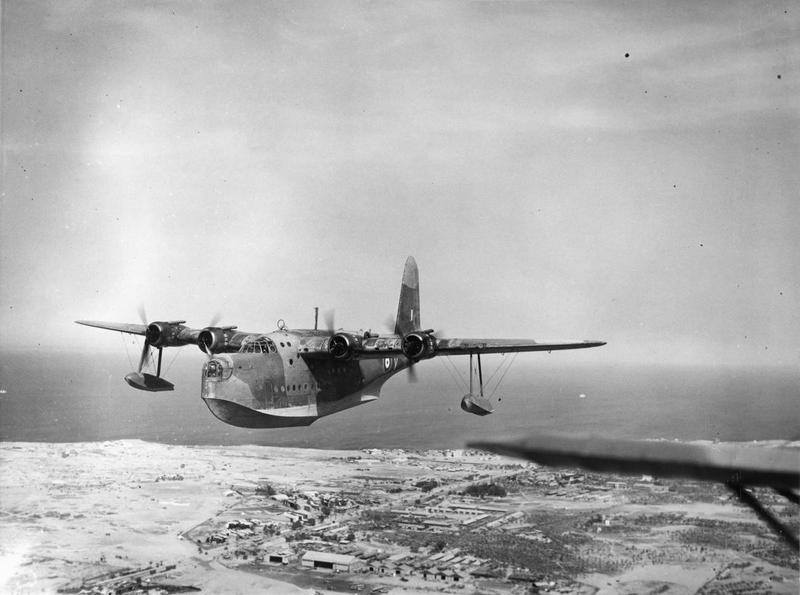
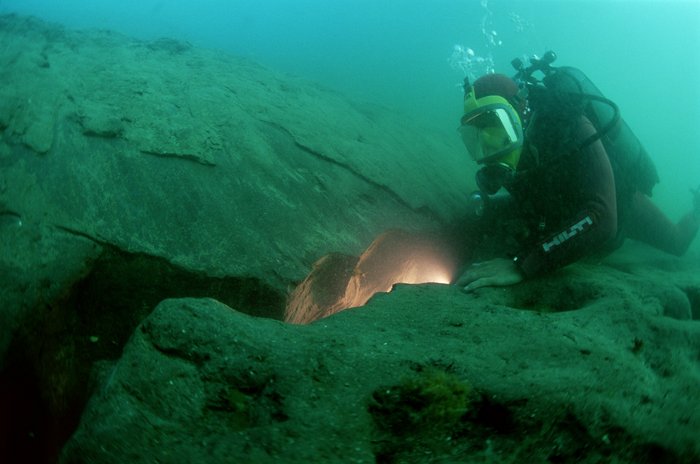
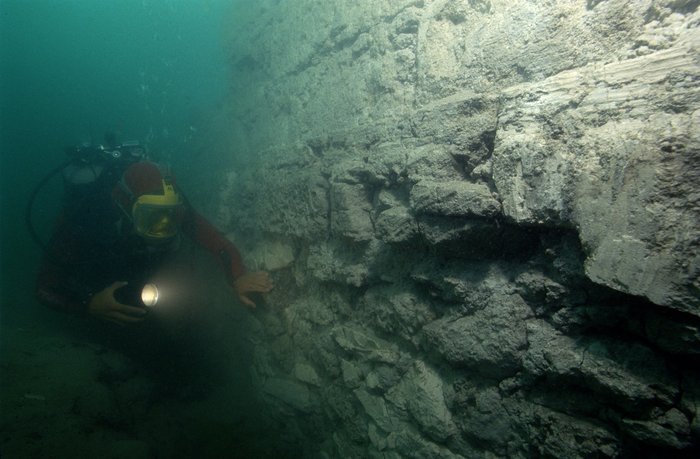
The story of its discovery began in 1933, when an RAF pilot flying off the coast of Alexandria reported a strange sight in the water.
He claimed to have seen massive ruined structures below the waves: buildings, squares & streets, a whole city lost beneath the ocean.
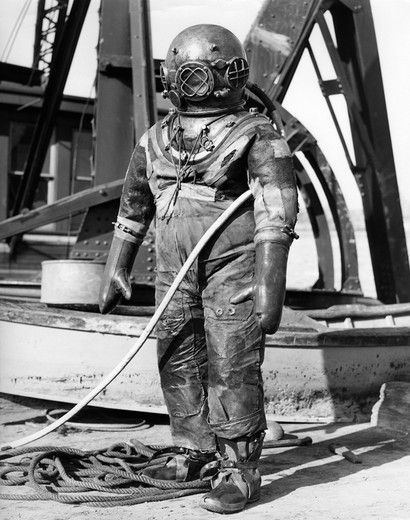
Divers set out to explore the spot, but they were unable to learn much or corroborate the sighting in the silty water of the Egyptian coast.
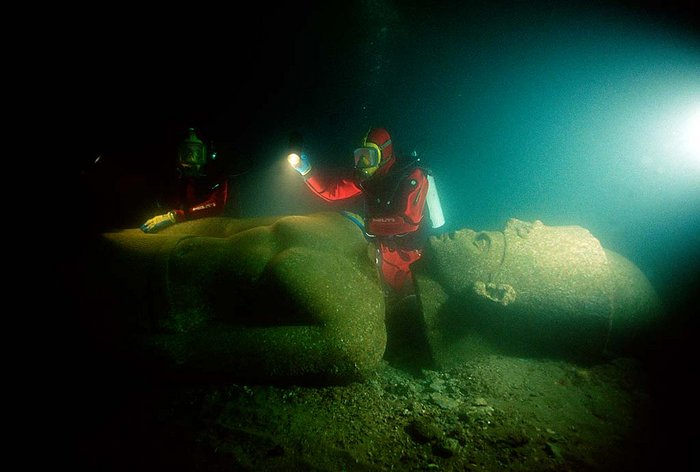
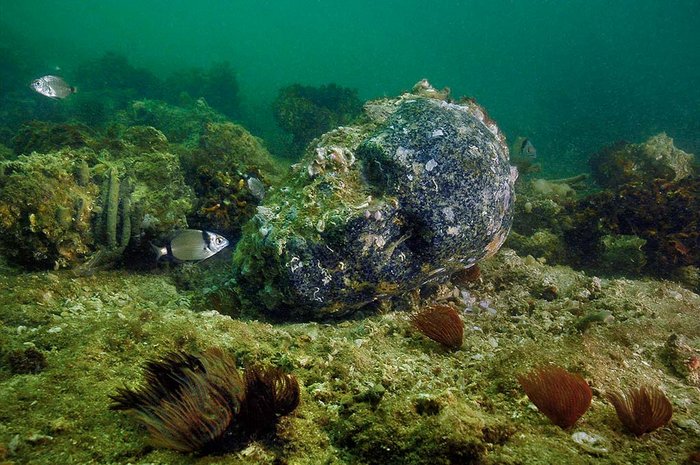
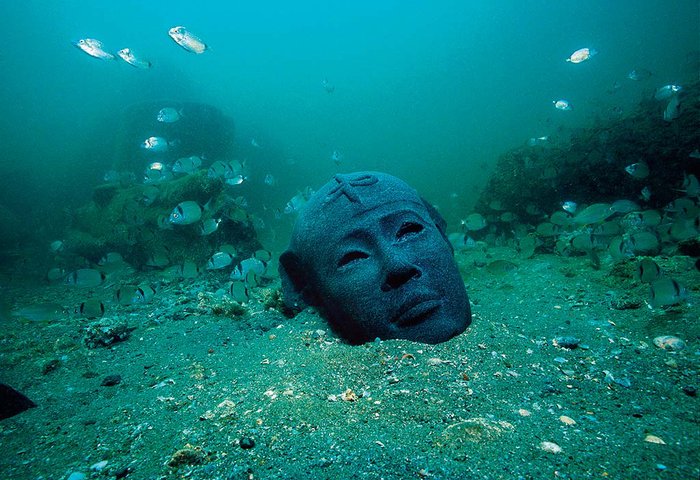
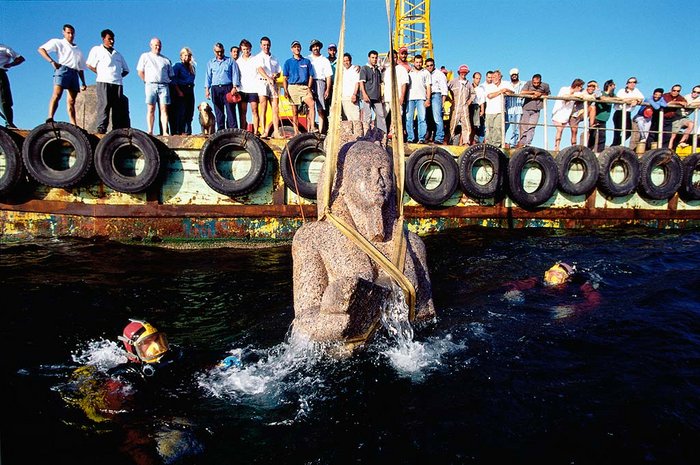
They found something, though: an enormous head of stone, larger than life, thought to be part of a statue depicting Alexander the Great.
These ruins would remain a mystery for another 70 years, until 1999, when a group of archaeological divers were exploring Egypt's shallow Abu Qir Bay.
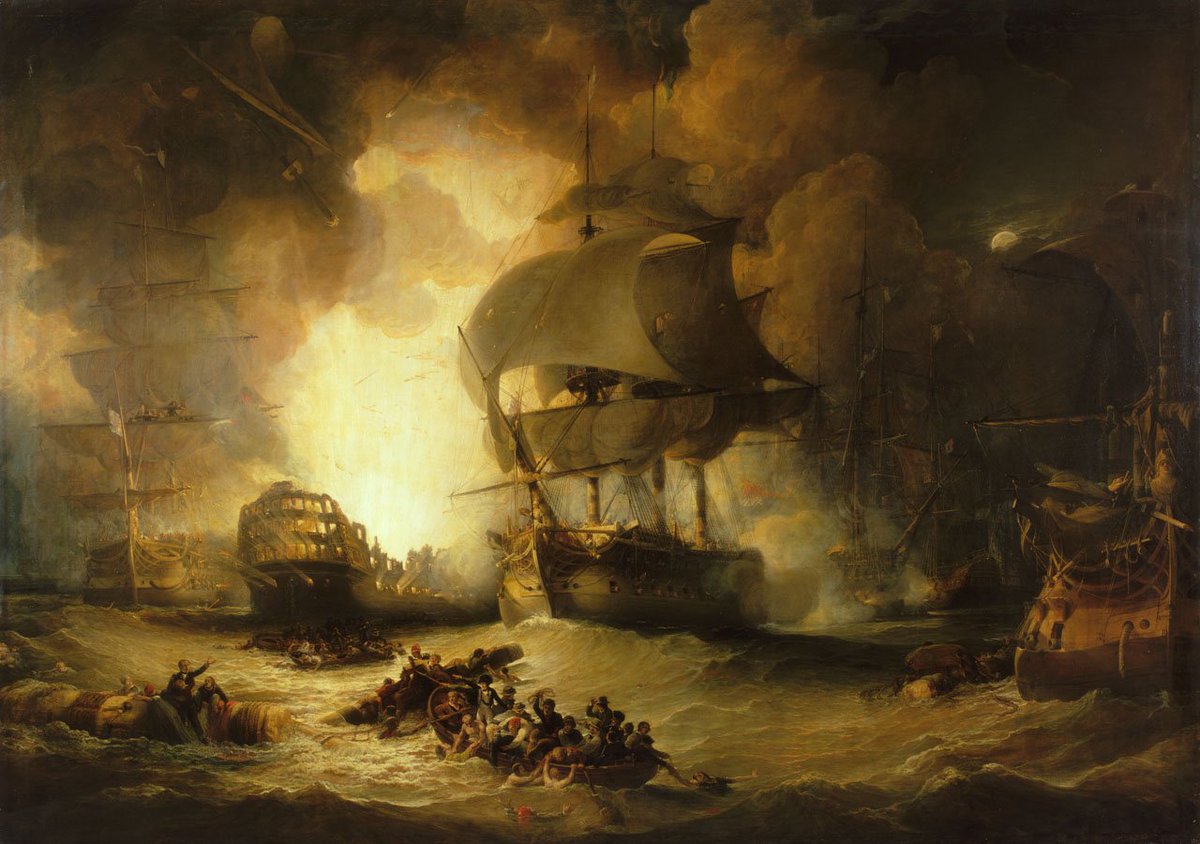
They were searching for the warships of Napoleon’s fleet that were sunk by Admiral Nelson during the 1798 Battle of the Nile.
While mapping the area & searching through the detritus of the 18th century, the cannons, buttons & living utensils, they stumbled upon something else. Something much older.
It was a stone head, half-buried in the silt & sand.
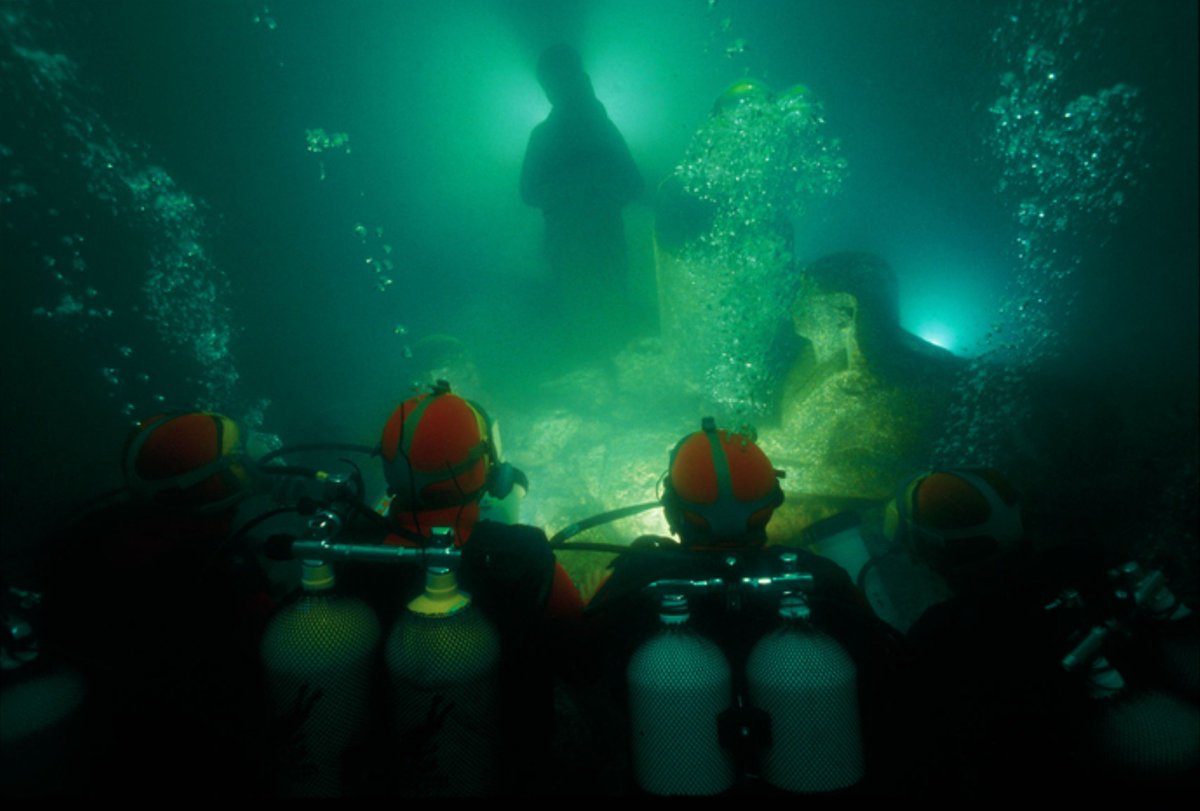
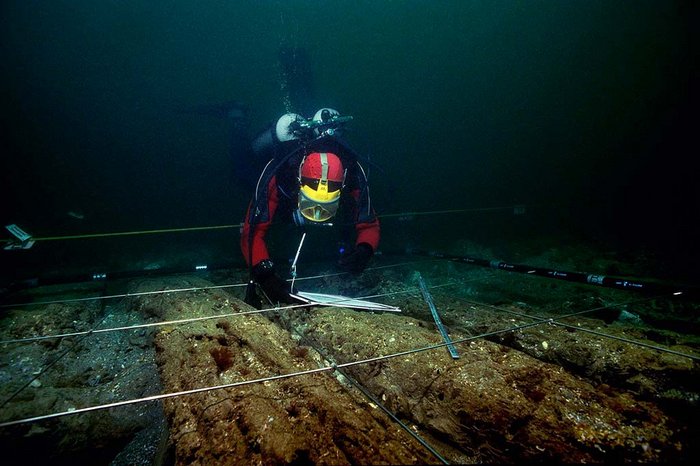
The team began to excavate in the silty seafloor, despite the poor visibility. At times they could barely see 6 inches ahead.
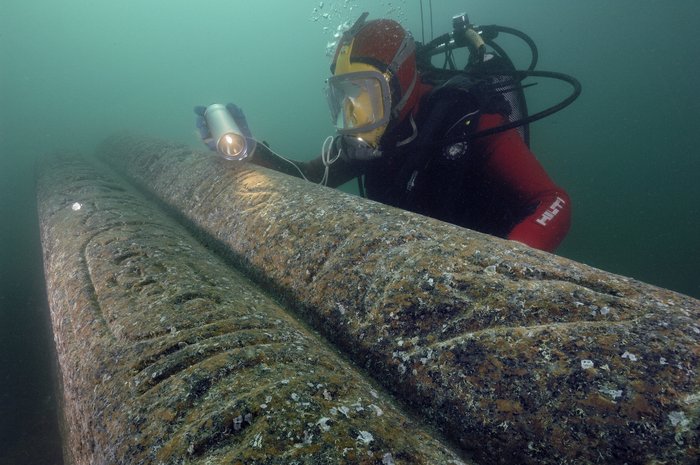
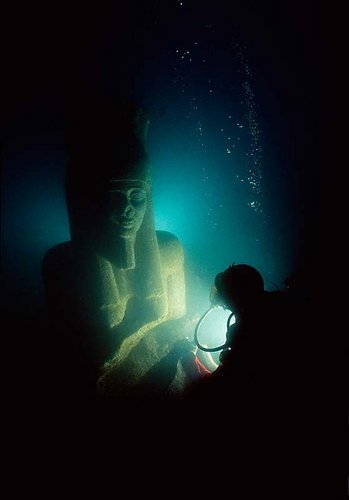
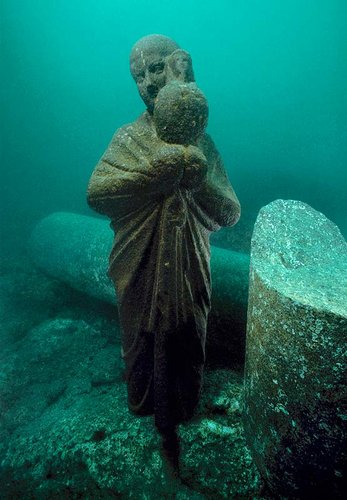
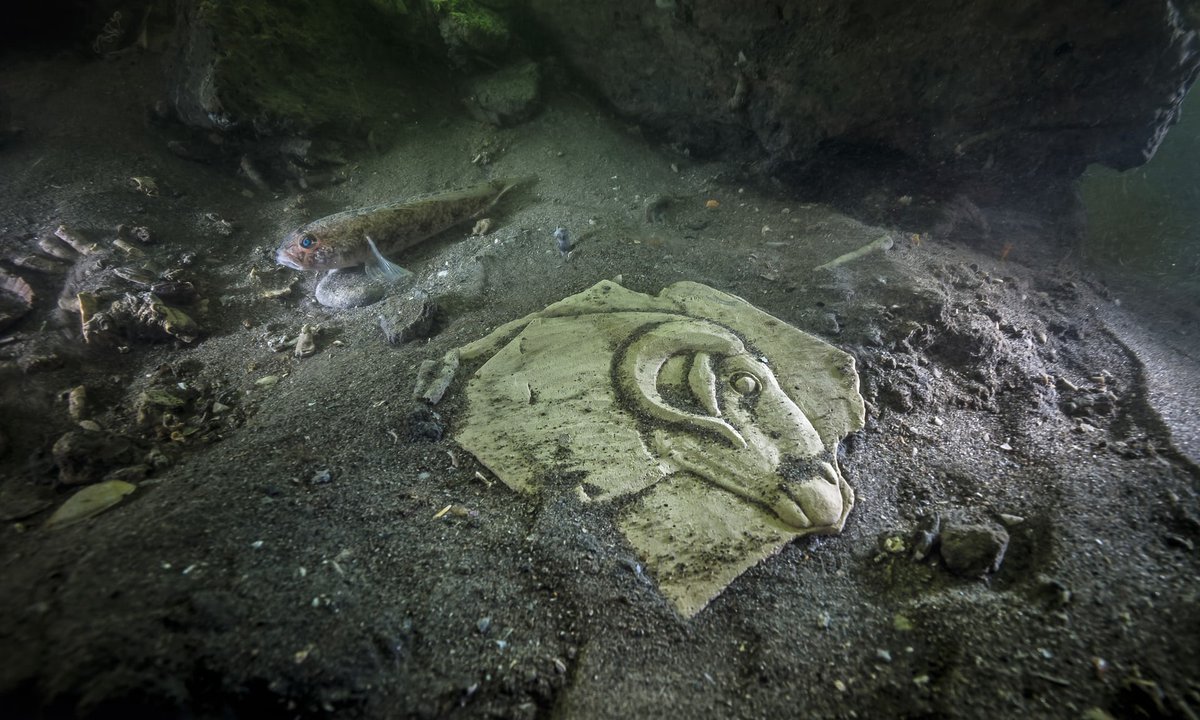
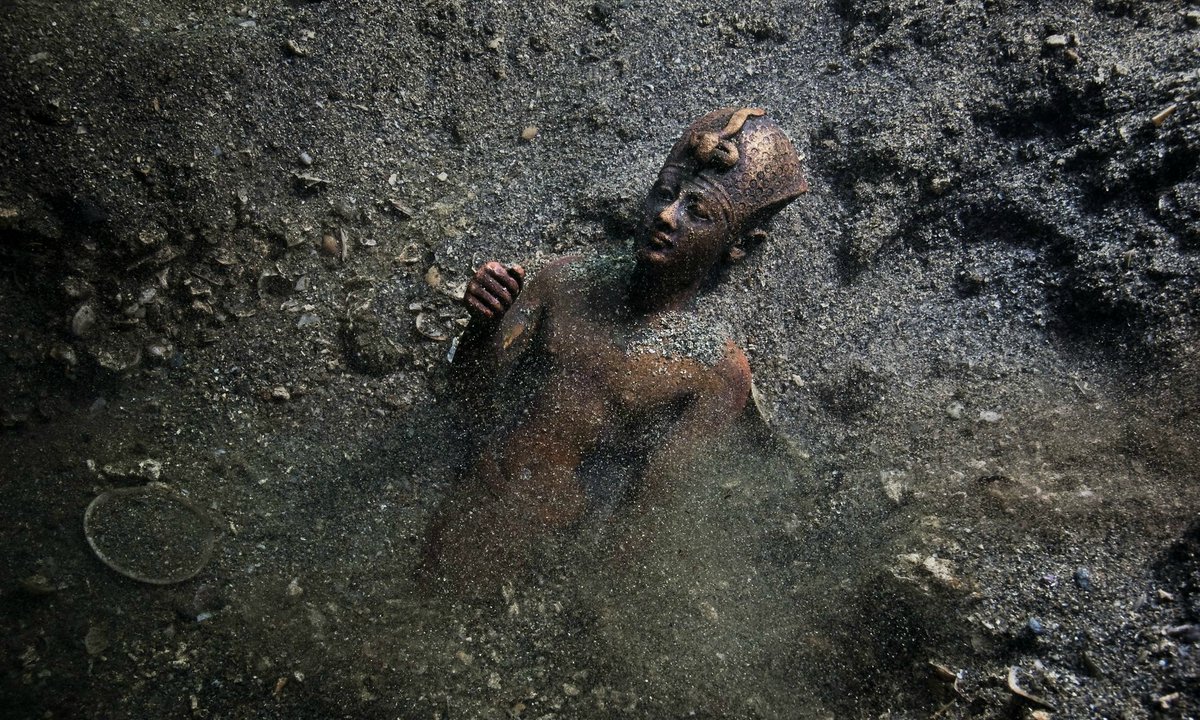
But as they worked, what they found astonished them. They uncovered vast structures: enormous statues & columns, the lines of streets, piers & bridges.
The only clues as to what they had discovered lay in ancient texts.
In the 5th century BCE, the historian Herodotus wrote about the great temple of a coastal city called Thonis, where the mythical hero Herakles first set foot in Egypt.
(Herodotus
https://t.co/f6VF2bmcDz)
A great temple was also mentioned by Strabo & Diodorus, in another coastal city called Heracleion.
Archaeologists had searched for these two cities on land many times, but with no success. But as the teams dug on, the realised that they had found not one, but both of the cities.
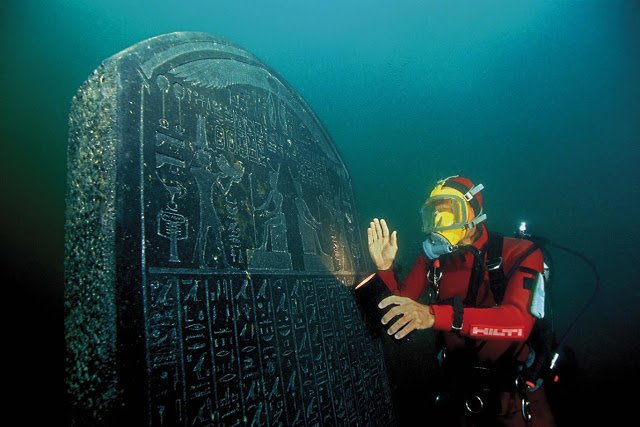
In the silty waters of the bay, one remarkable stele written by Pharoah Nectanebo I confirmed what some had suspected for decades: that the cities of Thonis & Heracleion were the same city.
Egyptians called the city Thonis, & the Greeks called it Heracleion, after Herakles.
The city of Thonis was enormous, over 3x the size of Pompeii. The team hoovered up metres of sand & silt, uncovering a lost world frozen in the moment of its destruction.
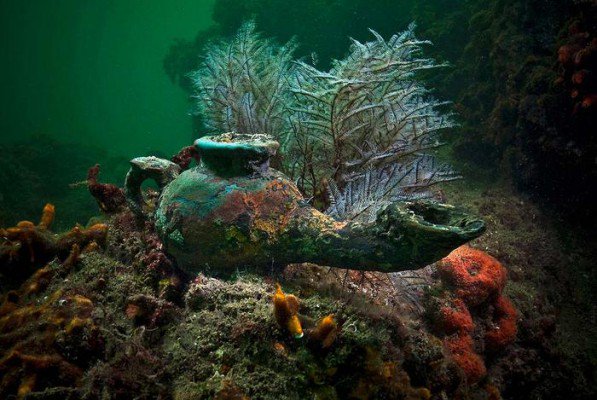
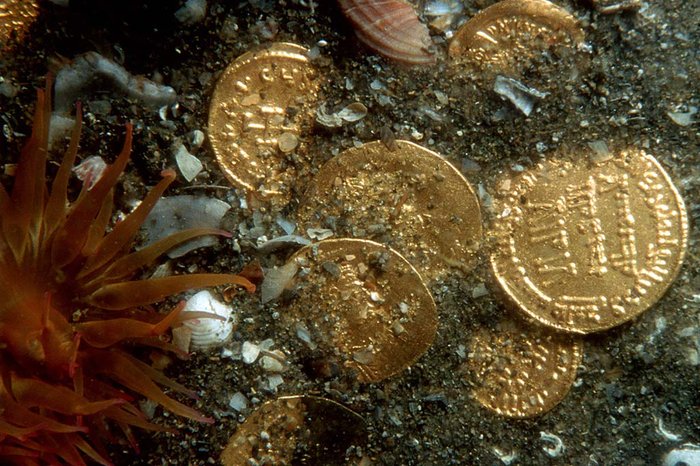
There were coins & pottery, & even animal footprints in the mud, left by buffalo over a thousand years ago.
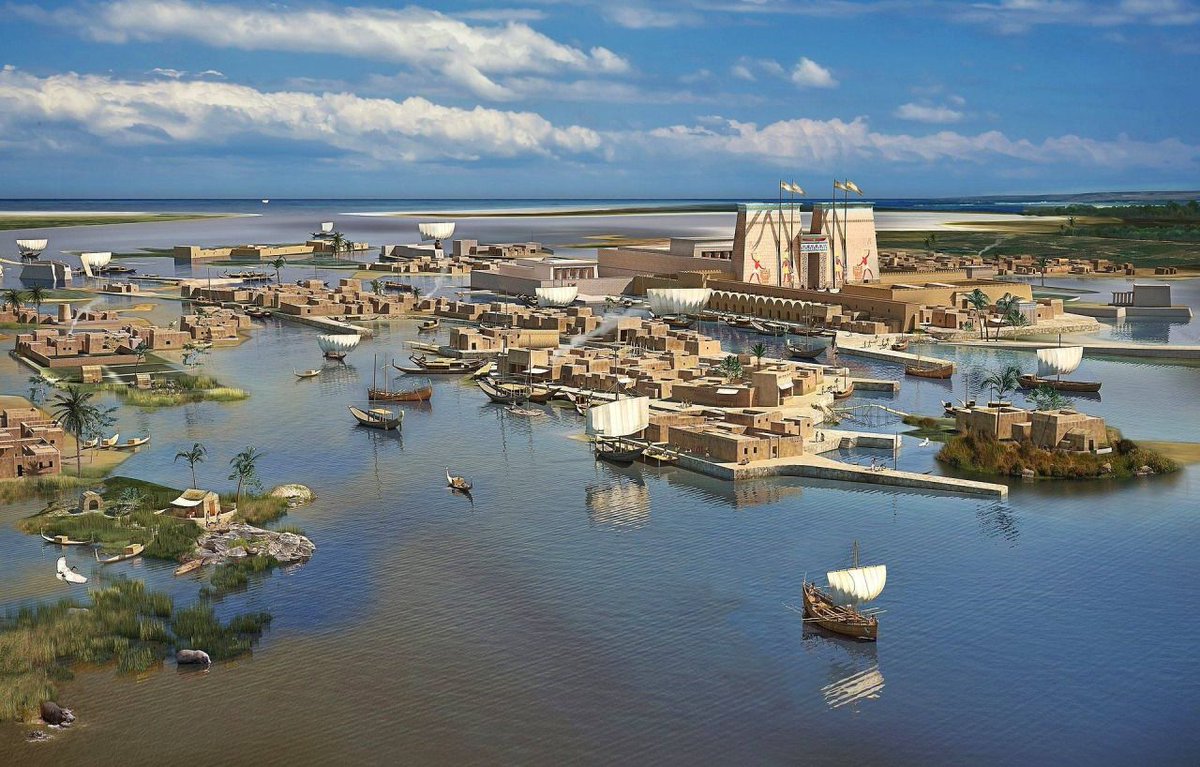
As excavations continued, a picture emerged of this thriving metropolis, a modern Venice: networks of islands & islets joined by bridges & pontoons, with the mighty temple at its heart.
A grand canal flowed past the temple from east to west, connecting the harbours.
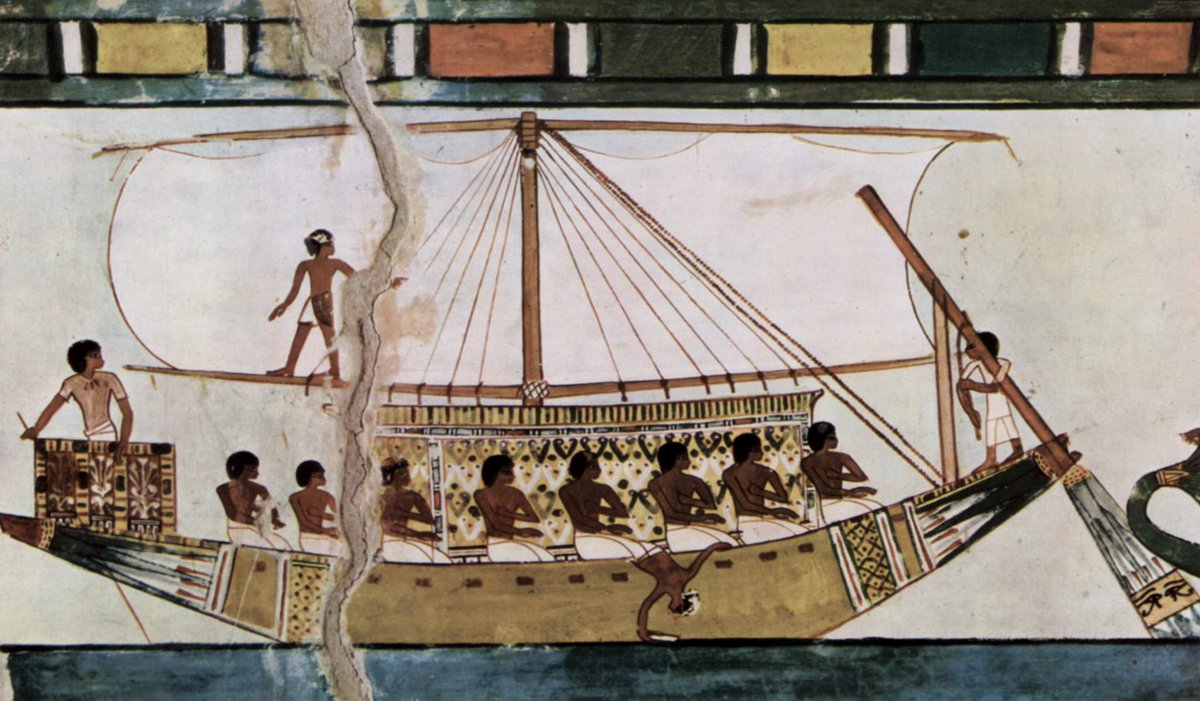
If you were a merchant sailor bringing goods into Egypt, you would have known all about Thonis.
All foreign trade passed through this city, making it one of the busiest & richest ports on earth.
(detail from the tomb of Menna, Thebes
https://t.co/o7GSbiV1BJ)
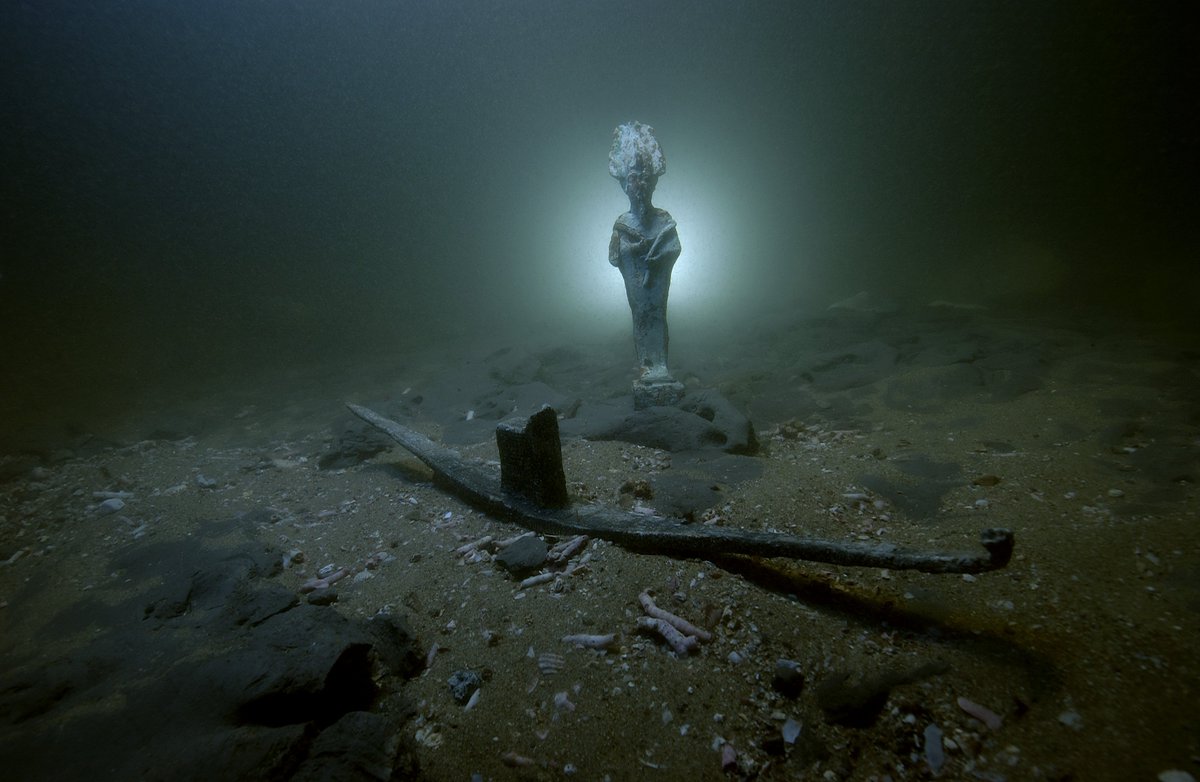
More than 700 anchors & over 70 shipwrecks were uncovered, dating from the 6th to the 2nd century BCE & originating across the breadth of the ancient world.
Here, Egyptian merchants exported gold, papyrus & incense, while importers brought in copper, wine & olive oil.
The city also had a huge religious significance, due to its temples to Herakles & the supreme god Amun.
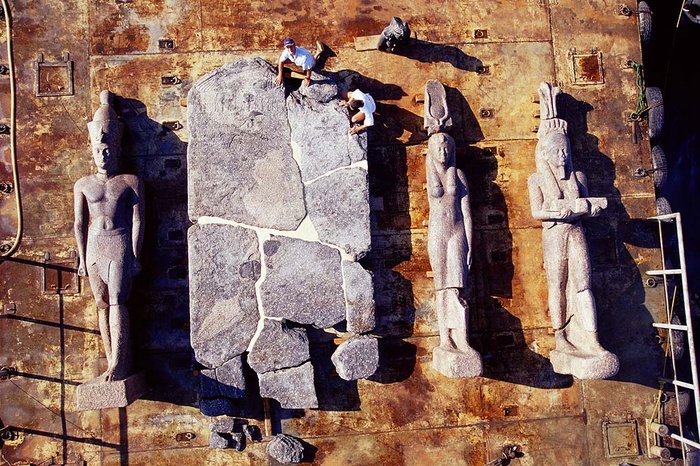
Taxes were collected by the main temple, with this wealth giving rise to opulent decorations & enormous statues.
(statues of a Pharoah, his Queen, & the God Hapy)
Every new Pharoah visited Thonis to be crowned, & sanctuaries to Osiris & other gods were renowned for miracle healing, attracting pilgrims from across Egypt.
Each year, Osiris passed down the river in his ceremonial boat from the temple of Amun, surrounded by a procession.
While originally completely Egyptian, contact with the cosmopolitan milieu of the Mediterranean meant that foreign customs brought from Greece, Cyprus & Phoenicia took hold.
Greek styles of dress & architecture were uncovered from Thonis, & from nearby Canopus & Alexandria.
From one of the world’s biggest ports to a sunken ruin: Thonis’ decline happened slowly at first.
During the 2nd century, the nearby city of Alexandria surpassed Thonis to become Egypt’s largest port, spurring an economic decline.
But the city also had a fatal flaw.
The heavy stone buildings of Thonis, which must have looked magnificently solid & imposing to its inhabitants, were built on soft coastal ground made of clay & loam.
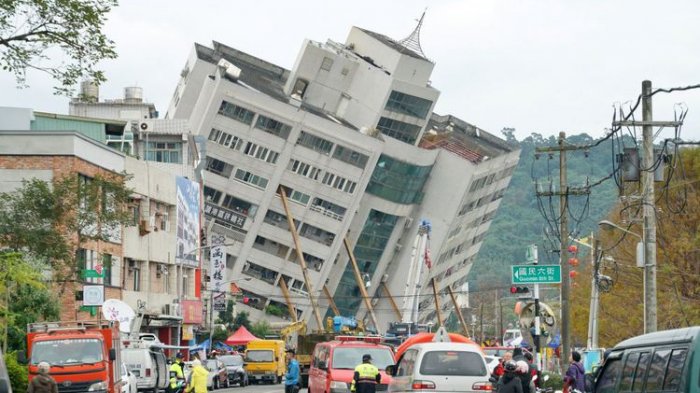
This made them particularly vulnerable to a deadly phenomenon known as soil liquefaction.
Soil of a certain type, when saturated with water & struck by tremors, can undergo a sudden change that causes it to behave like a liquid.
This is still an enormous challenge to modern architects in earthquake-prone areas.
(Taiwan, Turkey & New Zealand pictured)
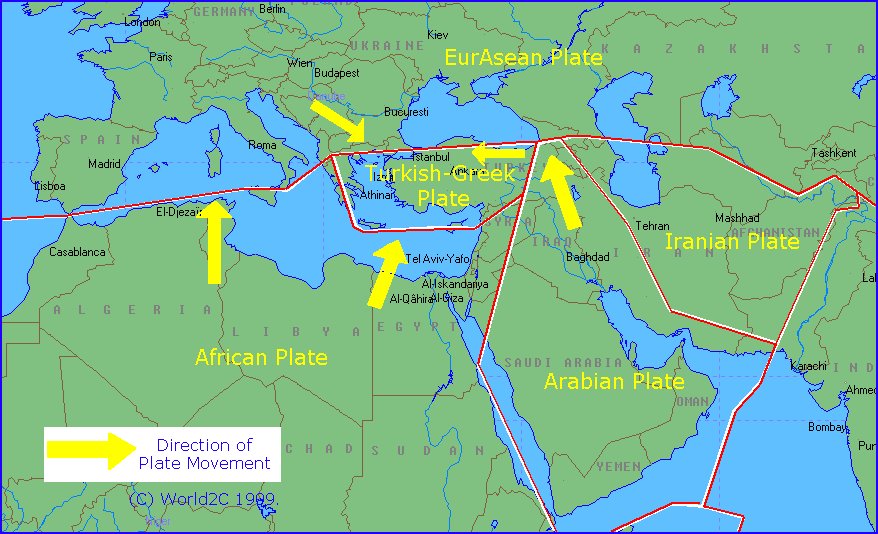
In the centuries following the 30 CE Roman conquest of Egypt, a number of earthquakes shook the Mediterranean, straddling as it does a major fault line.
A deadly mixture of soil liquefaction & huge tsunamis devastated Thonis, & it began to sink island by island into the sea.
It was around this time that new pottery & coins stopped flowing into Thonis.
At the end of the 2nd century BCE, the magnificent temple of Amun itself sunk below the waves, a sight that must have terrified the city's inhabitants.
It seems the Egyptians tried to save their city. Some of the ancient wrecks discovered in the bay seem to have been scuppered intentionally, perhaps as a measure against flooding & subsidence.
Whatever they tried, it didn’t work.
While some inhabitants of Thonis stubbornly remained through the Roman period & even into the early years of Arab rule after the 7th century, the city’s fate was sealed.
By the 8th century, Thonis was completely swallowed by the encroaching sea, & only its name lived on.
Today the city of Thonis stands as a melancholy reminder of the power of the natural world, & the fragility of our cities.
It looms out of the silty blue of the Egyptian sea & asks us how the people of future centuries will remember us, or indeed if they will remember us at all.
Thanks for listening!
For more information, please check out the website of the man who ran this expedition, Frank Goddio:
https://t.co/SUKfQQGVQQ Also check out the incredible work of the underwater photographer, Christoph Gerigk:
https://t.co/qUuqFRx1oM
If you found this interesting, I've put together more of my research in this thread-of-threads.
https://t.co/2IPGyXqXBT
And if you’d like you can chip me a tip here.
https://t.co/kaKtVVdquY