More from हठयोगी

#Thread on kundalini- The hidden treasure!

In Hinduism, there are few topics which can fascinate even an atheist. Kundalini is one of them.

Kundalini is the latent Shakti sleeping near the Muladhara region (bottom of the spinal cords).

Siva Samhita, chapter 5 (pic 2)


Two fingers above the rectum and two fingers below the linga , four fingers in width is a space like a bulbous root.

Between this space is the yoni having its face towards the back.That space is called the root;there dwells the Goddess Kundalini.


It surrounds all the nadis and has three coils and a half;and catching its tail in its own mouth,it rests in the hole of the Sushumna(nadi).

Significance-

Chandogya Upanishad 8.6.6 and Katha Upanishad  2.16 says:

यदा सर्वे प्रभिद्यन्ते हृदयस्येह ग्रन्थयः ।
अथ मर्त्योऽमृतो भवत्येतावद्ध्यनुशासनम् ॥

शतं चैका च हृदयस्य नाड्य-
    स्तासां मूर्धानमभिनिःसृतैका ।
तयोर्ध्वमायन्नमृतत्वमेति
    विष्वङ्ङन्या उत्क्रमणे भवन्ति ॥

When all the knots of Hridaya Granthi are cut down, mortal becomes an immortal & attains Brahman there. There are 101 Nadis which emerge from heart, one Nadi goes out piercing the head. Going up through that, one attains immortality; the others serve for departing in diiff. ways.
#Thread on speed of light in terms of vedic measurement.

Galileo Galilee was among the first to try to measure the speed of light in the early 17th century. Today we know that the exact speed of light is defined as 29,97,92,458 metres per second (approximately 186000 mi/s).


But, when it comes to Indian prospect, there are many references about the speed of light much before the 17th century.
The speed of light is not directly from the Rigveda Samhita but It is given by a great Indian scholor Sāyaṇācārya, popularly known as Sayana.


Sayana was a sanskrit scholar under king Bukka Raya I and Harihara II of Vijaynagar empire in 14th century. His commentary on vedas are very famous and was translated from Sanskrit to English by Max Müller, himself.


RigVeda verse 1.50.4-
तरणिविश्वदर्शवो ज्योतिष्कृदसि सूर्य । विश्वमा भासि रोचनम् ।।
Swift and all beautiful art thou, O Surya, maker of the light, Illuming all the radiant realm.

As it talks about maker of light. Commentary of Sayana in this verse is as:


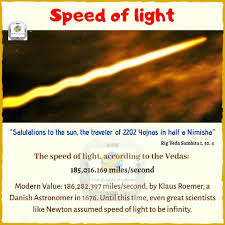
तथा च स्मर्यत योजनानां सहस्रम् द्वे द्वे शते द्वे च योजने । एकेन निमिषार्धेन क्रममाण नमोऽस्तु ते ॥
It is remembered, [O Sun] bow to you, you who traverse 2,202 yojanas in half a nimesha.
Here it is talking about speed of Sun.

More from All

#தினம்_ஒரு_திருவாசகம்
தொல்லை இரும்பிறவிச் சூழும் தளை நீக்கி
அல்லல் அறுத்து ஆனந்தம் ஆக்கியதே – எல்லை
மருவா நெறியளிக்கும் வாதவூர் எங்கோன்
திருவாசகம் என்னும் தேன்

பொருள்:
1.எப்போது ஆரம்பித்தது என அறியப்படமுடியாத தொலை காலமாக (தொல்லை)

2. இருந்து வரும் (இரும்)


3.பிறவிப் பயணத்திலே ஆழ்த்துகின்ற (பிறவி சூழும்)

4.அறியாமையாகிய இடரை (தளை)

5.அகற்றி (நீக்கி),

6.அதன் விளைவால் சுகதுக்கமெனும் துயரங்கள் விலக (அல்லல் அறுத்து),

7.முழுநிறைவாய்த் தன்னுளே இறைவனை உணர்த்துவதே (ஆனந்த மாக்கியதே),

8.பிறந்து இறக்கும் காலவெளிகளில் (எல்லை)

9.பிணைக்காமல் (மருவா)

10.காக்கும் மெய்யறிவினைத் தருகின்ற (நெறியளிக்கும்),

11.என் தலைவனான மாணிக்க வாசகரின் (வாதவூரெங்கோன்)

12.திருவாசகம் எனும் தேன் (திருவா சகமென்னுந் தேன்)

முதல்வரி: பிறவி என்பது முன்வினை விதையால் முளைப்பதோர் பெருமரம். அந்த ‘முன்வினை’ எங்கு ஆரம்பித்தது எனச் சொல்ல இயலாது. ஆனால் ‘அறியாமை’ ஒன்றே ஆசைக்கும்,, அச்சத்துக்கும் காரணம் என்பதால், அவையே வினைகளை விளைவிப்பன என்பதால், தொடர்ந்து வரும் பிறவிகளுக்கு, ‘அறியாமையே’ காரணம்

அறியாமைக்கு ஆரம்பம் கிடையாது. நமக்கு ஒரு பொருளைப் பற்றிய அறிவு எப்போதிருந்து இல்லை? அதைச் சொல்ல முடியாது. அதனாலேதான் முதலடியில், ஆரம்பமில்லாத அஞ்ஞானத்தை பிறவிகளுக்குக் காரணமாகச் சொல்லியது. ஆனால் அறியாமை, அறிவின் எழுச்சியால், அப்போதே முடிந்து விடும்.

You May Also Like