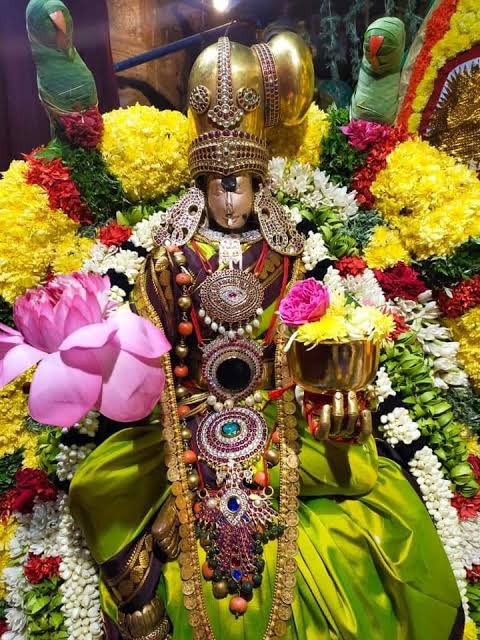
MEENAKSHI AMMAN, MADURAI (TN)
#bharatmandir #navratri2021
A paadal Petra sthalam where Shiva took the form of Sundareswarar (the handsome one) and married Devi Parvati (Meenakshi).
Devi is also known by the name Angayarkanni (mother with the beautiful fish eyes).
@GunduHuDuGa
Devi Meenakshi emerged from yagna fire as a 3 year old girl when Pandyan King Malayadwaja and Kanchanamalai were praying for a child.
It is said that Devi was born with three breasts and there was a prophesy that her superfluous breast would melt away when she met her husband.
Devi ruled over Madurai and captured Indralok. She went on to capture Kailasha. When she saw Shiva, her 3rd breast disappeared and she realised that Shiva would be her consort.
The divine marriage was attended by all Devas and Sri Vishnu (as her brother) gave her hand to Shiva.
It is said that Indra found a swayambhu lingam at Kadamba Vanam. He placed it in Madurai where the kshetram stands. Here, Shiva is seen on the vehicle of Indra.
The Golden Lotus Tank is said to be the place where a golden lotus blossomed for the puja performed by Indra.
The Meenakshi Thirukalyanam festival is celebrated in the Chithirai month to mark the divine marriage of Meenakshi Amman. The festival includes a procession where Meenakshi and Sundareshwara travel in a chariot and Sri Vishnu gives away his sister in marriage to Shiva.