/2
It is possible to believe that Twitter and Facebook did the right thing to block Trump, and that, having done so, it lays bear a real problem for American democracy. The Biden Administration and the incoming Congress need urgently to address the power of online social media.
/1
/2
/3
/4
/5
/6
/7
/8
/9
/10
/11
More from Trump


This is mostly right but strikes me as it needing said that I don't think the left or the intelligentsia have the slightest idea how low institutional trust in anything coming from a left mouthpiece is now. Except in-network, the best heuristic is "the opposite of what they said"
If you look at the situation from a predictive models perspective instead of the more rigorous and appropriate (under normal circumstances) "prove your case or gtfo" perspective, trusting the opposite of whatever the left side says has an AMAZING track record, as we know it.
Literally, the best heuristic most people have right now, in terms of how often it gets things right versus *completely* wrong, is "whatever CNN, the NYT, public health officials, and the Democrats said... yeah, the opposite." That is, they're wrong WAY outside of statistics.
They're also not just wrong. They're *completely* wrong, backwards, often transparently covering something up that they don't want known or refuse to believe. This isn't just a legitimation crisis because there's a heuristic: whatever the official left narrative is, is wrong.
There are a few reasons why such a heuristic would be more predictive than not. One of those is conspiracy, and another is mass hysteria with ideological capture. We know at least one of those is happening and have rather strong evidence both are. That makes conspiracy reasonable
I read part of the transcript of the Trump call.
— Eric Weinstein (@EricRWeinstein) January 4, 2021
The following strikes me.
A) Trump is a true political outsider & the only one to reach the Presidency with zero government experience.
B) There is an obvious open institutional conspiracy to prevent any outsider gaining power.
If you look at the situation from a predictive models perspective instead of the more rigorous and appropriate (under normal circumstances) "prove your case or gtfo" perspective, trusting the opposite of whatever the left side says has an AMAZING track record, as we know it.
Literally, the best heuristic most people have right now, in terms of how often it gets things right versus *completely* wrong, is "whatever CNN, the NYT, public health officials, and the Democrats said... yeah, the opposite." That is, they're wrong WAY outside of statistics.
They're also not just wrong. They're *completely* wrong, backwards, often transparently covering something up that they don't want known or refuse to believe. This isn't just a legitimation crisis because there's a heuristic: whatever the official left narrative is, is wrong.
There are a few reasons why such a heuristic would be more predictive than not. One of those is conspiracy, and another is mass hysteria with ideological capture. We know at least one of those is happening and have rather strong evidence both are. That makes conspiracy reasonable


You May Also Like




1/OK, data mystery time.
This New York Times feature shows China with a Gini Index of less than 30, which would make it more equal than Canada, France, or the Netherlands. https://t.co/g3Sv6DZTDE
That's weird. Income inequality in China is legendary.
Let's check this number.
2/The New York Times cites the World Bank's recent report, "Fair Progress? Economic Mobility across Generations Around the World".
The report is available here:
3/The World Bank report has a graph in which it appears to show the same value for China's Gini - under 0.3.
The graph cites the World Development Indicators as its source for the income inequality data.
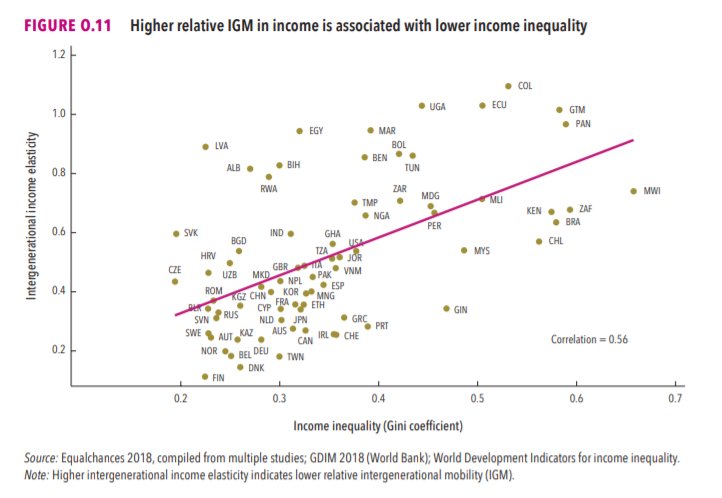
4/The World Development Indicators are available at the World Bank's website.
Here's the Gini index: https://t.co/MvylQzpX6A
It looks as if the latest estimate for China's Gini is 42.2.
That estimate is from 2012.
5/A Gini of 42.2 would put China in the same neighborhood as the U.S., whose Gini was estimated at 41 in 2013.
I can't find the <30 number anywhere. The only other estimate in the tables for China is from 2008, when it was estimated at 42.8.
This New York Times feature shows China with a Gini Index of less than 30, which would make it more equal than Canada, France, or the Netherlands. https://t.co/g3Sv6DZTDE
That's weird. Income inequality in China is legendary.
Let's check this number.
2/The New York Times cites the World Bank's recent report, "Fair Progress? Economic Mobility across Generations Around the World".
The report is available here:
3/The World Bank report has a graph in which it appears to show the same value for China's Gini - under 0.3.
The graph cites the World Development Indicators as its source for the income inequality data.
4/The World Development Indicators are available at the World Bank's website.
Here's the Gini index: https://t.co/MvylQzpX6A
It looks as if the latest estimate for China's Gini is 42.2.
That estimate is from 2012.
5/A Gini of 42.2 would put China in the same neighborhood as the U.S., whose Gini was estimated at 41 in 2013.
I can't find the <30 number anywhere. The only other estimate in the tables for China is from 2008, when it was estimated at 42.8.