CCP EXPERT:WE CAN'T FIX TRUMP VIA WALL STREET,BUT WITH BIDEN...FOR THE PAST 30-40 YEARS, WE HAVE BEEN UTILIZING THE CORE POWER OF THE USA...THERE ARE A LOT OF DEALS.
"We know that the Trump administration is in a trade war with us,so why can't we fix the Trump administration? 1/
[...] since the 1970s, Wall Street had a very strong influence on the domestic and foreign affairs of the 3/
So during the US-China trade war, they (Wall Street) tried to help, and I know that my friends on the US side told me that they tried to help, but they couldn't do much. 5/
Trump has been saying that Biden's son has some sort of global foundation. Have you noticed that? 6/
We know that in the '80s the Northeast (of China) was booming. Why? The Northeast is the root of the entire Chinese economy...China joined the U.S.-dominated world economy, 7/
In the post-financial crisis era, in the past 12 years, who are the companies whose stock prices 8/
---
https://t.co/6ZDZO19re4
More from Trump


1/ In a Trump Tower press conference, held nine days before he took office, Donald Trump described his plan to separate his business from his presidency. Over the last few years, the key pillars of that plan have crumbled. Let’s go through them one-by-one.
2/ Promise 1 of Trump’s ethics plan: “No new foreign deals will be made whatsoever during the duration of President Trump’s presidency,” his attorney said. Trump did at least one new foreign deal anyway.
(See the promise at 31:57 of the video
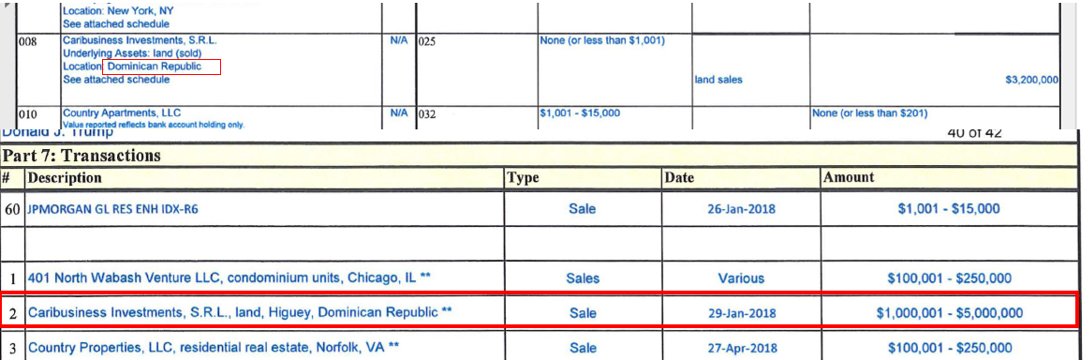
3/ We know that the president did new a new foreign deal in office because he himself admitted it—on a financial disclosure report filed with federal ethics officials. You can see here that he sold $3.2M of land in the Dominican Republic on Jan. 29, 2018. https://t.co/U7r3VCiJPM
4/ Promise 2 of Trump’s ethics plan: He said he wasn’t going to talk about the business with his sons, Eric and Don Jr., who he put in charge of day-to-day operations. Doesn’t look like he kept that promise either.
(See promise 25:00 into the
5/ Contradicting his father, Eric Trump later told me that he did in fact plan to update his dad on the business. “Yeah, on the bottom line, profitability reports and stuff like that. But you know, that’s about it.”
2/ Promise 1 of Trump’s ethics plan: “No new foreign deals will be made whatsoever during the duration of President Trump’s presidency,” his attorney said. Trump did at least one new foreign deal anyway.
(See the promise at 31:57 of the video
3/ We know that the president did new a new foreign deal in office because he himself admitted it—on a financial disclosure report filed with federal ethics officials. You can see here that he sold $3.2M of land in the Dominican Republic on Jan. 29, 2018. https://t.co/U7r3VCiJPM
4/ Promise 2 of Trump’s ethics plan: He said he wasn’t going to talk about the business with his sons, Eric and Don Jr., who he put in charge of day-to-day operations. Doesn’t look like he kept that promise either.
(See promise 25:00 into the
5/ Contradicting his father, Eric Trump later told me that he did in fact plan to update his dad on the business. “Yeah, on the bottom line, profitability reports and stuff like that. But you know, that’s about it.”


You May Also Like

Recently, the @CNIL issued a decision regarding the GDPR compliance of an unknown French adtech company named "Vectaury". It may seem like small fry, but the decision has potential wide-ranging impacts for Google, the IAB framework, and today's adtech. It's thread time! 👇
It's all in French, but if you're up for it you can read:
• Their blog post (lacks the most interesting details): https://t.co/PHkDcOT1hy
• Their high-level legal decision: https://t.co/hwpiEvjodt
• The full notification: https://t.co/QQB7rfynha
I've read it so you needn't!
Vectaury was collecting geolocation data in order to create profiles (eg. people who often go to this or that type of shop) so as to power ad targeting. They operate through embedded SDKs and ad bidding, making them invisible to users.
The @CNIL notes that profiling based off of geolocation presents particular risks since it reveals people's movements and habits. As risky, the processing requires consent — this will be the heart of their assessment.
Interesting point: they justify the decision in part because of how many people COULD be targeted in this way (rather than how many have — though they note that too). Because it's on a phone, and many have phones, it is considered large-scale processing no matter what.




1/OK, data mystery time.
This New York Times feature shows China with a Gini Index of less than 30, which would make it more equal than Canada, France, or the Netherlands. https://t.co/g3Sv6DZTDE
That's weird. Income inequality in China is legendary.
Let's check this number.
2/The New York Times cites the World Bank's recent report, "Fair Progress? Economic Mobility across Generations Around the World".
The report is available here:
3/The World Bank report has a graph in which it appears to show the same value for China's Gini - under 0.3.
The graph cites the World Development Indicators as its source for the income inequality data.
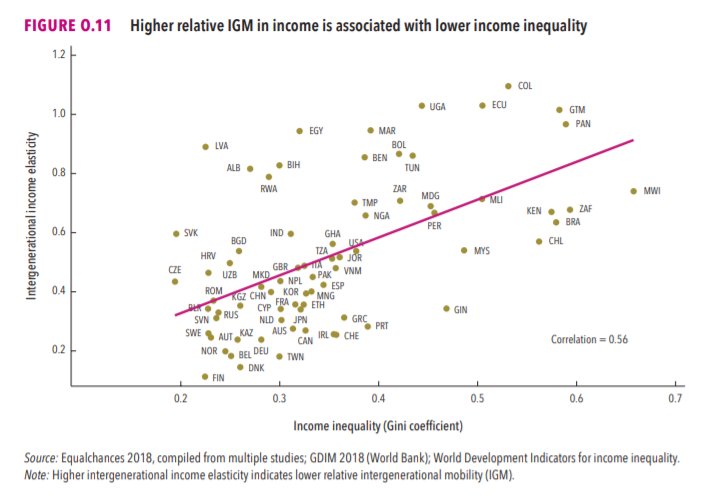
4/The World Development Indicators are available at the World Bank's website.
Here's the Gini index: https://t.co/MvylQzpX6A
It looks as if the latest estimate for China's Gini is 42.2.
That estimate is from 2012.
5/A Gini of 42.2 would put China in the same neighborhood as the U.S., whose Gini was estimated at 41 in 2013.
I can't find the <30 number anywhere. The only other estimate in the tables for China is from 2008, when it was estimated at 42.8.
This New York Times feature shows China with a Gini Index of less than 30, which would make it more equal than Canada, France, or the Netherlands. https://t.co/g3Sv6DZTDE
That's weird. Income inequality in China is legendary.
Let's check this number.
2/The New York Times cites the World Bank's recent report, "Fair Progress? Economic Mobility across Generations Around the World".
The report is available here:
3/The World Bank report has a graph in which it appears to show the same value for China's Gini - under 0.3.
The graph cites the World Development Indicators as its source for the income inequality data.
4/The World Development Indicators are available at the World Bank's website.
Here's the Gini index: https://t.co/MvylQzpX6A
It looks as if the latest estimate for China's Gini is 42.2.
That estimate is from 2012.
5/A Gini of 42.2 would put China in the same neighborhood as the U.S., whose Gini was estimated at 41 in 2013.
I can't find the <30 number anywhere. The only other estimate in the tables for China is from 2008, when it was estimated at 42.8.