
Asana is now planning to double the size of its sales team in 2020
Asana is the tool we all know even if we don't use it ourselves. With that famous B2C CEO that decided to do SaaS next.
It's crossed $250,000,000 in ARR and is starting to march upmarket
Here are 5 Interesting Learnings from Asana at $250M ARR:
Asana is now planning to double the size of its sales team in 2020
140% NRR for $50k+ customers
125% NRR for $5k-$50k customers
100% or so NRR for < $5k customers
Given it still skews 60% SMB, this is consistent with other market leaders like Zendesk, etc
We saw with Zendesk and Shopify the SMB growth keep pace with enterprise, and we saw with Slack enterprise be the engine of growth
Asana is in middle
Asana has the challenge many of you do. The Big Customers are growing fastest (100% YoY), but 40% of its revenue is still from accounts < $5k ACV.
Asana is growing 55% at $250m+ in ARR!! But new customer growth was ~10% YoY.
So again, lean way, way into your existing customers.
#6. Churn has returned to pre-Covid levels. So no more blaming Covid here.
#7. Asana added 130+ new features in 2020. How about you? Agile wins in very competitive spaces. Asana is in a very competitive space.
You just have to add admin-level controls if you want to go enterprise. So do it early.
More from Trading

1/ Feels like a good time to tell the story of how I went from broke to a millionaire to broke again in 2017/18 again...
Yesterday was brutal for some people...
Losing life-changing money sucks, losing any money sucks...you can chase the market or you can change your strategy.
2/ The original thread is gone but you can read it here.
https://t.co/cLLNs75rB0
tl;dr
- Traded $32k to $1.2m
- Thought I was a genius
- Made poor investments
- Didn't conserve capital
- Peaked at 150 BTC
- Lost nearly all of it
2 weeks from losing my house + no income. Oops.
3/ I am going to assume you are in it for the money rather than the tech. Yeah, you might Tweet about the amazing blockchaining of cross-border payments and oracles yadda yadda...really, you are in it to make money.
If you are really in it for the tech, go and build something.
4/ Okay, so if you want to make money, trading is super hard, you are trading against:
- Better traders than you
- People who can move markets
- Unknown information
And if you are trading with leverage you might blow up your account with the volatility.
5/ If you are not trading, you are investing. Okay, so what are you investing in?
I made the decision that the crypto with the best opportunity of existing in 10 years is #Bitcoin:
- Solves a genuine problem
- The right tech
- A proven track record
Yesterday was brutal for some people...
Losing life-changing money sucks, losing any money sucks...you can chase the market or you can change your strategy.
2/ The original thread is gone but you can read it here.
https://t.co/cLLNs75rB0
tl;dr
- Traded $32k to $1.2m
- Thought I was a genius
- Made poor investments
- Didn't conserve capital
- Peaked at 150 BTC
- Lost nearly all of it
2 weeks from losing my house + no income. Oops.
3/ I am going to assume you are in it for the money rather than the tech. Yeah, you might Tweet about the amazing blockchaining of cross-border payments and oracles yadda yadda...really, you are in it to make money.
If you are really in it for the tech, go and build something.
4/ Okay, so if you want to make money, trading is super hard, you are trading against:
- Better traders than you
- People who can move markets
- Unknown information
And if you are trading with leverage you might blow up your account with the volatility.
5/ If you are not trading, you are investing. Okay, so what are you investing in?
I made the decision that the crypto with the best opportunity of existing in 10 years is #Bitcoin:
- Solves a genuine problem
- The right tech
- A proven track record


Many of you have seen the famous Westrum Organizational Typology model, so prominently featured in State of DevOps Research, Accelerate, DevOps Handbook, etc.
This model was created Dr. Ron Westrum, a widely-cited sociologist who studied the impact of culture on safety
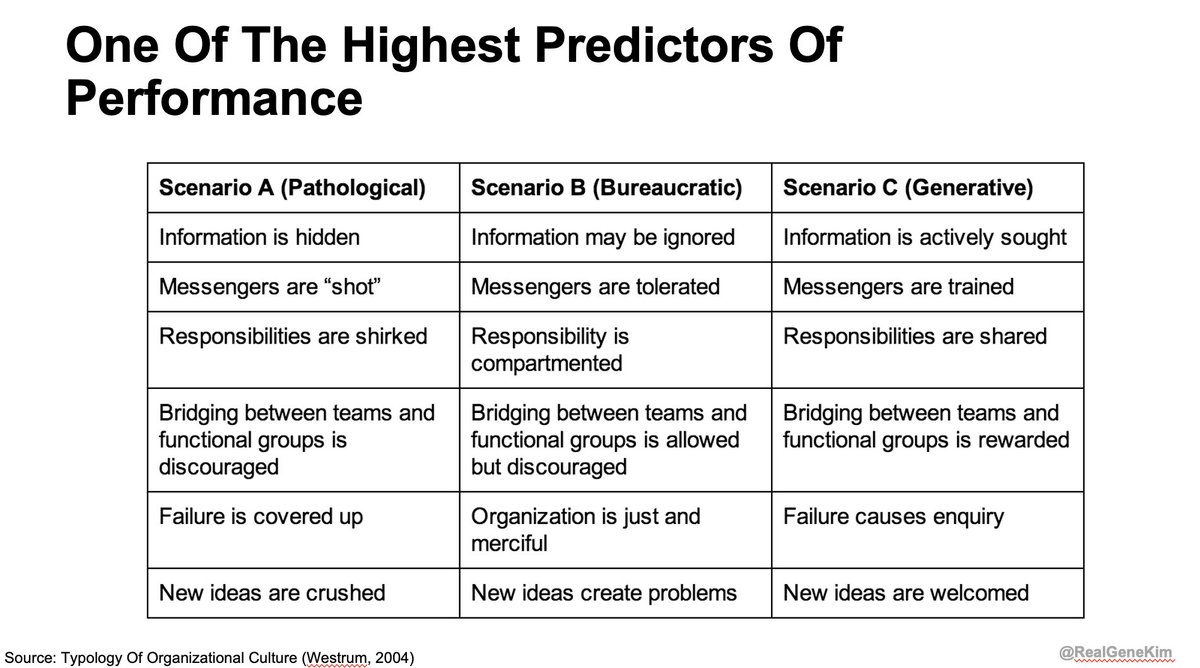
Thanks to Dr. @nicolefv, I was able to interview him for an upcoming episode of the Idealcast! 🤯
It was a very heady experience, and while preparing to interview him, I was startled to discover how much work he's done in healthcare, aviation, spaceflight, but also innovation.
I've read 4+ of his papers, so I thought I was familiar with his work. (Here's one paper: https://t.co/7X00O67VgS)
I was startled to learn he has also studied in depth what enables innovation. He wrote a wonderful book "Sidewinder: Creative Missile Development at China Lake"
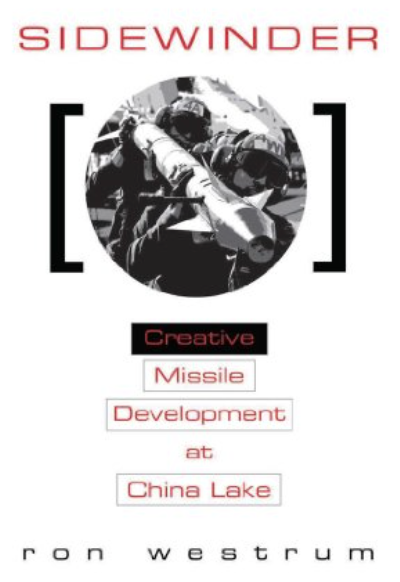
Dr. Westrum writes about China Lake Research Labs: "its design and structure had one purpose: to foster technical creativity. It did; China Lake operated far outside the normal envelope... Sidewinder & others were "impossible" accomplishments,
I love this book because it describes traits of organizations that routinely create and maintain greatness: US space program (Mercury, Gemini, Apollo), US Naval Reactors, Toyota, Team of Teams, Tesla, the tech giants (Amazon, Google, Netflix, Google)
This model was created Dr. Ron Westrum, a widely-cited sociologist who studied the impact of culture on safety
Thanks to Dr. @nicolefv, I was able to interview him for an upcoming episode of the Idealcast! 🤯
It was a very heady experience, and while preparing to interview him, I was startled to discover how much work he's done in healthcare, aviation, spaceflight, but also innovation.
I've read 4+ of his papers, so I thought I was familiar with his work. (Here's one paper: https://t.co/7X00O67VgS)
I was startled to learn he has also studied in depth what enables innovation. He wrote a wonderful book "Sidewinder: Creative Missile Development at China Lake"
Dr. Westrum writes about China Lake Research Labs: "its design and structure had one purpose: to foster technical creativity. It did; China Lake operated far outside the normal envelope... Sidewinder & others were "impossible" accomplishments,
I love this book because it describes traits of organizations that routinely create and maintain greatness: US space program (Mercury, Gemini, Apollo), US Naval Reactors, Toyota, Team of Teams, Tesla, the tech giants (Amazon, Google, Netflix, Google)


You May Also Like

A list of cool websites you might now know about
A thread 🧵
1) Learn Anything - Search tools for knowledge discovery that helps you understand any topic through the most efficient
2) Grad Speeches - Discover the best commencement speeches.
This website is made by me
3) What does the Internet Think - Find out what the internet thinks about anything
4) https://t.co/vuhT6jVItx - Send notes that will self-destruct after being read.
A thread 🧵
1) Learn Anything - Search tools for knowledge discovery that helps you understand any topic through the most efficient
2) Grad Speeches - Discover the best commencement speeches.
This website is made by me
3) What does the Internet Think - Find out what the internet thinks about anything
4) https://t.co/vuhT6jVItx - Send notes that will self-destruct after being read.



1/Politics thread time.
To me, the most important aspect of the 2018 midterms wasn't even about partisan control, but about democracy and voting rights. That's the real battle.
2/The good news: It's now an issue that everyone's talking about, and that everyone cares about.
3/More good news: Florida's proposition to give felons voting rights won. But it didn't just win - it won with substantial support from Republican voters.
That suggests there is still SOME grassroots support for democracy that transcends
4/Yet more good news: Michigan made it easier to vote. Again, by plebiscite, showing broad support for voting rights as an
5/OK, now the bad news.
We seem to have accepted electoral dysfunction in Florida as a permanent thing. The 2000 election has never really
To me, the most important aspect of the 2018 midterms wasn't even about partisan control, but about democracy and voting rights. That's the real battle.
2/The good news: It's now an issue that everyone's talking about, and that everyone cares about.
3/More good news: Florida's proposition to give felons voting rights won. But it didn't just win - it won with substantial support from Republican voters.
That suggests there is still SOME grassroots support for democracy that transcends
4/Yet more good news: Michigan made it easier to vote. Again, by plebiscite, showing broad support for voting rights as an
5/OK, now the bad news.
We seem to have accepted electoral dysfunction in Florida as a permanent thing. The 2000 election has never really
Bad ballot design led to a lot of undervotes for Bill Nelson in Broward Co., possibly even enough to cost him his Senate seat. They do appear to be real undervotes, though, instead of tabulation errors. He doesn't really seem to have a path to victory. https://t.co/utUhY2KTaR
— Nate Silver (@NateSilver538) November 16, 2018