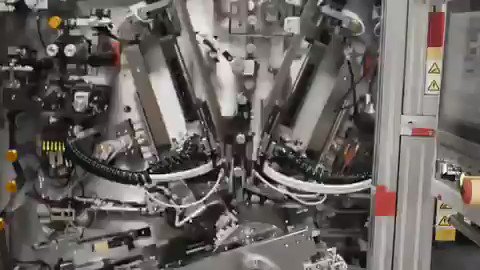
Tesla posted a new video about their secret Kato Road 4680 cell production lines a couple of days ago, and it contains a couple of technological gems I haven't seen widely mentioned elsewhere yet, so here's an attempt at listing these new disclosures.

1/

2/

The first thing is that there appear to be no human workers/operators whatsoever in the main production process.

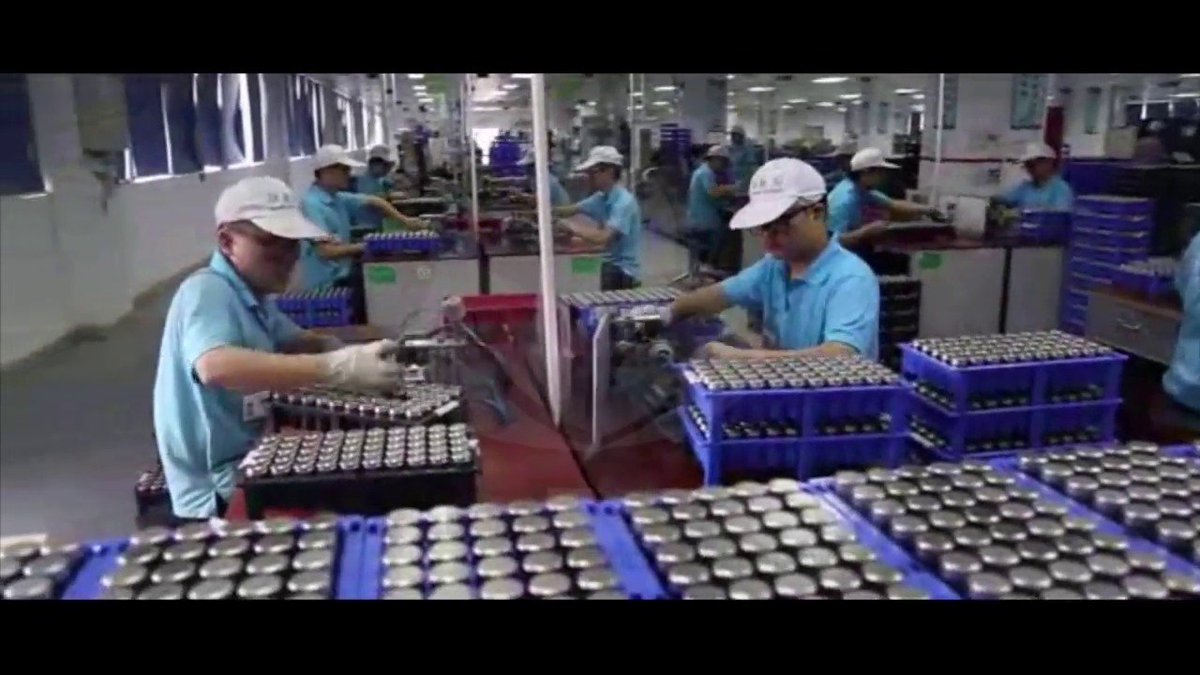
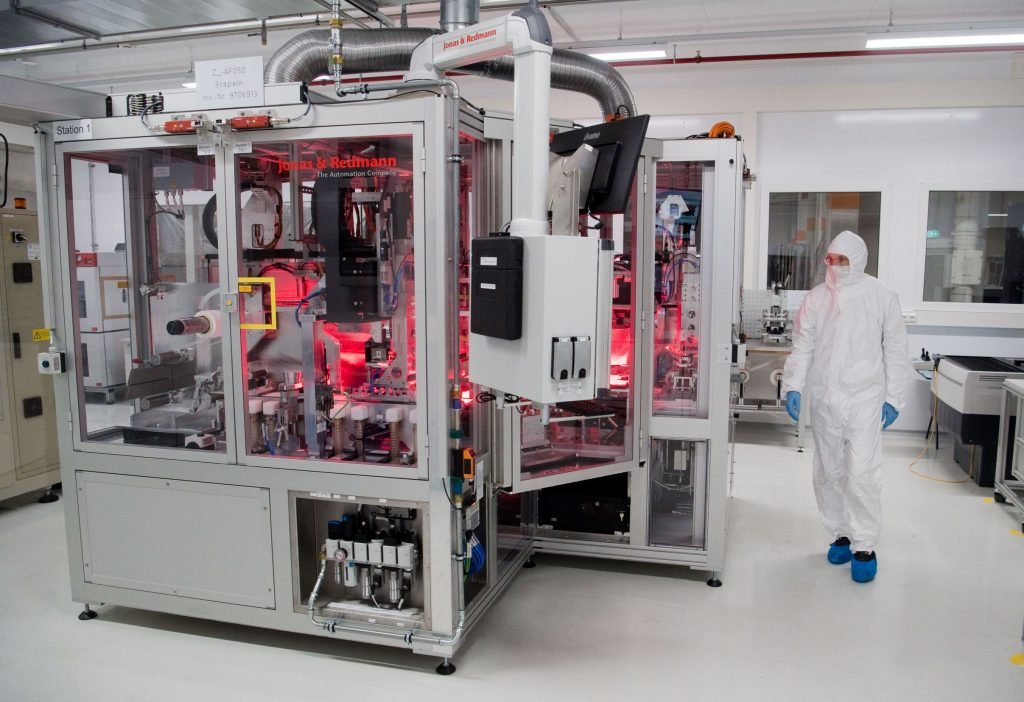
To the left is an image of line workers handling finished cells in a traditional facility. To the right is the 100% automated conveyance system Tesla has.
3/

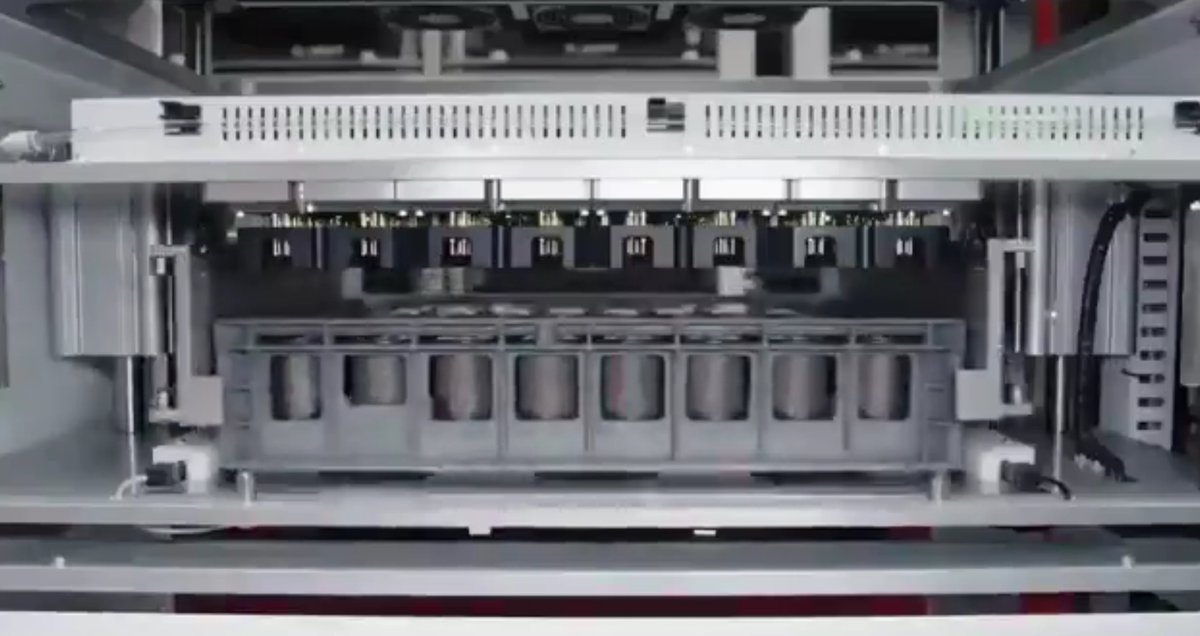
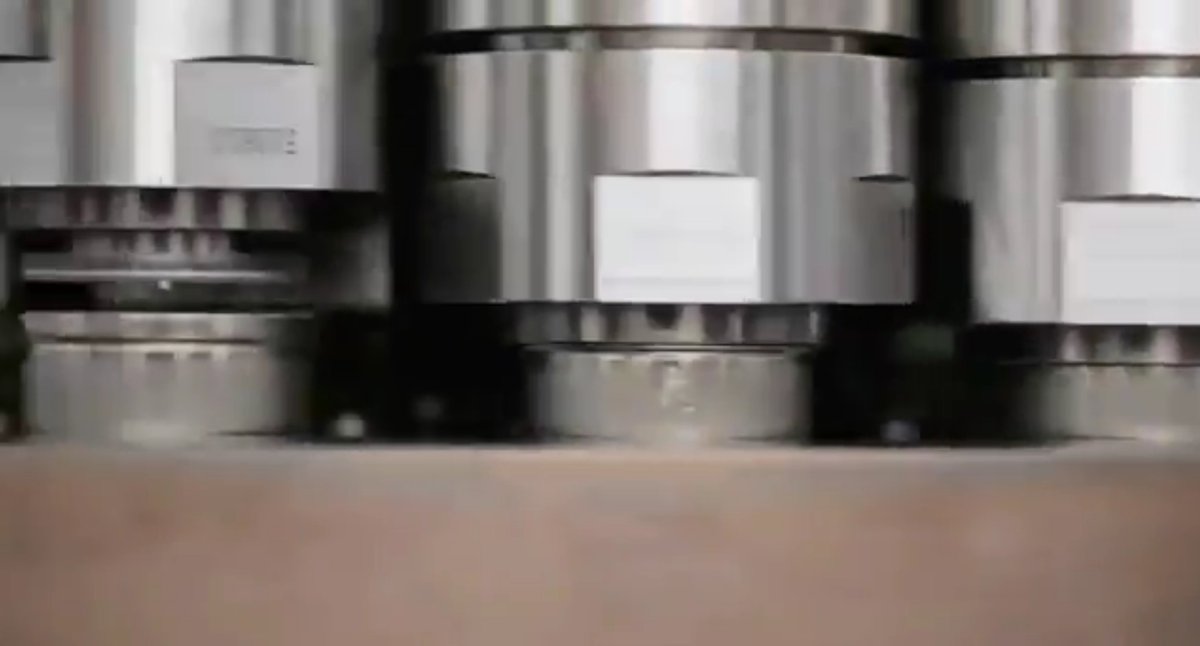
Here's how their 4680 cells are transported in racks of 8x8 cells: 64 cells each.

These standardized racks likely interface into automated pack production machines, made by Tesla Grohmann, or get directly integrated into the die-cast underbody (structural battery pack).
4/

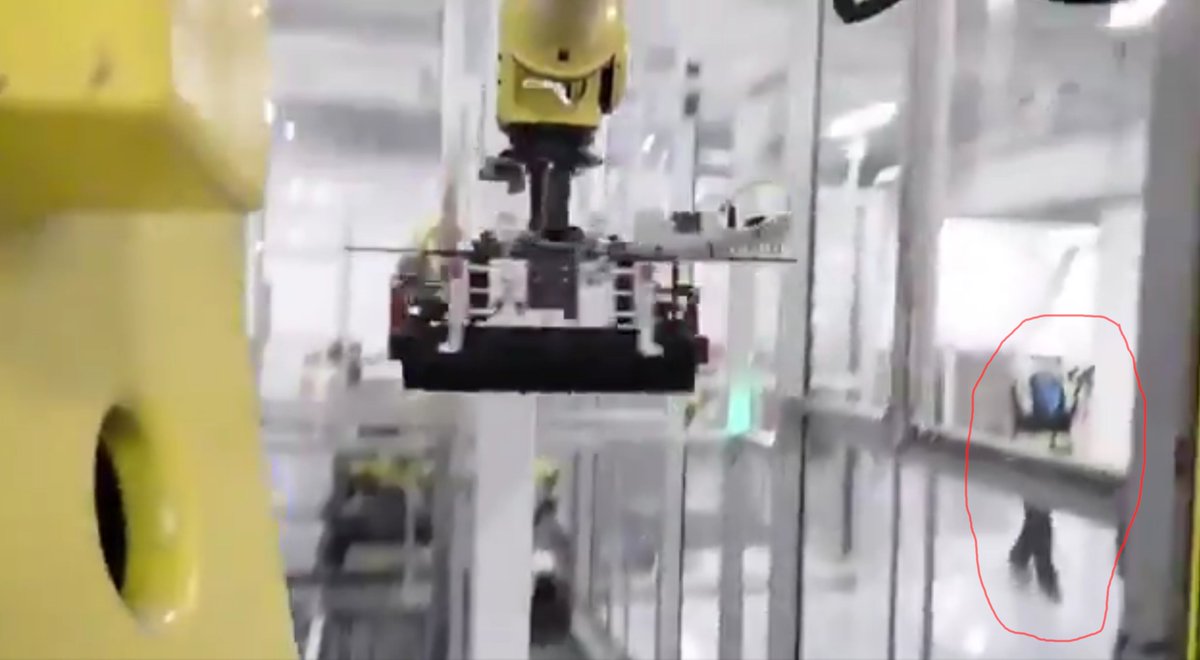
There's an interesting detail in one of the frames: glimpse of a facility worker observing an industrial robot moving a rack.
5/

What is interesting is that:

✅ Cell production facilities are Class 7 clean rooms, while the worker doesn't wear the usual "bunny suit" protective gear.
✅ There's a barrier between the worker and the robot: likely separating clean-room air from unprotected air.
6/

This suggests that much - maybe all - of the Kato Road production floor is in an isolated high grade clean-room with no human presence. Even finished cells are handled in what appear to be a clean-room environment.

Only maintenance would require humans to enter this space.
7/

The internal unit of handling finished cells appears to be a group of "4" cells in a single holder. A rack would have 16 of these.
8/

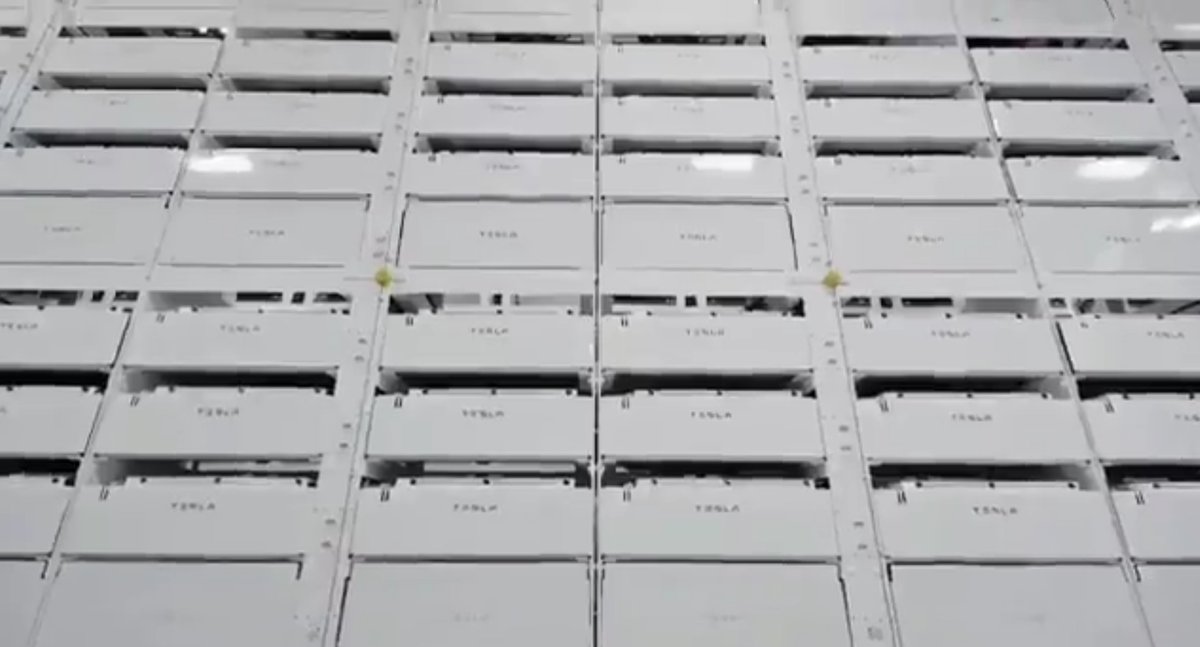
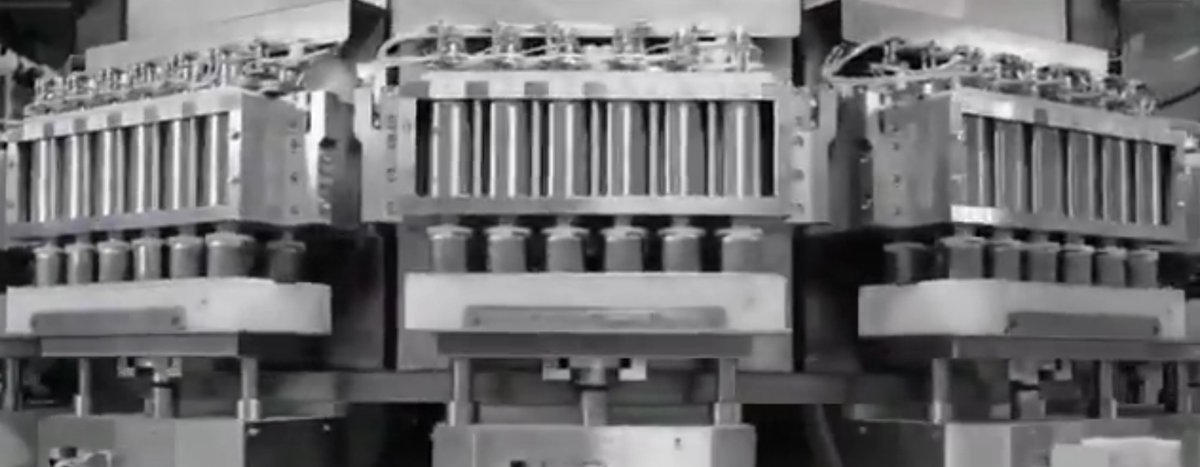
This large "wall" of Tesla labeled units appears to be high volume storage for 64-cell racks - possibly QA testing and initial formation (charging) of the cell.

Cell formation is usually done by third party equipment - but Tesla clearly uses their own equipment now.
9/

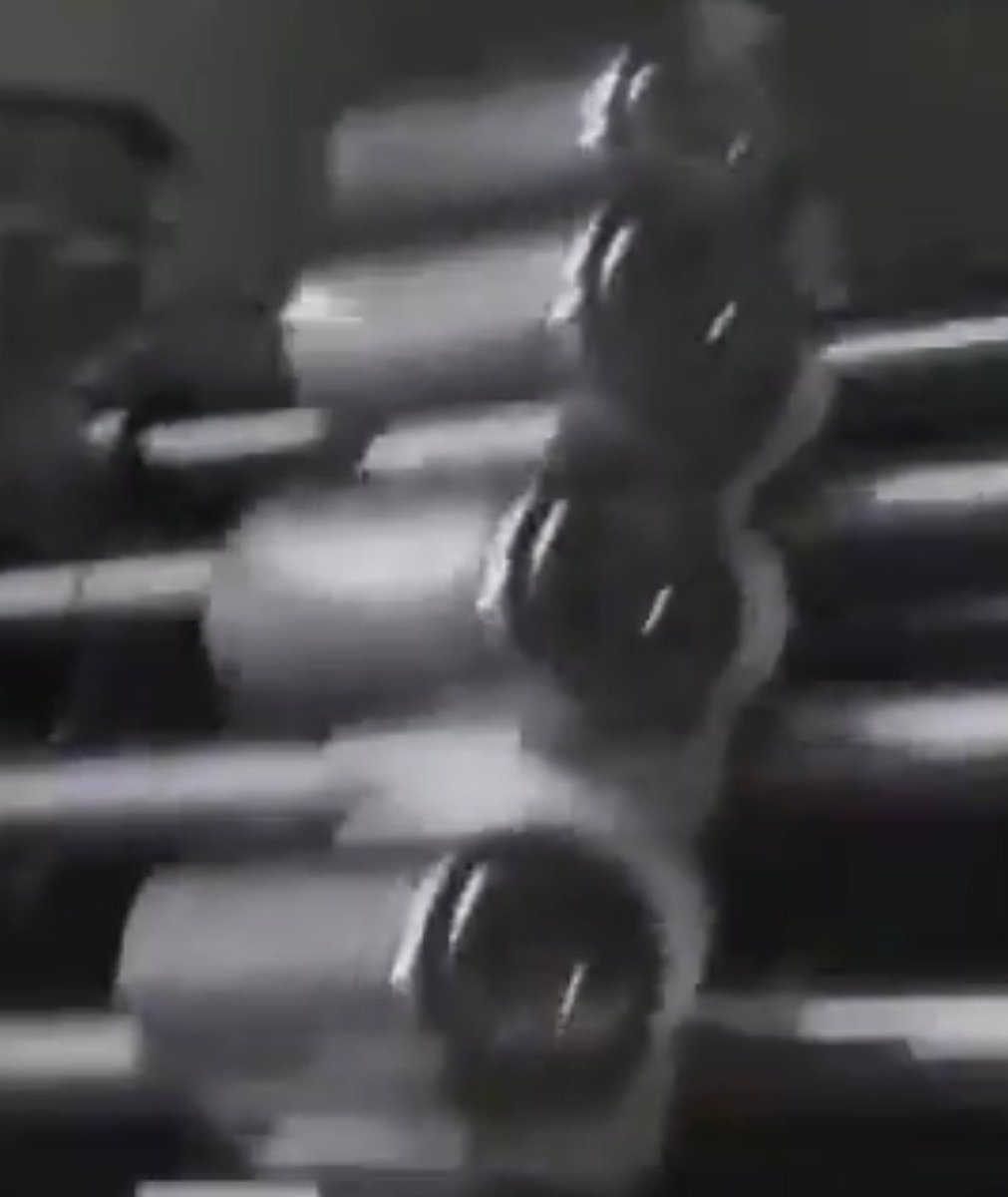
At 0:20 there appears to be rare footage of the "jelly roll" (inner roll of the cell) being carefully pressed into the "can", creating much of the final cell body.
10/

At 0:26 I think we see how the top of the cells get pressed to the bottom of the cell.

The famous "tab-less" picture on the right was disclosed on Battery Day. I believe Tesla is pressing the continuous metal surface of electrodes to the can surface, creating good contact.
11/

Tesla's goal with releasing this video was clearly recruitment - as can be seen in the final frames of the video. 🙂
12/

𝐓𝐋;𝐃𝐖: this video IMO demonstrates that Tesla's Kato Road facility is a full scale cell production pilot line & factory that is far more ahead in commercializing & scaling their new cell technologies than the "R&D project" impression @elonmusk gave on Battery Day. 😉

More from Tech

These past few days I've been experimenting with something new that I want to use by myself.

Interestingly, this thread below has been written by that.

Let me show you how it looks like. 👇🏻


When you see localhost up there, you should know that it's truly an experiment! 😀


It's a dead-simple thread writer that will post a series of tweets a.k.a tweetstorm. ⚡️

I've been personally wanting it myself since few months ago, but neglected it intentionally to make sure it's something that I genuinely need.

So why is that important for me? 🙂

I've been a believer of a story. I tell stories all the time, whether it's in the real world or online like this. Our society has moved by that.

If you're interested by stories that move us, read Sapiens!

One of the stories that I've told was from the launch of Poster.

It's been launched multiple times this year, and Twitter has been my go-to place to tell the world about that.

Here comes my frustration.. 😤
There has been a lot of discussion about negative emissions technologies (NETs) lately. While we need to be skeptical of assumed planetary-scale engineering and wary of moral hazard, we also need much greater RD&D funding to keep our options open. A quick thread: 1/10

Energy system models love NETs, particularly for very rapid mitigation scenarios like 1.5C (where the alternative is zero global emissions by 2040)! More problematically, they also like tons of NETs in 2C scenarios where NETs are less essential.
https://t.co/M3ACyD4cv7 2/10


In model world the math is simple: very rapid mitigation is expensive today, particularly once you get outside the power sector, and technological advancement may make later NETs cheaper than near-term mitigation after a point. 3/10

This is, of course, problematic if the aim is to ensure that particular targets (such as well-below 2C) are met; betting that a "backstop" technology that does not exist today at any meaningful scale will save the day is a hell of a moral hazard. 4/10

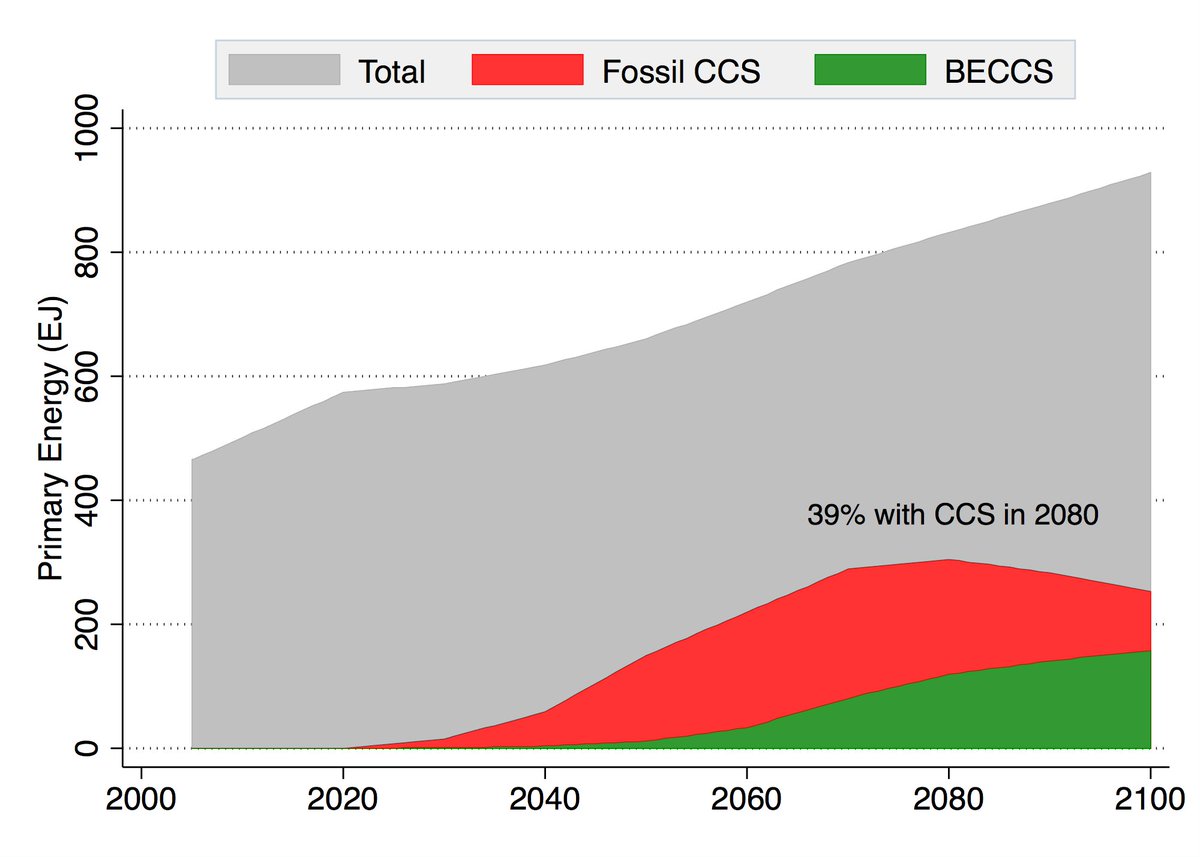
Many models go completely overboard with CCS, seeing a future resurgence of coal and a large part of global primary energy occurring with carbon capture. For example, here is what the MESSAGE SSP2-1.9 scenario shows: 5/10

You May Also Like