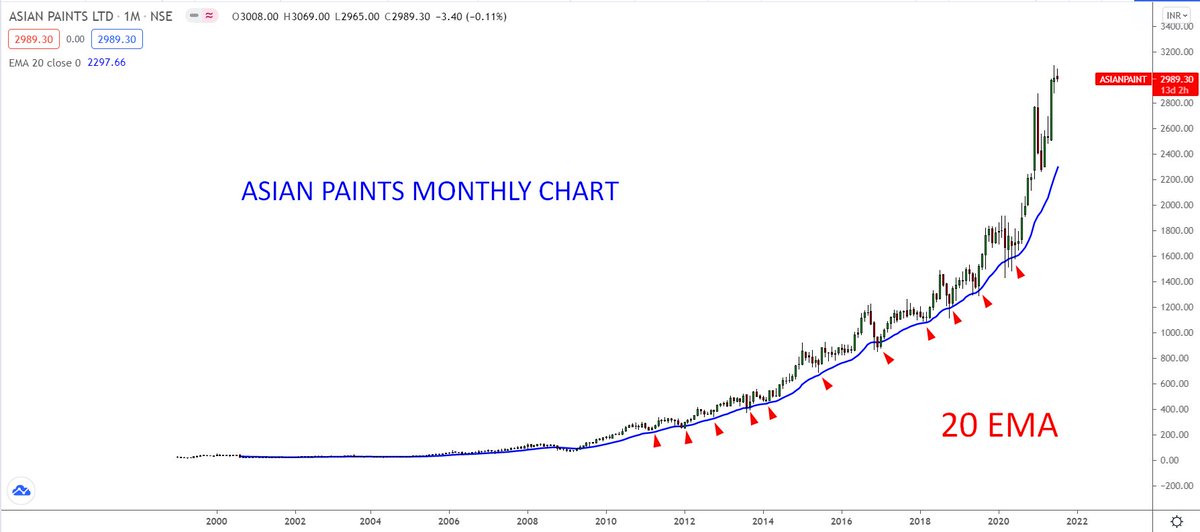
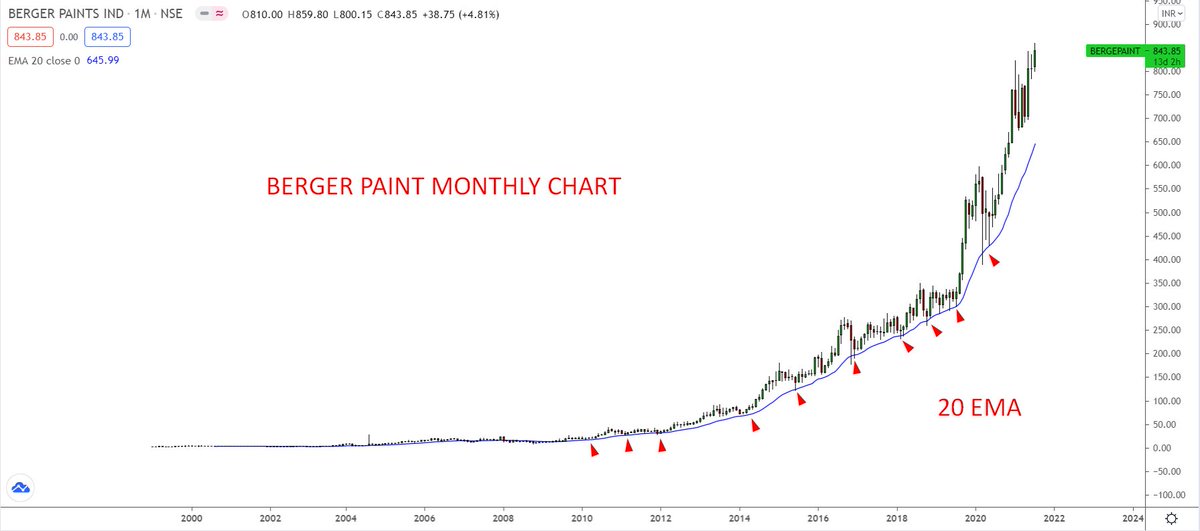
Thread on

👉How to choose best stocks for long term #Investing.

1⃣ Check out fundamentals:

🔹Debt to Equity Ratio = 0 or <1
🔹Revenue Growth > 10%
🔹Net Profit Growth > 15%
🔹Return on Equity > 20%
🔹Earning per share increases 10% Y-O-Y.

(1/N)

2⃣ Business model of the company:

🔹What the company sells or what services it offers and how the company makes a profit from its operations.

🔹Whether the products or services exists even after 50 years.

(2/N)
3⃣ The management of the company:

🔹The educational, employment backgrounds of the persons in key positions i.e. CEO, CFP, COO & CIO.

🔹Whether the management promoters the business as an open, transparent and flexible way.

(3/N)
4⃣ Competitive advantage:

🔹Company that has a sustainable competitive advantages in respect of cost structure brand reorganization, product/services quality distribution network and superior customary support.

(4/N)
5⃣ Qualitative factors:

🔹A domestic player or a big gun around the globe.

🔹Strong entry barrier.

🔹Future plans i.e. expansion of business, marketing policy.

Team #Equity4Life
#Learning #Investing
#StockMarket #FundamentalAnalysis

More from Equity4Life® Rishikesh Singh

You May Also Like

First thread of the year because I have time during MCO. As requested, a thread on the gods and spirits of Malay folk religion. Some are indigenous, some are of Indian origin, some have Islamic


Before I begin, it might be worth explaining the Malay conception of the spirit world. At its deepest level, Malay religious belief is animist. All living beings and even certain objects are said to have a soul. Natural phenomena are either controlled by or personified as spirits

Although these beings had to be respected, not all of them were powerful enough to be considered gods. Offerings would be made to the spirits that had greater influence on human life. Spells and incantations would invoke their


Two known examples of such elemental spirits that had god-like status are Raja Angin (king of the wind) and Mambang Tali Arus (spirit of river currents). There were undoubtedly many more which have been lost to time

Contact with ancient India brought the influence of Hinduism and Buddhism to SEA. What we now call Hinduism similarly developed in India out of native animism and the more formal Vedic tradition. This can be seen in the multitude of sacred animals and location-specific Hindu gods
These 10 threads will teach you more than reading 100 books

Five billionaires share their top lessons on startups, life and entrepreneurship (1/10)


10 competitive advantages that will trump talent (2/10)


Some harsh truths you probably don’t want to hear (3/10)


10 significant lies you’re told about the world (4/10)