1/10 When examining Statins, it should be noted that they have been shown to damage Mitochondria. Article – https://t.co/NIJbj3mULI. Mitochondrial damage can account for all of the relevant adverse effects of Statins – muscle weakness and damage, loss of memory/cognitive function
If you don’t design your study of mitochondrial damaging drugs to take into account how mitochondria react to assaults –
I certainly understand that many research scientists don’t have the time or funding to do long-term studies.
More from Society


1/ One year of destroyed economies, social isolation & deep social splits calls for an anniversary ⬇️thread ⬇️ to celebrate the RT-qPCR manuscript by Christian Drosten (@c_drosten) & Victor Corman (@vmcorman), submitted on 21st Jan 2020 to @Eurosurveillanc. #UnbiasedScience
2/ Before this very publication, virologists were neither treated like superstars, nor were they considered icons or half-gods. In 2009, Drosten almost succeeded in installing the false premise virology could supersede holistic medical sciences as discussed in this thread.
3/ Drosten is a virologist. He neither has any background in epidemiology, nor has he ever worked in the civil service. He also doesn’t have a background in public health. Yet he and his colleagues affect our daily lives to the level of whom to meet up or how to flush the toilet.
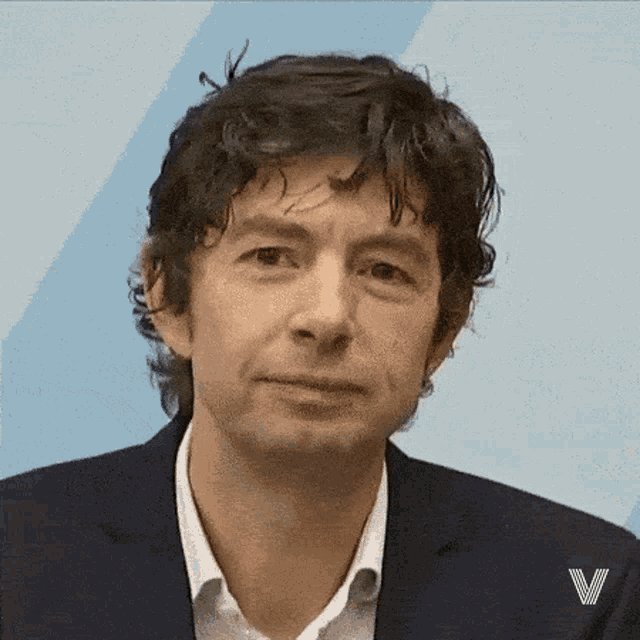
4/ Before January 2020, Drosten and Corman were common virologists at Charité Berlin, whenever they were not involved in economic implications (https://t.co/UTDwG8U7Du). Other than that, they looked at coronaviruses in dromedary calves in the Middle East or Africa. 😍 #cute
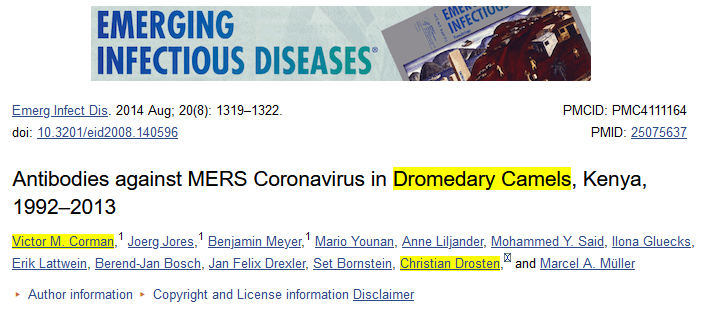
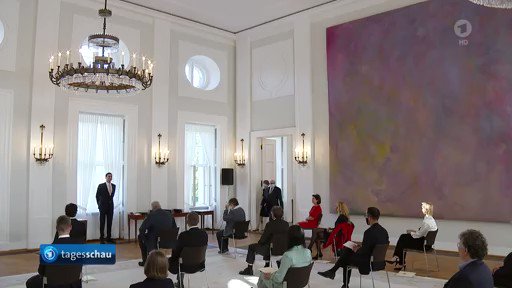
5/ Finally in Jan 2020, the published paper laid the theoretical grounds for the current pandemic, the RT-qPCR mass testing-religion, for which he was awarded his second German Federal Cross of Merit (he received the first one in 2005 for developing the SARS-CoV PCR test).
2/ Before this very publication, virologists were neither treated like superstars, nor were they considered icons or half-gods. In 2009, Drosten almost succeeded in installing the false premise virology could supersede holistic medical sciences as discussed in this thread.
3/ Drosten is a virologist. He neither has any background in epidemiology, nor has he ever worked in the civil service. He also doesn’t have a background in public health. Yet he and his colleagues affect our daily lives to the level of whom to meet up or how to flush the toilet.
4/ Before January 2020, Drosten and Corman were common virologists at Charité Berlin, whenever they were not involved in economic implications (https://t.co/UTDwG8U7Du). Other than that, they looked at coronaviruses in dromedary calves in the Middle East or Africa. 😍 #cute
5/ Finally in Jan 2020, the published paper laid the theoretical grounds for the current pandemic, the RT-qPCR mass testing-religion, for which he was awarded his second German Federal Cross of Merit (he received the first one in 2005 for developing the SARS-CoV PCR test).




You May Also Like

Ivor Cummins has been wrong (or lying) almost entirely throughout this pandemic and got paid handsomly for it.
He has been wrong (or lying) so often that it will be nearly impossible for me to track every grift, lie, deceit, manipulation he has pulled. I will use...

... other sources who have been trying to shine on light on this grifter (as I have tried to do, time and again:
Example #1: "Still not seeing Sweden signal versus Denmark really"... There it was (Images attached).
19 to 80 is an over 300% difference.
Tweet: https://t.co/36FnYnsRT9

Example #2 - "Yes, I'm comparing the Noridcs / No, you cannot compare the Nordics."
I wonder why...
Tweets: https://t.co/XLfoX4rpck / https://t.co/vjE1ctLU5x

Example #3 - "I'm only looking at what makes the data fit in my favour" a.k.a moving the goalposts.
Tweets: https://t.co/vcDpTu3qyj / https://t.co/CA3N6hC2Lq

He has been wrong (or lying) so often that it will be nearly impossible for me to track every grift, lie, deceit, manipulation he has pulled. I will use...
... other sources who have been trying to shine on light on this grifter (as I have tried to do, time and again:
Ivor Cummins BE (Chem) is a former R&D Manager at HP (sourcre: https://t.co/Wbf5scf7gn), turned Content Creator/Podcast Host/YouTube personality. (Call it what you will.)
— Steve (@braidedmanga) November 17, 2020
Example #1: "Still not seeing Sweden signal versus Denmark really"... There it was (Images attached).
19 to 80 is an over 300% difference.
Tweet: https://t.co/36FnYnsRT9
Example #2 - "Yes, I'm comparing the Noridcs / No, you cannot compare the Nordics."
I wonder why...
Tweets: https://t.co/XLfoX4rpck / https://t.co/vjE1ctLU5x
Example #3 - "I'm only looking at what makes the data fit in my favour" a.k.a moving the goalposts.
Tweets: https://t.co/vcDpTu3qyj / https://t.co/CA3N6hC2Lq


I’m torn on how to approach the idea of luck. I’m the first to admit that I am one of the luckiest people on the planet. To be born into a prosperous American family in 1960 with smart parents is to start life on third base. The odds against my very existence are astronomical.
I’ve always felt that the luckiest people I know had a talent for recognizing circumstances, not of their own making, that were conducive to a favorable outcome and their ability to quickly take advantage of them.
In other words, dumb luck was just that, it required no awareness on the person’s part, whereas “smart” luck involved awareness followed by action before the circumstances changed.
So, was I “lucky” to be born when I was—nothing I had any control over—and that I came of age just as huge databases and computers were advancing to the point where I could use those tools to write “What Works on Wall Street?” Absolutely.
Was I lucky to start my stock market investments near the peak of interest rates which allowed me to spend the majority of my adult life in a falling rate environment? Yup.
Ironies of Luck https://t.co/5BPWGbAxFi
— Morgan Housel (@morganhousel) March 14, 2018
"Luck is the flip side of risk. They are mirrored cousins, driven by the same thing: You are one person in a 7 billion player game, and the accidental impact of other people\u2019s actions can be more consequential than your own."
I’ve always felt that the luckiest people I know had a talent for recognizing circumstances, not of their own making, that were conducive to a favorable outcome and their ability to quickly take advantage of them.
In other words, dumb luck was just that, it required no awareness on the person’s part, whereas “smart” luck involved awareness followed by action before the circumstances changed.
So, was I “lucky” to be born when I was—nothing I had any control over—and that I came of age just as huge databases and computers were advancing to the point where I could use those tools to write “What Works on Wall Street?” Absolutely.
Was I lucky to start my stock market investments near the peak of interest rates which allowed me to spend the majority of my adult life in a falling rate environment? Yup.