SEBI cuts REIT lot size to 1 unit....this will boost the liquidity and encourage more participation!
REIT is like a mutual fund that invests in physical real estate assets!
Read more
Real Estate Investment Trusts (REITs) Simplified.
— JST Investments (@JstInvestments) June 9, 2021
A product that provides a fixed income that is better than FD +an upside like equity.
A Thread \U0001f9f5\U0001f447
More from Aditya Shah






Do u straight away invest in equities/shares?🤔
A simple thread🧵explaning how u can systematically create a structured portfolio on ur own.
Hit "Retweet" to educate maximum retail/small investors
Lets go👇
(1/14)
Step No 1.-
Golden Rule of Finance-
Expenses=Income-Saving
🧪In the starting years as an investor save as much as u can.
🧪Cut down as much as u can on discretionary spending.
🧪Initial years are tough as capital comes in slowly and seeds for compounding are being laid
(2/14)
Step No 2:-
Buy a health insurance:-
Health insurance will protect your portfolio against undue shocks of unforeseen hospitalization
A detailed review of how to buy health insurance is
As part of financial planning
— JST Investments (@JstInvestments) December 24, 2020
A thread on health insurance
What is health insurance?
Health insurance is a insurance that covers medical expenses that arise due to an illness. These expenses could be related to hospitalisation costs, cost of medicines etc.
1/
Step No 3:-
Buy a Life Insurance(If required):-
Evaluate the need for life insurance.
If need be buy a term plan.
A detailed review of how to buy life insurance is
Term Plan or a ULIP or a endowment plan?\U0001f914
— JST Investments (@JstInvestments) April 5, 2021
Life Insurance simplified:
Do 're-tweet' & help us educate more investors
A Thread \U0001f9f5\U0001f447
(1/15)
Step 4:-
Evaluate ur life goals
Goals can be:-
🧪Retirement
🧪Buying a house
🧪Child's Marriage
🧪Child's Education
Evaluate the year in which the goal will be achieved with the amount of estimated amount
(5/14)
You May Also Like


Ironies of Luck https://t.co/5BPWGbAxFi
— Morgan Housel (@morganhousel) March 14, 2018
"Luck is the flip side of risk. They are mirrored cousins, driven by the same thing: You are one person in a 7 billion player game, and the accidental impact of other people\u2019s actions can be more consequential than your own."
I’ve always felt that the luckiest people I know had a talent for recognizing circumstances, not of their own making, that were conducive to a favorable outcome and their ability to quickly take advantage of them.
In other words, dumb luck was just that, it required no awareness on the person’s part, whereas “smart” luck involved awareness followed by action before the circumstances changed.
So, was I “lucky” to be born when I was—nothing I had any control over—and that I came of age just as huge databases and computers were advancing to the point where I could use those tools to write “What Works on Wall Street?” Absolutely.
Was I lucky to start my stock market investments near the peak of interest rates which allowed me to spend the majority of my adult life in a falling rate environment? Yup.

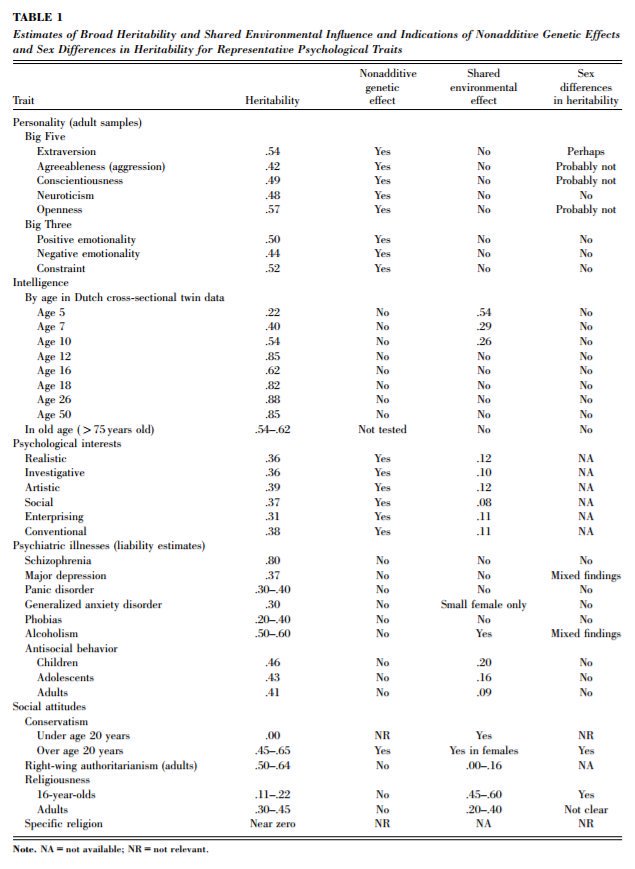
1. IQ is one of the most heritable psychological traits – that is, individual differences in IQ are strongly associated with individual differences in genes (at least in fairly typical modern environments). https://t.co/3XxzW9bxLE
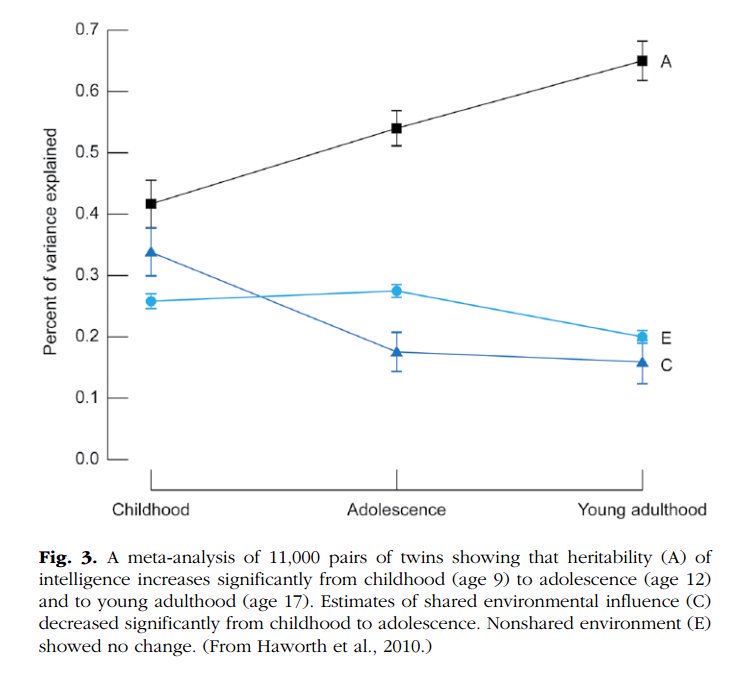
2. The heritability of IQ *increases* from childhood to adulthood. Meanwhile, the effect of the shared environment largely fades away. In other words, when it comes to IQ, nature becomes more important as we get older, nurture less. https://t.co/UqtS1lpw3n
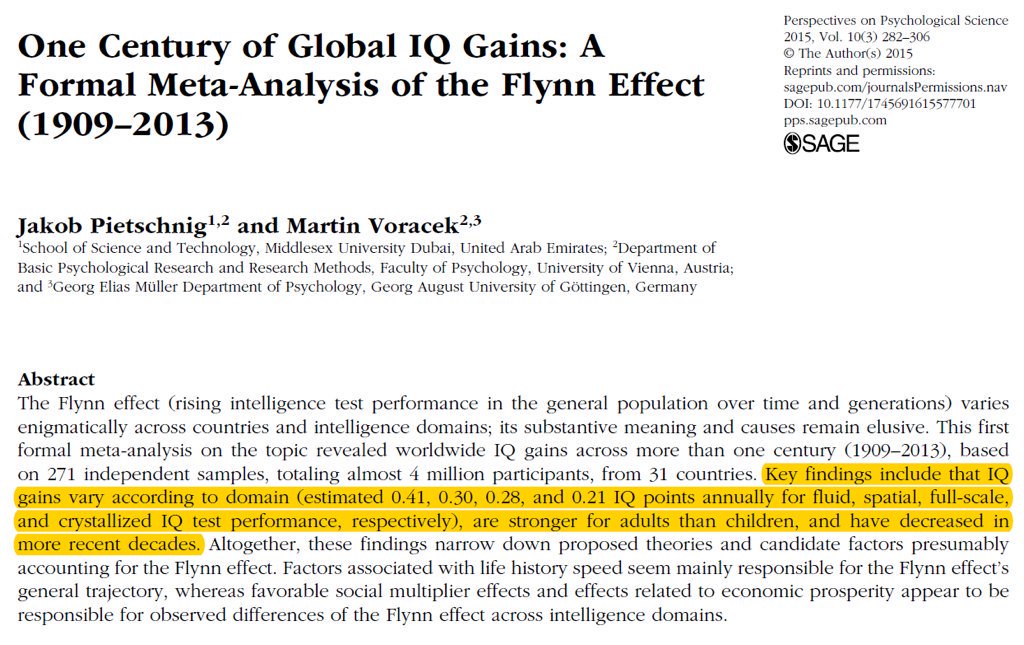
3. IQ scores have been increasing for the last century or so, a phenomenon known as the Flynn effect. https://t.co/sCZvCst3hw (N ≈ 4 million)
(Note that the Flynn effect shows that IQ isn't 100% genetic; it doesn't show that it's 100% environmental.)
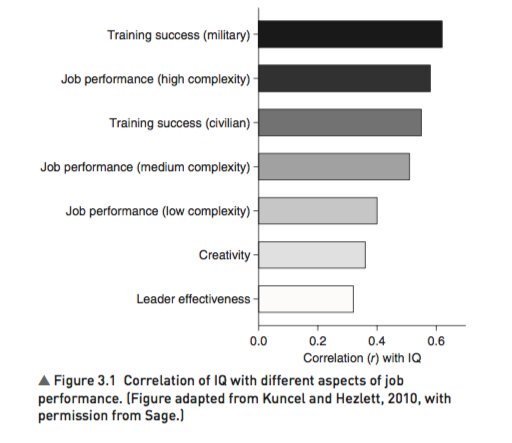
4. IQ predicts many important real world outcomes.
For example, though far from perfect, IQ is the single-best predictor of job performance we have – much better than Emotional Intelligence, the Big Five, Grit, etc. https://t.co/rKUgKDAAVx https://t.co/DWbVI8QSU3
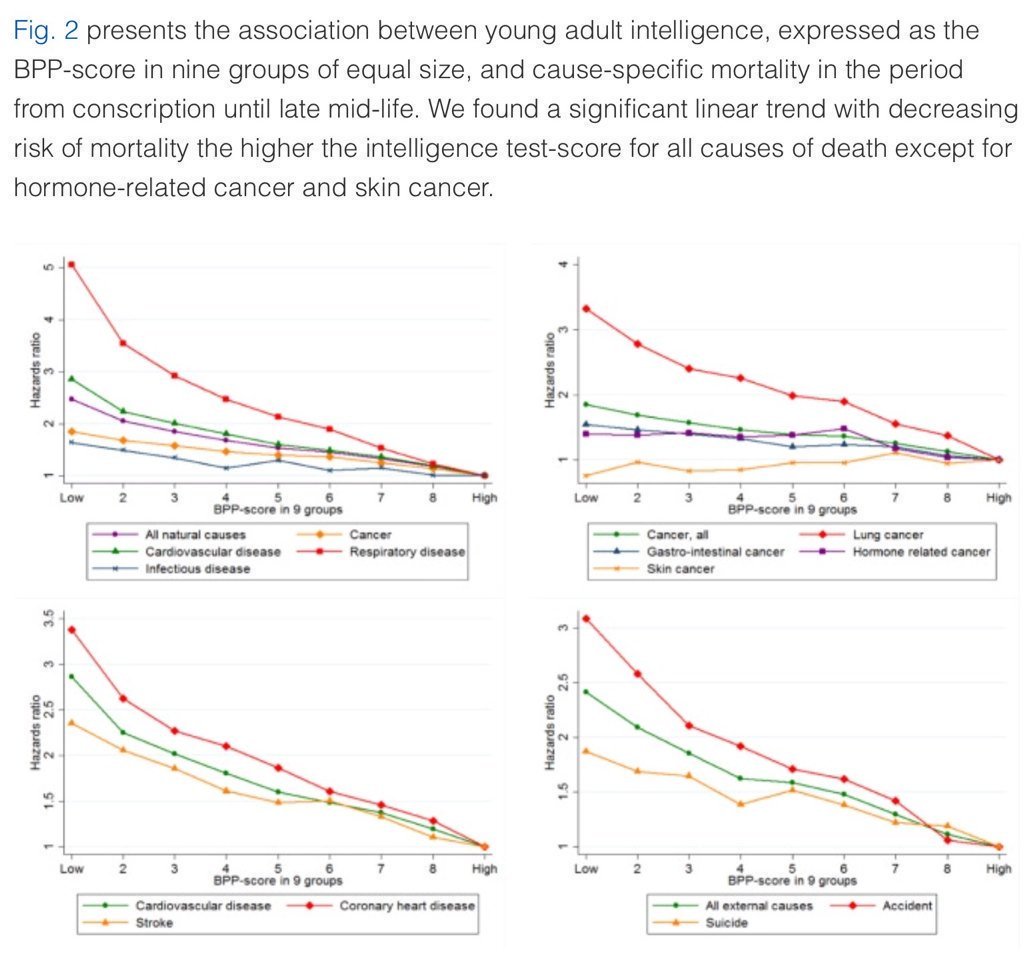
5. Higher IQ is associated with a lower risk of death from most causes, including cardiovascular disease, respiratory disease, most forms of cancer, homicide, suicide, and accident. https://t.co/PJjGNyeQRA (N = 728,160)

Those who exited at 1500 needed money. They can always come back near 969. Those who exited at 230 also needed money. They can come back near 95.
Those who sold L @ 660 can always come back at 360. Those who sold S last week can be back @ 301
Sir, Log yahan.. 13 days patience nhi rakh sakte aur aap 2013 ki baat kar rahe ho. Even Aap Ready made portfolio banakar bhi de do to bhi wo 1 month me hi EXIT kar denge \U0001f602
— BhavinKhengarSuratGujarat (@IntradayWithBRK) September 19, 2021
Neuland 2700 se 1500 & Sequent 330 to 230 kya huwa.. 99% retailers/investors twitter par charcha n EXIT\U0001f602