Stole this from a friend but I think it really captures my feelings towards people I know still pushing for Trump:
Just for clarity, as some people still don’t get why people unfriend them over what they see as politics.
These are moral judgements that aren’t the same class as policy differences. People aren’t really listening to the calls for civility coming from the same mouths that deny their validity as people.
Stalin mechanized agriculture but ran gulags in Siberia for gays.
More from Politics


This is partly what makes it impossible to have a constructive conversation nowadays. The stubborn refusal to accept that opposition to Trumpism and GOP nationalism is about more than simply holding different beliefs about things in and of itself. 👇
It's fine for people to hold different beliefs. But that doesn't mean all beliefs deserve equal treatment or tolerance and it doesn't mean intolerance of some beliefs makes a person intolerant of every belief which they don't share.
So if I said I don't think Trumpism deserves to be tolerated because it's just a fresh 21st century coat of cheap paint on a failed, dangerous 20th century ideology (fascism) that doesn't mean I'm intolerant of all beliefs with which I disagree. You'd think this would be obvious.
Another important facet. People who support fascist movements tend to give what they think are valid reasons for supporting them. That doesn't mean anyone is obliged to tolerate fascism or accept their proffered excuse.
Say you joined a neighborhood group that sets up community gardens and does roadside beautification projects. All good, right? Say one day you're having a meeting and you notice the President and exec board of this group are saying some bizarre things about certain neighbors.
No, but you can\u2019t keep labeling half of the country Nazis just because their beliefs are different than yours. Trump has fucked this whole country up in a matter of a few years. No one can even have a constructive conversation without someone getting triggered
— Joshua Savoy (@JoshuaSavoy2) February 11, 2021
It's fine for people to hold different beliefs. But that doesn't mean all beliefs deserve equal treatment or tolerance and it doesn't mean intolerance of some beliefs makes a person intolerant of every belief which they don't share.
So if I said I don't think Trumpism deserves to be tolerated because it's just a fresh 21st century coat of cheap paint on a failed, dangerous 20th century ideology (fascism) that doesn't mean I'm intolerant of all beliefs with which I disagree. You'd think this would be obvious.
Another important facet. People who support fascist movements tend to give what they think are valid reasons for supporting them. That doesn't mean anyone is obliged to tolerate fascism or accept their proffered excuse.
Just because some of the politicians act that way doesn\u2019t mean the whole party are Nazis. Some Republicans just vote that way because of abortion. You can\u2019t keep calling all of them Nazis and expect them to just start listening to your points.
— Joshua Savoy (@JoshuaSavoy2) February 11, 2021
Say you joined a neighborhood group that sets up community gardens and does roadside beautification projects. All good, right? Say one day you're having a meeting and you notice the President and exec board of this group are saying some bizarre things about certain neighbors.
You May Also Like










BREAKING: @CommonsCMS @DamianCollins just released previously sealed #Six4Three @Facebook documents:
Some random interesting tidbits:
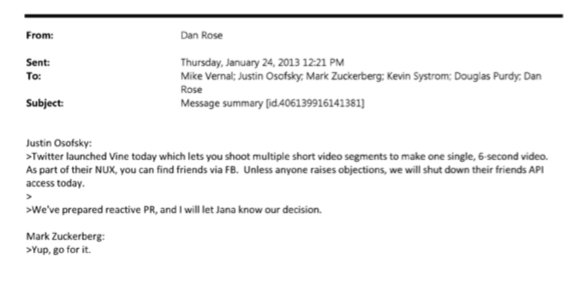
1) Zuck approves shutting down platform API access for Twitter's when Vine is released #competition
2) Facebook engineered ways to access user's call history w/o alerting users:
Team considered access to call history considered 'high PR risk' but 'growth team will charge ahead'. @Facebook created upgrade path to access data w/o subjecting users to Android permissions dialogue.
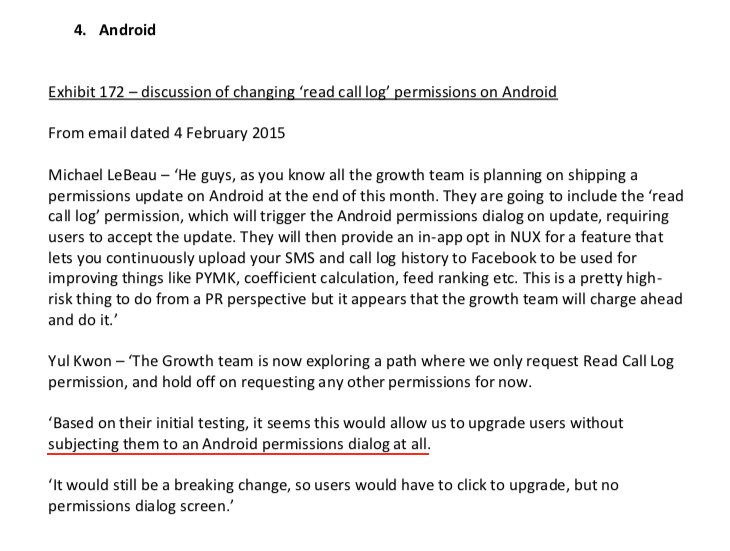
3) The above also confirms @kashhill and other's suspicion that call history was used to improve PYMK (People You May Know) suggestions and newsfeed rankings.
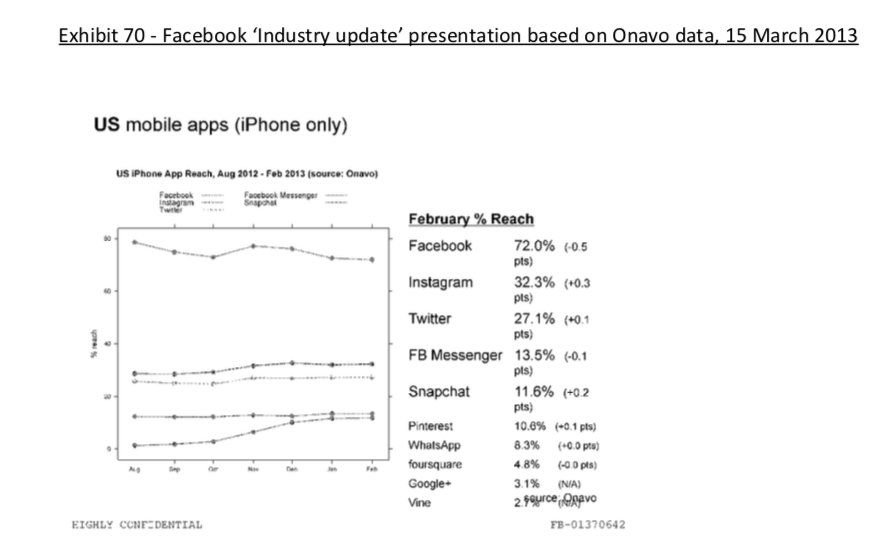
4) Docs also shed more light into @dseetharaman's story on @Facebook monitoring users' @Onavo VPN activity to determine what competitors to mimic or acquire in 2013.
https://t.co/PwiRIL3v9x
Some random interesting tidbits:
1) Zuck approves shutting down platform API access for Twitter's when Vine is released #competition
2) Facebook engineered ways to access user's call history w/o alerting users:
Team considered access to call history considered 'high PR risk' but 'growth team will charge ahead'. @Facebook created upgrade path to access data w/o subjecting users to Android permissions dialogue.
3) The above also confirms @kashhill and other's suspicion that call history was used to improve PYMK (People You May Know) suggestions and newsfeed rankings.
4) Docs also shed more light into @dseetharaman's story on @Facebook monitoring users' @Onavo VPN activity to determine what competitors to mimic or acquire in 2013.
https://t.co/PwiRIL3v9x