I've been studying @naval for years now.
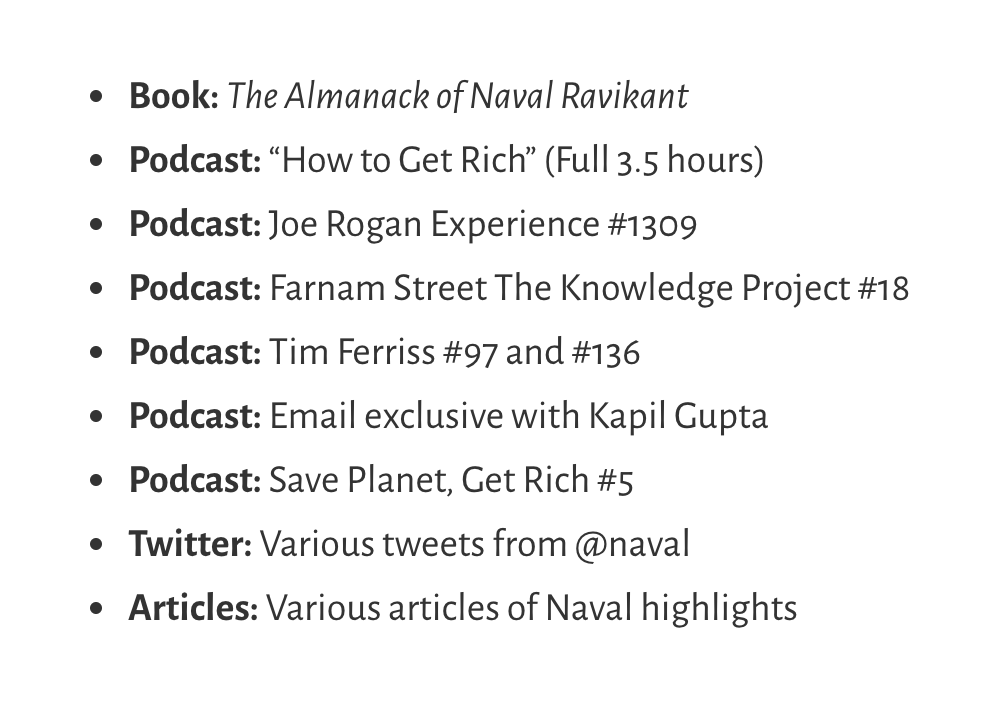
I've read "The Almanack," listened to the full 3.5 hours of "How to Get Rich," absorbed his best podcasts, pondered countless tweets, and more.
Here are 20 highlights you should know (thread 👇):

"Answers to all the great questions are paradoxes … Pursuing them is actually really useful because then it gives you certain intrinsic understanding in your life that brings a level of peace." — @naval
"I think the closest I can articulate ... is to keep growing and learning in the short period of time that you have. To seek truth and to accept things the way they are. To see the world the way it really is. Then, just to live your life." — @naval
If @naval could put on thing on a billboard, it would be:
"Desire is a contract you make with yourself to be unhappy until you get what you want."
"I think the most common mistake for humanity is believing you’re going to be made happy because of some external circumstance." — @naval
@naval's most surprising discovery in the last five years is that peace & happiness are skills & choices:
"The most important trick to being happy is to realize happiness is a skill you develop and a choice you make. You choose to be happy, and then you work at it."
"Peace is happiness at rest, and happiness is peace in motion. You can convert peace into happiness anytime you want. But peace is what you want most of the time. If you’re a peaceful person, anything you do will be a happy activity." — @naval
"You have to be very careful because sometimes the voices talking in your head that you think is you is actually social programming." — @naval
"Life is really a single-player game. It’s all going on in your head. Whatever you think and believe will very much shape your reality." — @naval
- What you do
- Who you spend time with
- Where you live
Big Getting Rich Decisions:
- Knowing what to do
- Who to do it with
- When to do it
- Health (Physical, Mental, Spiritual)
- Happiness
- Love / Family
- Mission / Work
- Wealth
"Becoming a perpetual learner. You have to know how to learn anything you want to learn." — @naval
Ultimate Meta-Skill:
"Reading (learning) is the ultimate meta-skill and can be traded for anything else." — @naval
- Reading
- Writing
- Arithmetic
- Persuasion (which is talking)
- Computer Programming (an applied form of arithmetic)
- Execution (getting things done, solving problems)
- Wealth creation / making money
- Read originals & classics
- Read the greats in math, science, philosophy
- Microeconomics, game theory, psychology, persuasion, ethics, computers
- Evolution, thermodynamics, information theory, complexity
"Money is not going to solve all of your problems; but it’s going to solve all of your money problems." — @naval
Wealth:
"My definition of wealth is oriented toward businesses and assets that can earn while you sleep." — @naval
"You’re probably not going to create wealth through work. There are many reasons for that, but the most basic is because your inputs are very closely tied to your outputs. You can’t earn non-linearly." — @naval
- Creating something new from scratch
- Predicting that society will want it
- Figuring out how to scale it and get it to everybody in a profitable, self-sustaining way
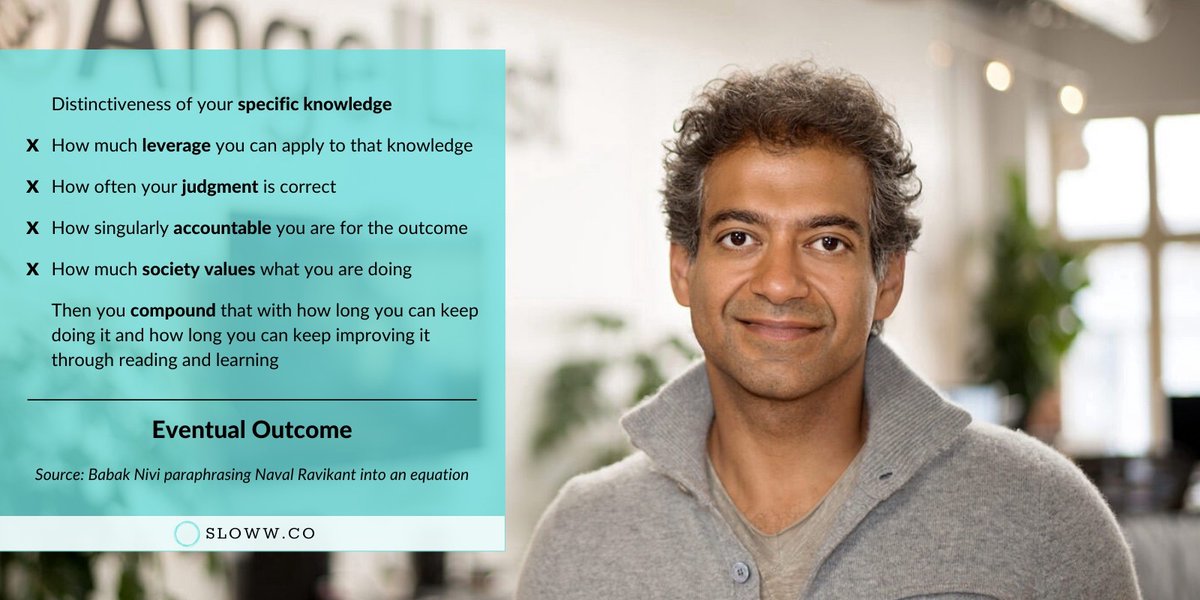
- You love to do it
- It’s natural and authentic to you
- You know how to do it the best
- Society wants it but doesn’t know how to get it
- Demonstrated judgment
- High accountability
- Leverage
- Long timescale
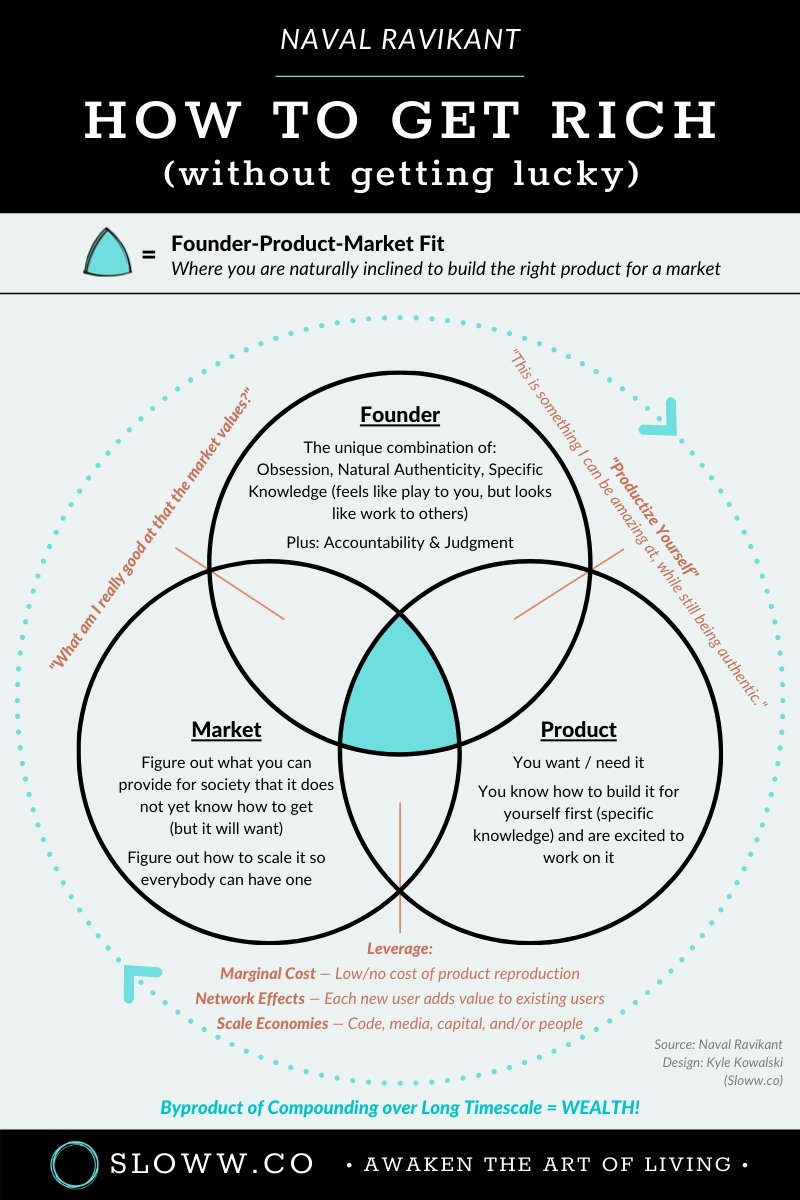
"The combination of the three should be your overwhelming goal. The most important thing for any entrepreneur is to find founder-product-market fit." — @naval
"Impatience with actions, patience with results. I think that’s a good philosophy for life." — @naval
All the benefits & returns in life come from compounding:
- Wealth
- Relationships
- Love
- Health
- Habits
- Learning
- Reading
- Knowledge
- Creating
More from Life


You May Also Like







The first area to focus on is diversity. This has become a dogma in the tech world, and despite the fact that tech is one of the most meritocratic industries in the world, there are constant efforts to promote diversity at the expense of fairness, merit and competency. Examples:
USC's Interactive Media & Games Division cancels all-star panel that included top-tier game developers who were invited to share their experiences with students. Why? Because there were no women on the
ElectronConf is a conf which chooses presenters based on blind auditions; the identity, gender, and race of the speaker is not known to the selection team. The results of that merit-based approach was an all-male panel. So they cancelled the conference.
Apple's head of diversity (a black woman) got in trouble for promoting a vision of diversity that is at odds with contemporary progressive dogma. (She left the company shortly after this
Also in the name of diversity, there is unabashed discrimination against men (especially white men) in tech, in both hiring policies and in other arenas. One such example is this, a developer workshop that specifically excluded men: https://t.co/N0SkH4hR35
USC's Interactive Media & Games Division cancels all-star panel that included top-tier game developers who were invited to share their experiences with students. Why? Because there were no women on the
ElectronConf is a conf which chooses presenters based on blind auditions; the identity, gender, and race of the speaker is not known to the selection team. The results of that merit-based approach was an all-male panel. So they cancelled the conference.
Apple's head of diversity (a black woman) got in trouble for promoting a vision of diversity that is at odds with contemporary progressive dogma. (She left the company shortly after this
Also in the name of diversity, there is unabashed discrimination against men (especially white men) in tech, in both hiring policies and in other arenas. One such example is this, a developer workshop that specifically excluded men: https://t.co/N0SkH4hR35