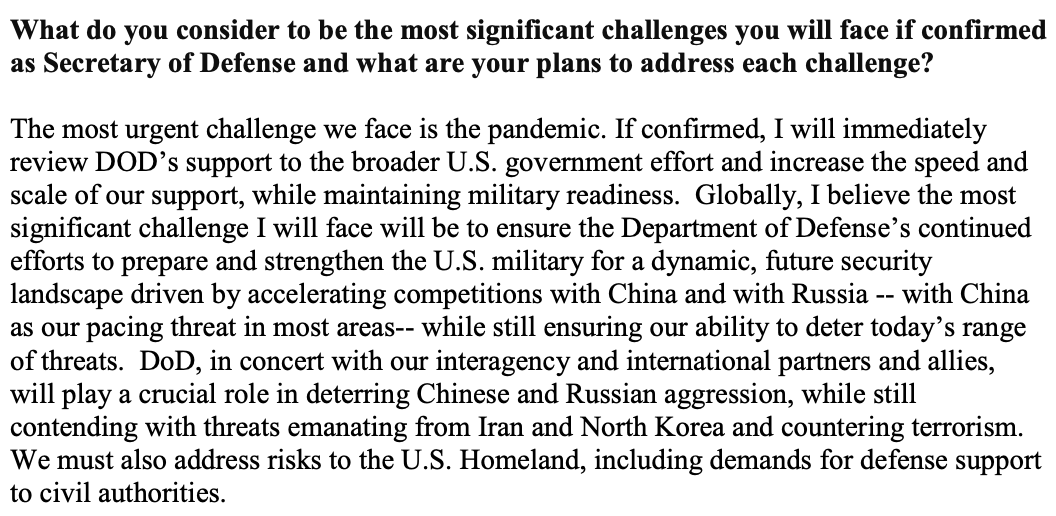
2/ SecDef nominee Lloyd Austin on advance policy Qs
"Globally...most significant challenge I will face will be to ensure DOD's contd efforts to prepare & strengthen the US military for a dynamic, future security landscape driven by accelerating competitions w China & w Russia.."
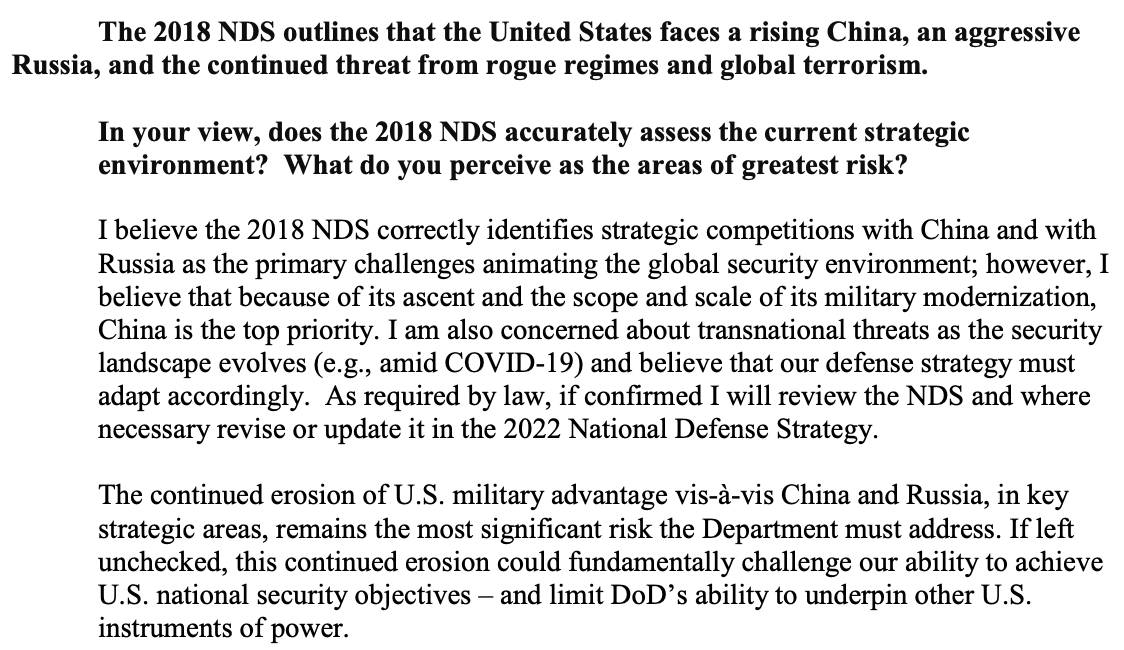
3/ SecDef nominee Austin in written answers says strategic competition w/ China & Russia primary challenges but "because of its ascent and the scope and scale of its military modernization, China is the top priority"
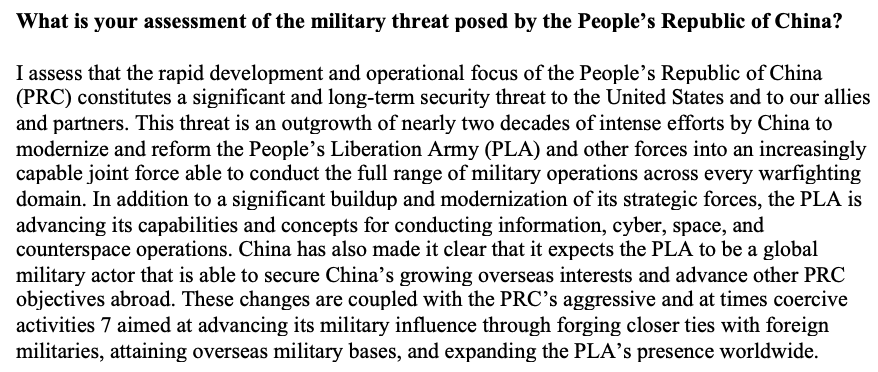
4/ SecDef nominee Austin in written answers on his assessment of the military threat posed by China...
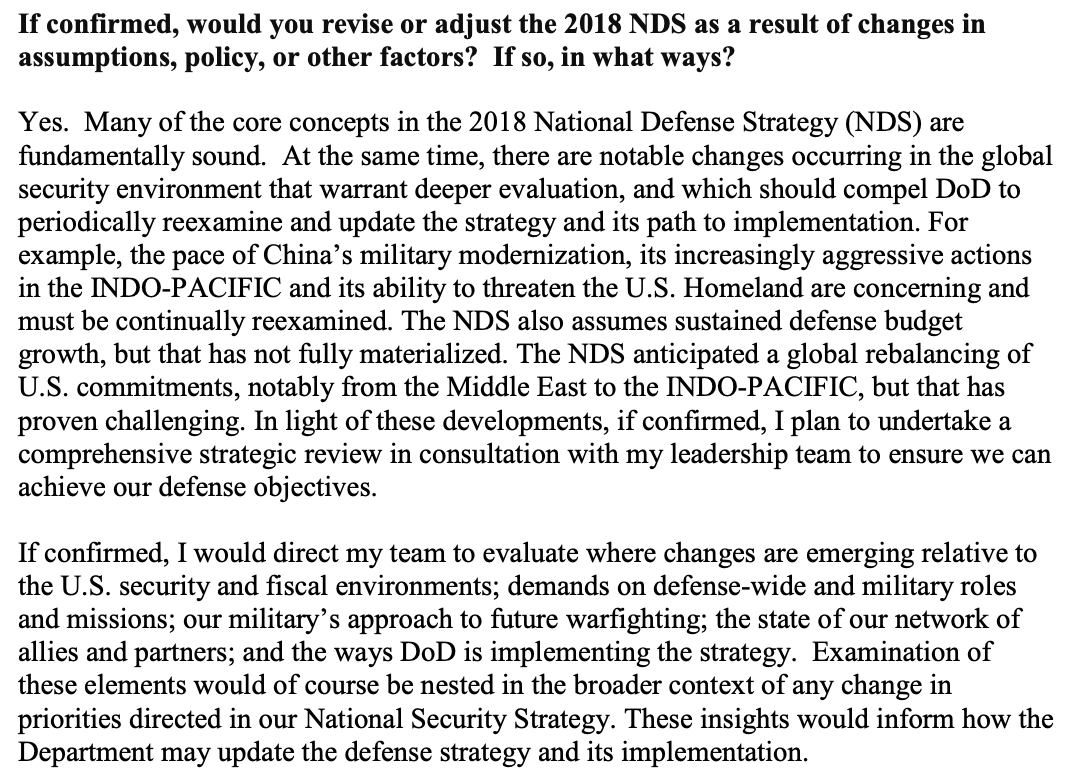
5/ SecDef nominee Austin on whether the NDS needs to be revised notes: "For example, the pace of China’s military modernization, its increasingly aggressive actions in the INDO-PACIFIC and its ability to threaten the US Homeland are concerning and must be continually reexamined"
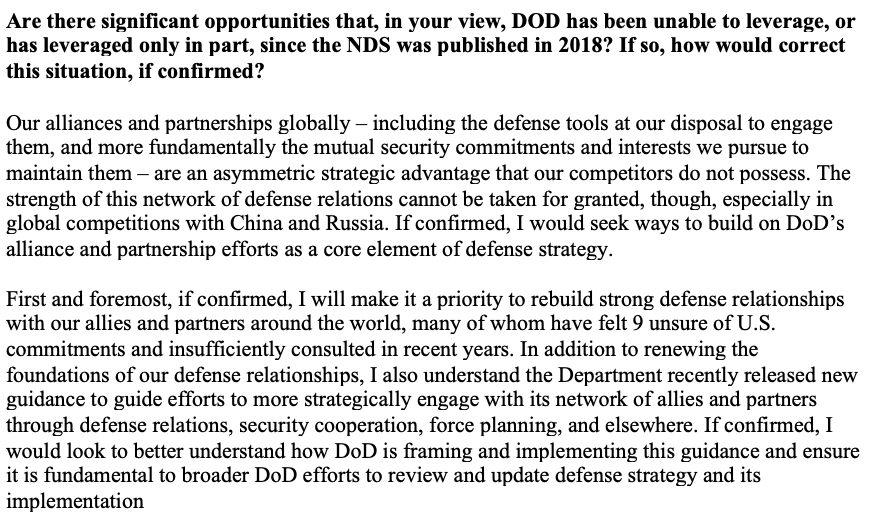
6/ SecDef nominee Austin in APQs emphasizes "strength of this network of defense relations" w/ allies & partners as crucial "especially in global competitions with China and Russia"
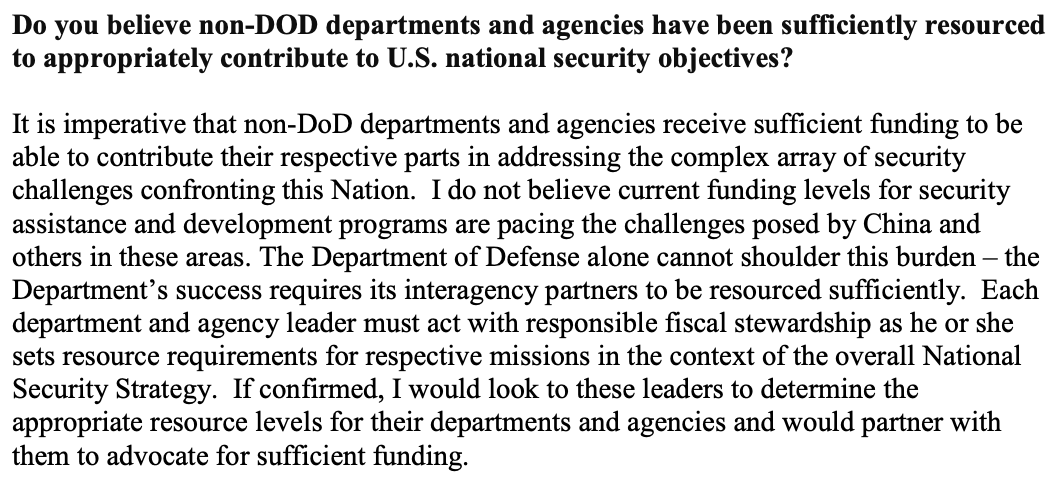
7/ SecDef nominee Austin in APQs on resources for non-DOD agencies: "imperative" they "receive sufficient funding"
"I do not believe current funding levels for security assistance & development programs are pacing the challenges posed by China and others in these areas"
8/ SecDef nominee Austin in APQs re DoD priorities in Africa: "countering
1) violent extremist organizations (VEOs) that
threaten the homeland and U.S. national security interests and
2) competitors such as China and Russia"
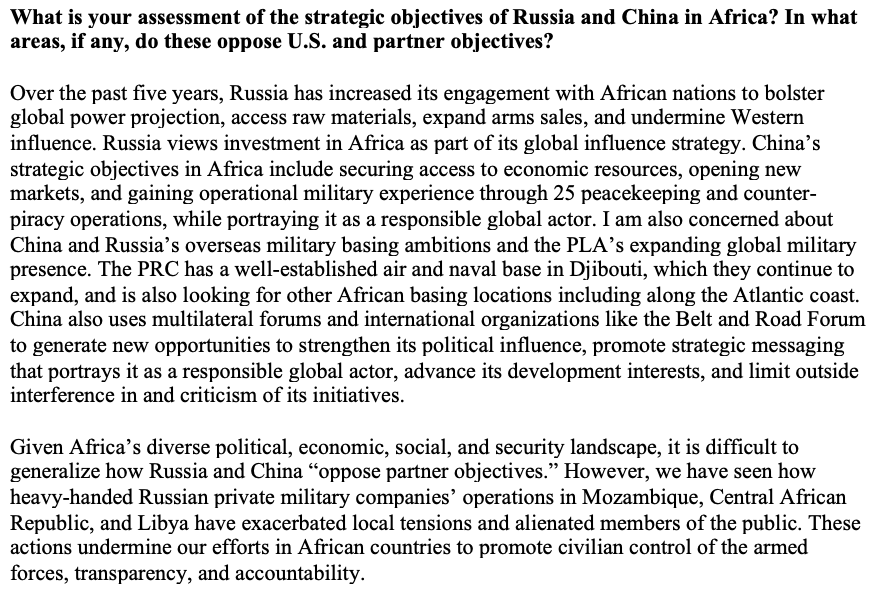
9/ SecDef nominee Austin in APQs re his assessment of Chinese & Russian goals in Africa.
(among other things, notes concern re their overseas basing plans)
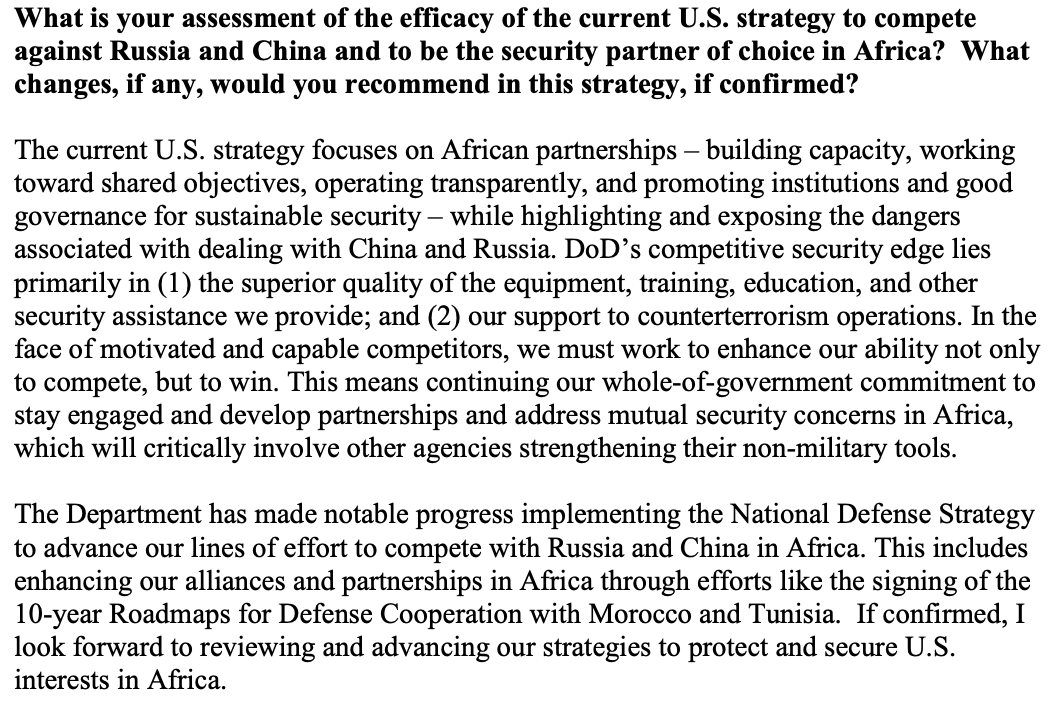
10/ SecDef nominee Austin in APQs re US strategy to compete vs China & Russia in Africa.
Says must not just compete, but win. Reqs whole of govt effort & addressing mutual security concerns
11/ Will circle back to APQs, picking up on the actual SASC hearing....
12/ Sen. Reed asks re Pacific Defense Initiative & solidifying ties w/ Australia, Japan, South Korea, & expanding w/ other Pacific nations.
Austin: refurbishing alliances "critical", hopes to "build add'l capacity where possible"
"the region will be one of my first stops."
13/ Sen. Reed talks about "strength in numbers" & security cooperation w/ Pacific partners being the "best deterrent we could think of with respect to the aspirations of China."
Austin says he agrees.
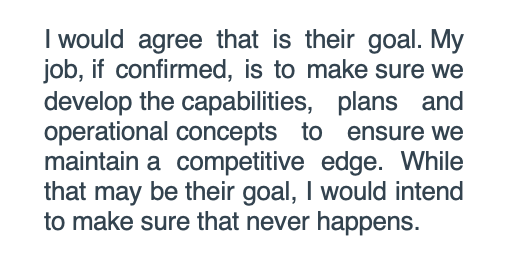
14/ Sen. Wicker asks if he agrees w/ assessment that China's goal is to devp a military by mid-century equal or superior to that of US.
Austin says he agrees & "I wld intend to make sure that never happens."
Talks abt maintaining competitive edge.