@matthaig1 1. Thank you for asking! I don't mind sharing, but an important question deserves a full answer and hopefully it will help someone else too.
I was "stable", but not ideally so on strattera for several years, it kept me emotionally level, although now I'm off it,
My decision to come off it was kind term and very considered. I was frankly, terrified to do so. I hadn't been unmedicated
As a care giver and as an example.
This is twitter and already an unreasonably long answer...
I've heard many people describe this experience as feeling euphoria, but I think it's actually just an ADHD person experiencing calm for the first time
I'd arranged to work from home that day, feeling trepidus of the meds.
It works differently, similar to an antidepressant.
I'd wanted to try something else, but in the UK, there were few alternatives.
Ultimately, I found that my ADHD symptoms were really affecting my abilities and performance at work and after several years I decided now was the time.
"It's time." I told them.
They called me to counsel me. Reminded me of my treasured stability, & that this would be a leap into the dark. But I'd waited, I'd thought this through & I was determined
Coming off atomoxetine was difficult.
As the dosage dropped, slowly over 8 weeks or so, my symptoms and my unregulated emotions returned
I couldn't have had better support if they were there in the room holding my hand every step.
They are another stimulant medication and work right away. I took my first pill and it made me kind of drowsy, but that was OK. I was sure it would pass and it did.
My world and my future look so much brighter now and full of hope and possibilities.
To anyone who stuck around this long, thank you for reading.
I hope it helps someone else.
Some beyond what I could have ever asked or imagined. I am so blessed to have you in my life.
More from For later read

Hi @EdinburghUni @EHRC @EHRCChair @KishwerFalkner @RJHilsenrath @trussliz @GEOgovuk
The DIVERSITY INFORMATION section in yr job application mentions 'legal equality duties'. You then ask "What is your gender identity?" with options
Female
Male
Non-binary
Not-listed
Other
1/13
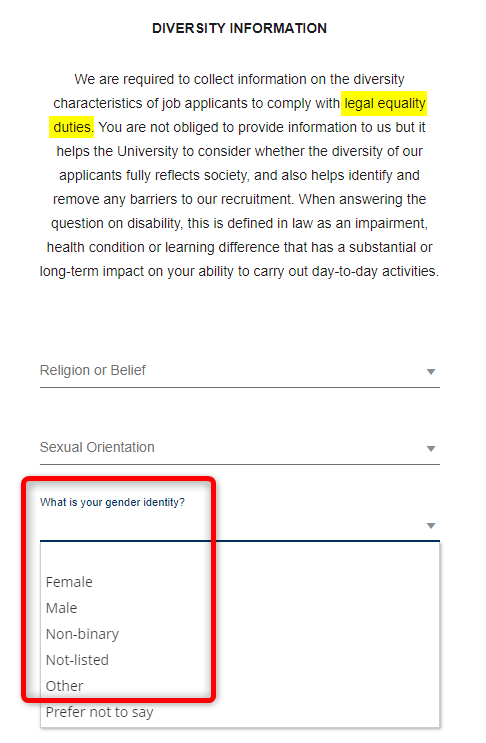
'Gender identity' is not a protected characteristic under the Equality Act 2010 and is not defined in the Act.
https://t.co/qisFhCiV1u
2/13
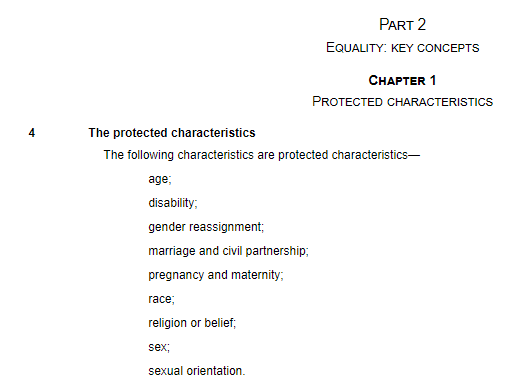
Sex is the protected characteristic and the only two possible options for sex are 'Female' and 'Male' as defined in the Act and consistent with biology - 'non-binary' and 'other' are not valid options.
https://t.co/CEJ0gkr6nF
'Gender identity' is not a synonym for sex.
3/13

You then ask "Does your gender identity match your sex registered at birth?"
4/13
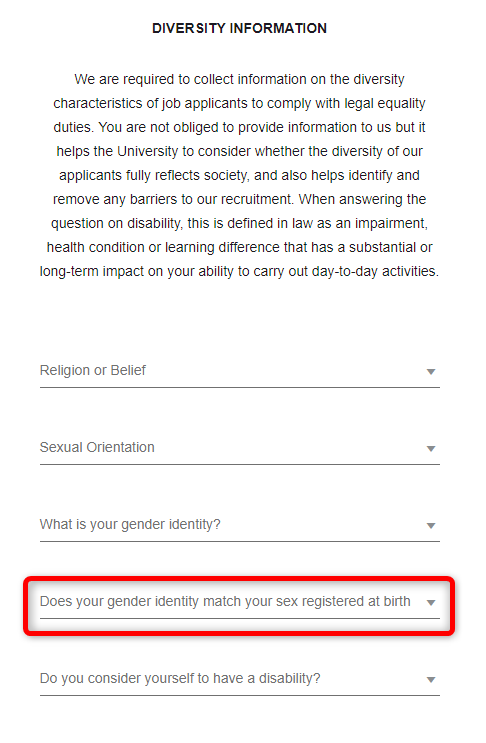
Again, 'gender identity' is not a protected characteristic under the Equality Act 2010 and is not defined in the Act.
https://t.co/qisFhCiV1u
5/13
The DIVERSITY INFORMATION section in yr job application mentions 'legal equality duties'. You then ask "What is your gender identity?" with options
Female
Male
Non-binary
Not-listed
Other
1/13
'Gender identity' is not a protected characteristic under the Equality Act 2010 and is not defined in the Act.
https://t.co/qisFhCiV1u
2/13
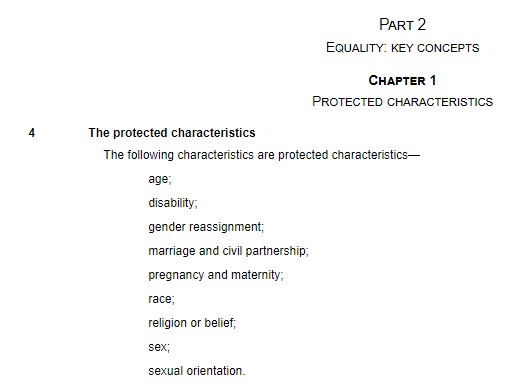
Sex is the protected characteristic and the only two possible options for sex are 'Female' and 'Male' as defined in the Act and consistent with biology - 'non-binary' and 'other' are not valid options.
https://t.co/CEJ0gkr6nF
'Gender identity' is not a synonym for sex.
3/13
You then ask "Does your gender identity match your sex registered at birth?"
4/13
Again, 'gender identity' is not a protected characteristic under the Equality Act 2010 and is not defined in the Act.
https://t.co/qisFhCiV1u
5/13