
People! Have you seen people being rude to each other during meetings, maybe directed at women/people of colour/disabled people/LGBTQ+ people? Do you want to help prevent this abuse?
Some tips you can consider as a bystander depending on the situation (thread)
More from For later read

Wow, Morgan McSweeney again, Rachel Riley, SFFN, Center for Countering Digital Hate, Imran Ahmed, JLM, BoD, Angela Eagle, Tracy-Ann Oberman, Lisa Nandy, Steve Reed, Jon Cruddas, Trevor Chinn, Martin Taylor, Lord Ian Austin and Mark Lewis. #LabourLeaks #StarmerOut 24 tweet🧵
Morgan McSweeney, Keir Starmer’s chief of staff, launched the organisation that now runs SFFN.
The CEO Imran Ahmed worked closely with a number of Labour figures involved in the campaign to remove Jeremy as leader.
Rachel Riley is listed as patron. https://t.co/nGY5QrwBD0

SFFN claims that it has been “a project of the Center For Countering Digital Hate” since 4 May 2020. The relationship between the two organisations, however, appears to date back far longer. And crucially, CCDH is linked to a number of figures on the Labour right. #LabourLeaks
Center for Countering Digital Hate registered at Companies House on 19 Oct 2018, the organisation’s only director was Morgan McSweeney – Labour leader Keir Starmer’s chief of staff. McSweeney was also the campaign manager for Liz Kendall’s leadership bid. #LabourLeaks #StarmerOut
Sir Keir - along with his chief of staff, Morgan McSweeney - held his first meeting with the Jewish Labour Movement (JLM). Deliberately used the “anti-Semitism” crisis as a pretext to vilify and then expel a leading pro-Corbyn activist in Brighton and Hove
Morgan McSweeney, Keir Starmer’s chief of staff, launched the organisation that now runs SFFN.
The CEO Imran Ahmed worked closely with a number of Labour figures involved in the campaign to remove Jeremy as leader.
Rachel Riley is listed as patron. https://t.co/nGY5QrwBD0
SFFN claims that it has been “a project of the Center For Countering Digital Hate” since 4 May 2020. The relationship between the two organisations, however, appears to date back far longer. And crucially, CCDH is linked to a number of figures on the Labour right. #LabourLeaks
Center for Countering Digital Hate registered at Companies House on 19 Oct 2018, the organisation’s only director was Morgan McSweeney – Labour leader Keir Starmer’s chief of staff. McSweeney was also the campaign manager for Liz Kendall’s leadership bid. #LabourLeaks #StarmerOut
Sir Keir - along with his chief of staff, Morgan McSweeney - held his first meeting with the Jewish Labour Movement (JLM). Deliberately used the “anti-Semitism” crisis as a pretext to vilify and then expel a leading pro-Corbyn activist in Brighton and Hove


You May Also Like





So friends here is the thread on the recommended pathway for new entrants in the stock market.
Here I will share what I believe are essentials for anybody who is interested in stock markets and the resources to learn them, its from my experience and by no means exhaustive..
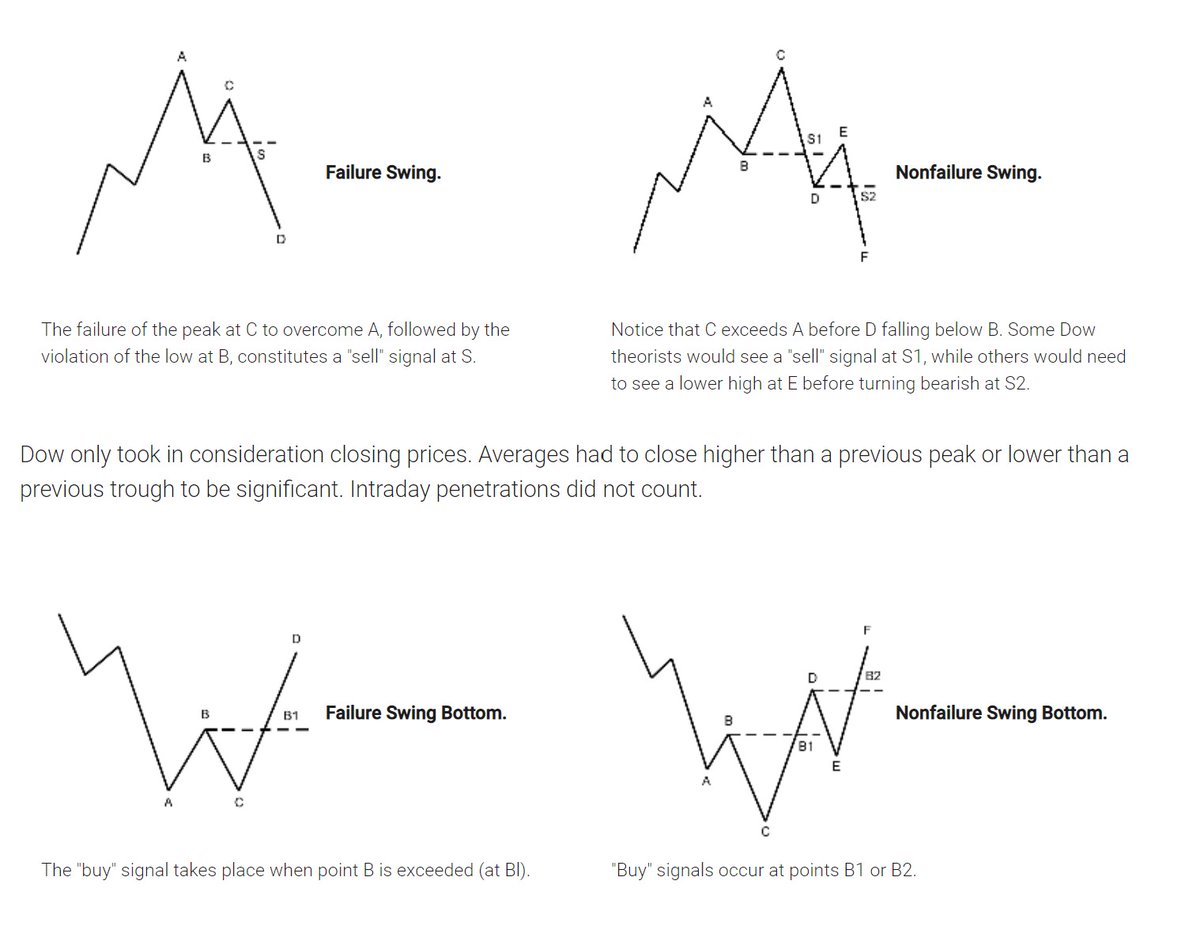
First the very basic : The Dow theory, Everybody must have basic understanding of it and must learn to observe High Highs, Higher Lows, Lower Highs and Lowers lows on charts and their
Even those who are more inclined towards fundamental side can also benefit from Dow theory, as it can hint start & end of Bull/Bear runs thereby indication entry and exits.
Next basic is Wyckoff's Theory. It tells how accumulation and distribution happens with regularity and how the market actually
Dow theory is old but
Here I will share what I believe are essentials for anybody who is interested in stock markets and the resources to learn them, its from my experience and by no means exhaustive..
First the very basic : The Dow theory, Everybody must have basic understanding of it and must learn to observe High Highs, Higher Lows, Lower Highs and Lowers lows on charts and their
Even those who are more inclined towards fundamental side can also benefit from Dow theory, as it can hint start & end of Bull/Bear runs thereby indication entry and exits.
Next basic is Wyckoff's Theory. It tells how accumulation and distribution happens with regularity and how the market actually
Dow theory is old but
Old is Gold....
— Professor (@DillikiBiili) January 23, 2020
this Bharti Airtel chart is a true copy of the Wyckoff Pattern propounded in 1931....... pic.twitter.com/tQ1PNebq7d