□■□■ Islamic Banking □■□■
In 1983, the first Islamic Bank (the Bank Islam Malaysia Berhad) was established in Malaysia through the introduction of the Islamic Banking Act. They are not recognised by a number of non-Islamic nations, including India.

In late 2008, a committee on Financial Sector Reforms, headed by former RBI governor Raghuram Rajan, had stressed on the need for a closer look at the issue of interest-free banking in the country and supported Islamic Banking system in India.
The RBI had in February, 2016 sent a copy of the IDG report to the finance ministry and recommended an "Islamic window" in conventional banks for gradual introduction of Sharia-compliant banking.
As per report:-
"In our considered opinion, given the complexities of Islamic finance and various regulatory and supervisory challenges involved in the matter and also due to the fact that Indian banks have no experience in this field, Islamic banking may be introduced in India.
"Initially, a few simple products which are similar to conventional banking products may be considered for introduction through Islamic window of the conventional banks after necessary notification by the government," it had said in a letter to the ministry.
■□■□■ Halalonomics ■□■□■
♤♧♤♧Dictatorship of ISLAM♤♧♤♧

In 2006, the Halal Industry Development Corporation was established in  Malaysia (though halal products have been in use even prior to this) to promote the Halal industry.
In 2013, Kuala Lumpur hosted the World Halal Research and World Halal Forum Summit, with a focus on ‘Halal Economy’. This summit pledged to bolster acceptance of Halal products worldwide through greater cooperation between the Halal industry and the Islamic banking sector.
To promote investments in the Halal industry, index series like the SAMI (Socially Acceptable Market Investments) Halal Food Indexes (a stock market index listing Sharia compliant companies) are gaining popularity.
The Halal Industry governs all aspects from the farm to the consumer, which includes the production and distribution lines. As the halal economy taking shape, a greater emphasis was placed on growing the Islamic economic sector by utilising this Halal Economy.
The astronomical increase in the market share of Islamic banking assets from 6.9% in 2000 to 22% in 2011 in Malaysia.
The ever widening scope of the halal industry:-

▶️ Meat to Vegetarian products : Even the famed all vegetarian Haldiram’s namkeens (snacks) are now halal certified. Dry fruits, sweets, chocolates are also included.
▶️ Foodstuff to Cosmetics : Grains, oil, soaps, shampoos, toothpaste, kajal (eye liners), nail polish, lipstick and other cosmetics are now under the ambit of ‘Halal’ certification.

▶️ Medicines : Unani, Ayurvedic medicines, honey are now halal certified.
▶️ Halal apartment complexes : Kochi (Kerala) is now home to the country’s first halal certified apartment complex built as per sharia regulations. The complex has prayer halls, washrooms that face away from Mecca, clocks that alert you to namaz timings.
▶️ Halal hospitals : Global Health City (Chennai, Tamil Nadu) is a halal certified hospital. They claim to meet international standards of hygiene and dietary regulations as per the tenets of Islam.
▶️ Multinational chains : McDonald’s burgers, Domino’s pizza, food available in almost all airports is now Halal certified.

▶️ Halal dating websites : There are numerous websites for singles to meet up and befriend each other. Now there are halal certified dating websites.
♡ World’s fasted growing economy ♡
Currently, a fee of about Rs.20,000 (on average) is levied to certify a product as halal compliant; with GST levied separately. Every product has to be certified individually (and of course the fees are also levied individually).
The certificate is valid only for a year and the renewal costs another Rs.15,000. This is for one product, now think about the multitude of products that the Indian industry produces for local consumption as well as export, this will give you an idea of the scale.
This is just about India!   When the entire world is taken into account, it is no wonder that the halal economy is the fastest growing economy today, projected to touch a staggering 3 Trillion US Dollars by 2023.
♤ Halal Economy & Terror Accused ♤
The Jamiat ulema-e-hind is a powerful entity in religious as well as political circles. During the recent protests against the Citizenship Amendment Act (2019), the Bengal state president of the JuH Siddiqullah Chowdhury had threatened
that the ‘Home Minister Amit Shah will not be allowed to step out of the Kolkata airport’. This organization had also declared that it will fight in favour of those accused of murdering Hindu leader Kamlesh Tiwari of Uttar Pradesh.
In the past the JuH has also provided legal support to the muslim accused in several acts of terrorism including the 7/11 Mumbai train blasts, 2006 Malegaon blasts, German Bakery blast (Pune), the 26/11 attack on Mumbai, the serial blasts of Zaveri Bazaar in Mumbai,
Delhi’s Jama Masjid blast and the Karnavati (Ahmedabad) bomb blast among others.
The Jamiat is fighting cases on behalf of about 700 such accused.
Majority Hindu society must boycott all items and business certified by Halal authorities to stop the monstrous Halal Jihad in India.
Dear @seriousfunnyguy @BefittingFacts @TheAngryLord @AmiSri @desimojito @indiantweeter @KyaUkhaadLega @AparBharat @SunainaHoley @AshishJaggi_1 @HinduYouthAlert @TheHinduYoddha @theanuragkts
Kindly RT and help to spread it more and more. 🙏🙏

More from Finance

1/ I'm thrilled to announce the launch of my new website, a one-stop shop for all the content I'm creating.

There you'll find links to all my podcasts, the TTMYGH newsletter, and other exciting future projects.

2/ In 2020, I reignited my passion for interviewing brilliant people by launching The Grant Williams Podcast in various forms, including The End Game, The Super Terrific Happy Hour, and The Narrative Game.
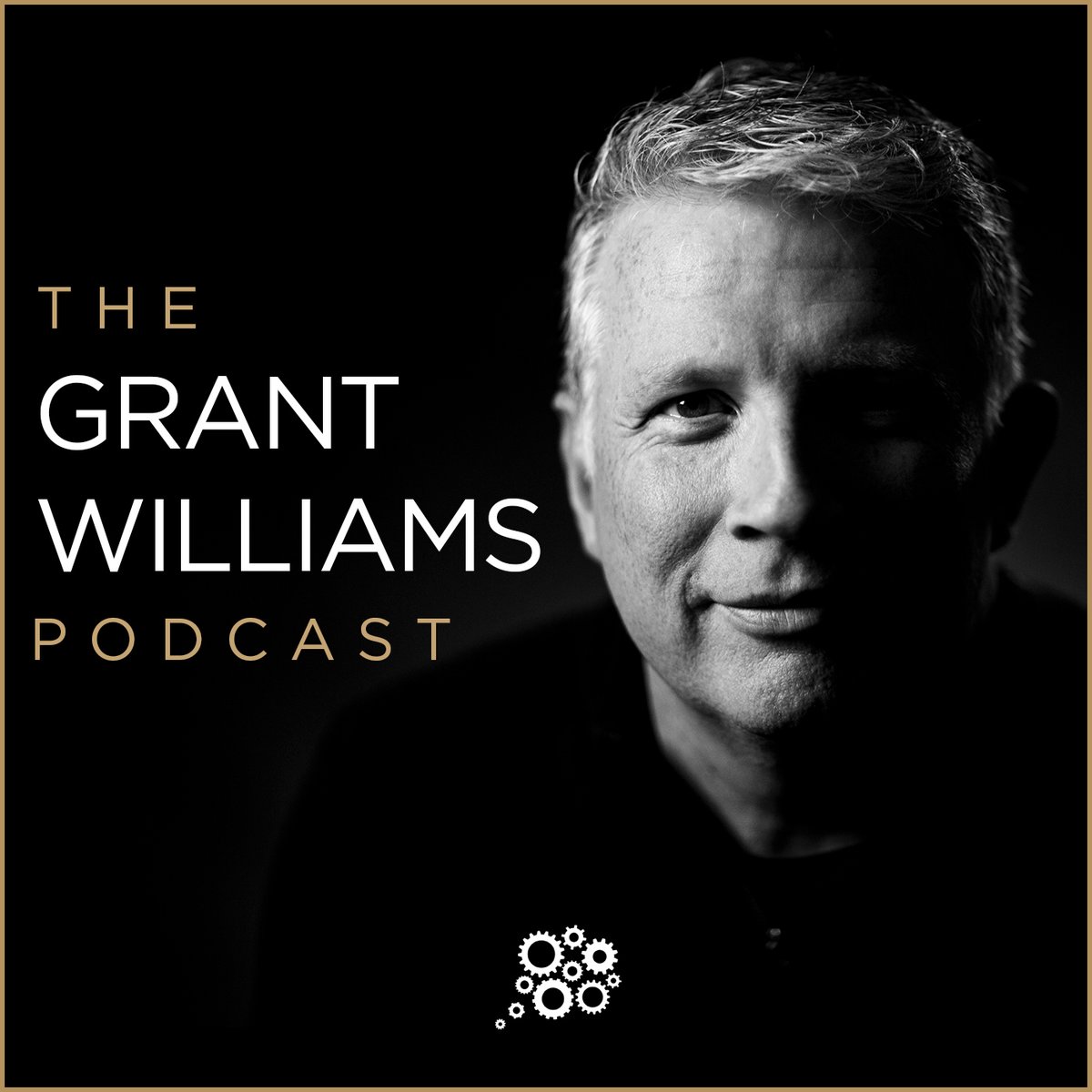

3/ Starting February 1, I'm taking the bold step of moving these podcasts completely behind a paywall.

For the very affordable price of only $10 a month, listeners can gain access to the Copper Tier of
https://t.co/fxUfH8maI4, which includes all current & future podcasts.

4/ Why am I doing this? First and foremost, I aspire to create VALUABLE content. By definition, if something is priced at $0, it isn’t valuable. The time, effort and creativity that goes into these episodes is substantial. To keep doing them properly, they can no longer be free.

5/ I also strongly believe content creators should be able to make a living creating content. If everything is free, that’s not possible. I never seriously considered accepting outside sponsors – complete integrity is too critical to me.
Here are all the threads posted by @AdityaTodmal and @niki_poojary in January: 🧵

• 8 powerful ways to use Twitter
• Power of Stocks
• 14 Trading Strategies
• Basics of Derivatives (3 parts)
• Technical Analysis for all sectors
• Tweets of the week
• Books on Futures

All the Top 10 tweets threads I have ever posted to date:


Basics of Derivatives Part 1:


8 powerful ways to use Twitter:


Basics of Derivatives Part 2:
Ok here is the explanation. Grab a cup of coffee and read on. If you have not read/noticed this, you will see intraday options movement in a new light.


Say we have two options, one 50 delta ATM options and another 30 delta OTM option. Normally for a 100 point move, the ATM option will move 50 points and the OTM option will move 30 points. But in a high volatile environment, the OTM option will also move nearly 50 points

To understand why this happens, first understand why an ATM option is 50 delta. An ATM option has the probability of 50% of expiring as ITM. The price just has to close a rupee above the strike for the CE to be ITM and vice versa for PEs

Now think of a highly volatile day like today. If someone is asked where the BNF will close for the day or expiry, no one can answer. BNF can close freakin anywhere, That makes every option of an equal probability of being ITM. So all options have a 50% probability of being ITM

Hence, when a huge volatile move starts, all OTM options behave like ATM options. This phenomenon was first observed in the Black Monday crash of 1987 at Wall Street, which also gave rise to the volatility skew/smirk

You May Also Like

A brief analysis and comparison of the CSS for Twitter's PWA vs Twitter's legacy desktop website. The difference is dramatic and I'll touch on some reasons why.

Legacy site *downloads* ~630 KB CSS per theme and writing direction.

6,769 rules
9,252 selectors
16.7k declarations
3,370 unique declarations
44 media queries
36 unique colors
50 unique background colors
46 unique font sizes
39 unique z-indices

https://t.co/qyl4Bt1i5x


PWA *incrementally generates* ~30 KB CSS that handles all themes and writing directions.

735 rules
740 selectors
757 declarations
730 unique declarations
0 media queries
11 unique colors
32 unique background colors
15 unique font sizes
7 unique z-indices

https://t.co/w7oNG5KUkJ


The legacy site's CSS is what happens when hundreds of people directly write CSS over many years. Specificity wars, redundancy, a house of cards that can't be fixed. The result is extremely inefficient and error-prone styling that punishes users and developers.

The PWA's CSS is generated on-demand by a JS framework that manages styles and outputs "atomic CSS". The framework can enforce strict constraints and perform optimisations, which is why the CSS is so much smaller and safer. Style conflicts and unbounded CSS growth are avoided.